



How does stress act on the body, and what is actually being measured?
Understanding this one point stops you being taken in by marketing claims, because not all studies measure the same thing.
Faced with a demand, the body activates the hypothalamic-pituitary-adrenal axis, usually shortened to the HPA axis. That hormonal cascade ends with the release of cortisol by the adrenal glands. Cortisol is not a harmful hormone, it mobilizes energy and lets you react. The problem comes from prolonged secretion.
When stress becomes chronic, the natural cortisol rhythm goes off. Normally high on waking then falling through the day, it flattens out or stays high in the evening, which disrupts falling asleep and keeps the morning fatigue going.
Studies use two kinds of measurement that should not be confused. Perceived stress scales, such as the PSS, are self-reported. Serum or salivary cortisol is an objective biological marker.
A plant can lower the reported score without changing cortisol, or the reverse. The most convincing work shows both, and it is rare.

What is an adaptogen, and does the word mean anything?
The term was coined in the USSR in the 1940s and describes a plant meant to help the body adapt to demands, without a strong directional effect.
Three criteria are traditionally used: the substance must be non-toxic at usual doses, produce a non-specific response by increasing resistance to varied stressors, and exert a normalizing action, meaning it brings you back toward balance rather than pushing in one direction.
The framework has the merit of existing, but its status needs to be clear: adaptogen is not a regulatory category. No health authority recognizes the term, and none of the plants in this article carries an authorized health claim for stress.
What that means on a label depends on where you are, and it explains a lot about why some products sound bolder than others. In the European Union and the United Kingdom, a manufacturer is not allowed to write that a product reduces stress. Traditional use and a contribution to mental wellbeing are as far as it goes, and anything firmer is already a breach. In the United States, structure and function claims are permitted under DSHEA provided the label carries the disclaimer that the statement has not been evaluated by the FDA and the product is not intended to diagnose, treat, cure or prevent any disease. Same plants, same evidence, very different wording. 🌿

How good is ashwagandha, the most studied of them all?
It is the only one in the group with several recent meta-analyses, which puts it in a category of its own.
A systematic review with meta-analysis published in 2024 in Explore assessed its effects on stress and anxiety, with favorable results on self-reported scales. A second, published the same year in Human Psychopharmacology, looked at anxiety and insomnia while also examining safety.
The trial that has served as the benchmark for over a decade is the one published in 2012 in the Indian Journal of Psychological Medicine: 600 mg a day of a full spectrum extract for 60 days, with a fall in serum cortisol measured in the treated group. It is one of the rare studies to document both the subjective experience and the biological marker.
Two important caveats. First, the doses that work in studies sit around 300 to 600 mg of standardized extract per day. Many commercial products advertise far higher numbers that actually refer to raw material equivalent, not to extract.
Second, safety. The French food safety agency ANSES has published nutrivigilance reports on ashwagandha, including cases of liver injury. The plant is not advised during pregnancy or breastfeeding, nor with thyroid disorders or related treatment. We covered all of this in our full guide to ashwagandha.
Does saffron have solid data on mood?
Yes, and it is the second surprise in this ranking, because most people know it as a spice.
An umbrella meta-analysis published in 2022 in Pharmacological Research, meaning a compilation of existing meta-analyses, concludes that saffron makes a real contribution to relieving depressive symptoms, as an add-on.
The doses studied are low, generally 28 to 30 mg a day of standardized extract, which is why you find it at those amounts in commercial formulas.
Two honest clarifications. The field studied is mood and mild to moderate depressive symptoms, not acute stress, which is not quite the same thing. And saffron can interact with antidepressants, so tell your doctor if you are on one.

What do we really know about rhodiola, passionflower and valerian?
These three are everywhere on the shelves, with very uneven levels of evidence.
Rhodiola (Rhodiola rosea) is traditionally linked to resistance to fatigue. Human data remain limited: a trial published in 2025 in Nutrients measured its effect on perceived fatigue and performance in basketball players, with modest results. The most convincing work is in animals, which does not let you conclude anything for humans. One practical point: it tends to be stimulating, so avoid it in the evening.
Passionflower has randomized trials, but in a very specific context. Two recent papers, one published in 2024 in Oral and Maxillofacial Surgery, the other in 2025 in Scientific Reports, assessed its effect on anxiety before a dental extraction, with measurements of salivary biomarkers. The results are encouraging on situational anxiety, which does not transfer automatically to the chronic stress of daily life.
Valerian is the most interesting case, because the reviews contradict each other. A systematic review published in 2007 in Sleep Medicine Reviews concluded bluntly: safe but ineffective. A more recent meta-analysis, published in 2020 in the Journal of Evidence-Based Integrative Medicine, reaches more favorable conclusions on sleep disorders, pointing to the heterogeneity of the extracts tested as a possible explanation for the disagreement.
In other words, the form and standardization of the extract probably matter as much as the plant itself. That is true for valerian, and it is true for most of the others.
Holy basil, schisandra and reishi: tradition or evidence?
These three often round out formulas, and it is worth being honest about what we know.
Holy basil (Ocimum sanctum, or tulsi) is central to Ayurvedic medicine, where it has been used for centuries. Recent publications mostly cover ground other than stress, such as lipid metabolism or liver protection. Human data specifically on stress remain scarce.
Schisandra (Schisandra chinensis) is in a comparable position. Its lignans are the subject of research, but mainly preclinical and oriented toward cognition or the liver. We are still in traditional use territory.
Reishi (Ganoderma lucidum) is not a plant but a mushroom, often grouped with botanical adaptogens in formulas. A comprehensive review published in 2023 in Food & Function catalogs the available data while underlining the wide variability of the extracts studied. We dealt separately with reishi and sleep.
Their presence in a formula is not illegitimate, but it rests on tradition and assumed synergy, not on clinical demonstration.

How do you choose according to your profile?
The table below sums up where each plant stands, so you can weigh it up yourself.
| Plant | Level of evidence | What has been studied | Precautions |
|---|---|---|---|
| Ashwagandha | High | Perceived stress, anxiety, serum cortisol | ANSES reports, thyroid, pregnancy, liver |
| Saffron | High | Mood and mild depressive symptoms | Avoid at high doses, interacts with antidepressants |
| Valerian | Contradictory | Sleep and falling asleep | Drowsiness, not advised before driving |
| Passionflower | Moderate and context specific | Situational anxiety, mainly before a procedure | Drowsiness, pregnancy |
| Rhodiola | Limited in humans | Perceived fatigue, performance | Possible stimulant effect, avoid in the evening |
| Holy basil (tulsi) | Low | Traditional Ayurvedic use | Human data scarce |
| Schisandra | Low | Traditional use, mostly preclinical work | Human data scarce |
In practice, three situations come up. If your problem is settled background stress, ashwagandha is the best documented option, provided you check the real extract dose. If it is mood, saffron has the better data. And if it is mainly sleep that is stuck, valerian or magnesium make more sense, a subject we cover in our guide to sleep supplements.
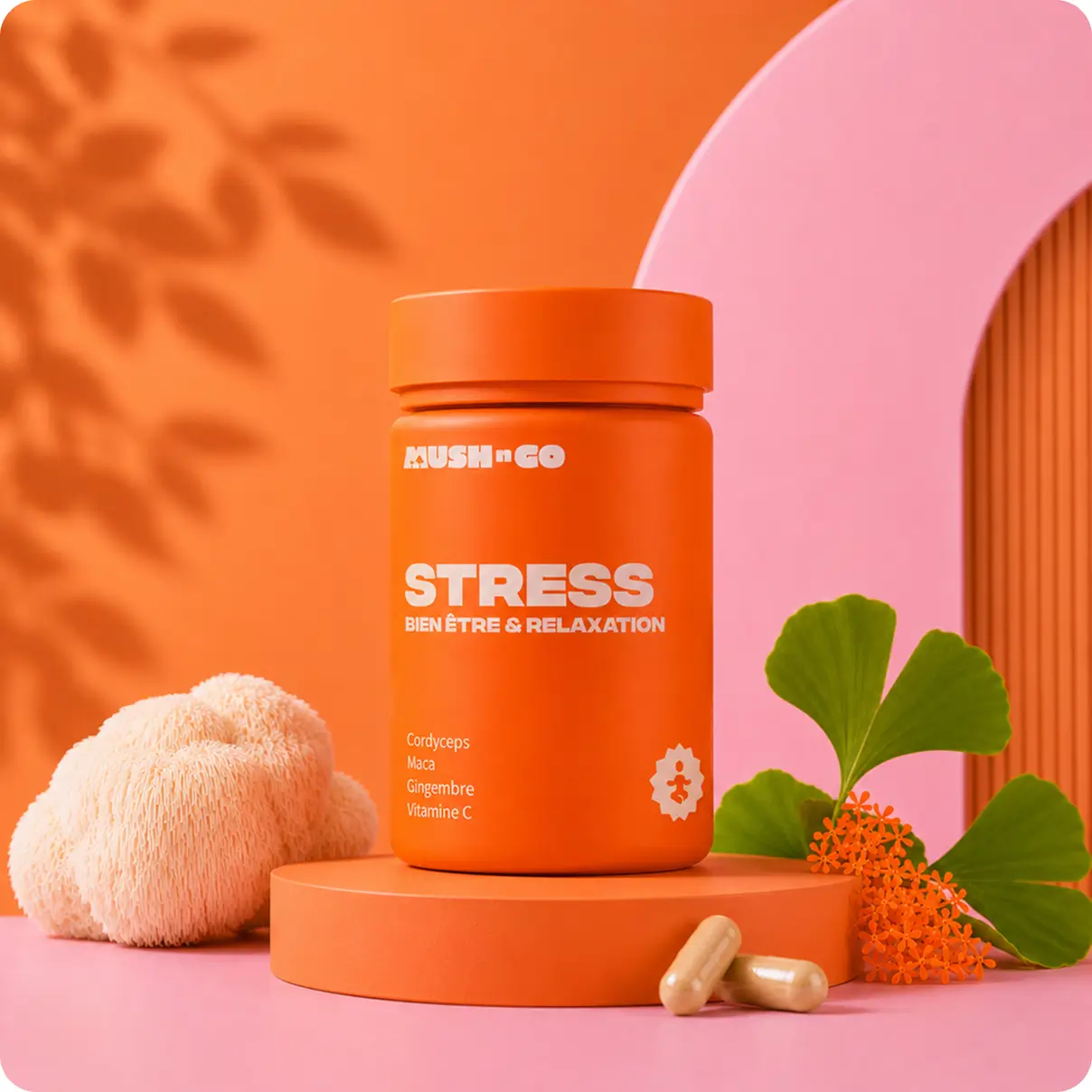
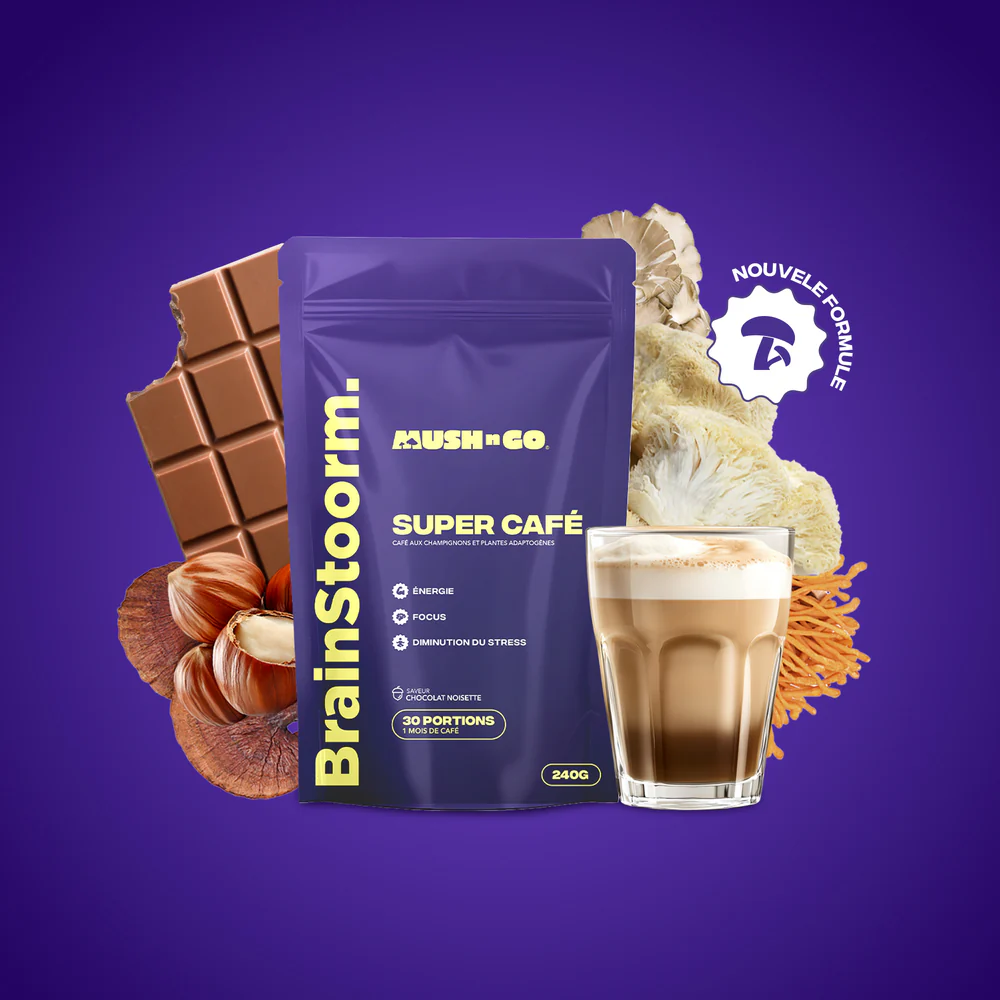
Some formulas combine several of these plants. The one from Mush N Go pairs ashwagandha, holy basil, schisandra and reishi with vitamin B6, which happens to be the only ingredient in the whole list carrying an authorized claim, on normal nervous system function. The code LMC15 gives 15 % off, and we broke down the real doses in our analysis of the range.
One piece of advice worth more than the choice of plant: start with a single one, for at least six weeks, before adding another. With four actives taken together from day one, you will never know which one is doing the work.
What precautions should you take before supplementing?
Natural does not mean risk-free, and that is particularly true here.
- Pregnancy and breastfeeding: almost all of these plants are not advised, for lack of sufficient safety data.
- Thyroid disorders: ashwagandha can influence thyroid hormones, which is a problem if you are on treatment.
- Psychotropic medication: antidepressants, anxiolytics and sleeping pills can interact with saffron, valerian and passionflower.
- Driving and alertness: valerian and passionflower can cause drowsiness.
- Liver: the ANSES reports on ashwagandha concern liver injury, worth knowing if you have a history.
Finally, a plant does not fix what produces the stress. It can help you through a heavy period, it replaces neither sleep, nor physical activity, nor proper support when the distress settles in. If stress becomes overwhelming, talk to your doctor.
Frequently asked questions about herbs for stress
What is the strongest herb for stress and anxiety?
The one with the best human data is ashwagandha, with several recent meta-analyses. Strongest is the wrong word: we are talking about modest effects, measurable statistically, not an anxiolytic.
How long before you see an effect?
Trials that show something generally run 6 to 8 weeks. An effect felt within three days is more likely expectation than pharmacology.
Can you combine several herbs for stress?
Commercial formulas do it routinely. The downside is that you no longer know what is working, and the precautions stack up. Start with one.
Are herbal teas for stress effective?
The doses delivered by an infusion are far below those in studies on standardized extracts. The ritual and the warmth probably count as much as the plant itself, which is not a criticism.
Should you take these herbs in the morning or the evening?
Rhodiola in the morning, since it stimulates, valerian and passionflower in the evening, since they sedate. Ashwagandha can be taken either way, often split into two doses.
Are these herbs the same as CBD or magnesium?
No. Magnesium has an authorized claim in Europe on normal psychological function and the reduction of tiredness, which none of these plants has. CBD sits in a separate regulatory category again, with its own rules depending on the country. Comparing them on the same shelf is convenient for a retailer, not for you.
Scientific references
- Explore, 2024. Effects of ashwagandha on stress and anxiety, systematic review and meta-analysis. PubMed 39348746
- Human Psychopharmacology, 2024. Safety and efficacy of Withania somnifera in anxiety and insomnia, systematic review and meta-analysis. PubMed 39083548
- Chandrasekhar K. et al., Indian Journal of Psychological Medicine, 2012. Full spectrum ashwagandha extract, safety and efficacy on stress. PubMed 23439798
- Pharmacological Research, 2022. Saffron as adjuvant therapy for depressive symptoms, umbrella meta-analysis. PubMed 34757208
- Nutrients, 2025. Short term Rhodiola rosea supplementation, perceived fatigue and performance in basketball players. PubMed 41373984
- Oral and Maxillofacial Surgery, 2024. Passiflora incarnata and Valeriana officinalis in controlling anxiety related to dental extraction, randomized trial. PubMed 38743126
- Scientific Reports, 2025. Passiflora incarnata, salivary biomarkers and anxiety. PubMed 41381570
- Journal of Evidence-Based Integrative Medicine, 2020. Valerian root in sleep disorders, systematic review and meta-analysis. PubMed 33086877
- Sleep Medicine Reviews, 2007. Valerian as a sleep aid, systematic review. PubMed 17517355
- Food & Function, 2023. Comprehensive review of Ganoderma lucidum, 2010 to 2022. PubMed 36734035
Food supplements are not a substitute for a varied, balanced diet and a healthy lifestyle. If stress persists, if sleep problems become established, or if you are on any treatment, ask a health professional for advice.

LMC’s editorial line is built around transparency and reliability. Our content is written to help users make better decisions, based on 7 key criteria* that support trustworthy information, verified promo codes, and useful reviews.
To support LMC, some links are affiliate links. Our recommendations remain independent and based on transparent, verifiable criteria. By using the site, you accept our terms of use and our editorial policy.
.webp)

.avif)