

Fennel, anise, fenugreek: these are the most common plants in breastfeeding teas. They are also the ones targeted by warnings from European and French health agencies. Many moms are therefore looking for a tea without fennel or fenugreek, without always knowing why. This guide takes stock: what the authorities say, what the studies show, and how to choose. For supplements in capsule form, see our comparison of breastfeeding supplements.
Why avoid fennel and fenugreek in a breastfeeding tea?
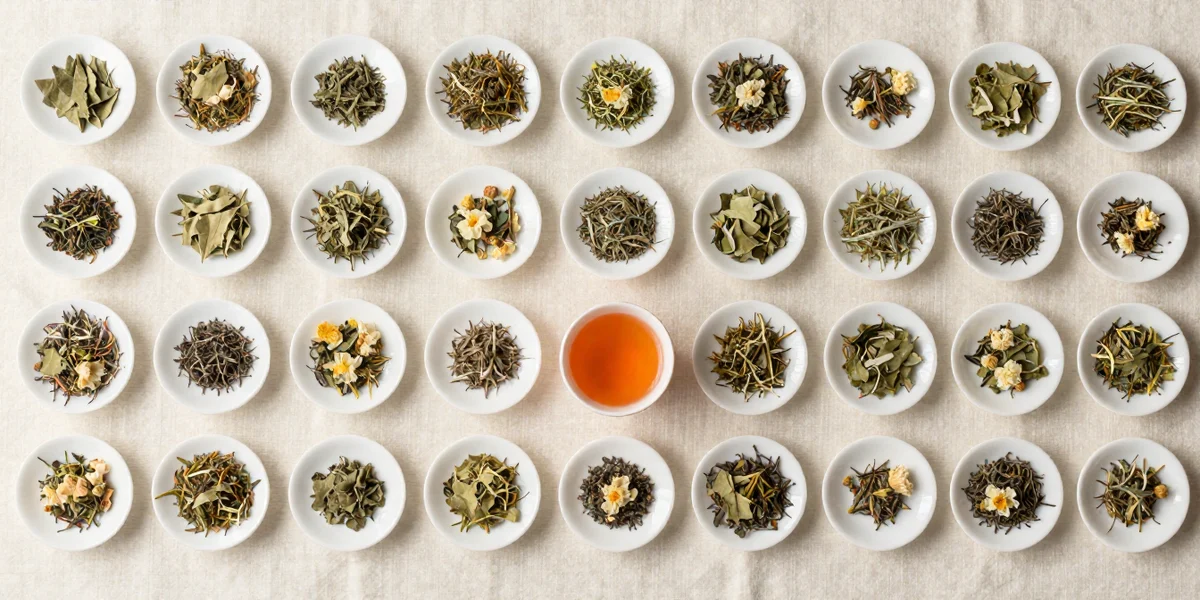
Because these two plants are the subject of official warnings: estragole in fennel for the European Medicines Agency, and fenugreek in dietary supplements for ANSES. A tea that does not contain them simply sidesteps the question.
Fennel and estragole. Fennel seeds contain estragole, a naturally occurring substance that is genotoxic and carcinogenic in rodents. As early as 2005, the herbal medicinal products committee of the European Medicines Agency (EMA) called for minimizing exposure in young children and in pregnant or breastfeeding women. Its revised statement (2021, corrected in 2023) advises against herbal medicines containing estragole for pregnant or breastfeeding women above 0.05 mg of estragole per day. Its sweet fennel summary also advises against use during pregnancy and breastfeeding, as a precaution.
The European Food Safety Authority (EFSA) went the same way in July 2025. In a draft opinion put out for consultation, it was unable to set a safe exposure level. Among the vulnerable groups, it lists breastfed babies and fetuses when the mother consumes fennel seed preparations, teas included. It specifies that preparations from which estragole has been removed, or in which it is not detectable, are not considered a risk.
LactMed, the leading U.S. database on plants during breastfeeding, is more nuanced: the small amounts that pass into breast milk are probably safe at usual doses. It does, however, report two newborns who were poisoned after their mother drank excessive amounts of a tea combining fennel, anise and other plants. It also advises against fennel if the mother or baby is allergic to carrot, celery or other Apiaceae.
Fenugreek. According to ANSES, which summarizes the EMA monograph, animal studies have shown reproductive toxicity, and the EMA advises against fenugreek during pregnancy and breastfeeding. In 2023, ANSES adopted this position for dietary supplements and recommends advising pregnant or breastfeeding women against them. In November 2025, in response to an exemption request, it concluded that the data provided were not enough to demonstrate their safety for breastfeeding women and their babies.
The LactMed entry on fenugreek also lists more everyday effects:
- Digestive issues: diarrhea, bloating, nausea, vomiting.
- A maple syrup smell in urine, sweat and possibly breast milk, caused by a molecule in the seed, sotolon.
- Possible cross-allergy with chickpeas, peanuts and other legumes.
- A possible drop in blood sugar at high doses, around 25 g per day: be careful if you have diabetes or take the anticoagulant warfarin.
In a U.S. survey cited by LactMed, 45% of the 85 mothers who had taken fenugreek for breastfeeding reported a side effect. Avoiding fenugreek is therefore as much about comfort as about caution.
Can a herbal tea increase milk supply?
No plant has an authorized health claim for breastfeeding in Europe, and the available studies are of low quality. What keeps lactation going is frequent, effective feeding.
The most comprehensive Cochrane review on the subject pooled 41 trials and more than 3,000 mothers (Foong et al., 2020). For natural galactagogues, including fennel and fenugreek, some subgroup analyses point to a benefit on the baby's weight or milk volume. But the authors say they are very uncertain about its size: the trials are too different from one another, often unblinded, with imprecise measurements. The certainty of the evidence is rated low to very low.
These authors point out what to look at first: the health of the mother and baby, sucking, latch and feeding frequency. LactMed repeats it in every entry: a galactagogue never replaces support on these points. Jolly Mama says so too on its product page: "galactagogues are not essential for breastfeeding. The first thing to do is to put your baby to the breast without watching the clock."
What about drinking more? Drinking more does not make you produce more milk. In a small crossover trial, 21 mothers increased their fluid intake by 59% on average: their production stayed stable, at around 800 mL per day (Dusdieker et al., 1985). The Cochrane review on this question finds no argument for drinking beyond your needs (Ndikom et al., 2014). The right rule of thumb is simple: drink according to your thirst, and keep a glass of water within reach during feeds.
That is where herbal tea really fits in: a moment for yourself that helps you remember to drink. If you have doubts about your milk supply, reach out to a professional:
- your midwife, in private practice or at the maternity unit;
- an IBCLC-certified lactation consultant;
- your local PMI (the French maternal and child health service), whose consultations are free;
- your doctor or pediatrician, especially if your baby is gaining little weight.

Which plants are found in breastfeeding teas?
Mainly fennel, green anise, fenugreek, caraway, goat's rue and nettle. None has proven effectiveness in solid trials, and their precautions differ considerably.
LactMed has an entry on each of these plants, all described as "purported" galactagogues. Here are the essentials, beyond the fennel and fenugreek covered above.
- Caraway (Carum carvi): found in several breastfeeding teas. LactMed lists no quality clinical trial on this use, and a small, older study found no effect on lactation. It is generally well tolerated, with mainly digestive effects: heartburn, belching, gas, nausea.
- Green anise (Pimpinella anisum): a meta-analysis cited by LactMed finds a small increase in milk volume on day one compared with no treatment, with low certainty. Like fennel, it contains anethole and estragole, and is among the plants targeted by the EMA statement. It can give breast milk an odor.
- Goat's rue (Galega officinalis): widely used around the world, with no quality trial to back it up. It contains galegine, which can lower blood sugar: be careful if you take diabetes medication.
- Nettle (Urtica dioica): traditionally drunk after childbirth, with scientific support that LactMed considers minimal. Well tolerated when taken orally, it should not be applied to the breast: a breastfed baby had a skin reaction after it was applied to the mother's nipple.
Finally, LactMed reports diarrhea with an enlarged liver in a woman who was taking fennel, fenugreek and goat's rue at the same time. The fewer active plants a blend contains, the easier it is to understand.
| Plant | What the research says | Main precautions | In Milky Mama?Jolly Mama |
|---|---|---|---|
| Caraway | Traditional use; no quality trial, one small older study with no effect on lactation (LactMed) | Generally well tolerated; mainly digestive effects; Apiaceae family | Yes, 30% |
| Fennel | Data limited to two small studies; very uncertain effect according to Cochrane (LactMed, Cochrane) | Estragole: use not recommended during pregnancy and breastfeeding by the EMA; Apiaceae allergy | No |
| Green anise | One meta-analysis: small effect on day one, low certainty (LactMed) | Contains estragole and anethole; may give breast milk an odor | No |
| Fenugreek | Contradictory meta-analyses, effect possibly mostly psychological (LactMed) | Advised against by ANSES in supplements during pregnancy and breastfeeding; digestion, cross-allergy, blood sugar | No |
| Goat's rue | No quality trial, a few older, poorly controlled studies (LactMed) | Risk of hypoglycemia: be careful with diabetes medication | No |
| Nettle | Minimal scientific support (LactMed) | Well tolerated orally; do not apply to the breast | No |
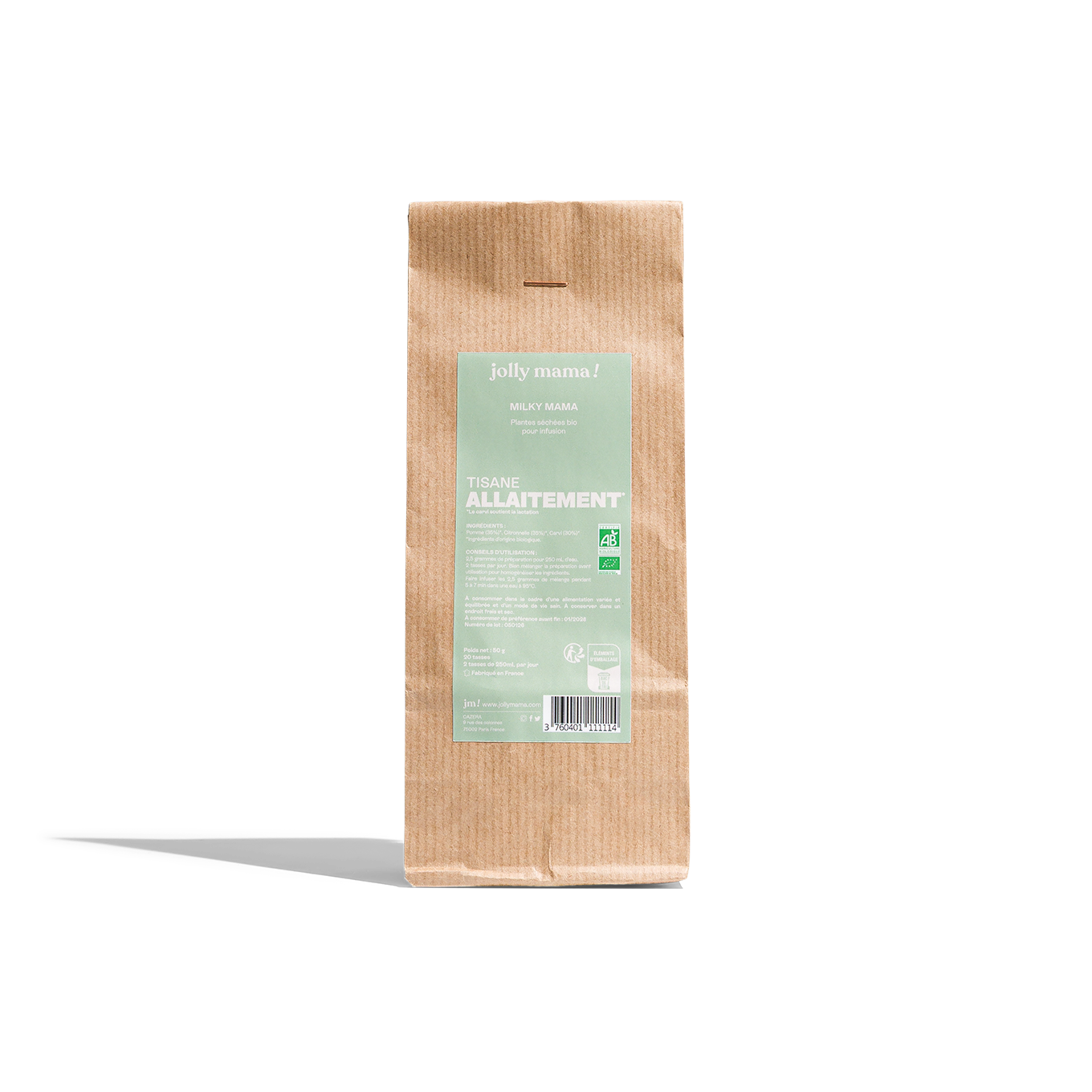
What is in Jolly Mama's Milky Mama infusion?
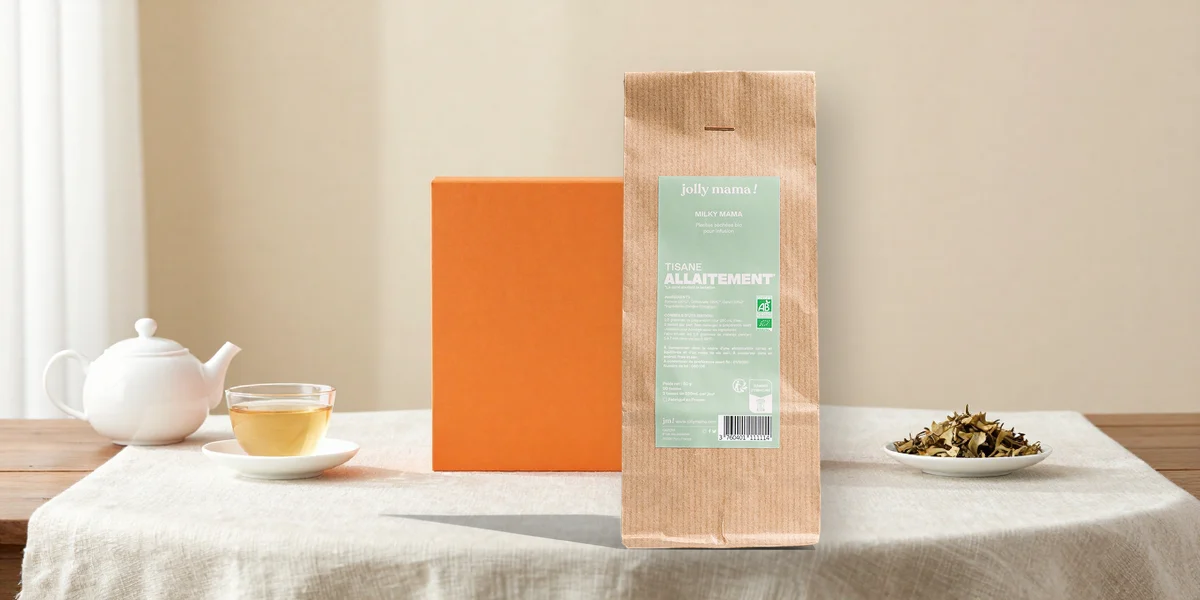
Three organic plants: apple (35%), lemongrass (35%) and caraway (30%). It contains no fennel or fenugreek, is meant to be drunk at two cups per day and costs €14 for 50 g.
Milky Mama, formerly Mama Time, is Jolly Mama's breastfeeding infusion. Its official product page, read on November 11, 2026, states:
- Ingredients: apple (35%), lemongrass (35%) and caraway (30%), all from organic farming, EU/non-EU agriculture origin.
- Format: 50 g pouch of loose tea, or 20 cups.
- Preparation: 2.5 g for 250 mL of water at 95 °C, steep for 5 to 7 minutes, without boiling the water. The brand also suggests a pitcher version: about 10 g for 1 liter, steeped hot, at room temperature or in the refrigerator.
- Recommended amount: 2 cups per day.
- Stated commitments: organic, vegan, gluten-free, fennel-free, and made in France according to the brand.
- Customer reviews: 4.4/5 from 136 reviews, on the brand's website.
The brand's precautions are clear: breastfeeding, yes; pregnancy, no. Jolly Mama specifies that its tea "is not suitable for pregnant women". Caraway belongs to the same botanical family as fennel, carrot and celery, the Apiaceae: if you have a known allergy to these plants, ask for advice before drinking it.
Caraway is a plant traditionally used during breastfeeding; the brand actually cites its LactMed entry, covered above. So choose Milky Mama for what it is: a gentle infusion with a light apple and lemongrass flavor, without fennel or fenugreek, to enjoy drinking while you breastfeed.
The pouch costs €14 for 20 cups, or €0.70 per cup; at two cups a day, it lasts about ten days. The code LMC15 gives you 15% off a one-time order, bringing the pouch to €11.90. You can learn more on the Milky Mama infusion product page, or order it through this link to Milky Mama (affiliate link: LMC earns a commission, at no extra cost to you).
Prefer a capsule? Jolly Mama also offers Moringa Mama (€20), made with organic moringa leaf and shatavari root powders, also free of fenugreek and fennel. The brand advises against it during pregnancy and recommends consulting a healthcare professional before any supplementation while breastfeeding. We go over the studies on this plant in our article on moringa and breastfeeding. In any case, don't combine several herbal products without talking to your midwife or lactation consultant.
How should you drink your breastfeeding tea day to day?
As one drink among others: at the dose stated on the product page, one herbal tea at a time, and always water according to your thirst.
- Stick to the dose on the product page: two cups per day for Milky Mama. More tea does not mean more milk.
- One herbal tea at a time, rather than several blends on the same day. It is the simplest way to avoid stacking plants.
- Read the ingredients of blends: besides fennel and green anise, star anise (badian) is also among the estragole-containing plants cited by the EMA.
- Watch your baby: if you notice an unusual change after starting a tea (redness, fussiness, digestive issues), stop it and talk to a healthcare professional.
- Mention your medications: diabetes, anticoagulants or any other long-term treatment, ask your doctor or pharmacist before drinking any herbal tea.
If fatigue is your main issue, see the other options in our article on vitamins, breastfeeding and fatigue.
Does raspberry leaf tea help with breastfeeding?
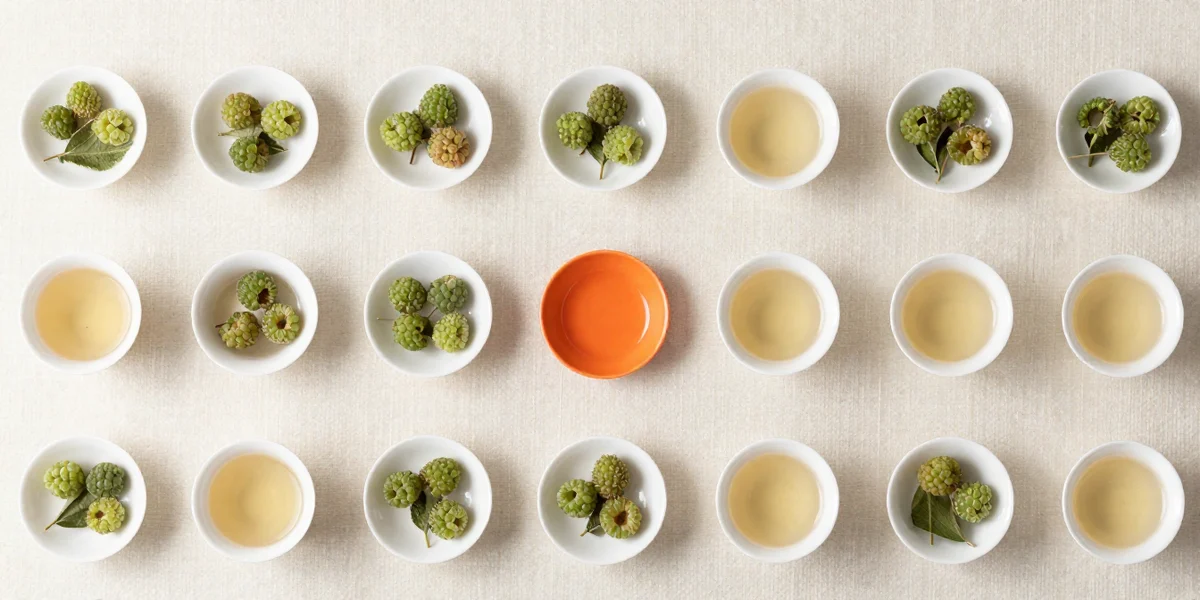
That is not what it is used for: raspberry leaf is traditionally drunk at the end of pregnancy, in preparation for childbirth. Studies are scarce and inconclusive, and whether to take it is a decision to make with your midwife.
The most cited trial followed 192 women expecting their first child. They took raspberry leaf tablets (1.2 g twice a day) or a placebo from 32 weeks (Simpson et al., 2001). No side effects were observed in the mother or baby. The first stage of labor was not shortened. The second stage was 9.6 minutes shorter on average, with fewer forceps deliveries, but with no significant link to birth outcomes; the authors themselves question the dose. These were tablets, not tea.
A 2021 review pooled thirteen studies, six of them in women: none showed any benefit or harm in humans, and the authors consider the evidence base weak (Bowman et al., 2021). A published case also describes hypoglycemia in a woman on insulin for gestational diabetes, after drinking raspberry leaf tea at 32 weeks (Cheang et al., 2016).
Jolly Mama sells a raspberry leaf infusion at €15 for a 50 g pouch, or 25 cups, made from 100% organic raspberry leaves grown in France. Its precautions: during pregnancy, "yes after the 32nd week or as recommended by your midwife", checking with your midwife before drinking it; no in case of gestational diabetes; yes during breastfeeding and postpartum. The brand recommends 1 to 3 cups per day. No available study links it to milk production: it is an end-of-pregnancy topic, not a breastfeeding one. For recovery after birth, see our comparison of postpartum supplements.
So, which breastfeeding tea should you choose?
A simple, organic tea without fennel or fenugreek, whose taste you enjoy and that you drink at the stated dose. It supports breastfeeding, without replacing frequent feeds or help from a professional.
A few criteria for sorting through labels:
- a complete ingredient list, with the percentage of each plant;
- no fennel, green anise or star anise if you want to limit estragole;
- clearly written precautions for breastfeeding and pregnancy;
- few active plants, and a taste you like.
Milky Mama ticks these boxes: three organic plants with their percentages listed, no fennel or fenugreek, and clear precautions. To learn more about the brand, its commitments and the rest of its range, read our Jolly Mama review.
Frequently asked questions
Can you drink a breastfeeding tea during pregnancy?
Not Milky Mama: the brand states that it is not suitable for pregnant women. For any herbal tea during pregnancy, ask your midwife or doctor for advice.
How many cups of breastfeeding tea should you drink per day?
The number stated on the product page: two cups per day for Milky Mama. The rest of your drinks can be water, according to your thirst.
Is fennel banned during breastfeeding?
No, it is not a ban but precautionary recommendations on fennel seeds and their preparations: teas, essential oils, supplements. EFSA does not consider preparations in which estragole is not detectable to be a risk.
Can you drink raspberry leaf tea while breastfeeding?
Jolly Mama states that it is compatible with breastfeeding and postpartum. No study shows any effect on breast milk: drink it for the taste, without expecting more.
Scientific references
- Drugs and Lactation Database (LactMed). Caraway. National Institute of Child Health and Human Development, 2026 revision. No quality clinical trial on lactation; well-tolerated plant, mainly digestive effects. See the source
- Drugs and Lactation Database (LactMed). Fennel. National Institute of Child Health and Human Development, 2026 revision. Limited evidence; two cases of toxicity in newborns after excessive maternal use of a combination tea; Apiaceae allergy. See the source
- Drugs and Lactation Database (LactMed). Fenugreek. National Institute of Child Health and Human Development, 2026 revision. Contradictory meta-analyses; digestive effects, cross-allergy, maple syrup odor, caution at high doses in case of diabetes. See the source
- Drugs and Lactation Database (LactMed). Anise. National Institute of Child Health and Human Development, 2026 revision. Small increase in volume on day 1, low certainty; contains anethole and estragole. See the source
- Drugs and Lactation Database (LactMed). Goat's Rue. National Institute of Child Health and Human Development, 2026 revision. No quality trial; risk of hypoglycemia. See the source
- Drugs and Lactation Database (LactMed). Stinging Nettle. National Institute of Child Health and Human Development, 2026 revision. Minimal scientific support; do not apply to the breast. See the source
- EMA, Committee on Herbal Medicinal Products. Public statement on the use of herbal medicinal products containing estragole, Rev 1 Corr 1. 2023. Use not recommended for pregnant or breastfeeding women above 0.05 mg of estragole per day. See the source
- EMA. Sweet fennel fruit, herbal medicine summary. No use during pregnancy or breastfeeding as a precaution, nor under age 4. See the source
- EFSA. Have your say: estragole in fennel seed preparations. 2025. Draft opinion: no safe exposure level established, possible risk for breastfed babies and fetuses. See the source
- ANSES. Opinion on a request for exemption from the warning for breastfeeding women concerning a dietary supplement containing fenugreek seed powder (request 2025-SA-0064). 2025. Safety not demonstrated for breastfeeding women and their babies. See the source
- Foong SC, Tan ML, Foong WC, Marasco LA, Ho JJ, Ong JH. Oral galactagogues (natural therapies or drugs) for increasing breast milk production in mothers of non-hospitalised term infants. Cochrane Database of Systematic Reviews, 2020. 41 trials, low to very low certainty. See the source
- Dusdieker LB, Booth BM, Stumbo PJ, Eichenberger JM. Effect of supplemental fluids on human milk production. Journal of Pediatrics, 1985. Drinking more did not change production; small sample. See the source
- Ndikom CM, Fawole B, Ilesanmi RE. Extra fluids for breastfeeding mothers for increasing milk production. Cochrane Database of Systematic Reviews, 2014. A single older study at high risk of bias. See the source
- Simpson M, Parsons M, Greenwood J, Wade K. Raspberry leaf in pregnancy: its safety and efficacy in labor. Journal of Midwifery and Women's Health, 2001. 192 women, tablets versus placebo: no effect on the first stage of labor. See the source
- Bowman R, Taylor J, Muggleton S, Davis D. Biophysical effects, safety and efficacy of raspberry leaf use in pregnancy: a systematic integrative review. BMC Complementary Medicine and Therapies, 2021. Weak evidence base. See the source
- Cheang KI, Nguyen TT, Karjane NW, Salley KES. Raspberry leaf and hypoglycemia in gestational diabetes mellitus. Obstetrics and Gynecology, 2016. Single case report. See the source
This article is for information only and does not replace the advice of a midwife, lactation consultant or doctor. The plants mentioned have no authorized health claim for breastfeeding. A herbal tea is not a substitute for a varied, balanced diet and a healthy lifestyle. During pregnancy, or if you are taking medication, ask for advice before drinking any herbal tea.

LMC content is written by our editorial team from the information published by the brands. Scores out of 10 follow a public grid of 5 criteria*, supplemented by LMC’s editorial assessment.
To support LMC, some links are affiliate links: LMC earns a commission at no extra cost to you, and some of the brands featured are partners. By using the site, you accept our terms of use and our editorial policy.