



Best postpartum supplement 2026: 5 formulas tested and analysed
After giving birth, the body goes through an intense recovery phase, often marked by nutritional gaps. This comparison reviews five postpartum supplements available in 2026, assessed against scientific criteria: how complete the formula is, bioavailability and value for money.


At LMC, a media outlet specializing in dietary supplements, we help consumers choose reliable brands through detailed reviews, comparisons, and product tests. After analyzing over 100 supplement brands, our team updates this ranking every month to reflect market changes. Our methodology is based on 7 key criteria*, designed to compare the quality, transparency, and actual value of each brand.
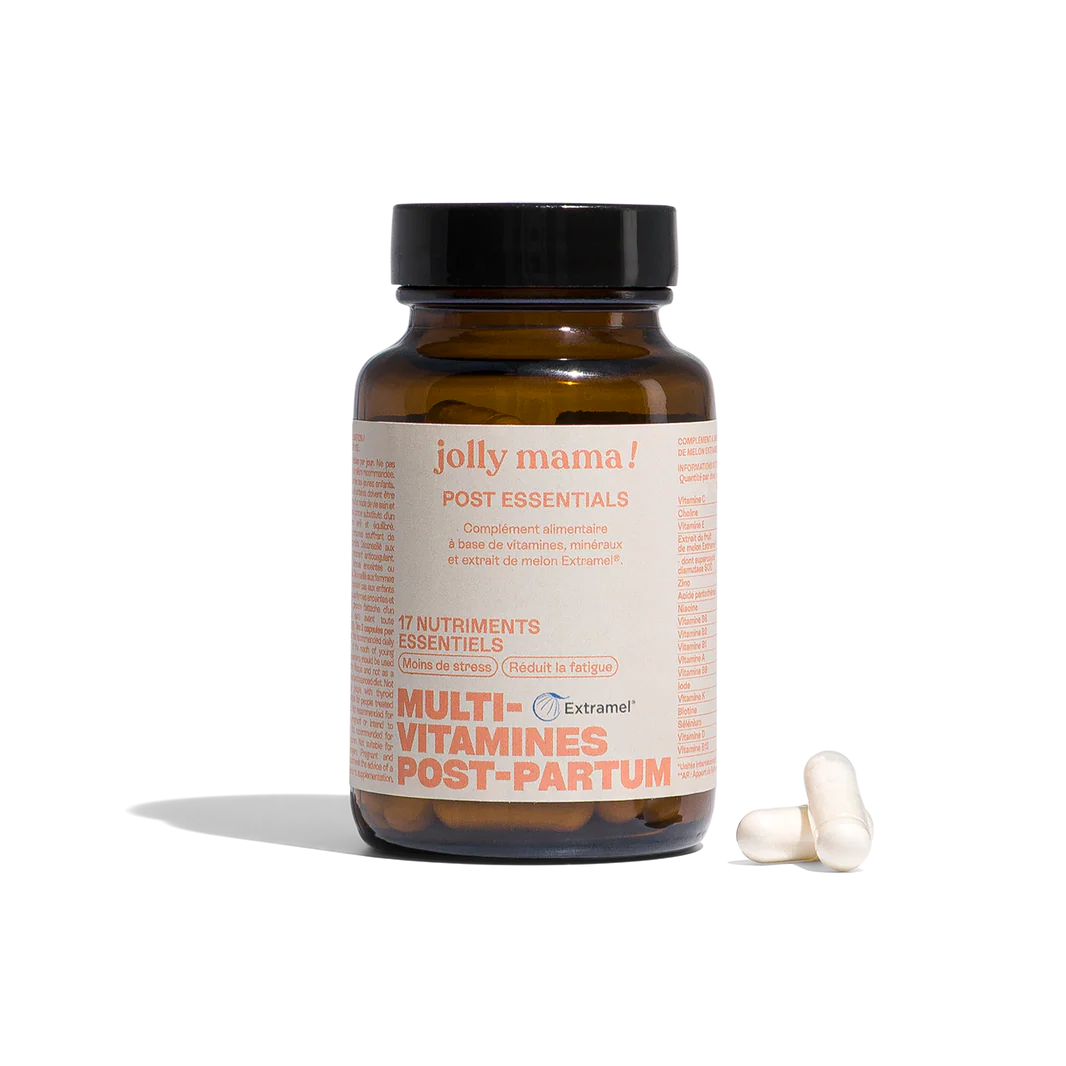



Post Essentials - Jolly Mama


Post Essentials - Jolly Mama
, with every formula co-developed alongside a scientific committee to meet the real needs of women at each stage of their journey.
The listing highlights a capsule format with Vitamins, minerals, choline, Extramel®.
In a comparison, this product stands out because its practical information is clear and easy to compare with other options. In terms of use, the listing indicates dosage: 2 capsules per day, time of intake: Daily, indicative duration: 30 days.
A good choice if you are looking for an option that fits this format and composition, without having to dig through a long page before grasping the essentials.
- 17 vitamins and minerals + Extramel® in 2 capsules/day, in patented, highly bioavailable forms
- Extramel®: patented active with clinically documented efficacy for reducing stress and fatigue
- Covers 100% or more of the daily intake of vitamin C, B9, D, K and iodine
- Vegan, gluten-free, made in France in a glass jar, breastfeeding-friendly
- 4.69/5 from 131 customer reviews, with very positive feedback on energy and postpartum well-being
- Recommended by healthcare professionals
- Not recommended for pregnant women or those trying to conceive due to the presence of vitamin A (retinol), requiring a different product depending on your stage of the journey
- Not recommended for people with thyroid disorders (contains iodine), although an alternative exists within the range
- Unit price (€33/month) is at the higher end, though justified by the quality and completeness of the formula


Moral Boost - Boome
Moral Boost - Boome
Moral Boost is a formula focused on mood, mental energy and emotional load.
It combines saffron, L-tyrosine, L-tryptophan and B vitamins, with a more mood- and mind-oriented positioning than a postpartum multivitamin.
In a comparison, it offers a useful alternative for mothers whose main need is mental load or emotional fatigue.
Worth a careful look: the brand notes significant restrictions, notably pregnancy and antidepressants.
- Saffron dosed at 30 mg, the dosage highlighted by the studies cited by the brand.
- A coherent trio of actives: saffron, L-tyrosine and L-tryptophan, rounded out by a plant-based B-vitamin complex.
- Clean formula: no controversial additives, solvent-free capsules made from tapioca fermentation.
- French manufacturing, traceability and independent random testing on finished products.
- Excellent customer reviews (4.9/5), particularly positive postpartum, and a breastfeeding-compatible formula.
- Free shipping only from €100 in France: shipping still applies when buying a single bottle.
- Several usage restrictions to be aware of: not recommended during pregnancy, for people on antidepressants, and prolonged use is not advised.
- Available only in capsules, with no alternative format (powder, liquid) for those who prefer another way of taking it.


After Bump - Talm
After Bump - Talm
After Bump is a postpartum formula designed to support recovery after childbirth and the variations of the cycle.
The formula combines marine magnesium, iron, zinc, L-tryptophan and B vitamins, with a simple intake of 2 capsules per day.
In a postpartum comparison, it stands out for its holistic angle: energy, balance and everyday support.
Worth a look if you are after a French alternative to Jolly Mama, compatible with breastfeeding according to the brand.
- Formula 98.2% of natural origin, vegan and compatible with breastfeeding
- Targeted, well-recognized actives: marine magnesium, iron, zinc, L-tryptophan and B vitamins
- Very positive customer reviews (4.7/5 across 19 reviews), notably on energy and mood
- Simple intake of 2 capsules per day, easy to fit into daily life
- Transparent composition, with detailed dosages for each ingredient
- Available online only, with no pharmacy distribution
- A minimum 3-month course is recommended, which is a budget to plan for
- 28-day bottle, slightly less than a full calendar month
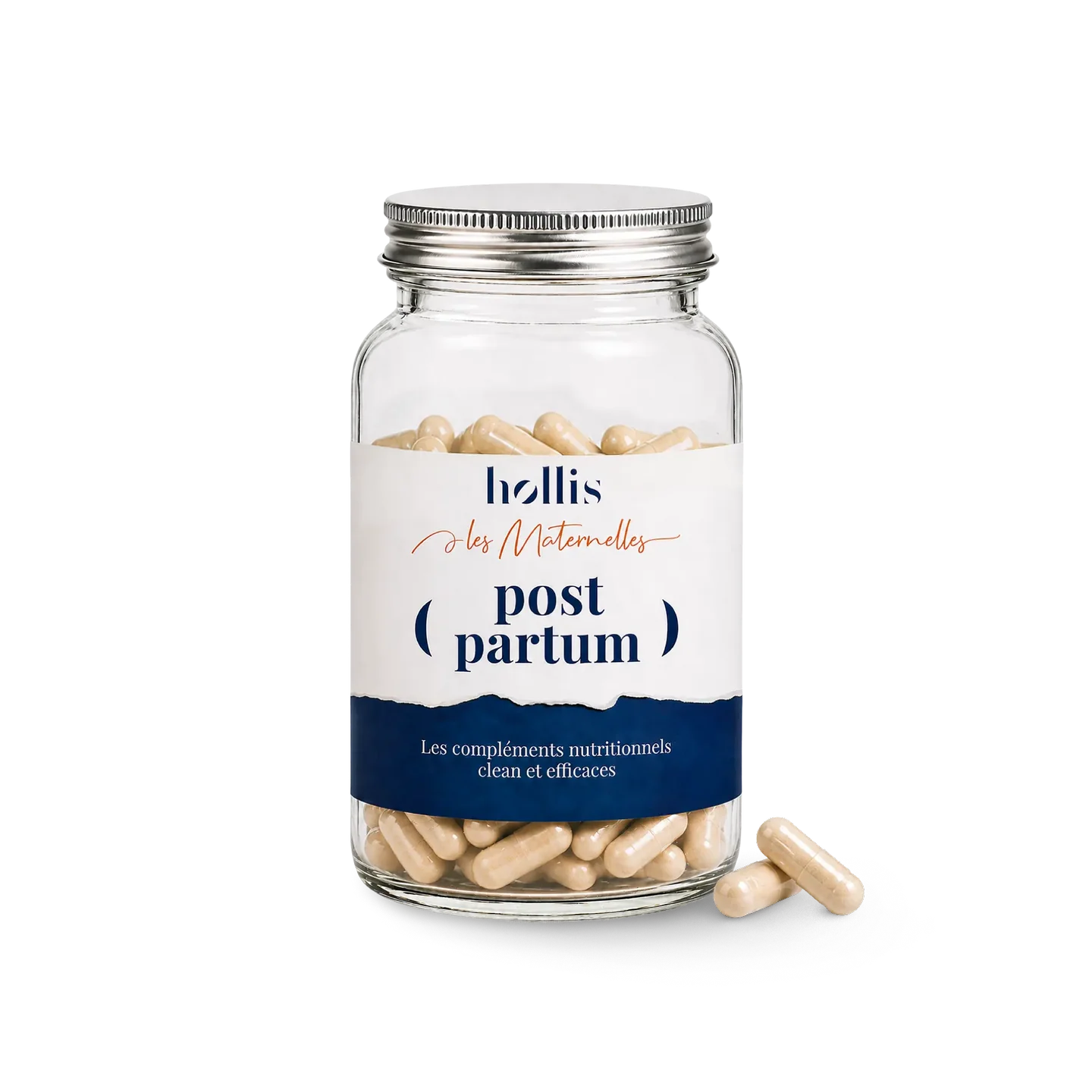

Post-Partum - Hollis
Post-Partum - Hollis
Hollis Post-Partum is a French formula designed for physical and emotional recovery after childbirth.
It combines iron, magnesium bisglycinate, B vitamins and amino acids, in a formula designed by a pharmacist according to the brand.
In a postpartum comparison, it positions itself as a serious and complete alternative to Jolly Mama.
Worth a look if you are after a multi-active formula compatible with breastfeeding according to Hollis.
- Complete, clean formula: iron and magnesium as bisglycinate, B vitamins in active form, targeted amino acids, free from chemical excipients.
- French manufacturing, ISO 22000 certified, formula designed by a pharmacist.
- Recommended by midwives and compatible with breastfeeding.
- Positive customer feedback: renewed energy, better mood and support with postpartum hair loss.
- Free delivery from the 2nd unit and a complete guide supplied with each product.
- A general-purpose postpartum formula, not specifically targeting the hair.
- The recommended course of 3 to 6 months means repurchasing several jars, so a budget to plan over time.
- Taking 3 capsules per day can be a constraint for people who are not keen on capsules.
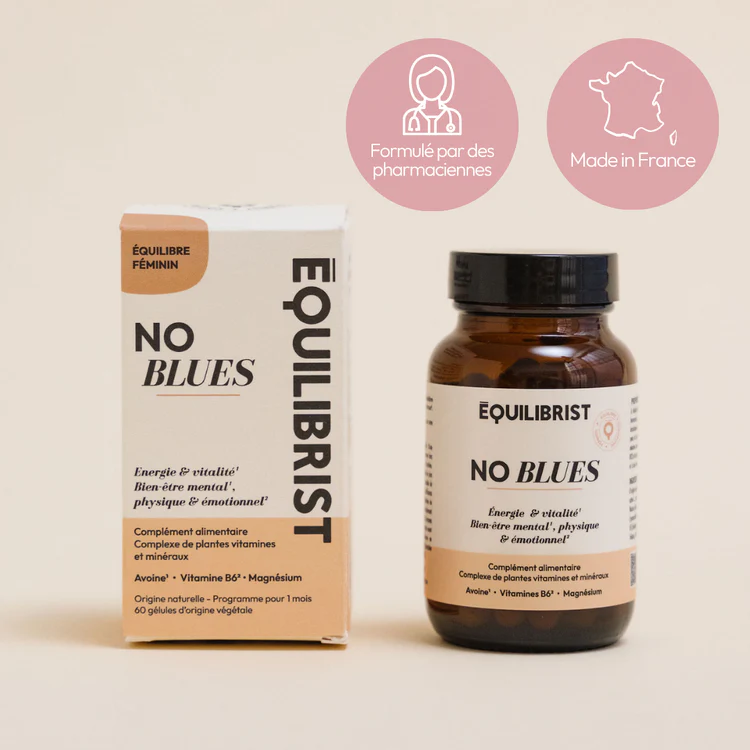

NO BLUES - Equilibrist
NO BLUES - Equilibrist
NO BLUES is a postpartum formula focused on mental energy, emotional load and everyday balance.
It combines L-tyrosine, magnesium, B vitamins and plants, with a more targeted mood positioning than a classic multivitamin.
In a comparison, its value is covering a facet that is often overlooked: mental fatigue, motivation and mental load after baby.
Worth a look if the priority is not only physical recovery, but also emotional balance.
- Standardized, precisely dosed formula (L-Tyrosine 350 mg, B vitamins at 100% of NRV)
- Compatible with breastfeeding and any type of contraception, a reassuring benefit
- 100% vegan capsules, free from GMOs, pesticides and major allergens
- Positive customer reviews (4.5/5 across 35 reviews), with energy and emotional balance often mentioned
- Discounts and free shipping on the 3- and 6-month packs, plus a network of partner pharmacies
- The single-unit price of €35 is considered a little high by some users
- Contains gluten due to oats, something to keep in mind for sensitive individuals
- Gradual results: deep rebalancing can take several months


Thé Matcha Cérémonie Bio 100 g - Amoseeds
Amoseeds, the French specialist in organic superfoods
Amoseeds is a French brand based in Belfort, specializing in organic seeds and superfoods. Its matchas are packed in France. The same company launched Nujimé, its sister brand dedicated to vitamins, minerals and targeted actives, which cannot obtain the organic label according to the brand. On the ceremonial matcha product page, 143 customers give an average rating of 4.88/5.
Organic Ceremonial Matcha Tea: first spring harvest, certified organic
A powder made of 100% organic matcha tea leaves, grown in Japan. The leaves are shaded for 15 to 30 days, picked with shears in spring, then ground with a ceramic millstone, according to the brand.
- Origin: Japan, very first spring harvest.
- Organic: certified by Ecocert France (FR-BIO-10).
- Preparation: 2 g in 100 ml of water at 80°C, whisked with a chasen.
- Format: 100 g pouch, about 50 cups of 2 g.
- Price: €37.99, i.e. €0.76 per cup; €34.20 with the code LMC (€0.68 per cup).
Who is it for? For those who drink their matcha plain, whisked, and want an organic ceremonial grade of Japanese origin without paying more than €1 per cup. Matcha contains caffeine: the brand advises not to drink it after 4 pm and to take it 2 to 3 hours before or after a medical treatment or a food supplement. If you are pregnant or breastfeeding, ask your doctor for advice.
- Leaves from the very first spring harvest, grown in Japan and hand-picked with shears, according to the brand.
- Certified organic: certifying body Ecocert France (code FR-BIO-10).
- 100% matcha tea leaf powder (Camellia sinensis), with no other ingredient.
- €0.76 per 2 g cup, €0.68 with the code LMC: €0.38 per gram of matcha.
- 4.88/5 from 143 customer reviews shown on the product page.
- No lab analysis published on the product page: quality relies on the organic certification and on the harvest information provided by the brand.
- No money-back guarantee: returns are accepted within 14 days, for an unused item in its original packaging.
Thé Matcha Cérémonie Bio 100 g - Amoseeds
Amoseeds, the French specialist in organic superfoods
Amoseeds is a French brand based in Belfort, specializing in organic seeds and superfoods. Its matchas are packed in France. The same company launched Nujimé, its sister brand dedicated to vitamins, minerals and targeted actives, which cannot obtain the organic label according to the brand. On the ceremonial matcha product page, 143 customers give an average rating of 4.88/5.
Organic Ceremonial Matcha Tea: first spring harvest, certified organic
A powder made of 100% organic matcha tea leaves, grown in Japan. The leaves are shaded for 15 to 30 days, picked with shears in spring, then ground with a ceramic millstone, according to the brand.
- Origin: Japan, very first spring harvest.
- Organic: certified by Ecocert France (FR-BIO-10).
- Preparation: 2 g in 100 ml of water at 80°C, whisked with a chasen.
- Format: 100 g pouch, about 50 cups of 2 g.
- Price: €37.99, i.e. €0.76 per cup; €34.20 with the code LMC (€0.68 per cup).
Who is it for? For those who drink their matcha plain, whisked, and want an organic ceremonial grade of Japanese origin without paying more than €1 per cup. Matcha contains caffeine: the brand advises not to drink it after 4 pm and to take it 2 to 3 hours before or after a medical treatment or a food supplement. If you are pregnant or breastfeeding, ask your doctor for advice.
- Leaves from the very first spring harvest, grown in Japan and hand-picked with shears, according to the brand.
- Certified organic: certifying body Ecocert France (code FR-BIO-10).
- 100% matcha tea leaf powder (Camellia sinensis), with no other ingredient.
- €0.76 per 2 g cup, €0.68 with the code LMC: €0.38 per gram of matcha.
- 4.88/5 from 143 customer reviews shown on the product page.
- No lab analysis published on the product page: quality relies on the organic certification and on the harvest information provided by the brand.
- No money-back guarantee: returns are accepted within 14 days, for an unused item in its original packaging.
Thé Matcha Cérémonie Bio 100 g - Amoseeds
Amoseeds, the French specialist in organic superfoods
Amoseeds is a French brand based in Belfort, specializing in organic seeds and superfoods. Its matchas are packed in France. The same company launched Nujimé, its sister brand dedicated to vitamins, minerals and targeted actives, which cannot obtain the organic label according to the brand. On the ceremonial matcha product page, 143 customers give an average rating of 4.88/5.
Organic Ceremonial Matcha Tea: first spring harvest, certified organic
A powder made of 100% organic matcha tea leaves, grown in Japan. The leaves are shaded for 15 to 30 days, picked with shears in spring, then ground with a ceramic millstone, according to the brand.
- Origin: Japan, very first spring harvest.
- Organic: certified by Ecocert France (FR-BIO-10).
- Preparation: 2 g in 100 ml of water at 80°C, whisked with a chasen.
- Format: 100 g pouch, about 50 cups of 2 g.
- Price: €37.99, i.e. €0.76 per cup; €34.20 with the code LMC (€0.68 per cup).
Who is it for? For those who drink their matcha plain, whisked, and want an organic ceremonial grade of Japanese origin without paying more than €1 per cup. Matcha contains caffeine: the brand advises not to drink it after 4 pm and to take it 2 to 3 hours before or after a medical treatment or a food supplement. If you are pregnant or breastfeeding, ask your doctor for advice.
- Leaves from the very first spring harvest, grown in Japan and hand-picked with shears, according to the brand.
- Certified organic: certifying body Ecocert France (code FR-BIO-10).
- 100% matcha tea leaf powder (Camellia sinensis), with no other ingredient.
- €0.76 per 2 g cup, €0.68 with the code LMC: €0.38 per gram of matcha.
- 4.88/5 from 143 customer reviews shown on the product page.
- No lab analysis published on the product page: quality relies on the organic certification and on the harvest information provided by the brand.
- No money-back guarantee: returns are accepted within 14 days, for an unused item in its original packaging.
Analysis of composition, dosages, active ingredients, and brand transparency.
Comparison of the actual price based on dosage, quantity, and duration of use.
Analysis of consumer feedback and overall satisfaction.
Exclusive discounts when the brand offers a partner deal.
After giving birth, the body enters an intense recovery phase. The nutritional gaps built up during pregnancy, combined with the physiological demands of breastfeeding, leave many women short of iron, zinc, vitamin B12 and B9, iodine, selenium, as well as omega 3 such as DHA [1]. Yet the range of food supplements formulated specifically for the postpartum period is still too limited or poorly dosed. This comparison reviews five products available in 2026, based on objective scientific criteria: how complete the formula is, compliance with recommended daily intakes (RDI), bioactive forms, patented ingredients and value for money.
Why are postpartum nutritional needs so specific?
The postpartum period is often underestimated from a nutritional point of view. Yet the recommendations from ANSES and EFSA are clear: several micronutrients remain critical after birth, especially while breastfeeding [2][3].
Pregnancy and childbirth draw heavily on the body's reserves.
Shortfalls are frequently seen in:
- Vitamin D: around 80 % of women in France have insufficient vitamin D according to national nutrition data [4]. EFSA recognises that vitamin D contributes to the maintenance of normal muscle function, to the functioning of the immune system and to calcium absorption [5].
- Iron: blood loss during delivery can worsen pre existing anaemia. Iron contributes to the reduction of tiredness and supports energy production [5].
- Iodine: essential for thyroid function and for the baby's neurological development [2][6].
- Vitamin B9 (folates): needs stay high while breastfeeding [2]. EFSA recognises the contribution of folates to amino acid synthesis and to the reduction of tiredness [5].
- Choline: a nutrient that is often forgotten, yet crucial for the baby's brain development through breast milk [7].
- Zinc: involved in protein synthesis, in the functioning of the immune system and in the health of skin and hair [5].
How we assessed the products in this comparison
To rank these five products rigorously, we used the following criteria:
- Number and relevance of the nutrients included
- Compliance with RDIs or with doses established in the scientific literature
- Quality of the forms used (bioactive forms vs basic forms)
- Presence of patented ingredients backed by clinical studies
- Price for a one month course
- Daily dosage (how easy it is to stick with)
Detailed ranking of the 5 best postpartum supplements
#1 Post Essentials by Jolly Mama: the most complete postpartum formula on the market
Post Essentials clearly stands apart from the other products analysed by the scope and the quality of its formula. With 17 vitamins and minerals covering the main needs identified after birth, it is currently the most complete formula available in France.
A formula built on solid scientific foundations
Every nutrient is present at doses consistent with the recommendations: 100 % of the RDI for zinc, vitamins C, B, E, K2 and iodine, and 400 % for vitamin D, which makes sense given how widespread vitamin D insufficiency is in France [4]. All the nutrients come in bioactive forms, meaning they can be used directly by the body without prior conversion in the liver. That is a concrete advantage, especially for women carrying the MTHFR variant, who struggle to convert folic acid into active 5-MTHF [8].
Three patented ingredients that go further
What really sets Post Essentials apart is the inclusion of several patented actives:
- Extramel®: a melon extract rich in superoxide dismutase (SOD), an antioxidant enzyme. Several clinical studies have shown its effect on reducing perceived stress and improving general wellbeing [9][10].
- Quatrefolic®: the most bioavailable form of folate (5-MTHF glucosamine), recommended in particular for women carrying the MTHFR polymorphism [8].
- Vitacholine®: a highly bioavailable form of choline, an essential nutrient for the baby's cognitive development through breast milk [7].
And finally vitamin K2 MK7 K2VITAL®, the form best absorbed by the body, which works in synergy with vitamin D3 for calcium metabolism.
Competitive value for money
At 33 €/month for 2 capsules a day, Post Essentials offers the best ratio between nutritional density and price among the five products tested.
For women looking for a postpartum supplement genuinely suited to their specific needs, Post Essentials by Jolly Mama is a serious, scientifically backed option.
#2 Boome: a wellbeing focused formula, but incomplete nutritionally
Boome positions itself as a postpartum wellbeing supplement. Its formula includes saffron, tyrosine and tryptophan, and saffron does have a clinical study showing a positive effect on mood [11]. That is a genuine plus worth pointing out.
On the other hand, with only 8 nutrients, all from the B vitamin group, Boome does not cover the best documented postpartum shortfalls: no vitamin D, no iodine, no zinc, no choline. Several of the B vitamin doses also fall below 100 % of the RDI.
At 36 €/month, it is the most expensive product in this comparison, for limited nutritional coverage. It can work alongside another product, but not as a main postpartum formula.
#3 Hollis: a decent base, but gaps on forms and doses
Hollis offers a mid range formula with 12 nutrients, including bioactive forms for some of them, which is a positive point. Vitamin D is dosed at 300 % of the RDI, and vitamins C and B reach 100 % of the RDI.
The limits are notable though: no patented ingredients, no clinical study on wellbeing at these precise doses, and a dosage of 3 capsules a day that can get in the way of sticking with it over several months. Iodine is missing from the formula and choline is present at a very low dose, which is a blind spot for women who are breastfeeding.
At 30,90 €/month, Hollis stays in a reasonable price range, but the formula is still incomplete when it comes to covering all postpartum needs.
#4 Equilibrist No Blues: focused on mood, without real postpartum nutritional coverage
Equilibrist No Blues includes actives such as blackcurrant, oat and tyrosine, but with only 9 nutrients, including B vitamins at 100 % of the RDI, the formula remains very partial. No clinical study is available at these doses to document an effect on wellbeing.
The forms used (folic acid, cyanocobalamin) are basic forms, less bioavailable than methylated or bioactive versions [12]. At 35 €/month, the price positioning is not justified by the quality of the formulation.
#5 Talm After Bump: the most affordable product, but the least complete
Talm After Bump is the cheapest in this comparison at 30 €/month, but it is also the product with the most problematic formulation. With only 8 nutrients, vitamin D doses of 5 µg (well below real needs), and low quality forms such as zinc oxide, magnesium oxide or folic acid, this product does not meet the standards expected of a postpartum supplement.
Zinc is also under dosed, and no clinical study backs up the wellbeing benefits at these doses. Talm After Bump can work as a top up supplement, but it cannot be recommended as a main postpartum formula.
A good postpartum food supplement is not necessarily the most expensive one. What counts is a transparent composition and well chosen forms, so that it is genuinely useful to your body during this demanding period.
Whichever channel you go for, a few points are worth checking before you buy: the forms of the vitamins and minerals, the presence of the key nutrients (vitamin D, iodine, active folates, zinc, DHA), a mention of suitability for breastfeeding if needed, and a daily dosage consistent with reference intakes.
Online, the choice is wider and prices are often more competitive. Brand websites and specialist platforms let you compare compositions, read reviews and order from home. This is generally where you find the most complete formulas, with bioactive forms and actives specific to the postpartum period.
In a pharmacy, the advantage is the pharmacist's tailored advice. They can point you in the right direction based on your profile (breastfeeding, current medication, medical history), check for any interactions and confirm your choice. Some specialist brands are available over the counter, even if the selection is sometimes narrower than online.
There are two main channels for finding a postpartum supplement suited to your situation.
Pharmacy or online: where to buy your postpartum supplement?
A postpartum food supplement containing these actives can be part of a nutritional support approach during this phase. It does not replace a medical check up if hair loss is heavy or prolonged, but it does provide an intake consistent with the specific needs of this period.
Postpartum hair loss, often called telogen effluvium, is a common phenomenon linked to hormonal fluctuations after birth. It usually starts between two and four months after delivery and lasts a few months. Some nutrients play a role in the maintenance of normal hair: zinc, selenium, biotin, iron and B group vitamins are among the best documented on this subject.
Hair loss after giving birth: what supplements can bring
Vitamin D deserves particular attention: even with a careful diet, natural intake is often not enough to cover the needs of a breastfeeding mother. That is one of the reasons why many healthcare professionals mention this supplementation during the postnatal period.
While breastfeeding, some micronutrients pass into breast milk, which increases the mother's needs. Vitamin D, iodine, choline and vitamin B12 are among those whose recommended intakes are higher than outside breastfeeding. A suitable postpartum food supplement can help cover these increased needs, alongside a varied and balanced diet.
Breastfeeding: why needs increase
After giving birth, nutritional needs stay high for several months, particularly if you are breastfeeding. People often talk about postpartum vitamins in generic terms, but a well formulated postpartum food supplement goes well beyond a simple classic multivitamin: it takes into account the specifics of this period, the needs linked to breastfeeding and the shortfalls frequently seen in new mothers.
Postpartum vitamins and food supplements: what to know before you buy
How to choose your postpartum supplement
The questions to ask yourself before buying
Are you breastfeeding? If so, needs for iodine, choline and vitamin D in particular are higher. Go for a formula suited to breastfeeding.
Do you carry an MTHFR variant? Look for a product containing 5-MTHF (Quatrefolic®) rather than folic acid.
Are you looking for support on mood and tiredness? Ingredients with clinical data (Extramel®, saffron) bring an extra guarantee.
Common mistakes to avoid
Choosing a supplement on price alone without checking the actual doses. Trusting long ingredient lists without checking whether the doses reach the RDIs. Ignoring the quality of the forms used: folic acid is not the same as 5-MTHF, cyanocobalamin is not the same as methylcobalamin. Stopping supplementation too soon: the recommendations advise keeping supplementation going for the whole duration of breastfeeding.
In conclusion
In 2026, the postpartum supplement market has grown, but the quality gaps between formulas are still considerable. Post Essentials by Jolly Mama stands out with its complete 17 nutrient formula, the use of exclusively bioactive forms, three patented actives whose effectiveness is supported by clinical studies, and a price consistent with the level of formulation on offer. The other products analysed can add specific value (saffron with Boome, partial bioactive forms with Hollis), but none covers the full range of postpartum nutritional needs with the same rigour.
If you are in the weeks or months following your delivery, and particularly if you are breastfeeding, suitable and properly dosed supplementation is not a luxury. It is plain nutritional common sense, for you and for your baby.
Sources
[1] Dr Oscar Serrallach. The Postnatal Depletion Cure: A Complete Guide to Rebuilding Your Health and Reclaiming Your Energy for Mothers of Newborns, Toddlers and Young Children.
[2] ANSES. Avis relatif à l'actualisation des repères nutritionnels pour les femmes enceintes et allaitantes. 2019. Available at: www.anses.fr
[3] EFSA NDA Panel. Scientific Opinion on Dietary Reference Values for the EU. EFSA Journal. 2017.
[4] Vernay M et al. Vitamin D status in the French adult population: the French Nutrition and Health Survey (ENNS, 2006-2007). Br J Nutr. 2012;107(12):1756-1764.
[5] Commission Regulation (EU) No 432/2012 of 16 May 2012 establishing a list of permitted health claims. Official Journal of the European Union.
[6] WHO. Iodine supplementation in pregnant and lactating women.
[7] Derbyshire, E. J. Choline in Pregnancy and Lactation: Essential Knowledge for Clinical Practice. Nutrients 17, 1558 (2025).
[8] Henderson, A. M. et al. l-5-Methyltetrahydrofolate Supplementation Increases Blood Folate Concentrations to a Greater Extent than Folic Acid Supplementation in Malaysian Women. J Nutr 148, 885-890 (2018).
[9] Milesi MA et al. Effect of an oral supplementation with a proprietary melon juice concentrate (Extramel) on stress and fatigue in healthy people: a pilot, double-blind, placebo-controlled clinical trial. Nutr J. 2009;8:40.
[10] Carillon J et al. Dietary supplementation with a superoxide dismutase-melon concentrate reduces stress, physical and mental fatigue in healthy people: a randomised, double-blind, placebo-controlled trial. Nutrients. 2014;6(6):2348-2359.
[11] Tabeshpour, J. et al. A double-blind, randomized, placebo-controlled trial of saffron stigma (Crocus sativus L.) in mothers suffering from mild-to-moderate postpartum depression. Phytomedicine 36, 145-152 (2017).
[12] Scaglione F, Panzavolta G. Folate, folic acid and 5-methyltetrahydrofolate are not the same thing. Xenobiotica. 2014;44(5):480-488.
FAQs❓
The 6 most frequently asked questions from consumers:
In this comparison, Post Essentials by Jolly Mama comes first. Its formula combines bioactive forms, patented actives and broad coverage of postpartum nutritional needs, which gives it consistent value for money next to the other products tested.
The vitamins and nutrients watched most closely after birth are vitamin D, vitamin B12, active folates (5-MTHF), iodine, choline, zinc, selenium, iron and omega 3 such as DHA. While breastfeeding, these needs increase, because several of these nutrients pass into breast milk.
Yes, some specialist brands are available in pharmacies, with the advantage of tailored advice from the pharmacist. The choice there is often narrower than online, where you will find more complete formulas with bioactive forms better suited to the specific needs of the postpartum period.
Hair loss after birth is mainly linked to hormonal fluctuations. Some nutrients such as zinc, selenium, biotin, iron and B group vitamins contribute to the maintenance of normal hair. A postpartum food supplement covering those intakes can provide nutritional support during this period, without replacing medical advice in case of heavy or prolonged hair loss.
Bioactive forms, such as 5-MTHF for folates or methylcobalamin for vitamin B12, are generally more directly usable by the body than their basic equivalents. That is particularly relevant after giving birth, a period when nutritional needs are high and good nutrient absorption makes the difference.
The ideal duration depends on your situation: breastfeeding, the results of any blood tests, how tired you feel and your everyday diet. Many needs stay high for several months after the birth, especially with prolonged breastfeeding. A healthcare professional can guide you on the duration that suits your case.
The 7 key criteria of our editorial staff
Every piece of content published on LMC is carefully written by engaged specialists following a rigorous process. LMC is committed to delivering information that is reliable, useful, and genuinely easy to read.
Specialized and involved writers


Rigorous research for each piece of information
Full transparency on sources

Taking into account your real needs

.webp)

.avif)
