




Moringa, a natural galactagogue: what does the science say?
Moringa (Moringa oleifera) is a tropical tree whose leaves pack an impressive nutritional density. In the field of moringa and breastfeeding, it is classed among the galactagogues, those substances thought to support milk production.
The proposed mechanism rests on prolactin, the hormone that conducts lactation. Traditionally used to support breastfeeding, moringa may, according to some studies, help milk production, although the evidence is not definitively settled.
Several pieces of research back this idea without turning it into a certainty:
- Trials run in the Philippines and Indonesia report a rise in milk volume among supplemented mothers.
- A randomised double-blind placebo-controlled study published in 2021 observed significantly higher milk production.
- Traditions in South-East Asia and sub-Saharan Africa have used the plant for generations.
These plants also need to be put back into the hierarchy of lactation. The main driver of milk production is still demand, meaning how often and how effectively the baby feeds or the pump is used. A galactagogue such as moringa comes second, supporting breastfeeding that is already well managed, never making up for feeds that are too infrequent.
A word of honesty is needed. These studies often involve small numbers of participants, in a specific hospital setting. Generalising those figures to every European mother would be a stretch. Moringa is a useful support, not a mechanical guarantee of abundant milk.
The benefits of moringa while breastfeeding: beyond milk supply
Reducing this plant to its effect on milk would be a mistake. One of the real benefits of moringa while breastfeeding lies in its nutritional richness, valuable for a mother whose reserves are under strain.
Moringa leaf delivers a dense mix of micronutrients:
- Iron, useful against fatigue and the deficiency often seen after birth.
- Calcium, which supports the bone capital called on during breastfeeding.
- Vitamins A, C and K, along with plant proteins.
- Antioxidant compounds that help counter oxidative stress.
This profile explains why moringa is often presented as all-round postnatal support, and not just a way to boost milk coming in. A better-nourished mother recovers better, which indirectly benefits the quality of her breastfeeding.
That density explains its superfood reputation. Dried leaves are among the most concentrated plant sources of certain micronutrients, which makes them a handy backup when appetite or time to cook are missing, a common reality with a newborn.
Be careful not to confuse the levels, though. At the doses found in a food supplement, moringa complements the diet, it does not replace it. A varied plate remains the foundation, with the plant stepping in to support targeted needs.

Moringa and breastfeeding: what dosage and in what form?
The question of moringa dosage while breastfeeding comes up again and again, because the plant exists in several formats with widely varying strengths. The right reflex is to follow the label of the product you choose and the advice of a professional.
Two formats dominate the market:
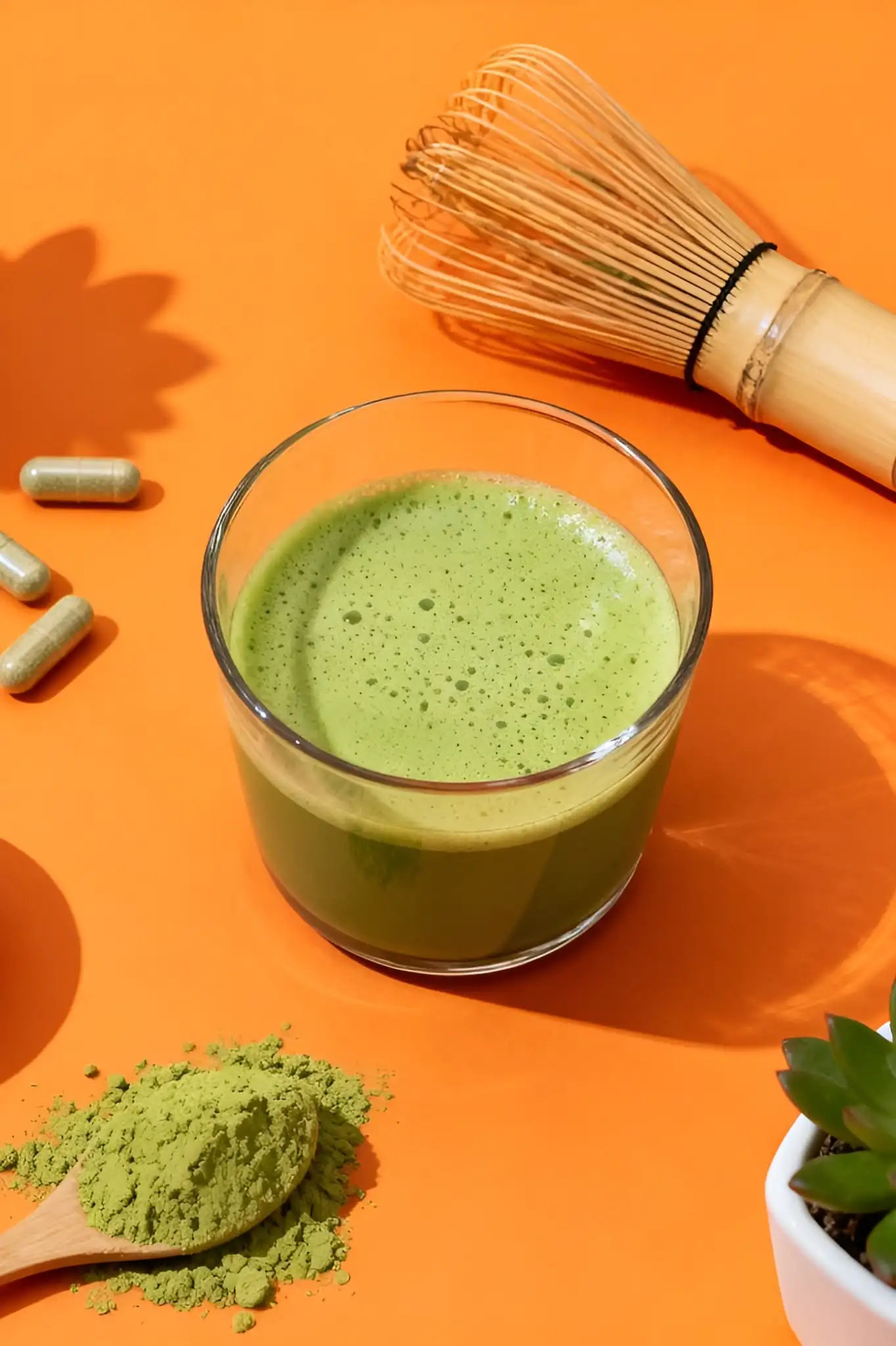
- There is moringa powder for breastfeeding, to be stirred into a smoothie, a yoghurt or a hot drink.
- And there is moringa in capsules for breastfeeding, more convenient and precisely dosed, ideal for regular use.
In capsule form, breastfeeding formulas usually sit around 350 to 700 mg of leaf per serving, spread across the day. Powder offers more flexibility, but also more imprecision, with a pronounced vegetal taste that does not suit everyone.
On timing, it is better to split the intake, for example one portion in the morning and one at the end of the day, for a steady supply. Starting at the low dose and then adjusting according to tolerance remains the most sensible approach.
When should you start? Moringa is generally begun once breastfeeding is up and running, in the first few weeks, rather than before the birth. The course is worth planning over several weeks, long enough to judge the effect, with breaks if needed. Hydration also plays a central role: drinking enough is inseparable from any attempt to support milk supply.
| Criterion | Capsules | Powder |
|---|---|---|
| Dosage accuracy | ✅ Exact dose per capsule | ❌ Varies with the spoonful |
| Day-to-day convenience | ✅ Quick to take, easy on the go | ❌ Needs preparing |
| Taste | ✅ Neutral, no bitterness | ❌ Green and fairly strong |
| Ease of adjustment | ❌ Fixed step per capsule | ✅ Dose fine-tuned as you like |
How to fit moringa into your breastfeeding routine
Beyond the dose, consistency makes all the difference. Moringa gives its best when it fits into a simple routine, easy to keep up through the hectic weeks after birth.
A few practical ideas so you do not forget to take it:
- Tie the capsule to a fixed point in the day, such as breakfast and dinner.
- Stir the powder into a smoothie, a porridge or a warm soup, never boiling, to protect the nutrients.
- Keep the tub in sight, next to the kettle or the feeding corner.
This framework goes hand in hand with the basics: feeding on demand, drinking enough and resting as much as possible. The supplement supports that foundation, it does not replace it. It is that combination, and not the plant on its own, that settles comfortable breastfeeding. 💡
Moringa and breastfeeding: what dangers and precautions?
Natural does not mean risk-free. Talking about a possible danger of moringa while breastfeeding is not scaremongering, it is simply common sense when you are feeding an infant. A few rules cut the risks down sharply.
The first one concerns the part of the plant used:
- The leaf is the part that has been studied and the best tolerated while breastfeeding.
- The root and the bark contain potentially problematic compounds and are best avoided.
The real danger of moringa while breastfeeding often comes from the quality of the product, not from the plant itself. Poorly grown moringa can concentrate contaminants (heavy metals, pesticides). Choosing a traceable origin and an organic certification cuts that risk down considerably.
For moringa in breastfeeding women, care is also needed around interactions:
- Caution if you are on thyroid or diabetes treatment, or taking anticoagulants.
- Moringa can lower blood sugar, an effect to watch in anyone concerned.
- In case of doubt, medical history or ongoing treatment, the advice of your doctor or midwife always comes first.
One point deserves clarifying: what applies to breastfeeding does not apply to pregnancy. During pregnancy, moringa root and certain extracts are clearly advised against because of a potential contraction-inducing effect. While breastfeeding, the leaf remains the reference, but that nuance is a reminder that a plant does not hold the same status at every stage of motherhood.
Caution doubles with a very young, premature or fragile infant. In those situations, no plant should be introduced without the approval of the paediatrician or a lactation consultant, who are better placed to weigh the benefit-risk balance case by case.
Finally, stay tuned in to your baby. Any unusual digestive or skin change after starting a supplement justifies a pause and professional advice. The golden rule remains moderation and quality, never pushing the dose ever higher.

Moringa and breastfeeding: reviews from mothers
Beyond the theory, reviews of moringa while breastfeeding point to a fairly consistent trend. Many mothers describe a positive experience, usually gradual rather than spectacular.
The most frequent feedback mentions:
- A sense of better milk supply after a few days to two weeks of regular use.
- A boost in energy, welcome in the tiredness of the postnatal period.
- Good digestive tolerance, especially with measured capsule forms.
Other accounts are more measured, with little noticeable effect. That makes sense: the response depends on your own body, your hydration, how often the baby feeds and how much you sleep. Moringa acts as one support among others, never as a magic switch. 🤱
One piece of advice runs through all this feedback: give it time. Judging a galactagogue over two or three days often leads to unwarranted disappointment. One to two weeks of regular use gives a far more reliable read on the real effect on your milk supply.
What do the most satisfied reviews have in common? Consistency and a quality product, combined with frequent feeds, the real driver of milk production.
Choosing the right breastfeeding food supplement
The breastfeeding food supplement market is vast, and not all formulas are equal. A few simple criteria help you sort through them without being won over by the packaging alone.
Before buying, check these points:
- A base of organic moringa leaf, with a clear origin and dosage.
- A formula designed for lactation, sometimes enriched with other galactagogue plants.
- No superfluous additives, a genuine mark of seriousness.
One last habit is to read the label carefully. A good supplement states the exact amount of moringa leaf per serving, the part of the plant used and the origin of the ingredients. Conversely, a vague formula that mentions an extract without specifying dose or source invites suspicion, especially for a product meant for a breastfeeding woman.
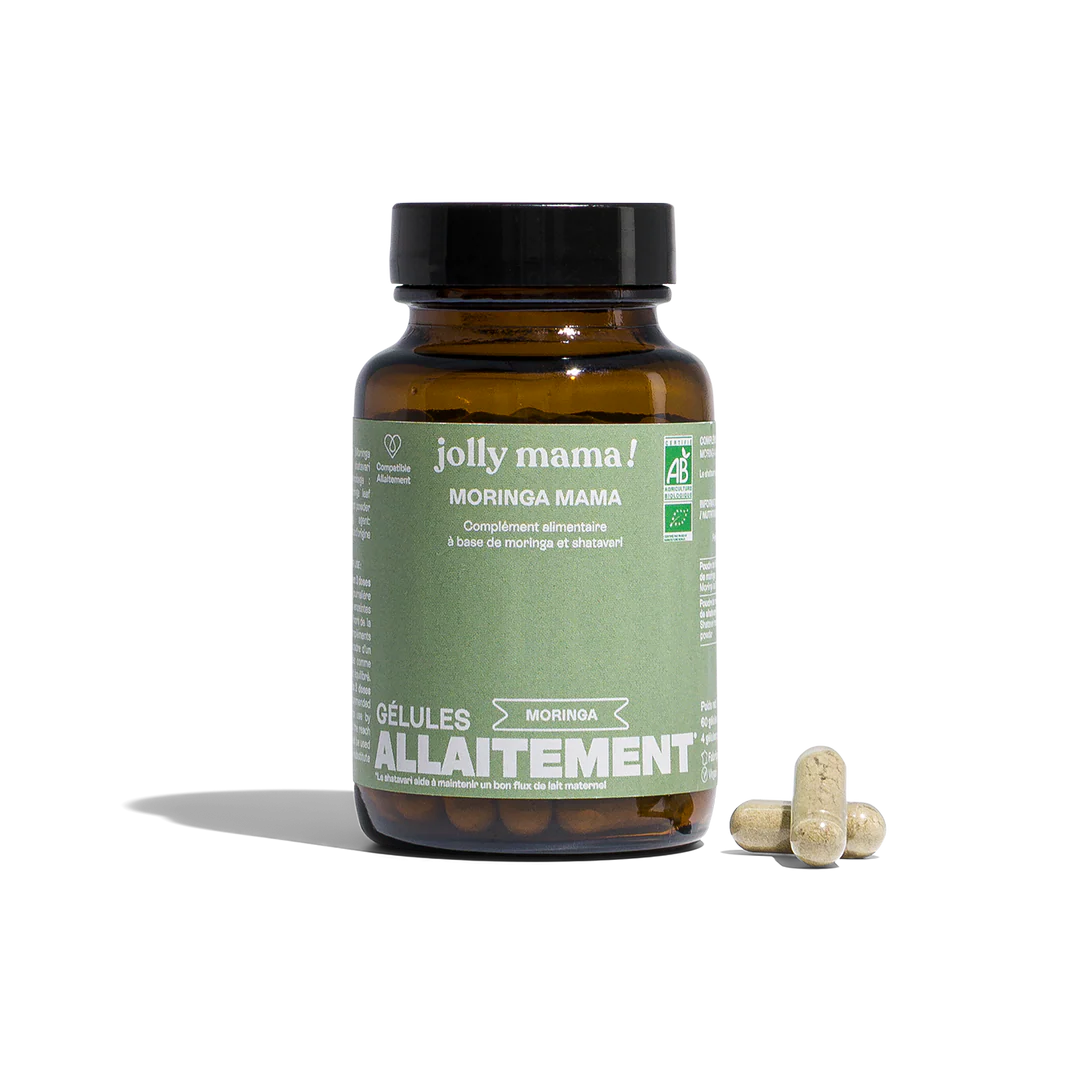
Some brands specialising in motherhood go further by pairing moringa with other targeted actives. The Moringa Mama by Jolly Mama, for example, combines 350 mg of organic moringa with shatavari, a plant traditionally used to support a good flow of milk, all vegan and free from additives.
This pairing logic reflects a deeper trend: no longer setting moringa against classic breastfeeding vitamins, but thinking in terms of coherent support. A base of postnatal multivitamins can in fact complement a plant-based lactation food supplement, depending on each mother's needs.
Price is not everything, but it tells you something. Traceable organic leaf and careful manufacturing come at a cost, whereas very cheap moringa sometimes hides uncertain quality. On a product meant for a breastfeeding mother, brand transparency is worth more than saving a few euros.
To compare ranges, formulations and user feedback, read our full Jolly Mama review. 🌿
Conclusion
Moringa is a credible ally for breastfeeding: a nutrient-dense plant with galactagogue potential backed by several studies, but with no miracle promise. The key comes down to three habits: choose organic leaf, stick to a sensible dosage and ask for medical advice at the slightest doubt. Used with judgement, alongside regular feeding and good hydration, this plant fully earns its place in a well-thought-out postnatal routine, serving your comfort and your baby's. For a formula designed for lactation, the discount code LMC gives you -15% at the Jolly Mama shop. 🌱
Food supplements are not a substitute for a varied and balanced diet or for a healthy lifestyle.
Scientific references
- Fungtammasan S., Phupong V., “The effect of Moringa oleifera capsule on breast milk volume”, randomised controlled trial (2021): pubmed.ncbi.nlm.nih.gov
- Raguindin P. et al., review of plant-based galactagogues and Moringa oleifera: pubmed.ncbi.nlm.nih.gov
- King J. et al., “Moringa oleifera: nutritional profile and health applications”: ncbi.nlm.nih.gov

LMC’s editorial line is built around transparency and reliability. Our content is written to help users make better decisions, based on 7 key criteria* that support trustworthy information, verified promo codes, and useful reviews.
To support LMC, some links are affiliate links. Our recommendations remain independent and based on transparent, verifiable criteria. By using the site, you accept our terms of use and our editorial policy.



.webp)

.avif)