

The Starbucks ube latte fascinates people for a simple reason: it ticks every box of a trendy drink. An impossible-to-miss purple color, an indulgent promise, a gentler taste than regular coffee and obvious viral potential on TikTok or Instagram.
But if you want to make it at home, the real question isn’t just “how do I get that purple?”. It’s more like: how do you make a homemade ube latte that’s creamy, pleasant, not cloying, and above all true to the taste of ube?
The coffee shop version gives you the idea. The homemade version lets you take back control: choice of milk, sugar level, powder intensity, texture, cost per cup. And that’s exactly where a powder like Araw Ube becomes interesting, because it lets you make a purple latte without relying on an overly flavored syrup or an industrial base.
Why the Starbucks ube latte gets so much attention

Starbucks didn’t invent ube. Purple yam has long been used in Filipino desserts, especially for its sweet, slightly vanilla-like taste and its naturally spectacular color. What Starbucks popularized is the idea of turning it into a desirable drink, easy to order and photogenic in two seconds flat.
And that’s where the phenomenon starts: an ube latte doesn’t look like just another flavored latte. It has an instant visual identity. In a market saturated with matcha, chai, pumpkin spice and cold brew, that purple hue creates a very strong novelty effect.

Its success also comes from the fact that ube meets a current craving: drinking something indulgent, but less aggressive than a highly caffeinated coffee or an ultra-sweet milkshake. A good ube latte can be smooth, creamy, slightly nutty, with a natural sweetness that works really well with hot or cold milk.
The trap, however, is reducing ube to a color. Many “purple” versions mostly rely on sugar, artificial flavoring or a coloring agent. The result: it looks pretty, but the taste falls flat. For a convincing homemade version, you need to start with a real ube powder and dose it wisely.
What does an ube latte really taste like?
A good ube latte taste isn’t just “sweet and purple”. Ube has a sweet, smooth flavor, sometimes described as a blend of sweet potato, light vanilla and subtle nuttiness. It’s not explosive like cocoa, nor grassy like some matchas. It’s more comforting.
In a latte, that sweetness works because it blends well with milk. With whole milk, the result is very dessert-like. With an oat drink, you get a more modern texture, slightly cereal-like. With almond milk, the taste can be drier, so you’ll need to adjust the sugar or add a hint of vanilla.
What others don’t say enough: ube shouldn’t mask the milk, it should flavor it. If your cup only tastes like purple syrup, you’re no longer drinking an ube latte. You’re drinking a flavored sugary beverage.
To understand the basics, our guide to the ube latte details the differences between ready-to-drink beverages, powder, syrup and homemade recipes. For this “Starbucks at home” version, the best compromise is still the powder: simpler than fresh purée, more versatile than a syrup.
Easy homemade recipe with Araw Ube
Here’s a recipe designed to capture the spirit of a Starbucks ube latte, but with a more controlled ingredient list. The goal: a purple, creamy, indulgent cup without going overboard on sugar.
Ingredients for one large cup
- 250 ml of milk or plant-based drink, oat if you want a coffee shop texture
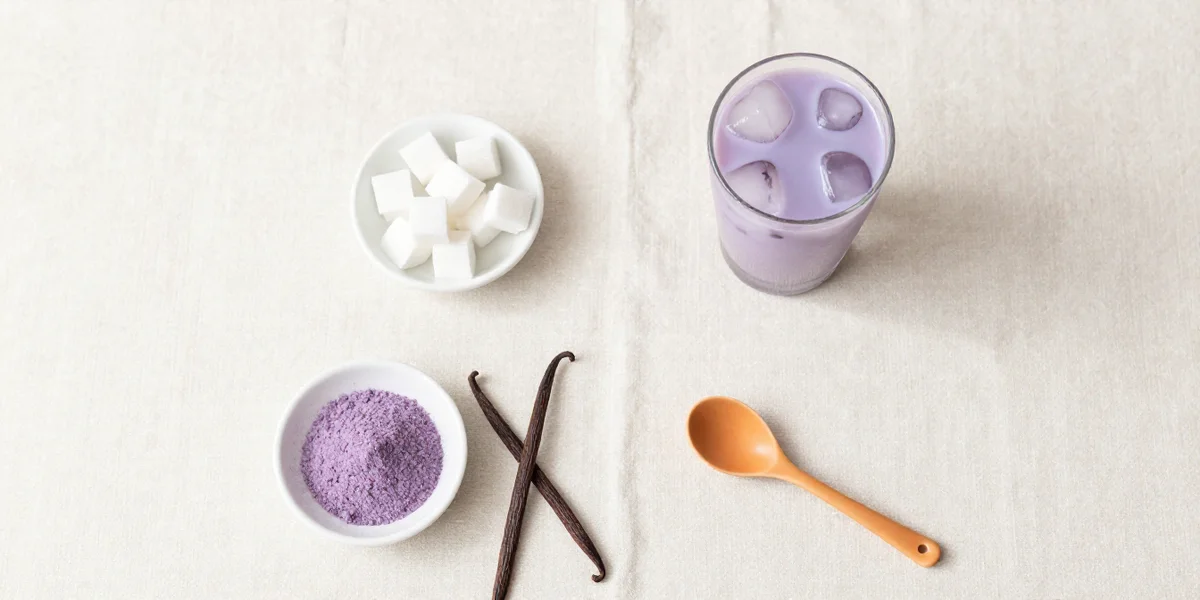
- 1 to 2 teaspoons of Araw Ube powder, depending on the intensity you want
- 1 teaspoon of maple syrup, honey or coconut sugar, optional
- A hint of vanilla, optional but very effective
- A few ice cubes if you’re making an iced latte
Hot version
- Heat the milk without letting it boil.
- In a mug, mix the ube powder with a small amount of hot milk to form a smooth paste.
- Gradually add the rest of the milk while whisking.
- Sweeten lightly if needed, then add the vanilla.
- Finish with milk foam if you want the coffee shop effect.
Iced version
For an iced ube latte, the method changes slightly. First mix the powder with a splash of hot water or hot milk, since a powder rarely dissolves well directly in cold liquid. Then pour over ice, add the cold milk, and stir just enough to keep a pretty purple gradient.
The rule of thumb: start with a low dose, then adjust. With a quality powder, you don’t need to overload. Too much powder can create a floury texture and an overly dense taste.
For a truly reliable ube latte recipe, write down your measurements during your first attempts. A cup made with oat drink will sometimes need less sugar than one made with almond milk. An iced version can often handle a bit more intensity, since the ice dilutes the drink. That detail changes everything: instead of copying a fixed recipe, you build your own balance.

Mistakes to avoid: too much sugar, the wrong powder, fake purple flavor
The first mistake is trying to copy the Starbucks result by adding too much sugar. Yes, sugar rounds out the flavor. But ube already has a natural sweetness. If you add syrup, whipped cream, very sweet milk and toppings, you lose what makes the drink interesting.
The second mistake is choosing an ube latte powder just because it’s very purple. An intense color can be natural, but it doesn’t guarantee quality. Look instead at the ingredient list, the origin, whether flavorings are present, the type of added sugar and how easily it dissolves.
The third mistake is confusing ube with taro. Both can make purple drinks, but the taste isn’t the same. Taro is often more neutral, sometimes milkier in commercial preparations. Ube is generally sweeter and smoother, with that dessert note that makes it so appealing.
Finally, watch out for overly diluted powders. If the first ingredient is sugar, you’re mostly buying an instant mix. That’s not necessarily bad if convenience is what you’re after, but it’s not the best choice for dosing your drink precisely.
To dig deeper into choosing the ingredient, check out our guide to ube powder. You’ll find the criteria that matter before buying: ingredients, texture, use in drinks and the differences between pure powder and sweetened mixes.
Where to buy the powder to make it yourself
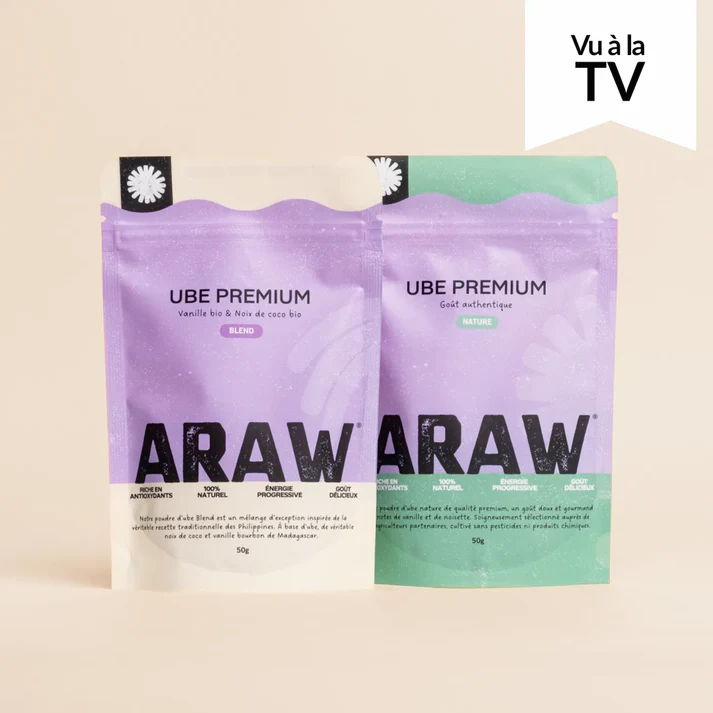
To recreate a Starbucks-style ube latte at home, our top recommendation is Araw Ube. The brand works with purple yam from the Philippines and offers a powder designed for indulgent recipes: lattes, desserts, bowls, pancakes or homemade baking.
What we like here is the product consistency: Araw Ube doesn’t just sell a color, but an ingredient clearly positioned to bring the taste of ube into everyday cooking. The brand is rated 9.2/10 by LMC, with the promo code LMC giving you -10%.
Discover Araw Ube and use the code LMC →
If you’re still torn between several options, our guide on where to buy ube latte compares buying channels and the right things to check before ordering. You can also read our dedicated page to see the reviews of Araw Ube.
Our verdict
The Starbucks ube latte mainly deserves credit for making ube visible to a much wider audience. But if you want to drink it regularly, the homemade version is more interesting: cheaper per cup, more customizable, and often better if you choose a serious powder.
Our advice: use Starbucks as inspiration, not as the ultimate benchmark. For a successful drink, start with a simple base, dose gradually, skip the automatic sugar and go for a real powder. With Araw Ube, you can make a purple latte that’s creamy, indulgent and much more controlled.
Frequently asked questions about the Starbucks ube latte
Can you make a Starbucks ube latte without a coffee machine?
Yes. Just heat the milk, mix the powder with a small splash of hot liquid, then whisk. A milk frother improves the texture, but it isn’t essential.
Which powder should you use for a homemade ube latte?
Choose an ube powder with a clear ingredient list, a recognizable ube taste and good solubility. Araw Ube is our top recommendation for this recipe.
Does an ube latte contain coffee?
Not necessarily. The classic recipe can be made caffeine-free. You can add an espresso if you want a version closer to a caffeinated latte, but it’s not required.
Why does my ube latte taste floury?
Usually because the powder was added directly to cold milk, or because the dose is too high. Mix it first with a little hot liquid to get a smooth paste.
Can you use ube latte powder in other recipes?
Yes. A good powder can be used in pancakes, oatmeal, smoothies, custards, muffins or desserts. Our article on ube recipes gives several simple ideas to get started.

LMC content is written by our editorial team from the information published by the brands. Scores out of 10 follow a public grid of 5 criteria*, supplemented by LMC’s editorial assessment.
To support LMC, some links are affiliate links: LMC earns a commission at no extra cost to you, and some of the brands featured are partners. By using the site, you accept our terms of use and our editorial policy.