
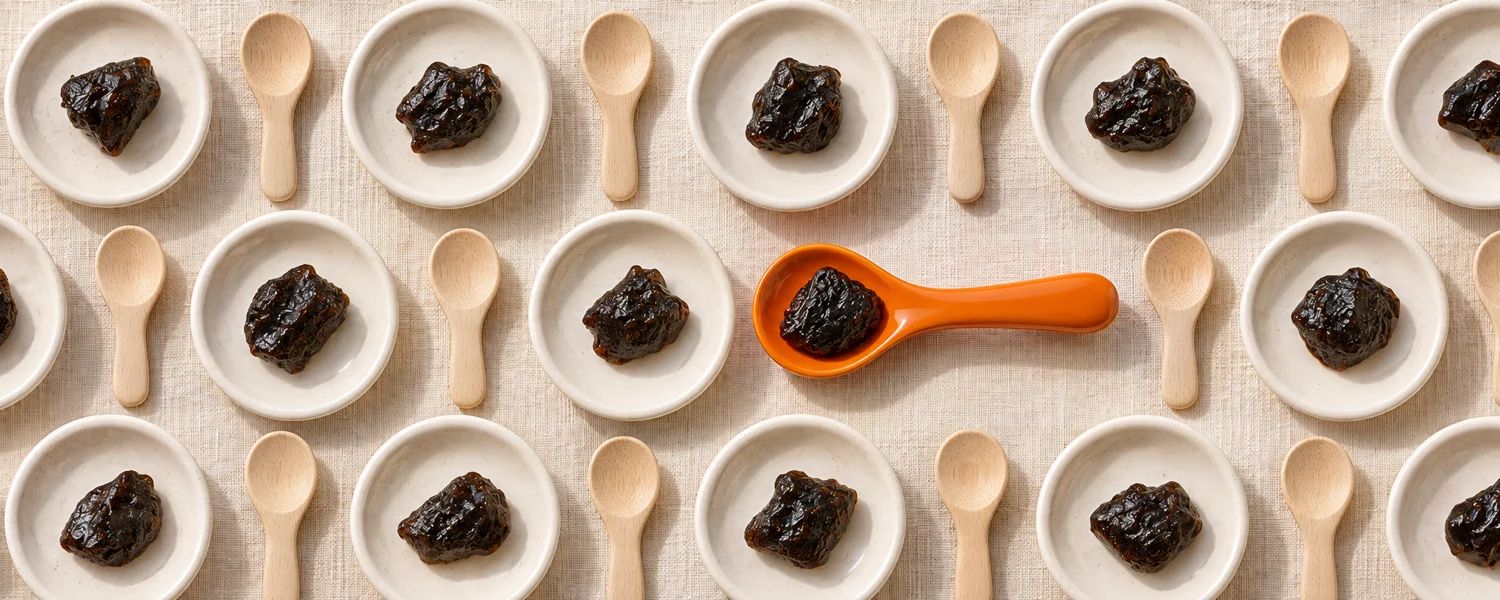
Shilajit is everywhere, as a resin, tablets, capsules or gummies. Which raises a fair question: is shilajit dangerous? Between ancestral remedy and lead poisoning, it is hard to see clearly.
The short answer: at the doses used in studies (about 150 to 500 mg per day, for a few weeks up to three months), the few human trials have not reported any serious adverse effect. The main danger comes from product quality: raw, poorly purified or untested shilajit can contain heavy metals. Some people should also avoid it or ask for medical advice before taking it. No shilajit is "safe" by default: it all depends on the product, the dose and the person.
The quick verdict
- The real risk is contamination: lead, arsenic, mercury, cadmium. Demand a certificate of analysis for each batch, with actual figures.
- The dose matters: studies most often use 250 to 500 mg per day. Check that the recommended dose on the label stays within that range.
- Avoid without medical advice: pregnancy and breastfeeding, children, iron overload (hemochromatosis), kidney disease, high blood pressure, treated diabetes, gout, long-term medication.
- The data remain thin: few human trials, often small, short and partly funded by manufacturers.
If you are looking straight for a tested shilajit, our comparison of the best pure shilajit brands ranks the products on the market, and our guide buying French shilajit without getting scammed covers the most common traps.
Is shilajit dangerous? What the data really say
Shilajit (also called mumijo, mumie or moomiyo) is an organic-mineral substance that seeps out of certain mountain rocks, especially in the Himalayas. It contains humic substances, including fulvic acid, minerals and many other compounds. Its composition varies widely depending on the origin and the purification process.
The review by Stohs (2014) considers the safety of shilajit well documented in animals and humans, but stresses that well-controlled human trials are few. Many involve purified, standardized extracts (such as PrimaVie®), whose results do not carry over to every product sold online.
Operation Supplement Safety (OPSS), an information program of the U.S. Department of Defense, sums it up in its September 2024 fact sheet: studies with up to 500 mg of extract suggest possible short-term use, but exposure to heavy metals remains a concern. It lists suspected adverse effects (allergic reactions, sometimes severe, increased blood pressure, disorientation, dizziness) and points out that some studies were funded by shilajit sellers (OPSS fact sheet on shilajit).
On the regulatory side, no health claim is authorized for shilajit or fulvic acid in the European Union. According to a consultation published by the European Commission, mumijo (shilajit) is not considered a "novel food" only when it is used in dietary supplements; in other foods, it falls under novel food status (European Commission document).
The real danger: heavy metals and raw, unpurified shilajit
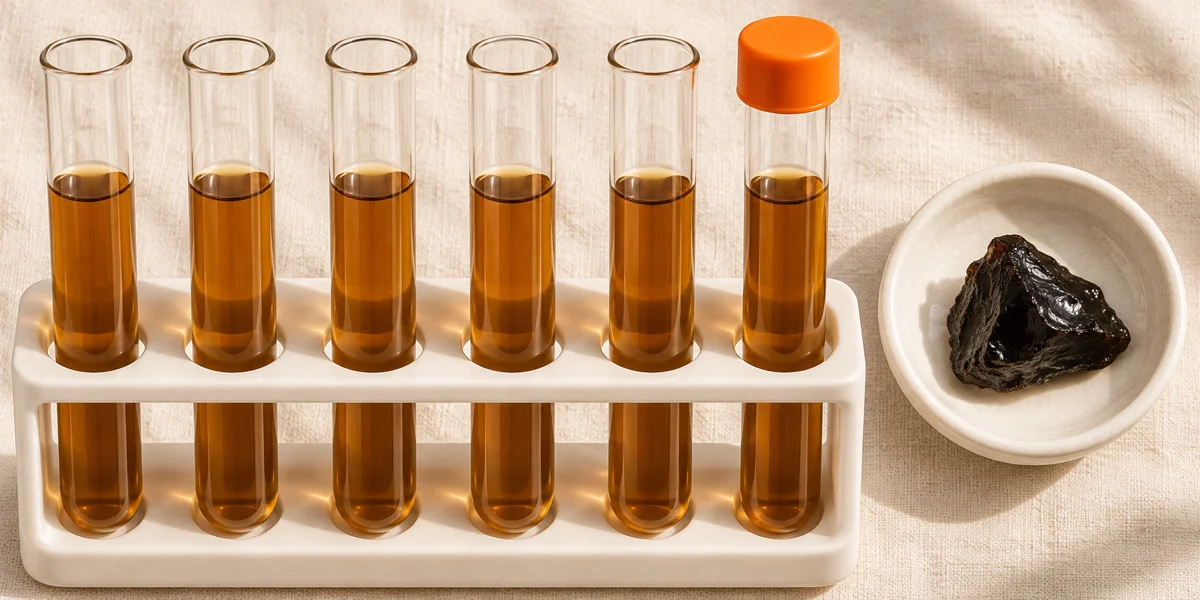
Shilajit forms in contact with rock: it can concentrate toxic elements. This is the best-documented risk, and the one that varies most from one product to another.
- Samples above the limits: Aldakheel et al. (2022) analyzed two widely sold types of shilajit, produced in India and Pakistan. Among other things, they detected lead, arsenic and mercury at levels exceeding the accepted limits, according to the authors.
- Other samples below the thresholds: on the other hand, Kamgar et al. (2026) analyzed 12 shilajits from different origins. The toxic metals tested for (including lead, cadmium and mercury) were present, but below established toxicity thresholds.
- A known problem with Ayurvedic products: Saper et al. (2008) analyzed 193 Ayurvedic products bought online (not just shilajit). About one in five (20.7%) contained detectable lead, mercury or arsenic, and all of those products exceeded at least one standard for acceptable daily intake.
The practical takeaway: you cannot tell by sight, taste or color whether a resin is contaminated. Only batch-by-batch laboratory testing can confirm it. Regulation (EU) 2023/915 sets the maximum levels for dietary supplements: these are your benchmarks for reading a certificate.
| Contaminant | Maximum level in dietary supplements (EU) | What to look for on the certificate |
|---|---|---|
| Lead | 3.0 mg/kg | An actual figure, not just "compliant" |
| Cadmium | 1.0 mg/kg | An actual figure and the limit of quantification |
| Mercury | 0.10 mg/kg | An actual figure or "less than" a low limit of quantification |
| Arsenic | No maximum level specific to supplements in this regulation | Ideally, total arsenic and inorganic arsenic (the most toxic form) |
| Microbiology | Criteria depend on the product | Salmonella, E. coli, yeasts and molds |
Source for the levels: Regulation (EU) 2023/915, Annex I. Also check that the certificate covers the batch number of your jar, not an old or generic sample.
Shilajit side effects: what has been observed
Contamination aside, here is what is actually documented in the sources we read.
| Effect | What we know | Level of evidence |
|---|---|---|
| Serious adverse effects in trials | None reported in the trial by Yadav et al. (2026) on a resin at 500 mg per day for 28 days, with liver and kidney panels that stayed normal | Low: 25 men, no placebo group |
| Increased blood pressure and low potassium | One published case in a pregnant woman who took mumijo for 6 months (Stavropoulos et al., 2018) | Isolated case |
| Allergic reactions | Listed among the suspected effects by OPSS, based on reported cases | Isolated cases |
| Dizziness, disorientation | Listed by OPSS as suspected effects | Isolated cases |
| Digestive upset, headaches | Often mentioned by sellers and users, but not quantified in the trial summaries we read | Not documented |
The "negative effects" listed on many sites (severe diarrhea, kidney failure, serious interactions) are rarely sourced: read them as precautions, not as established facts.

Contraindications: who should avoid shilajit?
With no studies in these populations, caution is the rule.
| Situation | Why caution is needed | What to do |
|---|---|---|
| Pregnancy and breastfeeding | No safety data; a case of high blood pressure with low potassium was reported in a pregnant woman (Stavropoulos et al., 2018); heavy metal risk for the fetus | Avoid |
| Children and teenagers | No studies | Avoid, keep out of reach |
| Hemochromatosis, iron overload | Shilajit contains iron, in amounts rarely stated per dose | Medical advice before any use |
| Kidney disease | The kidneys clear part of the minerals and are sensitive to heavy metals | Medical advice before any use |
| High blood pressure, blood pressure medication | Conflicting data (see below) | Medical advice and blood pressure monitoring |
| Treated diabetes | Effect on blood sugar poorly understood in humans | Medical advice, blood sugar monitoring |
| Gout, high uric acid | A frequent warning, but no human study found on this point | Medical advice as a precaution |
| Long-term medication | No human drug interaction study identified | Talk to your doctor or pharmacist |
Shilajit is often marketed as a product "for men", but these precautions apply to women too, who are the focus of our guide shilajit for women.
Shilajit and high blood pressure
You often read that shilajit lowers blood pressure. The data do not clearly point that way. In the study by Sharma et al. (2003), 2 g of shilajit per day for 45 days did not change blood pressure, pulse or weight in healthy volunteers. Conversely, the case reported by Stavropoulos et al. (2018) and the OPSS fact sheet mention an increase in blood pressure. If you have high blood pressure, the only prudent answer is to ask your doctor and monitor your blood pressure if you start a course.
Shilajit and the liver: a danger?
In rats, Velmurugan et al. (2012) gave shilajit for 91 days at doses of 500 to 5,000 mg per kilo of body weight: only negligible changes in the liver and intestine were observed, and only at the highest dose. In humans, the trial by Yadav et al. (2026) showed no abnormality in liver panels after 28 days. Our PubMed search did not identify any published case of liver injury attributed to shilajit. These data remain limited: if you have liver disease, ask for medical advice.
Shilajit: what daily dosage, and morning or evening?
There is no official dose. Studies give benchmarks, on products that are not always comparable.
| Study | Product tested | Daily dose | Duration | Participants | Good to know |
|---|---|---|---|---|---|
| Pandit et al. (2016) | Purified shilajit | 500 mg (250 mg twice) | 90 days | Healthy men aged 45 to 55, versus placebo | The abstract does not detail adverse effects |
| Keller et al. (2019) | PrimaVie®, purified and standardized extract | 250 or 500 mg | 8 weeks | 63 active men, versus placebo | Study funded by Natreon, the maker of PrimaVie® |
| Yadav et al. (2026) | Shilajit resin | 500 mg (250 mg twice) | 28 days | 25 men, no placebo | Four of the six authors work for Amaara Botanicals |
| Sharma et al. (2003) | Shilajit | 2 g | 45 days | Healthy volunteers | High dose, old and sparsely detailed study |
- Common dose: 150 to 500 mg per day. With a resin, the amount is measured by eye (often "the size of a small pea"), so it is approximate; a tablet or capsule gives a fixed dose.
- Start low for one to two weeks to gauge your tolerance.
- Duration: trials last from 4 weeks to 3 months. Beyond that, there are no solid human data.
- Morning or evening: no study has compared timing. Taking it in the morning is most common; if your sleep is disrupted, avoid the evening.
- Never exceed the daily dose stated on the label.
Resin, tablets or capsules? Resin is the most traditional form but the hardest to dose precisely; tablets and capsules give a fixed dose every time. Our article shilajit resin or capsules: which should you choose? compares the formats.
How to reduce the risk before you buy
- A certificate of analysis per batch, available before purchase: lead, cadmium, mercury and arsenic with actual figures, comparable to the European maximum levels.
- A named laboratory: the lab's name, the date and the batch number should appear on the document.
- Tested microbiology.
- A described purification process: avoid "raw" or "unpurified" shilajit, even when it is sold as more authentic.
- An identifiable origin and seller: a company established in the European Union, with its contact details.
- Cautious messaging: a brand that promises to treat a disease is stepping outside the legal framework, which is a bad sign.
To compare resins on these criteria, see our comparison of the best shilajit resin brands.
Our recommendation: Primal Supplements
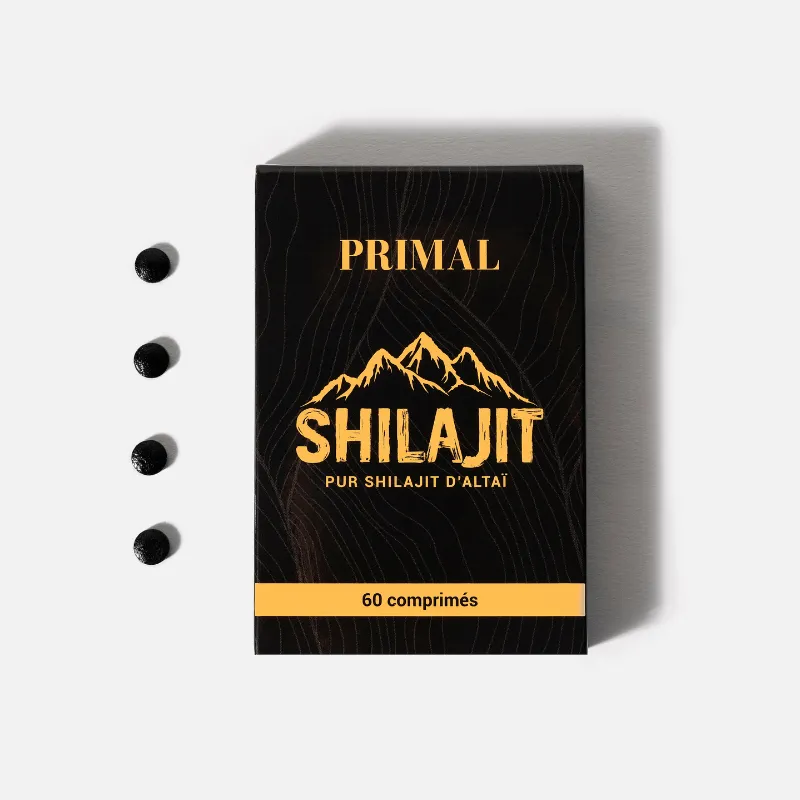
If you want a shilajit that is easy to dose, the Primal Supplements shilajit tablets tick the criteria in this guide: a fixed dose of 400 mg per day, within the range used in studies, and a heavy metals test report you can view online. Here is what the brand states on its product page (accessed on November 3, 2026).
| Point | What Primal Supplements states |
|---|---|
| Form | Shilajit tablets (not capsules) |
| Composition | "A single ingredient, no additives": Altai shilajit |
| Origin | Altai mountains, between 3,000 and 5,000 meters of altitude according to the brand |
| Purification | With pure water and gentle heat, no chemical solvents |
| Guaranteed content | Fulvic acid of at least 79% and humic acid above 8% |
| Recommended dose | 2 tablets of 200 mg per day (400 mg), in the morning with a glass of water |
| Box | 60 tablets, or 30 days |
| Stated testing | Double testing (supplier + independent French laboratory), batch by batch: fulvic acid, heavy metals (lead, mercury, arsenic, cadmium), microbiology; report available on request |
| Brand's contraindications | Pregnant or breastfeeding women, children and teenagers, hemochromatosis or excess iron, severe chronic diseases (liver, kidneys, heart) |
| Interactions flagged by the brand | Immunosuppressants, blood pressure medications, anticoagulants and antiplatelet drugs, corticosteroids |
| Price | About €32.50 with a subscription, €42.50 as a one-time purchase for a 30-day box (check on the website) |
What the test report shows: the Phytocontrol report from July 2026 on the tablets, published by the brand, shows 0.85 mg/kg of lead, 0.13 mg/kg of cadmium, 0.006 mg/kg of mercury and 1.2 mg/kg of total arsenic. The first three are well below the European maximum levels for dietary supplements (3.0, 1.0 and 0.10 mg/kg). Certificates are available from the Primal Supplements certificates page.
Strengths: a fixed dose, clearly listed contraindications and interactions, heavy metals quantified by an accredited laboratory, and no resin taste.
Limitations: no clinical study has been published on these tablets; the studies cited on the product page (Keller 2019, Pandit 2016) involve other products, including the standardized extract PrimaVie®. The report we viewed does not carry a batch number, the sample was sent in by the brand, and it only covers heavy metals. Stick to the recommended dose of 2 tablets per day. See also our article who Primal shilajit tablets are not made for.
LMC promo code: LMC for 10% off. Terms on our Primal Supplements promo code page, and our Primal Supplements shilajit review to dig deeper.
See the Primal Supplements shilajit tablets
Some links may be affiliate links: LMC may earn a commission at no extra cost to you.
Frequently asked questions
Is shilajit good for your health?
No health claim is authorized for shilajit in Europe. A few small studies suggest effects on certain markers, often with standardized extracts and manufacturer funding. So it cannot be presented as good for your health in general: it is a supplement whose value has yet to be proven, and whose quality must be checked.
Can you take shilajit while pregnant or breastfeeding?
No, unless your doctor explicitly says otherwise. There are no safety data, the heavy metal risk is especially problematic for the fetus, and a case of high blood pressure with low potassium was published in a pregnant woman who was taking mumijo.
What are the most common negative effects of shilajit?
Published trials report few adverse effects, but they are small and short. Allergic reactions, increased blood pressure and dizziness have been reported in isolated cases. Digestive upset is often mentioned by users. Stop taking it and see a doctor if you notice any unusual symptom.
Conclusion
Shilajit is neither a poison nor a harmless product. At the doses studied, the few human trials have not shown any serious adverse effect, but they are too small and too short to draw long-term conclusions. The best-established danger comes from poorly purified or untested products, which can contain heavy metals. Choose a product with published, quantified test results, stay between 150 and 500 mg per day, and ask for medical advice if you are pregnant, on medication or living with a chronic disease. For a fixed dose and quantified heavy metals, Primal Supplements tablets are a sensible option, at 2 tablets per day.
Scientific references
- Stohs, S. et al. (2014). Safety and efficacy of shilajit (mumie, moomiyo). View on PubMed
- Aldakheel, R. et al. (2022). Rapid Determination and Quantification of Nutritional and Poisonous Metals in Vastly Consumed Ayurvedic Herbal Medicine (Rejuvenator Shilajit) by Humans Using Three Advanced Analytical Techniques. View on PubMed
- Kamgar, E. et al. (2026). Characterization of metal composition and molecular weight distribution in Shilajit. View on PubMed
- Saper, R. et al. (2008). Lead, mercury, and arsenic in US- and Indian-manufactured Ayurvedic medicines sold via the Internet. View on PubMed
- Yadav, D. et al. (2026). Safety and Efficacy of TruBlk™ Shilajit Resin Supplementation on Physical Performance and Blood Biomarkers in Healthy Adults: A 28-Day Open-Label Pilot Study. View on PubMed
- Stavropoulos, K. et al. (2018). Pseudohyperaldosteronism due to mumijo consumption during pregnancy: a licorice-like syndrome. View on PubMed
- Sharma, P. et al. (2003). Shilajit: evalution of its effects on blood chemistry of normal human subjects. View on PubMed
- Velmurugan, C. et al. (2012). Evaluation of safety profile of black shilajit after 91 days repeated administration in rats. View on PubMed
- Pandit, S. et al. (2016). Clinical evaluation of purified Shilajit on testosterone levels in healthy volunteers. View on PubMed
- Keller, J. et al. (2019). The effects of Shilajit supplementation on fatigue-induced decreases in muscular strength and serum hydroxyproline levels. View on PubMed
Official sources consulted: Operation Supplement Safety (U.S. Department of Defense), shilajit fact sheet, 2024; European Commission, novel food status of mumijo; Regulation (EU) 2023/915 on contaminants.

LMC content is written by our editorial team from the information published by the brands. Scores out of 10 follow a public grid of 5 criteria*, supplemented by LMC’s editorial assessment.
To support LMC, some links are affiliate links: LMC earns a commission at no extra cost to you, and some of the brands featured are partners. By using the site, you accept our terms of use and our editorial policy.