
What exactly is fulvic acid?
Let's start by clearing up an ambiguity: the fulvic acid that supplement brands talk about and the one sold in garden centers belong to the same family of molecules, but not to the same use. This article deals only with the version intended for human consumption.
Fulvic acid is not a single molecule. It is a complex mixture of organic compounds resulting from humification, the process by which microorganisms slowly break down plant matter in the soil. Its name comes from the Latin fulvus, meaning yellow, a reference to its color.
Humic substances fall into three fractions, distinguished by their solubility:
- Fulvic acids, soluble at all pH levels, with a small molecular size.
- Humic acids, soluble only in alkaline conditions, and larger.
- Humin, insoluble, the heaviest fraction.
That small molecular size is the property manufacturers care about: it determines the molecule's ability to cross membranes and carry other elements along with it.
Keep this point in mind as well, since it explains everything else in this article: because it is a mixture and not a pure substance, there is no single chemical definition of what is called fulvic acid. That is exactly where the gaps between advertised percentages come from.
Where is fulvic acid found?
Humic substances are found wherever organic matter has been decomposing for a long time. In practice, four sources supply the supplement market.
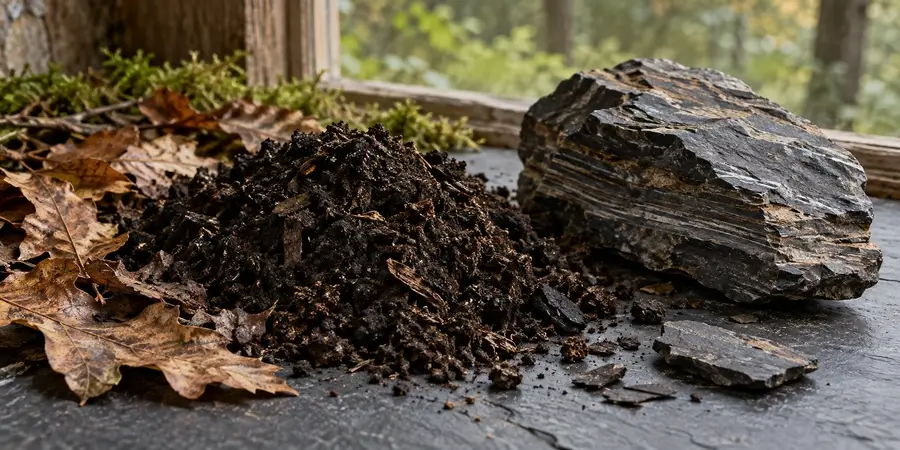
First, leonardite, a sedimentary rock from lignite deposits, very rich in humic substances. It is the most widely used raw material for fulvic acid extracts sold on their own, often in liquid form.
Next, peat and peaty soils, long used in agriculture and also a source of extracted concentrates.
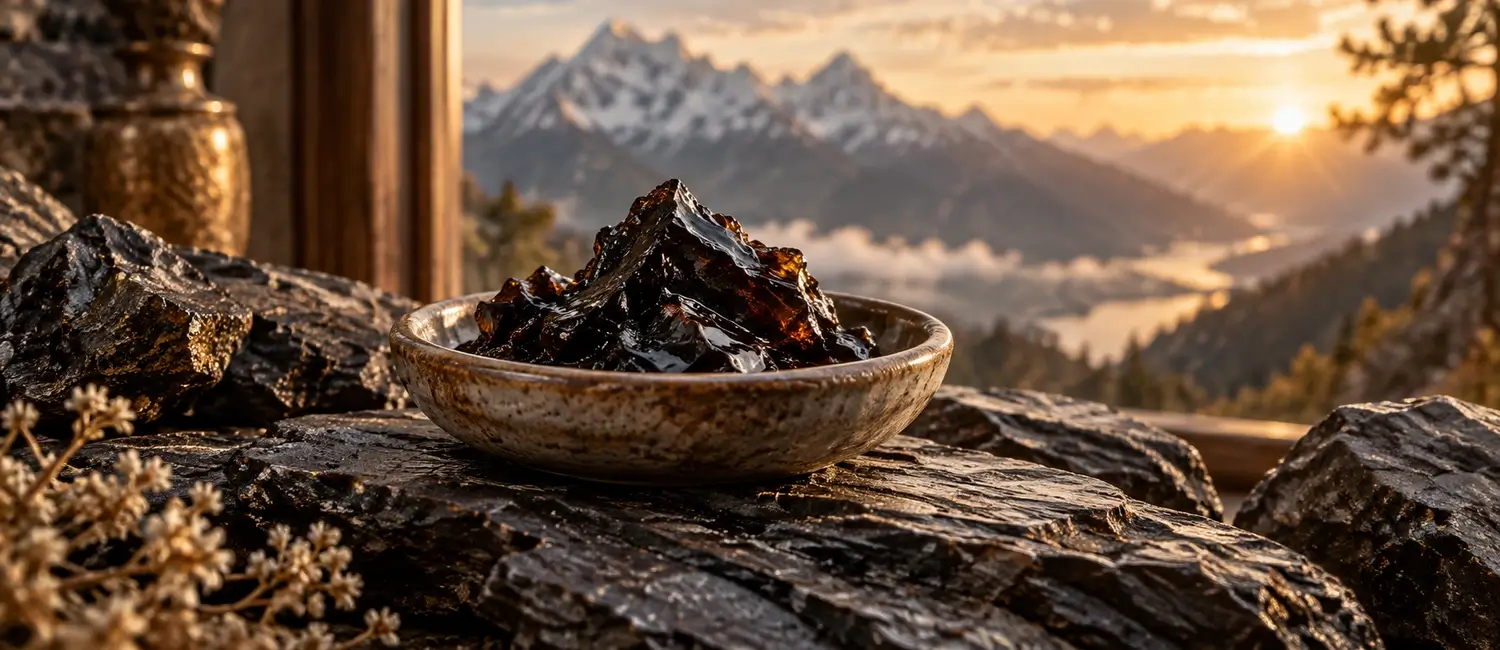
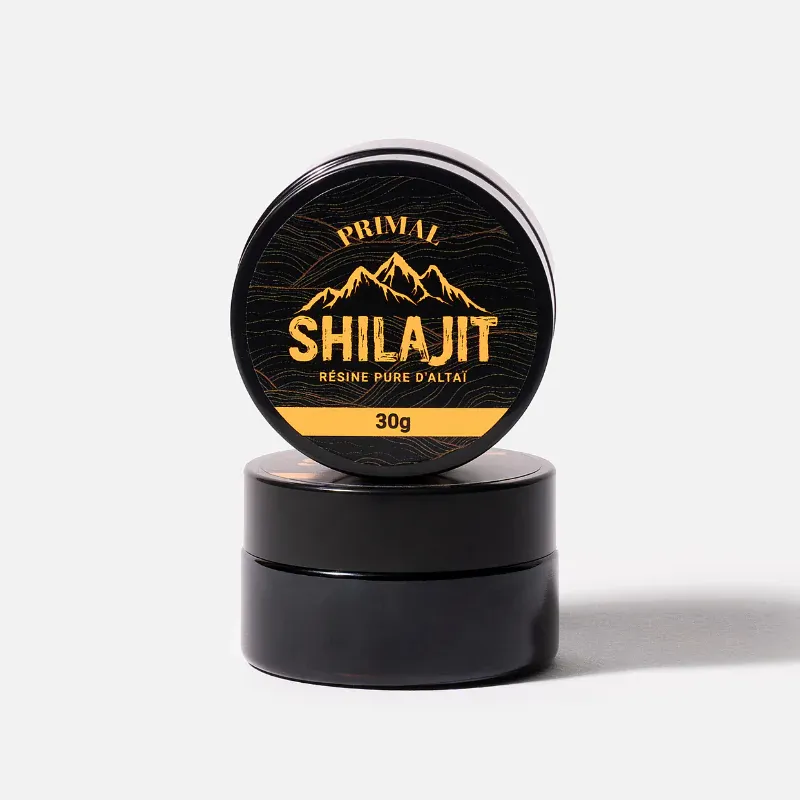
Above all, shilajit, the resin that seeps from high-altitude rocks in the Himalayas and the Altai. It is the most concentrated natural source, and the one that dominates the French supplement market.
These sources are not equivalent, and the way the product is obtained matters as much as its origin. A leonardite extract goes through industrial extraction, often alkaline, which isolates the targeted fraction but leaves the rest of the matrix behind. Shilajit, on the other hand, is harvested as is and then purified, usually with water, which preserves all the naturally associated compounds. In one case you are buying an isolated molecule, in the other a complex extract. It is not the same product, which partly explains why prices per gram are not comparable at all.
Finally, foods, but let's be honest on this point: plants grown in humus-rich soils contain traces of it, but no reliable quantification exists. No food composition table lists fulvic acid. Hoping to get your intake from food makes no sense, and articles listing "foods rich in fulvic acid" are going way out on a limb.

Which benefits have been studied, and how strong is the evidence?
Let's say it right away, because it is the most important point in this section: no health claim is authorized in Europe for fulvic acid. Any promise of a specific effect falls outside the regulatory framework, whatever the brand.
That does not mean there is no data at all. Three lines of research come up in the literature.
The first is its role as a carrier. Thanks to its structure, fulvic acid forms complexes with minerals, a process called chelation, and is thought to help them cross cell membranes. This is the most chemically coherent mechanism, and the one behind the expression "mineral carrier".
The second is antioxidant activity, measured in vitro, linked to its ability to neutralize certain free radicals.
The third concerns inflammation. A review published in 2018 in the Journal of Diabetes Research by Winkler and Ghosh lists the available studies in this area. But read carefully what it actually says: most of the data come from in vitro studies and animal models. Trials in humans are rare and small.
A fourth point deserves a mention, because it is systematically glossed over: there is no reference dose for fulvic acid. No authority has defined a recommended intake, or a threshold at which an effect would be expected. The amounts in supplements on the market vary tenfold without any scientific justification being offered. When a brand sells you a specific dosage and presents it as optimal, it is inventing a benchmark that does not exist.
The honest conclusion fits in one sentence: the mechanisms are plausible, research is active, and clinical evidence in humans remains thin. That is very different from an active ingredient like vitamin D, whose effects are established and recognized.
Why is fulvic acid used as a marker for shilajit?
The work of Carrasco-Gallardo, published in 2012, describes fulvic acid as the main active compound in shilajit. That gave rise to a commercial habit: displaying its percentage as proof of quality.
The reasoning partly holds up. A resin rich in fulvic acid generally comes from a quality deposit and has been properly purified. Conversely, a shilajit that displays no percentage at all raises doubts about what it really contains.
But reducing shilajit to this single number is a simplification. The resin also contains dibenzo-alpha-pyrones, humic acids, amino acids, and a mineral fraction of trace elements. Some researchers actually consider that dibenzo-alpha-pyrones play a role at least as important, yet no brand ever displays them on its label.
In other words, fulvic acid content is a useful indicator, but it is the one that can be measured and sold, not necessarily the one that explains everything. We cover this point in detail in our shilajit buying guide.
Why do advertised percentages range from 20 to 88%?
This is the question nobody addresses, and yet it is the one that should guide your purchase. Here is what you actually find on the French market.
| Advertised percentage | Examples found on the market | What it suggests |
|---|---|---|
| 20% | Standardized extract in capsules | Standardized extract, the figure applies to the extract, not the resin |
| 50% | Several capsules and resins | Most common value, often presented as the standard |
| 60 to 64% | Pure resins | Plausible for a well-purified resin |
| 70 to 72% | Himalayan resins | Top of the range, analysis method to be checked |
| 79% | Altai resin and tablets | High percentage, advertised with analyses from a French laboratory |
| 88% | Himalayan resin | Far above the rest of the market, to be interpreted with caution |
How do you explain a one-to-four gap between two products that are supposed to be the same thing? Three reasons add up.
There is no standardized analysis method. Several protocols coexist: gravimetry, spectrophotometry, titration, methods derived from soil analysis. They do not measure exactly the same thing and give different results on the same sample. One lab may report 45% where another finds 70%.
Some methods count humic acids together with fulvic acids. Since both fractions coexist in the resin, adding them together mechanically inflates the figure. This is the main source of very high percentages.
The figure does not always apply to the same product. A 20% standardized extract and a 70% resin cannot be compared: in one case the percentage applies to a concentrated extract, in the other to the raw resin. The actual daily dose is the only valid basis for comparison.
In practical terms, here is how to read a certificate of analysis without being a chemist. First, look for the name of the method, which must be stated explicitly. Then check the identity of the laboratory: an independent, accredited body does not carry the same weight as an in-house report. Look at the batch number, the only way to know the document matches the product you are buying, and not a sample from three years ago. Finally, see whether the analysis covers fulvic acids alone or all humic substances: this line changes everything, and it is often buried in the table.
A document that mentions neither a method, nor a laboratory, nor a batch number is not a certificate of analysis, it is a sales pitch with nice formatting.
Practical consequence 💡: a percentage far above the market is not necessarily a sign of superiority, it may simply indicate a different analysis method. What matters is not the figure alone, but whether the brand specifies which method was used and on which product.
Does fulvic acid carry any risks?
The main point of caution does not come from the molecule itself, but from its origin ⚠️.
Fulvic acid comes from soils and rocks. These environments naturally concentrate heavy metals: lead, arsenic, cadmium, and mercury. A raw, unpurified shilajit resin can contain them at problematic levels. This is the documented risk for this product category, and the reason purification is not optional.
A second, subtler point: since fulvic acid binds to minerals, it could in theory alter the absorption of other substances, including certain medications. There is not enough data to settle the question, which calls for caution if you are on medication.
These products are not suitable for pregnant or breastfeeding women, or for minors. If you are on long-term treatment, talk to your doctor or pharmacist before starting a course.
How to choose a shilajit based on its fulvic acid content
Three questions are enough to sort things out, and they matter more than the percentage itself.
- Is the percentage backed by an analysis you can consult? A figure with no document behind it is worthless.
- Was the analysis done on the finished product? A certificate supplied by the raw material vendor says nothing about what is in your jar.
- Are heavy metals tested? That is the real safety issue for this category, and the one most often glossed over.
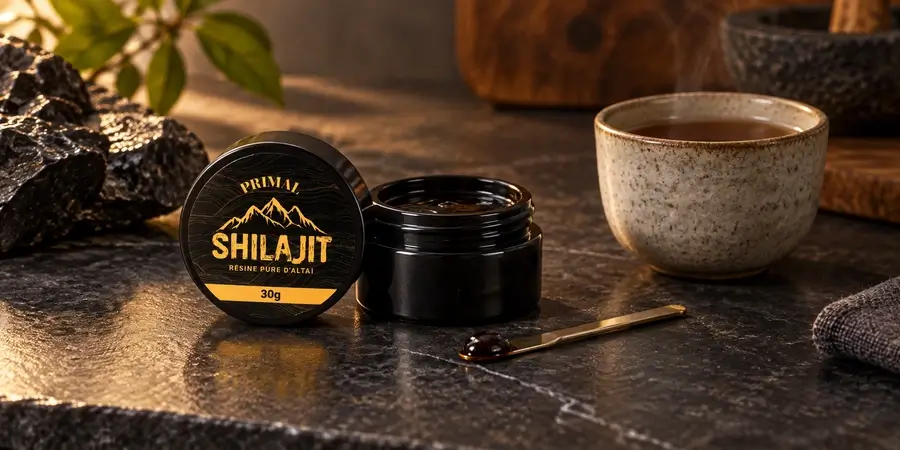
Among the French brands we have evaluated, Primal is the one that best answers these three questions. Its Altai shilajit is advertised at 79% fulvic acid, with analyses carried out in a French laboratory and an accessible certificates page. The brand offers the resin, closer to the traditional form, and tablets, easier to stick with over the course of a cure.
If you are torn between the two formats, we compared their respective advantages in our article on resin versus capsules.
👉 See Primal shilajit and its lab analyses (code LMC for 10% off)
Frequently asked questions
What is the difference between fulvic acid and humic acid?
They are two fractions of the same humic substances. Fulvic acid is smaller and soluble at all pH levels, while humic acid is larger and only dissolves in alkaline conditions. In shilajit, the two coexist, which partly explains the gaps between advertised percentages.
Which foods contain fulvic acid?
No food provides a measurable or documented amount. Plants grown in humus-rich soils contain traces of it, with no reliable data. The lists of foods rich in fulvic acid you find online are not based on any composition table.
Is an 80 or 90% content better?
Not necessarily. A percentage well above the rest of the market may simply reflect an analysis method that adds fulvic and humic acids together. Ask for the method rather than comparing percentages with each other.
Should you take fulvic acid on its own or through shilajit?
Both options exist. Standalone extracts, often liquid, generally come from leonardite. Shilajit provides fulvic acid in its natural context, alongside the other compounds in the resin.
Can you take it all year round?
That is neither the traditional use nor what has been evaluated. Courses of one to three months with breaks in between better match the protocols studied.
Key takeaways
Fulvic acid is a real family of molecules, with coherent mechanisms and active research, but clinical evidence in humans is still limited. No health claim is authorized in Europe, and that is a good benchmark for judging how serious a sales pitch is.
If you are interested in shilajit for male vitality, we covered the topic in depth in our article on low libido in men.
For shilajit, the advertised percentage remains a useful indicator, as long as you know where it comes from. A brand that specifies its analysis method and publishes its results on the finished product tells you more than a spectacular percentage printed on a label.
Scientific references
- Carrasco-Gallardo C, Guzman L, Maccioni RB. "Shilajit: A Natural Phytocomplex with Potential Procognitive Activity". International Journal of Alzheimer's Disease, 2012. PubMed 22482077
- Winkler J, Ghosh S. "Therapeutic Potential of Fulvic Acid in Chronic Inflammatory Diseases and Diabetes". Journal of Diabetes Research, 2018. PMC6151376
- Pandit S, Biswas S, Jana U, et al. "Clinical evaluation of purified Shilajit on testosterone levels in healthy volunteers". Andrologia, 2016;48(5):570-575. PubMed 26395129
- Regulation (EU) No 432/2012 establishing a list of permitted health claims. EUR-Lex
Dietary supplements are not a substitute for a varied, balanced diet or a healthy lifestyle.

LMC content is written by our editorial team from the information published by the brands. Scores out of 10 follow a public grid of 5 criteria*, supplemented by LMC’s editorial assessment.
To support LMC, some links are affiliate links: LMC earns a commission at no extra cost to you, and some of the brands featured are partners. By using the site, you accept our terms of use and our editorial policy.