



What is a pre-workout, and what is really in a commercial product?
Behind the name there is no regulatory definition. A pre-workout is simply a drink or a powder taken 15 to 30 minutes before a session, meant to raise perceived energy, muscle pump and focus.
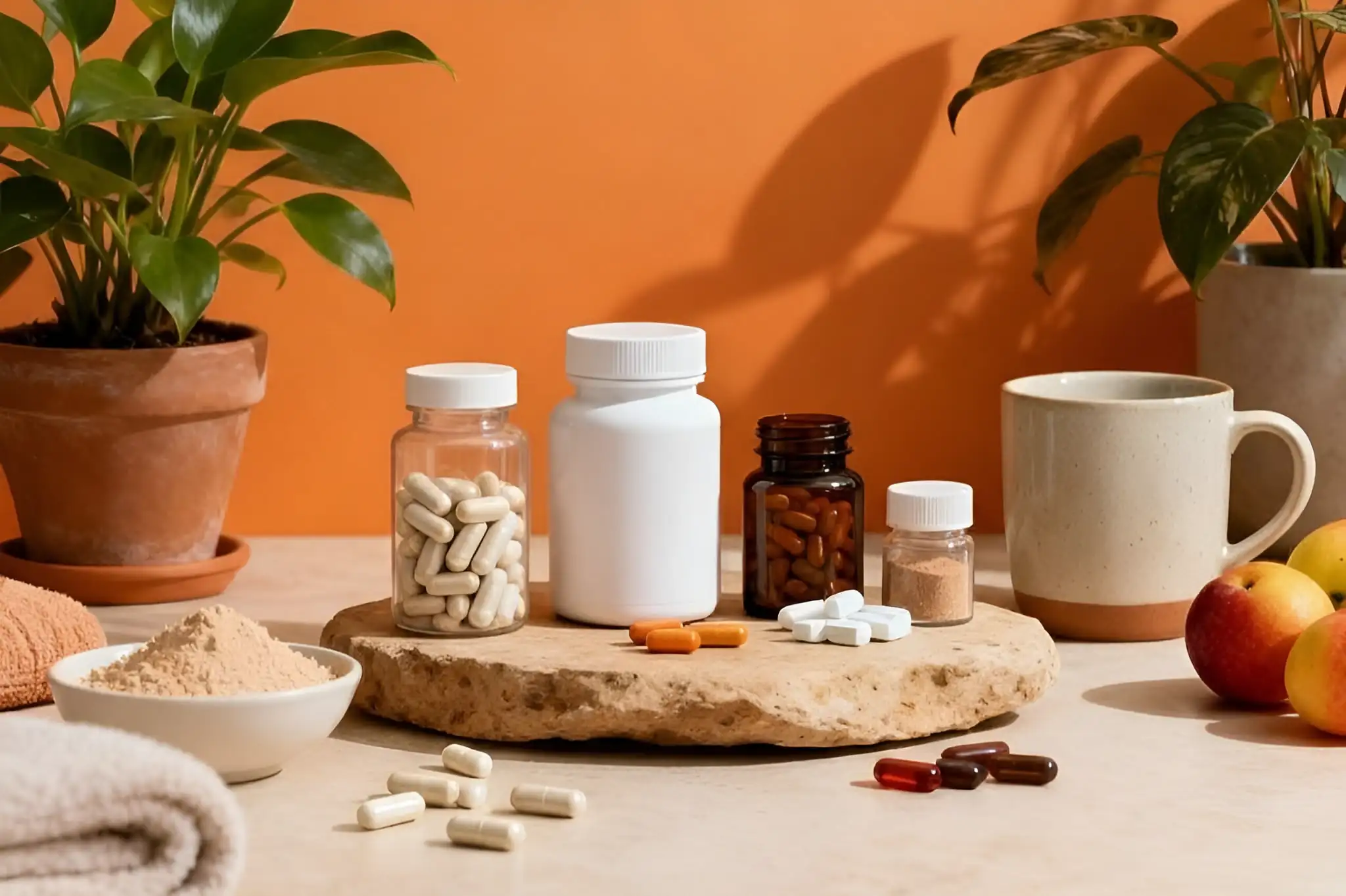
In practice, most commercial formulas rest on the same four families of ingredients:
- Caffeine, between 150 and 400 mg per serving depending on the brand, the equivalent of 2 to 4 espressos in one go.
- Beta-alanine, responsible for the skin tingling that many people read as a sign it is working.
- Citrulline malate or arginine, aiming for the pump through the nitric oxide pathway.
- Amino acids, B vitamins and sometimes creatine.
The rest, flavorings, colorings and sweeteners, plays no part in performance. That is exactly what pushes a lot of lifters toward a simpler version.
There is a second problem with commercial labels, and it is the one to check first: the proprietary blend. When a tub lists a named blend with a single total figure, say 6 g, you have no way of knowing how much of each ingredient is in it. In practice the cheap fillers sit at the top of the list and the expensive actives at the bottom, in amounts far below the doses used in the studies. A formula that states each ingredient in milligrams is telling you something. A blend is telling you nothing.
One point is worth clearing up straight away: natural does not mean caffeine-free. Coffee, green tea, guarana and yerba mate all contain it. A homemade coffee-based recipe is still a stimulant, with the same timing constraints as an industrial product.
Why look for a natural alternative to a classic pre-workout?
Three reasons come up every time, and none of them is ideological.
The first is sleep. Caffeine has a half-life of around 5 hours in an average adult, and considerably longer in slow metabolizers. A 300 mg dose taken at 6 pm still leaves roughly 150 mg in the body at 11 pm. For anyone training in the evening, that is the most ordinary cause of short nights.
The second is the crash. It is not a myth: when the stimulant effect fades, the fatigue accumulated during the session lands all at once. The pattern gets worse with habit, since caffeine tolerance builds within a few weeks and pushes you to raise the dose.
The third is the side sensations. The beta-alanine tingling, known as paresthesia, is harmless but unpleasant. Some people add palpitations or a jittery edge, especially on an empty stomach.
Then there is cost. A tub of commercial pre-workout usually works out between 0.80 € and 1.50 € per serving, for an ingredient list you can largely rebuild yourself. 💪


How do you make a homemade pre-workout in five minutes?
Here are four simple recipes, to adapt to the time of your session and your sensitivity to stimulants. All of them go in a shaker, with no special equipment.
1. The classic, for a morning strength session. A long espresso (around 80 to 100 mg of caffeine), 200 ml of water, a pinch of salt and the juice of half a lemon. The salt provides sodium, useful if you sweat heavily, and the lemon makes it drinkable.
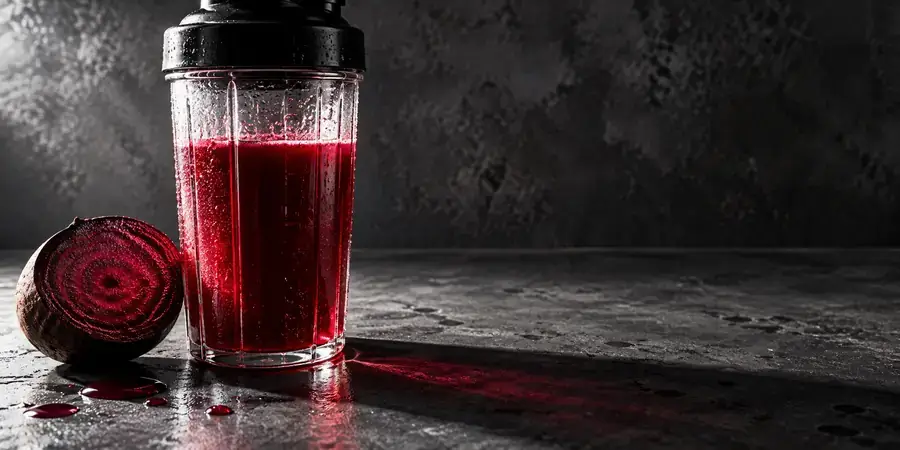
2. The beetroot one, for endurance. 150 ml of beetroot juice, 100 ml of water and a squeeze of lemon. Take it 2 hours before the session, not 30 minutes, because nitrates need time to be converted. It is the least pleasant to drink and the best documented scientifically.
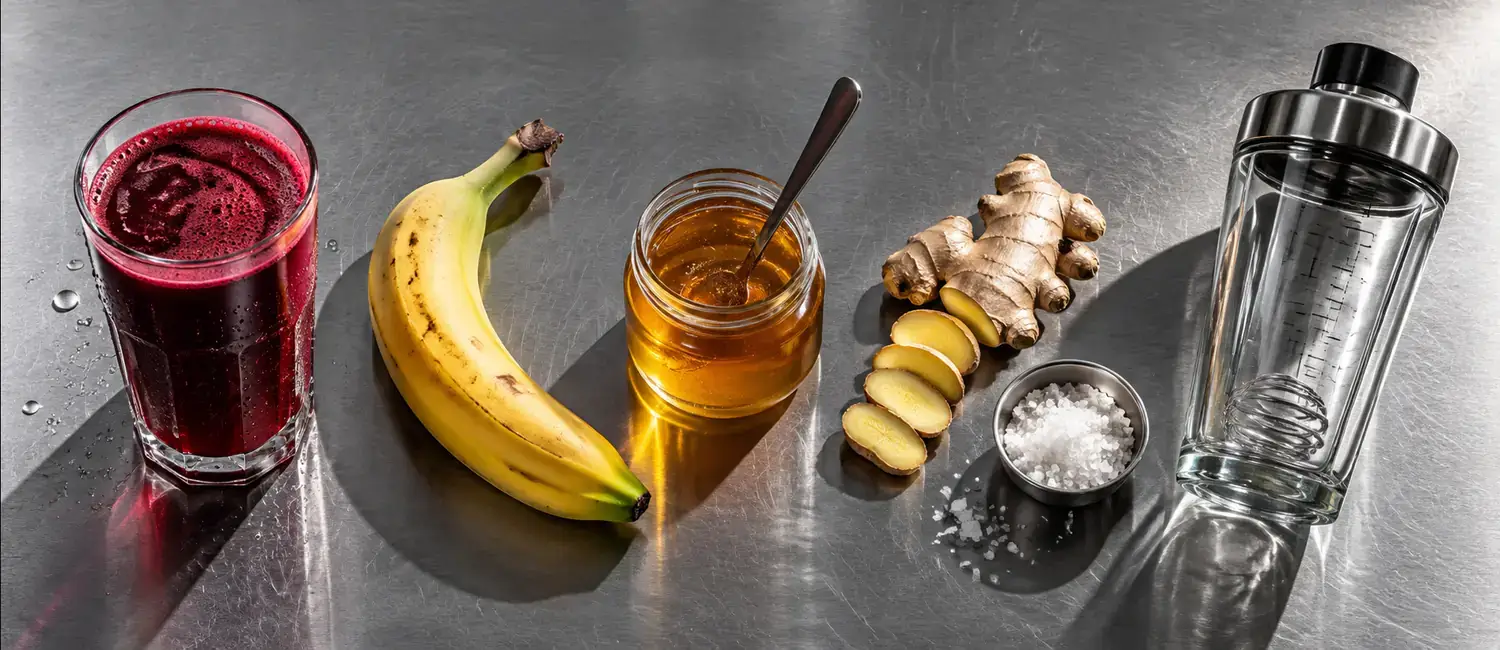
3. The caffeine-free one, for the evening. One ripe banana, 250 ml of water, a teaspoon of honey, a pinch of salt and 2 cm of freshly grated ginger. Readily available carbohydrates, sodium and a digestive ingredient, with nothing that disturbs sleep.
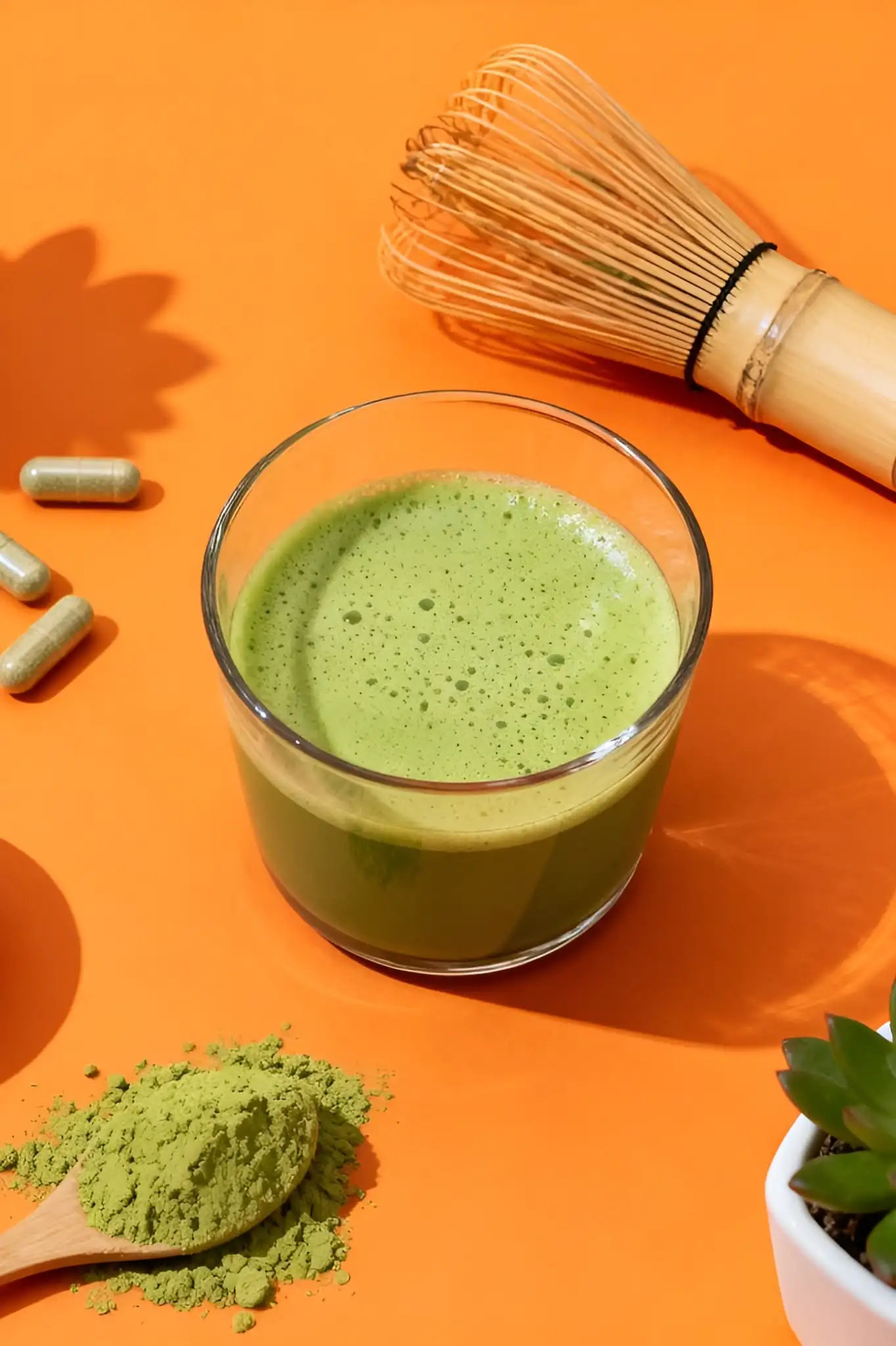
4. The matcha version, in between. A teaspoon of matcha in 250 ml of hot water, cooled, with a spoon of honey. Matcha brings caffeine but also L-theanine, which smooths out the nervous peak. A good transition if you want to cut down without stopping overnight.
One piece of advice that applies to all four: test them on an easy day before taking them into a session that matters. Digestive reactions vary a lot from person to person, especially with beetroot juice.
Which natural ingredients actually have solid data?
This is where sorting becomes useful, because the lists of natural ingredients you find online are far from equal.
Dietary nitrates, of which beetroot is the most concentrated source, are by far the best supported. An umbrella review published in 2025 in Sports Medicine, pooling twenty systematic reviews with meta-analyses, concludes there is a real effect on performance, mainly in endurance and on efforts of moderate duration.
Citrulline malate also has recent data. A three-level systematic review with meta-analysis published in 2026 in Nutrients examined its effect on performance, with favorable but moderate results that depend on the dose.
Caffeine remains the best documented stimulant of all. A 2026 meta-analysis on female participants confirms its value in resistance exercise, with the usual caveats about individual variability.
The dose matters more than the source. Sports nutrition guidance converges on 3 to 6 mg per kilogram of body weight, which is 210 to 420 mg for a 70 kg person. Below 3 mg/kg the effect is inconsistent, above 6 mg/kg you mostly add side effects without adding performance. Worth knowing when a commercial tub advertises 400 mg per scoop as a selling point: for most people that is the ceiling, not a bonus.
Beta-alanine was the subject of a 2024 systematic review with meta-analysis on maximal intensity exercise in trained men. Its effect mainly concerns efforts of 1 to 4 minutes, and it requires several weeks of daily intake, not a single dose before the session.
Ginger, present in several formulas and in our third recipe, has been studied for its influence on exercise induced muscle pain, with a synthesis published in 2026 in Nutrition Reviews. 🔍

What about caffeine-free capsule formulas?
This is the third route, between the homemade recipe and the tub of flavored powder. It has one specific advantage: a constant, known dose, with no stimulant, in a format you can carry.
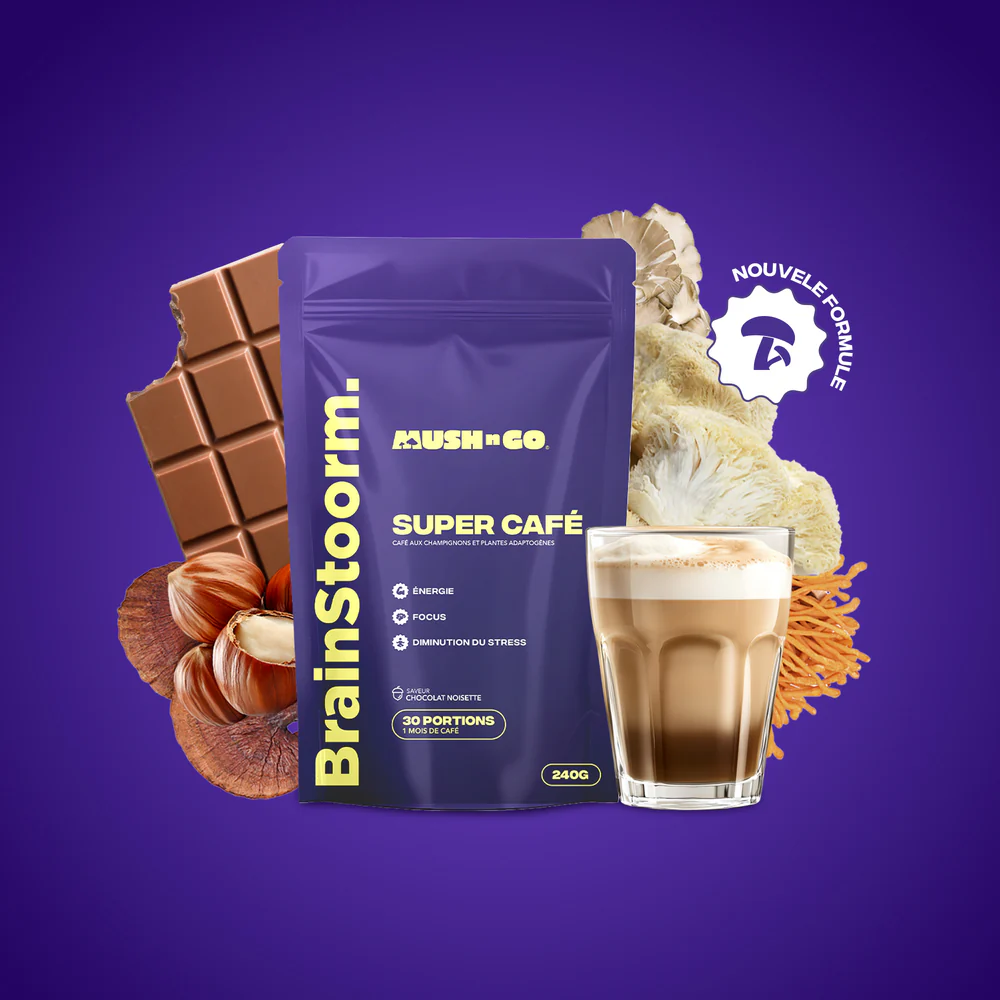
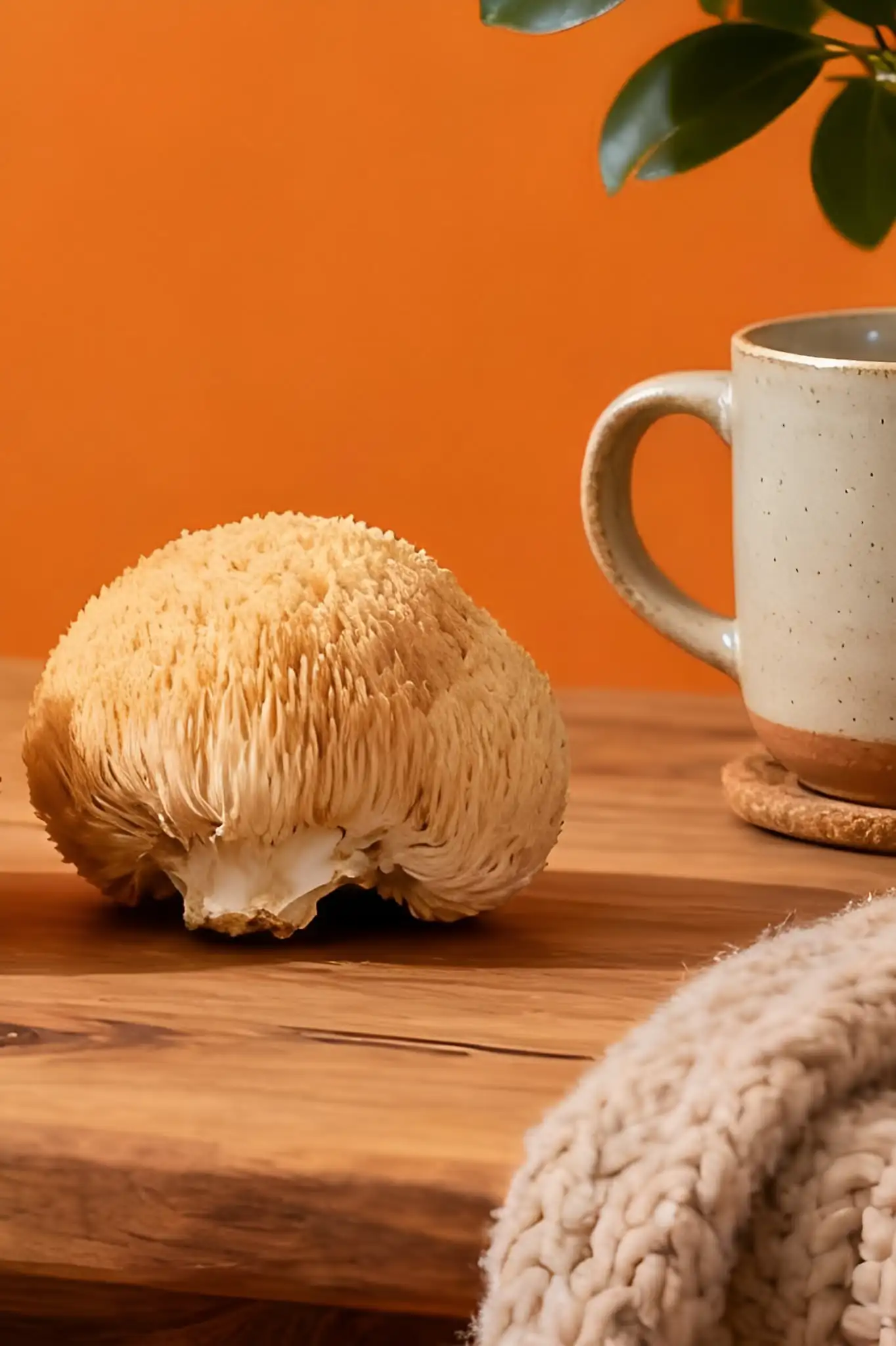
These formulas generally rely on adaptogens rather than stimulants. The Mush N Go Energy formula is a good example, with only four active ingredients: cordyceps, maca, ginger and vitamin C.
Cordyceps is traditionally linked to endurance. A double blind placebo controlled trial published in 2010 measured an improvement in certain ventilatory parameters during exercise in healthy older adults, on small numbers.
Maca is mostly documented on sexual desire: a 2002 study observed a rise in reported desire with no change in serum testosterone. On sporting performance itself, the data stay thin.
Only vitamin C carries an authorized health claim at European level here, for its contribution to normal energy metabolism and to the reduction of tiredness. Cordyceps, maca and ginger have none and fall under traditional use.
This type of formula does not produce the kick of a caffeinated product, and that is precisely the point. You judge it over several weeks, not over one session.
When should you take a natural pre-workout, depending on the time of your session?
Timing matters as much as content, and it changes with the main ingredient.
- Caffeine: 30 to 45 minutes before, never after 3 pm if you go to bed at 11 pm.
- Beetroot nitrates: 2 to 3 hours before, the time needed for conversion into nitric oxide.
- Fast carbohydrates (banana, honey): 30 minutes before, or just before if your stomach can take it.
- Adaptogens in capsules: taken daily, not occasionally. That is the logic of a course.
For an evening session, the simplest combination remains fast carbohydrates plus a stimulant-free formula. You keep energy available without mortgaging the night that follows.
If you train early in the morning on an empty stomach, be wary of recipes that are too acidic or too concentrated. Neat beetroot juice on an empty stomach makes itself known quickly.
Homemade, capsules or classic pre-workout: which one should you choose?
There is no universal winner, only profiles. The table below sums up what each option actually delivers.
| Criterion | Tested by LMCCaffeine-free formula | Homemade recipe | Classic pre-workout |
|---|---|---|---|
| Immediate kick | ❌Gradual, over 2 to 3 weeks | ✅Yes if caffeinated | ✅Yes, very marked |
| Usable in the evening | ✅Yes | Depends on the recipe | ❌No past 4 pm |
| Crash after the session | ✅None | Variable | ❌Common |
| Controlled dosing | ✅Stated per serving | ❌Approximate | ✅Stated |
| Cost per session | 0.77 € to 1.42 € | ✅0.30 € to 0.80 € | 0.80 € to 1.50 € |
| Practical when travelling | ✅Capsules to carry | ❌Must be made on the spot | ✅Powder to measure |
| Who it suits | Evening sessions, sensitivity to stimulants | Tight budget, wanting full control | Intense morning sessions |
Our reading, if you are hesitating: start with the homemade recipes for two weeks. It is free, it teaches you to spot what works on you, and it avoids buying a 40 € tub that ends up in the cupboard.
If your sessions fall in the evening, or if caffeine causes you problems, a stimulant-free formula makes sense over time. The Mush N Go range offers that format, with the code LMC15 for 15 % off. For delivery times and the guarantee, see our notes on shipping.
And if what you really wanted was to replace your morning coffee rather than fuel a session, that is a different question, which we cover in our article on coffee before training.
Frequently asked questions about natural pre-workout
Is a natural pre-workout as effective as a commercial product?
On the immediate feeling, no, because a commercial product packs more caffeine than a homemade recipe. On the ingredients that actually do something, nitrates and citrulline first, a well dosed homemade mix holds its own for a fraction of the price.
Can you take a pre-workout every day?
With caffeine, better not: tolerance builds within a few weeks and the effect dulls. Alternating days with and without a stimulant keeps the benefit. Caffeine-free formulas, on the other hand, are taken continuously.
Are honey and salt really enough as a pre-workout?
They provide available glucose and sodium, which helps if you train fasted or sweat a lot. But it is not a stimulant: do not expect a kick, only the absence of an energy crash.
Which natural pre-workout for a session after 7 pm?
The banana, honey, salt and ginger recipe, or a stimulant-free capsule formula. Rule out coffee, matcha, guarana and green tea, all caffeinated, even if the content is lower than in an industrial product.
Should you take a pre-workout on an empty stomach?
The effects come faster fasted, but so do digestive discomfort and jitters. If you are starting out, take it on a lightly filled stomach and adjust from there.
Is a natural pre-workout compatible with creatine?
Yes, the two work through different pathways. Creatine, however, is taken every day, session or not, and not specifically before training.
How much caffeine should a pre-workout contain?
Between 3 and 6 mg per kilogram of body weight, so roughly 210 to 420 mg for a 70 kg person. Many commercial tubs sit at the top of that range in a single scoop, which is a lot if you are not used to it. Start with half a serving.
Does the beta-alanine tingling mean it is working?
No. Paresthesia is a harmless side effect with no link to the benefit, which comes from several weeks of daily intake and concerns efforts of 1 to 4 minutes. A formula can tingle a lot and do very little.
Scientific references
- Sports Medicine, 2025. Dietary nitrate supplementation and exercise performance, umbrella review of 20 systematic reviews with meta-analyses. PubMed 40085422
- Nutrients, 2026. Citrulline malate and exercise performance, systematic review and three-level meta-analysis. PubMed 42356270
- Frontiers in Physiology, 2026. Acute caffeine and resistance exercise performance in female participants, three-level meta-analysis. PubMed 42591203
- International Journal of Sport Nutrition and Exercise Metabolism, 2024. Beta-alanine and maximal intensity exercise, systematic review and meta-analysis. PubMed 39032921
- Nutrition Reviews, 2026. Influence of ginger on exercise induced muscle pain. PubMed 42186281
- Chen S. et al., Journal of Alternative and Complementary Medicine, 2010. Cs-4 (Cordyceps sinensis) and exercise performance. PubMed 20804368
- Gonzales G. F. et al., Andrologia, 2002. Maca, sexual desire and serum testosterone. PubMed 12472620
Food supplements are not a substitute for a varied, balanced diet and a healthy lifestyle. If you have a heart condition, high blood pressure or are pregnant, ask a health professional before using a stimulant product.

LMC’s editorial line is built around transparency and reliability. Our content is written to help users make better decisions, based on 7 key criteria* that support trustworthy information, verified promo codes, and useful reviews.
To support LMC, some links are affiliate links. Our recommendations remain independent and based on transparent, verifiable criteria. By using the site, you accept our terms of use and our editorial policy.


.webp)

.avif)