

Marine or bovine collagen: the question comes up as soon as you compare two jars on the shelf. One is presented as "more bioavailable" and more premium, the other as "more complete" and cheaper. In both cases, the pitch often comes from the brand selling one of the two.
The short answer: once hydrolyzed, both mainly provide type I collagen, and no study has shown that one source works clearly better than the other for skin or joints. So the choice mostly comes down to practical criteria: allergies, diet, halal requirements, price per dose and label quality.
The quick verdict
- Choose marine collagen if you don't eat beef (pescatarian, personal or religious choice), if you want a routine focused on skin, hair and nails with a documented marine ingredient, and if the higher price doesn't bother you.
- Choose bovine collagen if you're allergic to fish, if you're looking for the best price per gram, or if you already take a protein powder and want a neutral product at 10 g per day.
- In both cases, look at the label first: hydrolyzed peptides, clearly stated origin, collagen dose in grams per serving, short ingredient list.
If you've already chosen marine, go straight to our comparison of the best marine collagens. If you want to see all sources side by side, check out our general collagen comparison.
Marine collagen, bovine collagen: what are we talking about?

Collagen is the most abundant structural protein in the body: it's found in skin, tendons, bones and cartilage. Supplements don't contain human collagen, but processed animal collagen.
Marine collagen is extracted from fish skin, scales or bones, often by-products of the filleting industry. Bovine collagen generally comes from cattle hide or bones. In both cases, the raw material is hydrolyzed: the long collagen chains are cut into shorter peptides that are water-soluble and absorbable.

Marine vs. bovine collagen: the comparison table
| Criterion | Marine collagen | Bovine collagen |
|---|---|---|
| Source | Fish skin, scales or bones | Cattle hide or bones |
| Main collagen type | Type I | Type I, with some type III depending on the tissues used |
| Clinical evidence | Trials mostly on skin; results debated | Trials on skin, joints and sports; results debated |
| Proven superiority | No | No |
| Price | Generally more expensive per gram | Generally cheaper per gram |
| Allergy | Avoid if you have a fish allergy | Allergy rare; check your tolerance to beef |
| Diet | Pescatarian-friendly | Not pescatarian-friendly |
| Halal / kosher | Often simpler, certification to be checked | Requires explicit certification |
| Common branded ingredients | Naticol (Weishardt), marine Peptan (Rousselot) | Bovine Peptan (Rousselot) |
Absorption: is marine collagen really more bioavailable?
This is the most repeated argument in favor of marine collagen: its peptides are supposedly smaller, and therefore better absorbed. The reality is more nuanced.
Peptide size depends mainly on the hydrolysis process, not on the animal. A well-hydrolyzed bovine collagen can have a molecular weight comparable to a marine collagen. For example, Clearly states 2,000 to 3,000 daltons for its fish collagen, while AqeeLab highlights fine hydrolysis for its bovine Peptan. So compare the product, not the source.
The most cited study on the subject (Ohara et al., 2007) compared, in 5 volunteers, the presence of hydroxyproline peptides in the blood after ingesting collagen from fish scales, fish skin or pig skin. The amount measured was higher with fish scales than with pig skin, and the peptide structure varied by source. Three limitations: the sample is tiny, the study doesn't test bovine collagen, and it measures absorption, not an effect on skin or joints.
Bottom line: peptide profiles differ by source, but nothing allows us to claim that marine collagen "works better."
Effectiveness: what studies say about skin and joints
For skin, two meta-analyses of randomized trials conclude that hydrolyzed collagen improves hydration and elasticity compared with placebo (de Miranda et al., 2021, 19 studies; Pu et al., 2023, 26 studies). In the second one, the effect on hydration varied by collagen source, but no significant difference between sources was found for elasticity. A more recent meta-analysis (Myung and Park, 2025, 23 trials) throws cold water on this: when only high-quality studies, or those not funded by industry, are kept, the effects on hydration, elasticity and wrinkles disappear.
For joints, a meta-analysis of placebo-controlled trials (García-Coronado et al., 2019) reports a drop in symptom scores in people with osteoarthritis. A 24-week trial in athletes (Clark et al., 2008) used 10 g per day of hydrolyzed collagen, but EFSA, when reviewing that same trial, concluded that no significant difference remained once multiple comparisons were corrected for. Many of these trials use collagen of bovine or porcine origin, and they focus on specific products: you can't automatically apply them to any jar.
On the European regulatory side, EFSA reviewed a claim application on hydrolyzed collagen and joint maintenance (2011), then another on a collagen peptide and skin elasticity (2013). In both cases, it found that a cause-and-effect relationship had not been established. No health claim specific to collagen is authorized in the EU, whether marine or bovine. Only vitamin C can be linked to collagen: it "contributes to normal collagen formation" for the normal function of bones, cartilage and other tissues.
For details on the effects studied and their limitations, see our article marine collagen: benefits, effects and real limitations.
Price: why marine collagen costs more

Marine collagen is generally more expensive per gram than bovine. Some brands that sell bovine collagen even say so openly on their product page: AqeeLab says it chose bovine because, in its view, marine Peptan costs 2 to 3 times more without being 2 to 3 times more effective. That's a sales argument, but the price gap does show up on the shelf.
To compare fairly, always bring the price back to the daily collagen dose:
- a 300 g jar at 10 g per day lasts 30 days;
- a 280 g jar at 6 g per day lasts about 45 days;
- a coffee or drink in which collagen is only part of the blend provides less collagen than it seems.
Allergies, diets and halal: often the deciding factor
Fish allergy. This is the only truly disqualifying criterion. Fish collagen is itself an allergen: in a Japanese study, half of fish-allergic patients had IgE antibodies against mackerel collagen, with strong cross-reactivity between species (Kobayashi et al., 2016). Hydrolysis doesn't guarantee there will be no reaction. Some products also warn of traces of crustaceans and mollusks. If you have an allergy, choose bovine, and ask your allergist for advice.
Diet. Pescatarians can only take marine collagen. No collagen is vegetarian or vegan: products called "vegan collagen" are blends of nutrients designed to support the body's natural collagen production, not collagen.
Halal and kosher. Fish is generally considered simpler to approve, but certification still needs to be checked in both cases (processing, capsules, flavorings). Bovine collagen is only halal if the brand says so and backs it up. Our guide to halal collagen details what to check.
How to spot a good collagen, marine or bovine
- The origin is written in the ingredients. "Fish collagen peptides" or "bovine collagen peptides." Be wary of vague wording like "natural collagen."
- "Peptan" doesn't mean "marine." Peptan is an ingredient brand from Rousselot that comes in both a bovine and a marine version. Several products promoted as "Peptan" are bovine. Check the origin statement.
- The collagen dose is given in grams per serving. Powder manufacturers most often recommend 5 to 10 g per day. See our guide to marine collagen dosage.
- The ingredient list is short. Collagen, possibly vitamin C. Add-ons (hyaluronic acid, biotin, flavorings) raise the price more than the value.
- The format fits your routine. Powder is the most economical way to reach several grams per day; capsules and tablets mean taking many of them. Detailed comparison in marine collagen powder or capsules and in our guide to marine collagen powder.
Which collagen should you choose based on your profile?

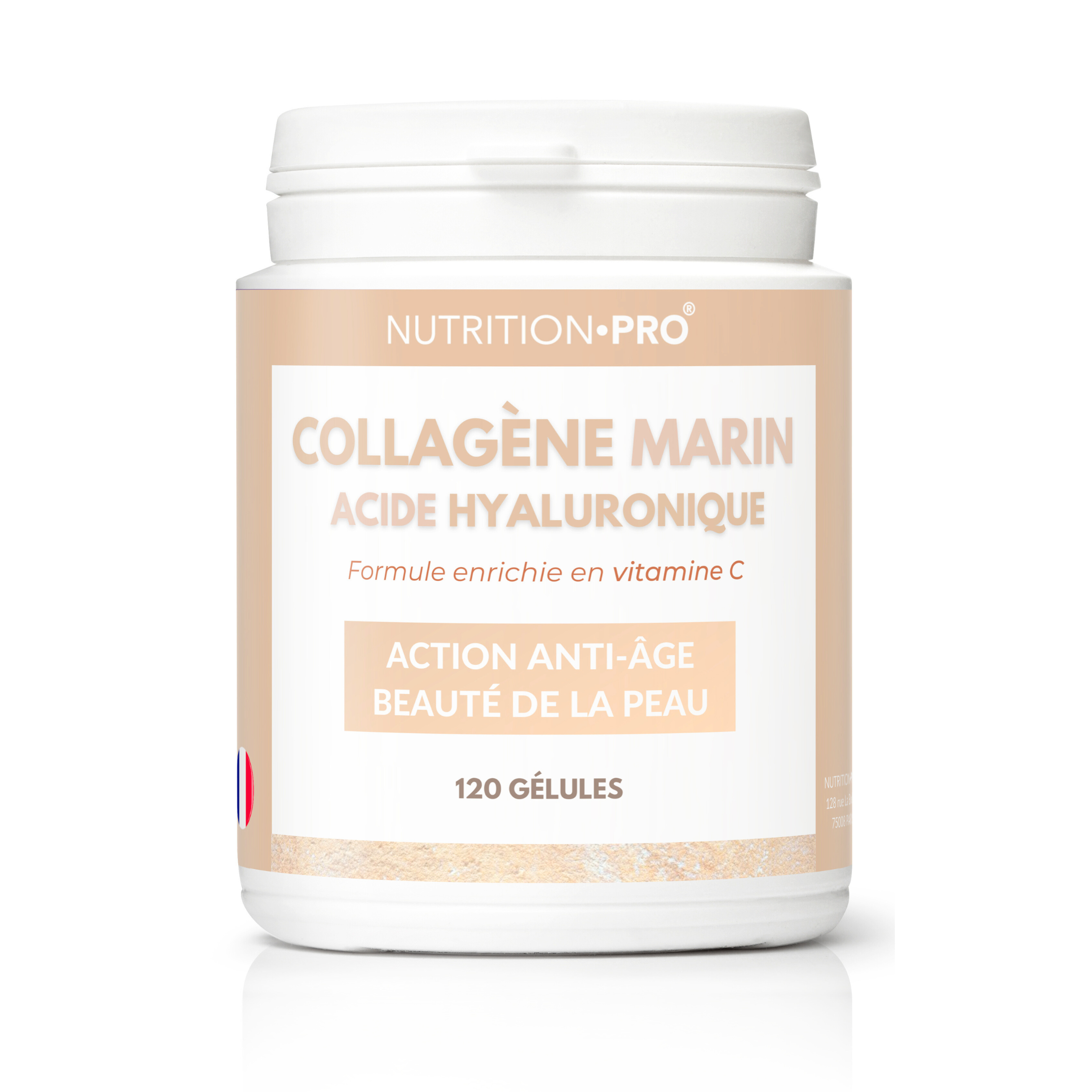
- Beauty routine (skin, hair, nails), no allergy: both work. Marine is the most common choice, especially with a documented ingredient such as Naticol or marine Peptan. In our selection of the best marine collagens, Nutrition Pro's marine collagen with hyaluronic acid comes out on top.
- Athlete or joint goal, tight budget: a hydrolyzed bovine collagen powder at 10 g per day is the most economical option. See our general collagen comparison.
- Pescatarian, or you avoid beef: marine collagen, with a clearly stated fish origin.
- Allergic to fish or seafood: bovine collagen only.
- Pregnant, breastfeeding, on medication, kidney failure: ask your doctor or pharmacist before starting, whatever the source. Several manufacturers actually advise against their product in these situations.
In summary
Marine or bovine, hydrolyzed collagen mainly provides type I collagen, and studies don't allow us to name a winner. Marine makes sense if you avoid beef or prefer a documented marine ingredient, and are willing to pay more. Bovine is the logical choice if you have a fish allergy or want the best grams-to-price ratio. In both cases, label quality (origin, dose, hydrolysis) matters more than the source. And neither one replaces a varied diet, sufficient protein and vitamin C intake, or medical advice if you have skin or joint problems.

LMC content is written by our editorial team from the information published by the brands. Scores out of 10 follow a public grid of 5 criteria*, supplemented by LMC’s editorial assessment.
To support LMC, some links are affiliate links: LMC earns a commission at no extra cost to you, and some of the brands featured are partners. By using the site, you accept our terms of use and our editorial policy.