
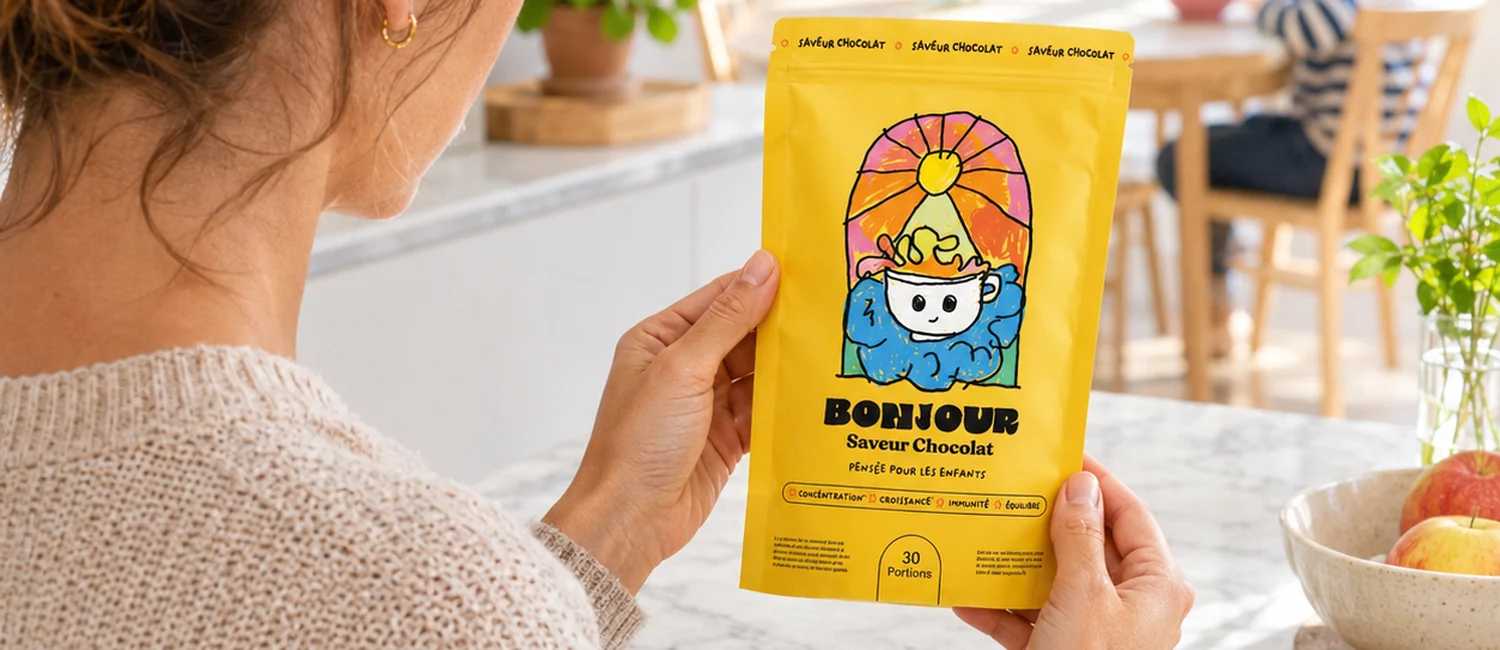
What is the real risk for a child who drinks Bonjour Kids?
Used as the brand directs, one to two mugs a day from age 3, none of the ingredients in Bonjour Kids goes over the thresholds set by EU regulations. The only situation that calls for medical advice before giving it is anticoagulant treatment of the vitamin K antagonist family, because of the vitamin K2 in the formula.
That said, four questions come up again and again among parents, and none of them is silly: the stevia that replaces sugar, the cadmium naturally present in cocoa, that much-discussed vitamin K2, and the dose not to exceed. I take them one by one, with the official texts alongside, rather than offering a general opinion.
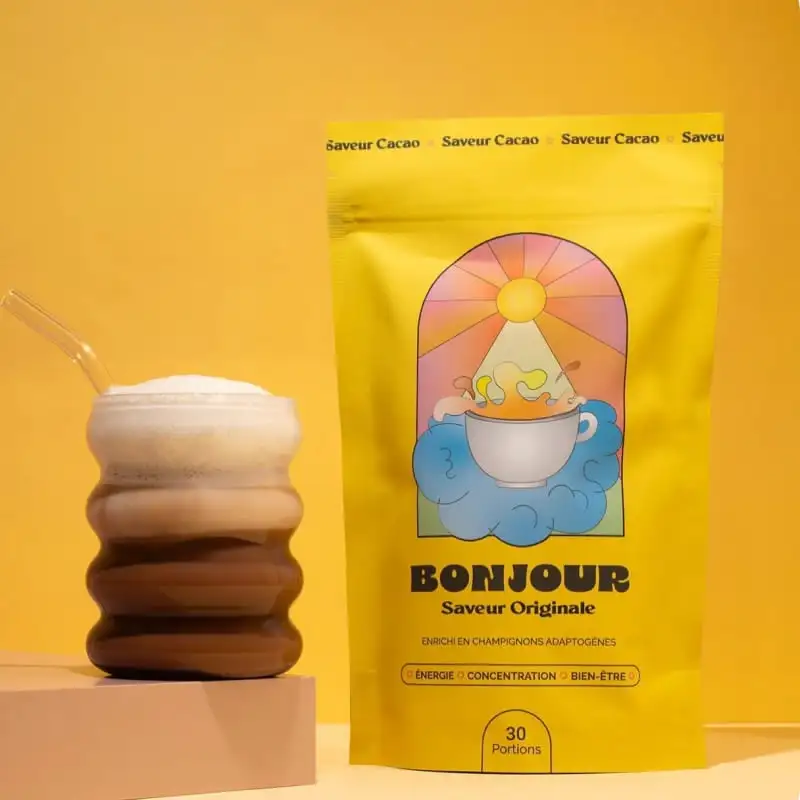
One point of vocabulary before we start, because it explains a good deal of the worry you find online. Bonjour Drink sells two very different product families. The adult range is a drink made with adaptogenic mushrooms, and some flavours contain caffeine: it is not meant for children. The Kids range contains no caffeine, no adaptogenic mushrooms and no added sugars. The warnings you come across about the brand almost always concern the first, not the second.

Is the stevia in Bonjour Kids a problem?
Steviol glycosides are the sweetener additive E960, authorised in the European Union, and the European Food Safety Authority has set an acceptable daily intake of 4 mg per kilo of body weight per day, expressed as steviol equivalents. For a 20 kilo child, that comes to 80 mg a day, from all foods combined.
This figure appears in EU regulation 1131/2011, the very regulation that authorised the ingredient. And that regulation contains a sentence that sales pages never quote: according to exposure estimates, the acceptable daily intake could be exceeded by high consumers, adults and children alike, if the maximum use levels are applied across the board. In other words, the issue is not any one product, it is the build-up over a whole day.
In practice, a child who drinks one mug of sweetened chocolate in the morning is not a concern. A child who goes from a sweetened drink to a light yoghurt, sugar-free chewing gum and a diet dessert in the same day piles up sources without anyone adding them up. So the right question is not ‘is this product safe?’ but ‘how many sweetened products does my child have each day?’.
We also have to be honest about one limit: the brand does not publish the exact steviol glycoside content per mug, so it is impossible to work out precisely what share of the acceptable daily intake one serving covers. Given the size of a serving, 6 g of powder per mug, it can only be small, but until the figure is published, this remains reasoning rather than measurement.
On eating habits, a study published in Pediatric Obesity in 2025 followed 450 Chilean 3-year-olds and measured their intake of non-nutritive sweeteners and how it related to their sugar intake. Work like this is a reminder that a sweetener is not a neutral ingredient when it comes to shaping taste, even when it is fully authorised. That is an argument for varying drinks, not for fearing a mug.

Also worth reading : my full review of Bonjour Kids / which Bonjour Drink version by age.
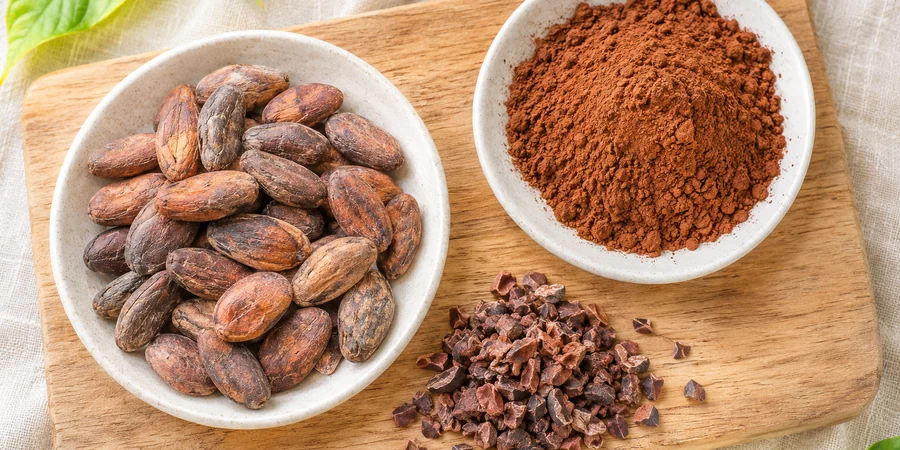
Cadmium in cocoa: the real issue with chocolate powders
EU regulation 2023/915 sets the maximum cadmium level for cocoa powder sold to the consumer or used in drinking chocolate at 0,60 mg per kilo. Bonjour Drink states 0,27 mg per kilo for its cocoa, which is less than half that limit.
This metal is not added by the manufacturer: it is present in the soils where cocoa trees grow, and the plant concentrates it in its beans. Levels therefore vary widely by origin, with South American cocoa carrying more on average than West African cocoa. That is why the stated origin, the Dominican Republic, is useful information rather than window dressing, and why the brand publishes the results of its batch tests, carried out by a COFRAC-accredited laboratory.
This matters all the more because children are proportionally the most exposed group: for the same amount, a small body receives a higher relative dose than an adult. A children's chocolate powder that stays at half the regulatory limit therefore does more than simply comply with the law, and it is a figure most brands in the aisle do not disclose at all.
The question is what this figure is worth. It comes from tests the brand commissioned from Phytocontrol, a COFRAC-accredited laboratory. That accreditation is a serious guarantee on method: it shows the laboratory is regularly assessed on its procedures and the reliability of its measurements. It does not, however, turn a result into a product certification, and it says nothing about batches that were not tested.
What a parent can take from this, in practical terms: a brand that publishes a figure, names its laboratory and states where its cocoa comes from is opening itself up to checks, which is already a filter. In this aisle, most chocolate powders disclose no heavy metal levels at all, and a lack of information obviously does not mean a lack of cadmium: it only means nobody is giving you the figure.
Vitamin K2 is the only firm contraindication
One mug provides 18,8 µg of vitamin K2 from natto, a fermented soya. Under EU regulation 432/2012, vitamin K contributes to normal blood clotting, and it is precisely this action that makes it incompatible with anticoagulant treatments of the vitamin K antagonist family.
These treatments work by counteracting vitamin K: a regular intake that the doctor does not know about can change how well they work. It is rare in children, but it does happen, particularly in paediatric cardiology. In that situation the rule is not up for debate: get medical advice before introducing the product, just as you would for any food fortified with vitamin K.
For a child who is not on this kind of treatment, vitamin K2 calls for no particular precaution. Note in passing that the natto and the vitamin E in the product both come from soya: a soya allergy is a contraindication in its own right, and it is not always given prominence on sales pages.
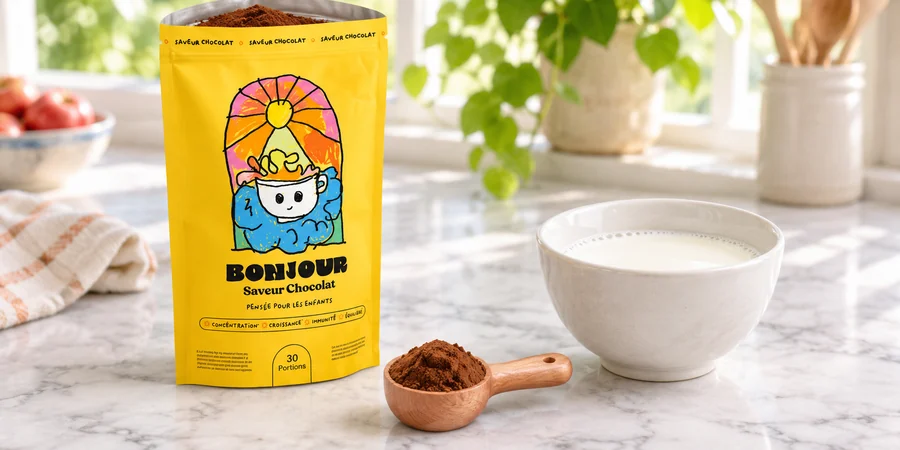
Why you should not go over two mugs a day
The two-mug limit is not a commercial precaution: it comes from the added vitamins, whose amounts are calculated on reference values for adults. Annex XIII of regulation 1169/2011, which defines these values used on every label, states explicitly that they are adult references.
One mug covers 50 % of the adult reference for vitamins D, C, B12 and E, 25 % for vitamin K, and 12,5 % for calcium and zinc. For a 5-year-old who weighs four times less than an adult, the real share of their needs is far higher than the percentage suggests. So for four of the vitamins, two mugs already provide the equivalent of a full adult reference.
The risk is not in the mug itself, it is in the silent addition: a child who takes this product, plus a multivitamin syrup, plus fortified breakfast cereals, builds up intakes that nobody totals. If supplementation is already under way, the sensible move is to talk to your paediatrician and choose one or the other, not to stack them.
| Profile | Bonjour Kids | What you need to know |
|---|---|---|
| Child under 3 | ❌No | The product is not formulated for this age, and a toddler's diet is a matter for paediatric follow-up |
| Child aged 3 and over | ✅Yes | One to two mugs a day at most, at breakfast or as an after-school snack |
| Vitamin K antagonist anticoagulant treatment | ❌Medical advice required | Vitamin K2 interferes with this class of treatment |
| Soya allergy | ❌No | The vitamin E comes from soya and the vitamin K2 from fermented soya |
| Child already taking multivitamins | To be decided | Intakes add up: choose one or the other after asking your paediatrician |
| Teenager or adult | ✅Yes | Nothing against it, but the amounts are set for a child |
Can Bonjour Kids cause tummy ache?
This is the most plausible side effect, and it comes from the fibre, not the vitamins. Acacia gum is second on the ingredient list: it is a soluble fibre, and any fibre introduced suddenly into a child's diet can cause bloating or wind in the first few days.
What we know about this ingredient is fairly reassuring. A controlled trial published in Nutrients in 2021 gave 48 adults 20 g and then 40 g of acacia gum at breakfast and measured digestive tolerance, satiety and blood glucose. Tolerance was described as good, even at the higher dose. Two big caveats: the trial involved adults, and these amounts are far above what a 6 g serving of chocolate powder contains, fibre included. So it cannot be read as a guarantee for a child, only as a reassuring sign that this fibre is well tolerated.
In practice, three habits head off most discomfort. Start with half a mug for two or three days rather than a full mug straight away. Stick to the stated dose, about 6 g, without heaping the scoop to boost the flavour. And serve the drink with a meal, not on an empty stomach.
If the discomfort lasts more than a few days, or comes with diarrhoea, the right decision is to stop and talk to your doctor: this kind of reaction can also point to something other than fibre, for example an intolerance to the milk the powder is made with. Remember that the powder is lactose-free, but the mug itself is usually made with cow's milk.
The real risk is mixing up the adult and children's ranges
Giving the adult drink to a child: that is the scenario that genuinely causes problems. It contains adaptogenic mushrooms whose effects in children are not documented, and up to 35 mg of caffeine per serving depending on the flavour.
The two ranges look alike on the shelf and share the same brand name, hence the confusion. The way to tell them apart is simple: the children's product carries the word Kids and the chocolate flavour, and its ingredient list contains neither mushrooms nor coffee. If in doubt, the full details are on our Bonjour Kids product sheet, and the precautions for the adult range are gathered on our page about the contraindications of the Bonjour drink.
One last common-sense point: even without sugars, this drink still tastes sweet. It replaces neither the day's water nor a meal, and it should be made with the stated dose, about 6 g, without overdoing it to boost the flavour.
My verdict on the safety of Bonjour Kids
In my view, Bonjour Kids is not a risky product for a healthy child over 3 who sticks to the dose. The two figures that matter point the right way: cadmium at half the regulatory limit, and an authorised sweetener whose acceptable daily intake is out of reach with one mug a day.
My watch points fit in three lines: medical advice if your child is on a vitamin K antagonist anticoagulant, a firm no in case of soya allergy, and a choice to make alongside other sources of vitamins. Beyond that, the formula is simpler than most chocolate powders in the aisle, and it is the absence of sugars that makes the biggest difference day to day.
If you want to dig deeper into the formula, I have broken down every ingredient and its dose in my full Bonjour Kids review. The brand offers a 60-day guarantee on its shop, bonjourdrink.co, which gives you time to try it with no commitment. The code LMC20 gives 20 % off the range, including the children's product, for an indicative price of 35,20 euros for 30 mugs.
Frequently asked questions about Bonjour Kids safety
Does Bonjour Kids contain caffeine?
No. The children's formula contains no caffeine and no adaptogenic mushrooms, unlike several flavours in the adult range.
Is stevia dangerous for children?
Steviol glycosides are authorised in the European Union with an acceptable daily intake of 4 mg per kilo of body weight. One mug a day is a long way below that, but it is worth keeping an eye on how many sweetened products add up over the day.
What should I do if my child is on anticoagulant treatment?
Ask your doctor before introducing it. The vitamin K2 in the product interacts with vitamin K antagonist anticoagulants.
Is there cadmium in Bonjour Kids?
As in any cocoa-based product, yes, naturally. The brand states 0,27 mg per kilo for its cocoa, against a regulatory limit of 0,60 mg per kilo for cocoa powder sold to the consumer.
How long can you give it without a break?
It is a food, not a course of treatment: no maximum duration is set. The useful question remains the daily dose and how it adds up with other fortified products.
Official sources and studies cited
- Regulation (EU) No 1131/2011 authorising steviol glycosides, acceptable daily intake of 4 mg/kg body weight expressed as steviol equivalents. EUR-Lex
- Regulation (EU) 2023/915 on maximum levels for certain contaminants, point 3.2.15.4, cadmium in cocoa powder. EUR-Lex
- Regulation (EU) No 432/2012, list of permitted health claims, vitamin K and blood clotting. EUR-Lex
- Regulation (EU) No 1169/2011, Annex XIII, reference intakes for adults. EUR-Lex
- Arévalo P. et al., Non-Nutritive Sweeteners Intake and Its Association With Sugars Intake Among Chilean Toddlers, Pediatric Obesity, 2025. PMID 40653632
- Tanaviyutpakdee P. et al., Risk of Exposure to Steviol Glycosides Through Consumption of Foods and Beverages, Food Science & Nutrition, 2025. PMID 39901985
Food supplements should not be used as a substitute for a varied and balanced diet and a healthy lifestyle. This article is for information only and does not replace advice from a healthcare professional: if you are on medication, have an allergy or have any doubts, ask your doctor or paediatrician.

LMC content is written by our editorial team from the information published by the brands. Scores out of 10 follow a public grid of 5 criteria*, supplemented by LMC’s editorial assessment.
To support LMC, some links are affiliate links: LMC earns a commission at no extra cost to you, and some of the brands featured are partners. By using the site, you accept our terms of use and our editorial policy.