
Can a child drink Bonjour Drink?
Not the adult drink, which is for adults only, but yes to Bonjour Kids, the cocoa product formulated for children aged 3 and over. That is the first thing to clear up, because both products carry the same brand name and are sold in the same shop.
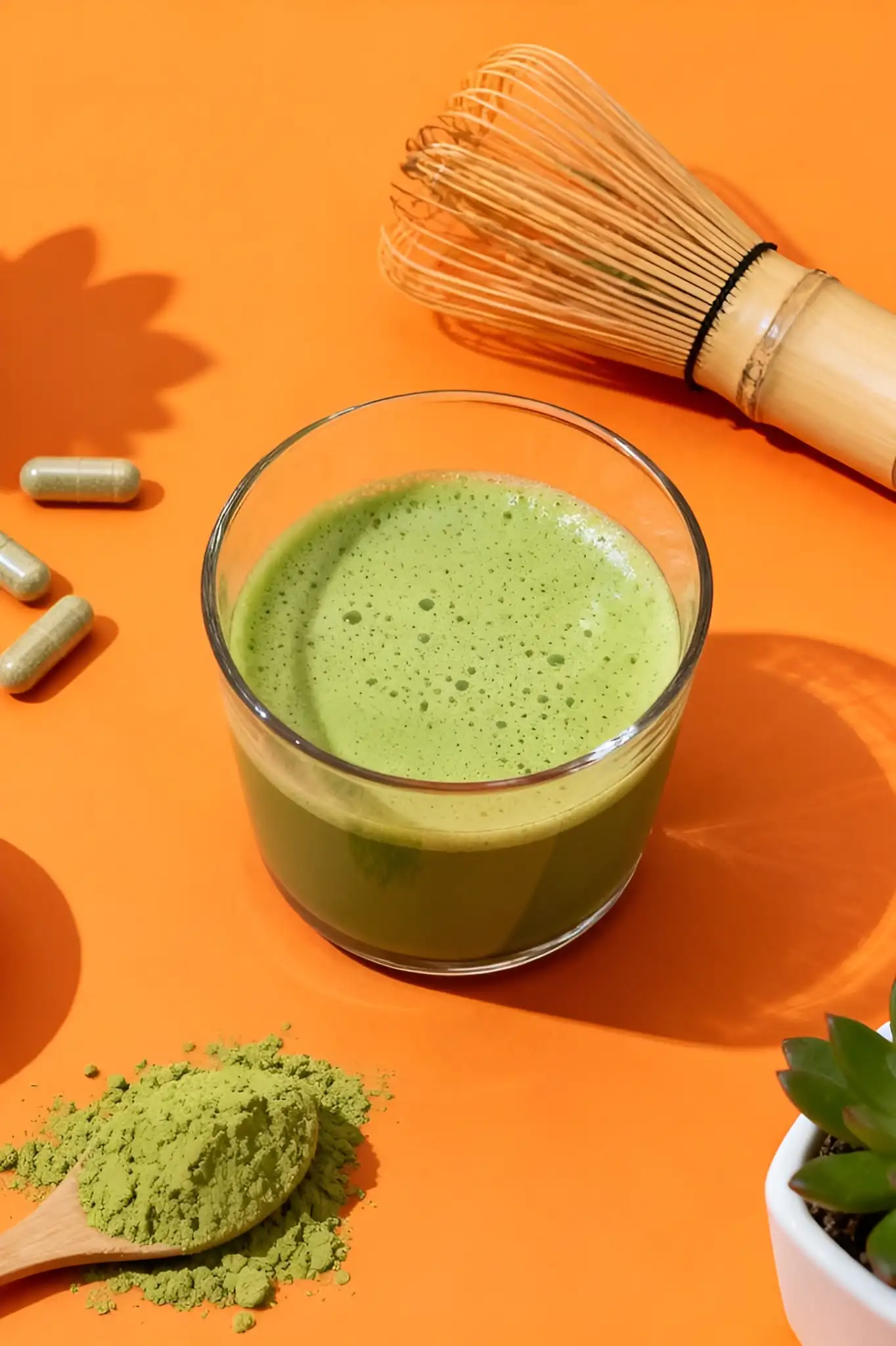
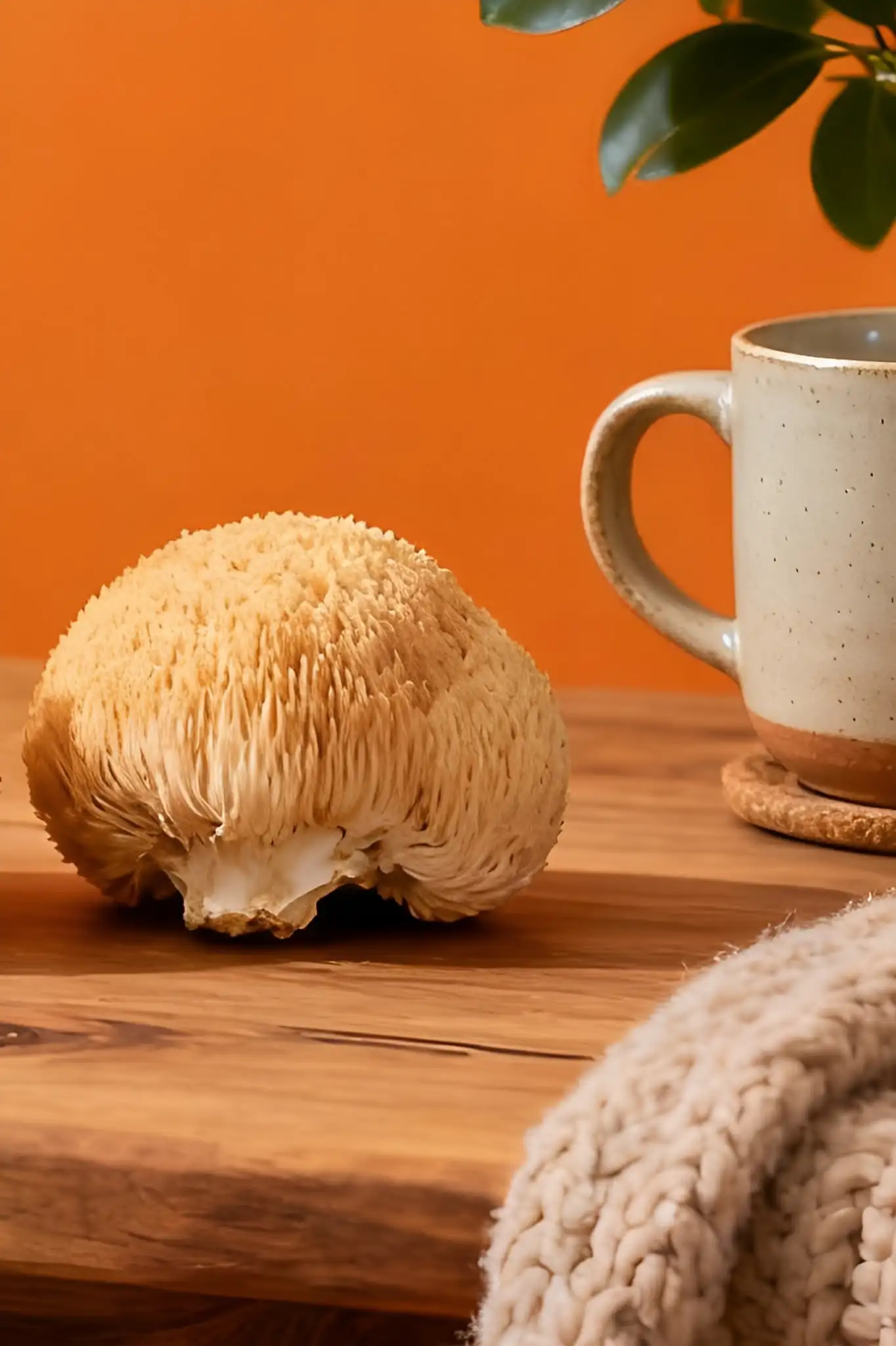
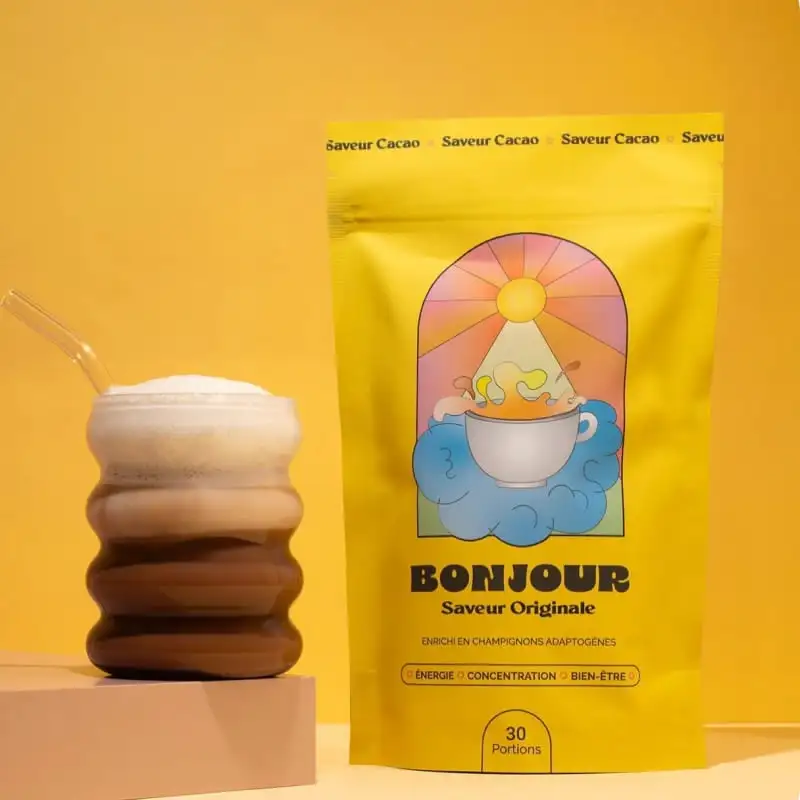
The mix-up is all the easier because the brand made its name with a single product, a mushroom drink pitched as an alternative to coffee. The children's range came later, with an entirely different formula: cocoa, vanilla, fibre and eight micronutrients, with no caffeine and no adaptogenic mushrooms.
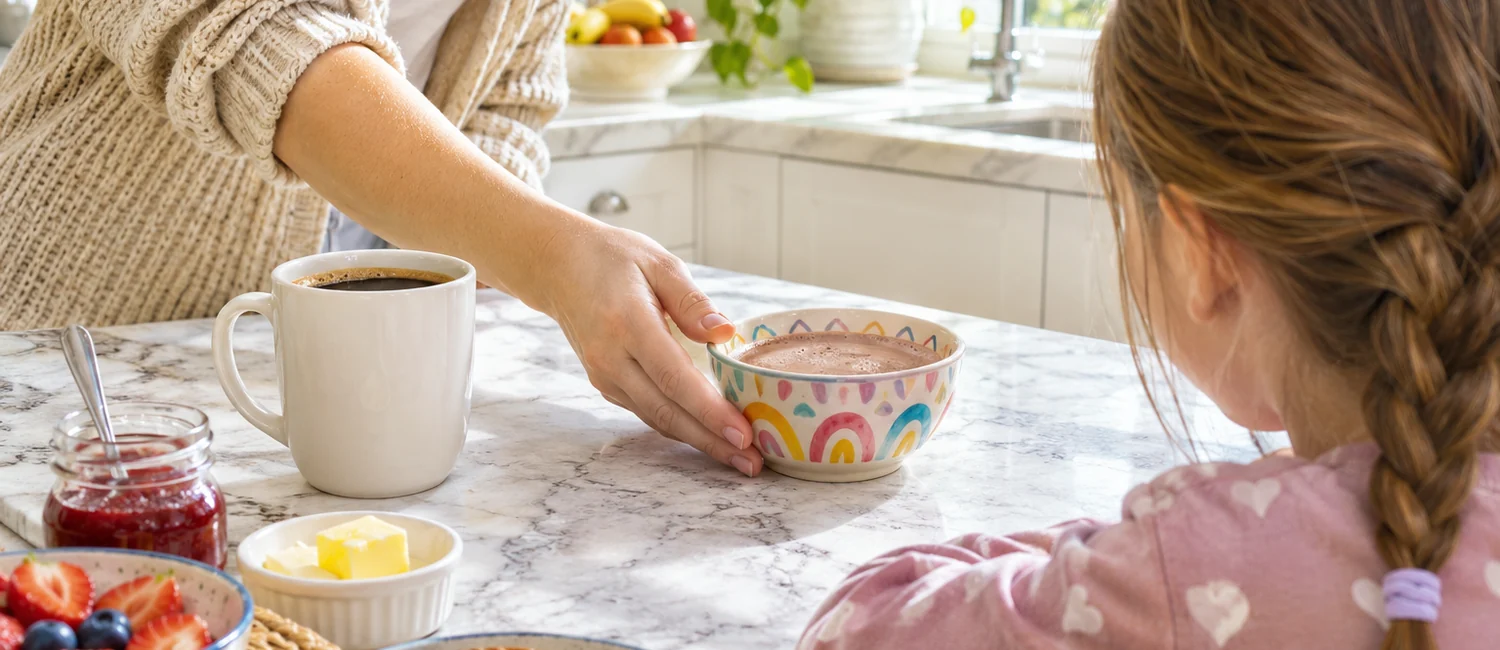
What this means in practice: a child who asks for a mug just like Mum or Dad can perfectly well have their own version, with the same ritual and the same shared moment, without raising any regulatory issue at all. What you should not do is pour them the dregs of your own mug, telling yourself one sip will not make any difference.
Why the adult range has to wait until adulthood
Two reasons, and only one is regulatory: the caffeine in several flavours, and the adaptogenic mushrooms whose effects in children are not documented.
On caffeine, EU law is explicit. Annex III of regulation 1169/2011 requires any drink containing more than 150 mg of caffeine per litre, including in concentrated or dried form once reconstituted, to show in the same field of vision as its name the statement ‘High caffeine content. Not recommended for children or pregnant or breast-feeding women’, followed by the exact caffeine content. Lawmakers have therefore singled out children as the first group to protect where this ingredient is concerned, and it is the only statement of its kind in the entire labelling regulation.
The caffeinated flavours in the adult range state 35 mg per serving. That is moderate compared with a cup of filter coffee, but it is still caffeine in a lighter body, and the ratio of dose to body weight is worlds apart between a 70 kilo adult and a 20 kilo child.
On adaptogenic mushrooms, the reasoning is different: there is no ban, there is a lack of data. These ingredients have not been studied in children, and the precautionary principle naturally applies. That is in fact what the brand itself says by keeping this range for adults, and we have covered it in detail on our page about the contraindications of the Bonjour drink.

Also worth reading : my full review of Bonjour Kids / is Bonjour Kids dangerous for a child?.
What a formula designed for children changes
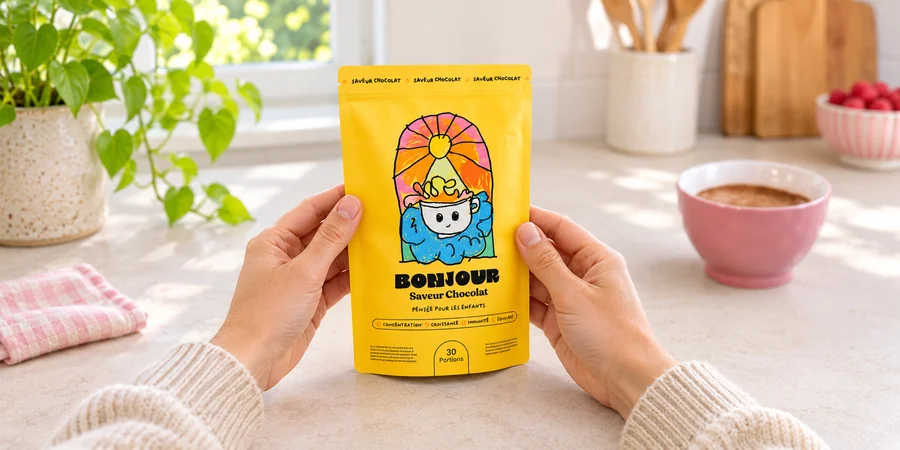
Bonjour Kids is not a lighter version of the adult drink: it is a separate product built to a different specification. The mushrooms and caffeine are gone, cocoa becomes the base, and eight vitamins and minerals are added.
That addition is not a free-for-all. EU regulation 1925/2006 governs the addition of vitamins and minerals to everyday foods: only the forms on its lists may be used, and the label must declare the amounts provided. It is this framework that lets a chocolate powder show intakes comparable to those of a nutrition product, provided it stays within the rules.
The children's formula also stands out on a point that counts in a school day: it provides no added sugars, for 22 calories per prepared serving, not counting the milk. The full breakdown of doses is in my Bonjour Kids review, and the official composition is on our product sheet.

Where the mug fits into a child's day
At breakfast for a child who eats little in the morning, as an after-school snack for one who already eats a proper breakfast. That is the only real choice to make, and it depends less on the product than on your household's habits.
The value of breakfast, for its part, is documented independently of any brand. A study carried out in Wales on more than 3 000 children aged 9 to 11 linked eating breakfast with school results six to eighteen months later, with significant associations. The authors talk about associations, not causation, and a chocolate drink obviously deserves no credit of its own for that result. What it does say is that a child who sits down and eats something in the morning starts the day with an advantage, and a mug they enjoy can be the way to get there.
For the after-school snack, the logic is different: the idea is to fill the slot of a sugary snack with something less sweet. Either way, the drink goes alongside solid food rather than replacing it, and it never stands in for the day's water.
| Age | Suitable version | What to watch |
|---|---|---|
| Under 3 | None | Neither range is formulated for this age |
| 3 to 6 | Bonjour Kids | One mug a day is plenty at this age |
| 7 to 11 | Bonjour Kids | One to two mugs, taking other fortified products into account |
| 12 to 17 | Bonjour Kids, or an occasional caffeine-free adult flavour | Caffeinated flavours are still best avoided in this age group |
| 18 and over | The whole adult range | The usual precautions for the adult range |
The four lines to check on a children's chocolate powder
Whatever the brand, four pieces of information on the pack are enough to judge a product in this aisle, and you can read them in under a minute in the shop.
- Where sugar sits in the ingredient list. Ingredients must be listed in descending order of weight: sugar in first place means it is the main ingredient, ahead of the cocoa. That is the case for many standard powders, where cocoa ends up in second or third place.
- The ‘of which sugars’ line in the nutrition table, based on the serving actually prepared rather than on 100 g of powder. Packs often show both, and only the second figure matches what your child drinks.
- Whether micronutrients are added, and which ones. Regulation 1925/2006 requires the amounts to be declared, so the information has to be there. A powder that advertises vitamins without giving the amounts per serving deserves suspicion.
- The origin of the cocoa and, better still, a heavy metal content. Very few brands publish one. When it is given, it can be compared with the regulatory limit, which we cover in detail in our article on the safety questions around Bonjour Kids.
These four points explain why two products that look alike on the shelf can be very different in the mug. They also explain the price gap, which is far from trivial: a powder made mostly of sugar is cheap to produce, while a powder whose main ingredient is cocoa costs a lot more.
Three family situations and what I would do
The child who skips breakfast. This is where a hot drink is most useful, simply because it goes down more easily than solid food for a child who is not hungry on waking. The aim is to build the habit of sitting down and having something, not to tick a nutritional box. Keep the mug modest and add to it as soon as their appetite comes back.
Siblings of different ages. The same pouch can serve a 4-year-old and a 10-year-old: the formula is the same, only the frequency changes, one mug for one, one or two for the other. The brand applies an extra discount from two children upwards, which makes the sums less painful on a family budget. However, the younger one should not keep pace with the older one just because they share the table.
The child who already takes supplements. This is the situation that calls for a real decision, not a reflex. A child who already gets vitamin D drops, a multivitamin syrup or fortified cereals at breakfast builds up intakes that nobody totals. The right approach is to talk to your paediatrician with a list of what they take, and choose what makes most sense, rather than stacking sources.
In all three cases, the product remains an everyday food, not a course of treatment: there is no minimum duration to stick to and no effect to expect after a set number of weeks. That is a fundamental difference from food supplements in capsule form, and it makes the decision much simpler.
At what age can a teenager move on to the adult range?
The brand keeps its adult range for over-18s, and that is the rule I would follow. For a teenager who wants the same ritual, the sensible choice is still the children's formula, and nothing stops them drinking it at 14 or 16: the vitamin amounts are simply set for a child.
If the urge to switch to the parents' version is strong, the most sensible compromise is to go for a caffeine-free flavour rather than a caffeinated one, and only now and then. Adolescence is also when caffeine intake rises from other sources, fizzy drinks and energy drinks included, and the total over the day weighs more than a single mug.
One case deserves a special mention: the sporty teenager, often tempted by anything that looks like a performance product. The adult drink is not one, and nothing in its composition justifies starting it earlier for that reason.
My advice by age
From 3 to 11, Bonjour Kids is the only version in the range that makes sense, at one mug a day in most cases. The two-mug limit exists, but it is not a target: for a nursery or primary school child who otherwise eats normally, one mug already covers most of what the product has to offer.
Between 12 and 17, the children's formula is still suitable and becomes mainly a matter of taste and image: some teenagers will turn down a product labelled Kids, and that is a real factor at that age. From 18, the whole range opens up, with the usual precautions of the adult version.
Finally, a reminder that applies at any age: this kind of fortified drink has to be thought about alongside everything else your child consumes. If your child already takes a multivitamin supplement recommended by a professional, put the question to your paediatrician and choose one or the other rather than adding them together. The full range, its prices and the code LMC20 are gathered on our Bonjour Drink brand profile, and the official shop is bonjourdrink.co. For the children's product, the indicative price is 35,20 euros for 30 mugs with the code, on the Bonjour Kids page.
Frequently asked questions about Bonjour Drink and children
My child had a sip of my adult drink: is that serious?
A one-off sip is no particular cause for concern. What is not recommended is a child regularly drinking the adult formula, because of the caffeine and the adaptogenic mushrooms.
Is there a caffeine-free version for the whole family?
The adult range includes caffeine-free flavours, and the children's formula contains no caffeine at all. The vitamin amounts in the latter are, however, still calculated for a child.
Can Bonjour Kids replace breakfast?
No. It is a drink: it goes with a meal and does not replace it, whatever the age.
Does it have to be made with cow's milk?
The powder mixes into the milk of your choice, hot or cold. The milk you choose changes what the mug provides, notably calcium and protein, but not the composition of the powder.
Can my child take Bonjour Kids to school?
That is not what it is designed for: it is a hot drink made fresh in a mug. It belongs at home, in the morning or after school, and it does not replace the day's water bottle.
Can a child drink the evening version from the adult range?
No, that product belongs to the adult range and carries the same caveats as the other adult flavours. For children, the brand's only option is the children's formula.
Can my teenager have two mugs a day?
Yes, two mugs is the limit the brand gives for all ages, because it follows from the amounts of added vitamins.
Official texts and studies cited
- Regulation (EU) No 1169/2011, Annex III, mandatory statement ‘High caffeine content. Not recommended for children or pregnant or breast-feeding women’ above 150 mg/l. EUR-Lex
- Regulation (EC) No 1925/2006 on the addition of vitamins and minerals and of certain other substances to foods. EUR-Lex
- Littlecott H.J. et al., Association between breakfast consumption and educational outcomes in 9-11-year-old children, Public Health Nutrition, 2016. PMID 26411331
Food supplements should not be used as a substitute for a varied and balanced diet and a healthy lifestyle. This article is for information only and does not replace advice from a healthcare professional: if you have any doubts about your child's diet, talk to your doctor or paediatrician.

LMC content is written by our editorial team from the information published by the brands. Scores out of 10 follow a public grid of 5 criteria*, supplemented by LMC’s editorial assessment.
To support LMC, some links are affiliate links: LMC earns a commission at no extra cost to you, and some of the brands featured are partners. By using the site, you accept our terms of use and our editorial policy.