

At what age does perimenopause start?
On average between 45 and 50, with first signs possible as early as 35 to 40. Menopause itself arrives at 51 on average in France, and is confirmed after twelve months without a period.
Inserm (the French national institute for health and medical research) places menopause between 45 and 55, with a French average of 51, and describes a transition phase of two to four years leading up to it. This phase is called perimenopause, or premenopause in everyday language. Both words refer to the same period.
But an average hides big differences. The review published in the CMAJ in 2025 points out that symptoms linked to falling estrogen can begin up to ten years before the final period. A 38- or 40-year-old woman whose cycles start going haywire doesn't always realize what's going on, and that is exactly where the most common misunderstanding lies.
A benchmark to keep in mind: periods stopping for good before age 40 is no longer perimenopause. Inserm then speaks of premature ovarian insufficiency, sometimes called early menopause, and it calls for medical advice, because the consequences for bones and cardiovascular risk are managed differently.

What are the first signs between 35 and 45?
The very first sign is a change in your cycle: persistent variations of seven days or more from one cycle to the next. Then come broken sleep, heavier periods, irritability and fatigue.
The international criteria for staging reproductive aging, the STRAW criteria, set out a clear definition that is easy to check yourself: perimenopause begins when cycle length varies persistently by seven days or more. In practical terms, a 26-day cycle followed by a 34-day cycle, then a short cycle again, repeated over several months.
- The cycle first: cycles that get shorter, then further apart, heavier periods or periods with clots, bleeding between periods. This is the most reliable signal.
- Sleep: waking up in the middle of the night, sometimes with night sweats, even though the day was no more stressful than usual.
- Mood: irritability, nervous tension, a sense of losing patience faster, a low mood that doesn't feel like ordinary tiredness.
- The body: sore breasts, migraines that follow the cycle, weight gain mostly around the belly, lower libido, vaginal dryness.
- Energy and the mind: tiredness on waking, words that don't come as easily, reduced concentration.
These signs don't all show up at once, and none of them is a given. It is their gradual accumulation in a woman aged 38 to 48 that should get your attention, especially when the cycle changes at the same time.


Why do these symptoms appear before menopause?
Because hormones don't decline in a straight line: they fluctuate. Progesterone becomes deficient first, estrogen follows, with peaks and dips from one cycle to the next.
Inserm describes the mechanism: as the egg reserve runs down, the ovaries no longer release an egg every cycle. This irregular ovulation disrupts hormone secretion, and it is this chaos, more than the decline itself, that explains the symptoms.
This has a very practical consequence: one month can be perfectly normal and the next one difficult. Many women conclude that it isn't perimenopause, since "things are better." On the contrary, that is typical of this period. 🌙
Another point raised by the CMAJ review, and rarely mentioned: the deterioration of metabolic markers is more pronounced and faster during perimenopause than after menopause. In other words, now is when lifestyle matters most, not ten years from now.
How do you know if it really is perimenopause?
It is a clinical diagnosis, based on symptoms and on how the cycle changes. After 40, no blood test or imaging is needed to confirm it.
The CMAJ review is explicit: no lab test or imaging is required to diagnose perimenopause after 40, because FSH levels vary enormously during this period and there is no threshold value. A single hormone test can therefore falsely reassure you, or worry you for nothing.
On the other hand, other causes produce the same signs and can be checked with a simple blood test: a thyroid disorder, iron deficiency with low ferritin, anemia. Ruling them out avoids blaming perimenopause for fatigue that has another explanation, and a treatment.
Three situations call for medical advice without delay, and the CMAJ review flags them: bleeding that becomes more frequent or heavier after 40, since an ultrasound and an endometrial biopsy are then indicated; bleeding after twelve months without a period; a significant impact on mood. Also worth noting, since it is often forgotten: pregnancy is still possible during perimenopause, and French national health insurance (Assurance Maladie) points out that contraception remains necessary until menopause is certain.
How long does perimenopause last?
Two to four years on average according to Inserm, but hot flashes and night sweats often last much longer: a median of 7.4 years in the large American SWAN study.
This study followed more than 3,000 women for nearly twenty years. It shows that vasomotor symptoms persist for a median of 4.5 years after the final period, and that women whose symptoms start early, during premenopause, are the ones who keep them the longest, with a median of more than 11 years.
The point of this figure is not to worry you, but to set realistic expectations: this is not a rough six-month patch. Putting in place what helps early on is therefore worth much more than waiting for it to pass.

How do you manage symptoms day to day?
Four levers stand out: preserving muscle mass, protecting your sleep, getting enough protein, calcium and vitamin D, and limiting alcohol and caffeine in the evening.
- Strength training, as a priority. Muscle mass declines during this period, and it is muscle that supports metabolism and protects bones. Two sessions a week are enough to get started. Our article on creatine, electrolytes and metabolism explains what creatine adds to training after 40.
- Sleep before everything else. A cool bedroom, regular hours, screens off early. Broken sleep amplifies irritability and cravings, which then get blamed on hormones.
- Protein at every meal, plus calcium and vitamin D for your bones. Osteoporosis is two to three times more common in postmenopausal women, and bone loss begins during the transition.
- Alcohol and caffeine in the evening trigger or worsen hot flashes and nighttime waking in many women. A two-week test costs nothing.
- Stress keeps the loop going: it disrupts sleep, which drags down mood. A daily walk, breathing exercises, or anything you can stick with over time rather than the perfect method kept up for three days.
Hormone therapy exists and can be discussed with a doctor or midwife, depending on your symptoms, medical history and need for contraception. That is not the topic of this article, but it is a legitimate option: no one should have to put up with a debilitating perimenopause just because they never talked about it.

Which supplements can support this period?
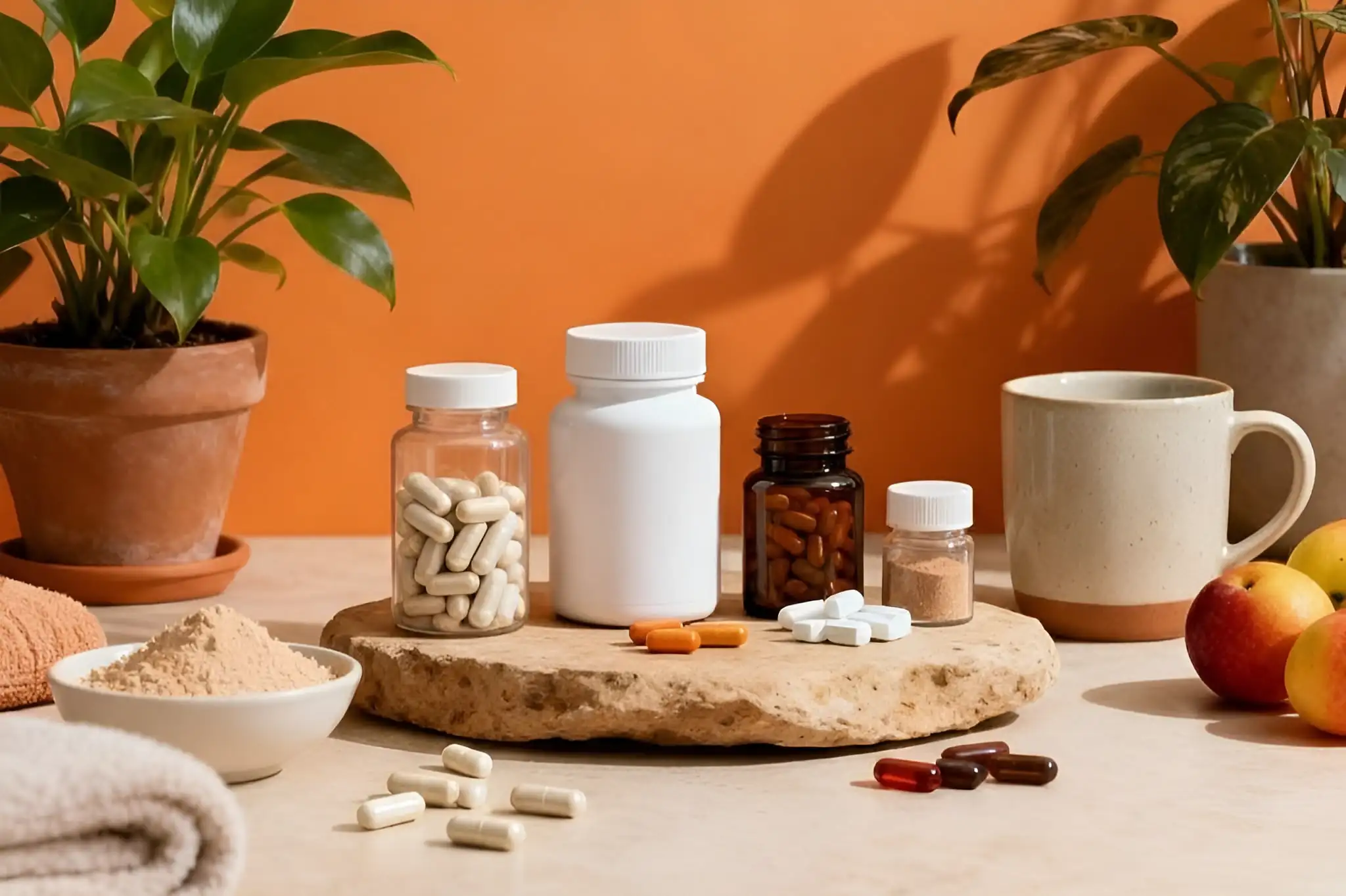
Two complementary approaches: a vitamin and mineral base suited to this age, and plants traditionally used during menopause. No supplement replaces medical advice.
On the nutrient side, the authorized claims are solid and verifiable: vitamin B6 contributes to the regulation of hormonal activity and to the reduction of tiredness and fatigue, vitamins D and K contribute to the maintenance of normal bones, zinc to normal cognitive function and to the protection of cells from oxidative stress, chromium to the maintenance of normal blood glucose levels, and biotin to the maintenance of normal hair and skin. That is exactly the ground covered by a multivitamin designed for this period.
Péri Essentials (€30 a month) provides, in two capsules, 300 mg of Bacognize® bacopa extract, 50 mg of choline, 200 µg of vitamin B9, 75 µg of vitamin K, 10 µg of vitamin D, 5 mg of zinc, 45 µg of selenium, 20 µg of chromium, 50 µg of biotin and all the B vitamins. Péri Support (€34 a month) takes a different approach with 500 mg of shatavari, 250 mg of milk thistle standardized to 80% silymarin, 123 mg of sage and 30 mg of Safr'inside™ saffron. The brand intends it for women experiencing hot flashes, night sweats, cycle imbalance, irritability, stress or fatigue.
Let's be precise about what you can expect. Sage, shatavari, saffron and milk thistle fall under botanical claims awaiting assessment by the European authority. The regulation explicitly provides that they remain usable in the meantime, under the manufacturer's responsibility, as long as they comply with the regulation and national rules. So these are not forbidden promises, they are promises not yet settled. For a menopause supplement, the question is not whether it eliminates symptoms, but what published studies observe, and with what level of evidence.
Sage reduced the frequency and intensity of hot flashes by 50% in four weeks and by 64% in eight weeks in a multicenter trial, but it was an open-label trial, with no placebo group. Saffron, studied double-blind against placebo in 86 perimenopausal women for twelve weeks, improved mood, with a 33% drop in anxiety scores and a 32% drop in depression scores, with no effect on hot flashes. Shatavari showed, in a randomized double-blind trial in perimenopausal women, a reduction in vasomotor symptoms and menstrual discomfort, and in another study an improvement in grip strength in postmenopausal women. Two useful caveats before expecting too much: the extracts tested are specific standardized extracts, which are not necessarily those in commercial formulas, and sample sizes remain modest.
The precautions, as listed on the brand's product pages, are not minor details. Péri Support is not recommended for people taking an antidepressant, is for adults only, and should be avoided if you are allergic to the Asteraceae family. Péri Essentials is not recommended if you take an anticoagulant, and its biotin can skew some lab tests: let the lab know if you take it. Both are not recommended during pregnancy and breastfeeding. Neither contains hormones, phytoestrogens or iodine, which is worth checking before any purchase if you have a hormonal history. If you have a history of hormone-dependent cancer or are on ongoing treatment, your doctor's advice is essential.
Which signs at which age, and when should you see a doctor?
The table below sums up what is common in each age group, what helps, and what should prompt you to see a doctor without delay.
| Age group | What is common | What helps first | When to see a doctor |
|---|---|---|---|
| 35 to 40 | Slightly irregular cycles, less stable sleep, more pronounced PMS | Strength training, sleep, protein | No periods for several months, wanting to get pregnant |
| 40 to 45 | Variations of seven days or more, heavy periods, irritability, fatigue | Thyroid and ferritin tests, lifestyle | More frequent or heavier bleeding |
| 45 to 50 | Hot flashes, night sweats, cycles further apart, belly weight gain | All of the above, plus targeted support | Symptoms that weigh on your daily life |
| After 50 | Very spaced-out cycles then no periods, symptoms that may persist | Bones and heart health as a priority | Any bleeding after twelve months without a period |
To learn more about the signs themselves, we go over them in detail in our article on premenopause symptoms. And if you are comparing the formulas available, our comparison of perimenopause supplements reviews the supplements for this period, while premenopause and dietary supplements sums up what each family of active ingredients brings.
Frequently asked questions
Perimenopause supplements: which one should you choose?
It all depends on what dominates. If it's fatigue, mood and skin, a vitamin and mineral base suited to this age makes sense. If it's hot flashes and sleep, the brand points you toward its herbal formula, with no hormones or phytoestrogens. Either way, a supplement supports you, it doesn't treat you, and medical advice comes first if you have a relevant medical history.
Can you be in perimenopause at 35?
Yes, it is possible, even if it is less common. What matters is how your cycle changes over several months. However, periods stopping completely before 40 is not perimenopause and requires a medical visit.
Can a blood test confirm perimenopause?
No, not after 40. FSH levels fluctuate too much during this period and there is no reference threshold value. A blood test is used to rule out other causes, such as a thyroid disorder or iron deficiency.
How do you tell perimenopause apart from ordinary PMS?
PMS comes back at the same point in your cycle and stops when your period starts. In perimenopause, it is the length of the cycle itself that becomes unpredictable, and symptoms no longer follow a regular pattern.
Do you still need contraception during perimenopause?
Yes. Pregnancy remains possible until menopause is confirmed, meaning after twelve consecutive months without a period. French national health insurance (Assurance Maladie) says so explicitly.
Does the Jolly Mama promo code work on the menopause range?
Yes, code LMC15 gives you 15% off in the store, and the subscription offers the same discount. The two cannot be combined.
Scientific references
- Inserm. Menopause report: definition, average age in France, perimenopause and consequences for bones. See the source
- Lega IC, Jacobson M. Perimenopause. CMAJ (Canadian Medical Association Journal), 2025. Clinical diagnosis, no value in FSH testing after 40, symptoms up to ten years before the final period. See the source
- Harlow SD et al. Executive summary of the Stages of Reproductive Aging Workshop + 10 (STRAW + 10). The Journal of Clinical Endocrinology and Metabolism, 2012. Criterion of variations of seven days or more. See the source
- Avis NE et al. Duration of menopausal vasomotor symptoms over the menopause transition (SWAN study). JAMA Internal Medicine, 2015. Median duration of 7.4 years. See the source
- Assurance Maladie (ameli.fr). Perimenopause (premenopause): symptoms and contraception. See the source
- Regulation (EU) No 432/2012 establishing a list of permitted health claims. See the source
- Bommer S, Klein P, Suter A. First time proof of sage's tolerability and efficacy in menopausal women with hot flushes. Advances in Therapy, 2011. Open-label trial, no placebo. See the source
- Lopresti AL, Smith SJ. The effects of a saffron extract (affron®) on menopausal symptoms in women during perimenopause. Journal of Menopausal Medicine, 2021. Randomized double-blind placebo-controlled trial, 86 women. See the source
- Yadav P et al. A standardized Asparagus racemosus root extract improves hormonal balance and menstrual health and reduces vasomotor symptoms in perimenopausal women. Journal of the American Nutrition Association, 2025. See the source
- O'Leary MF et al. Shatavari supplementation in postmenopausal women improves handgrip strength. Nutrients, 2021. Randomized double-blind trial, 20 women. See the source
- Regulation (EC) No 1924/2006 on nutrition and health claims, Article 27(5): rules applicable to claims pending adoption of the list. See the source
Dietary supplements are not a substitute for a varied, balanced diet and a healthy lifestyle. This article does not replace medical advice. If your symptoms weigh on your daily life, or if you have unusual bleeding, a history of hormone-dependent cancer or are on ongoing treatment, talk to your doctor or midwife.

LMC content is written by our editorial team from the information published by the brands. Scores out of 10 follow a public grid of 5 criteria*, supplemented by LMC’s editorial assessment.
To support LMC, some links are affiliate links: LMC earns a commission at no extra cost to you, and some of the brands featured are partners. By using the site, you accept our terms of use and our editorial policy.