




Premenopause or perimenopause: what are we actually talking about?
Let's clear up a common confusion first. The difference between perimenopause and menopause comes down to something simple: perimenopause is the transition phase, menopause is the finish line.
Another useful nuance: "premenopause" and "perimenopause" refer in practice to the same period. The first is the everyday word, the second is the preferred medical term. Either way, we are talking about the window when hormones start to fluctuate.
What to remember about this stage:
- It lasts 4 to 7 years on average before menopause settles in.
- Oestrogen and progesterone production becomes irregular.
- Menopause is only confirmed after twelve consecutive months without periods.
In terms of timing, this transition often starts between the ages of 40 and 50, sometimes earlier. Age is only a marker: what really signals the start of perimenopause is the arrival of the first signs, above all a change in your cycle. A gynaecologist's opinion helps confirm the phase and rule out other causes.
Understanding this mechanism changes everything. The symptoms do not come from a sudden lack of hormones, but from their rollercoaster. That is why a targeted approach, symptom by symptom, makes sense at this stage of hormonal life.
Recognising the symptoms of perimenopause

Before choosing a supplement, you need to identify what you want to ease. Symptoms vary a great deal from one woman to another, in intensity as well as duration.
The first signal is irregular periods in perimenopause. Cycles get shorter or longer, the flow becomes heavier or lighter, with gaps that sometimes exceed a week.
Then come the best-known symptoms:
- Hot flushes in perimenopause and night sweats, hugely disruptive to sleep.
- Fatigue in perimenopause, often linked to broken nights and hormonal swings.
- Mood swings, irritability and more noticeable anxiety.
- Brain fog, with forgetfulness and a drop in concentration.
Weight gain in perimenopause often completes the picture, with a tendency to store fat around the middle. It comes down to falling oestrogen, a slower metabolism and sometimes a lack of sleep. No supplement melts those kilos on its own, but supporting energy and sleep helps you stay active.
Other, quieter signs often creep into daily life:
- Dry skin or vaginal dryness, linked to lower oestrogen.
- An up-and-down libido.
- Headaches or breast tenderness that follow the hormonal fluctuations.
Beyond the individual symptoms, it is often their accumulation that weighs on you. Broken nights feed fatigue, which amplifies irritability, which in turn wrecks sleep. Breaking that vicious circle, even partly, makes a clear difference to daily life.

Which vitamins and which actives should you choose for your symptoms?
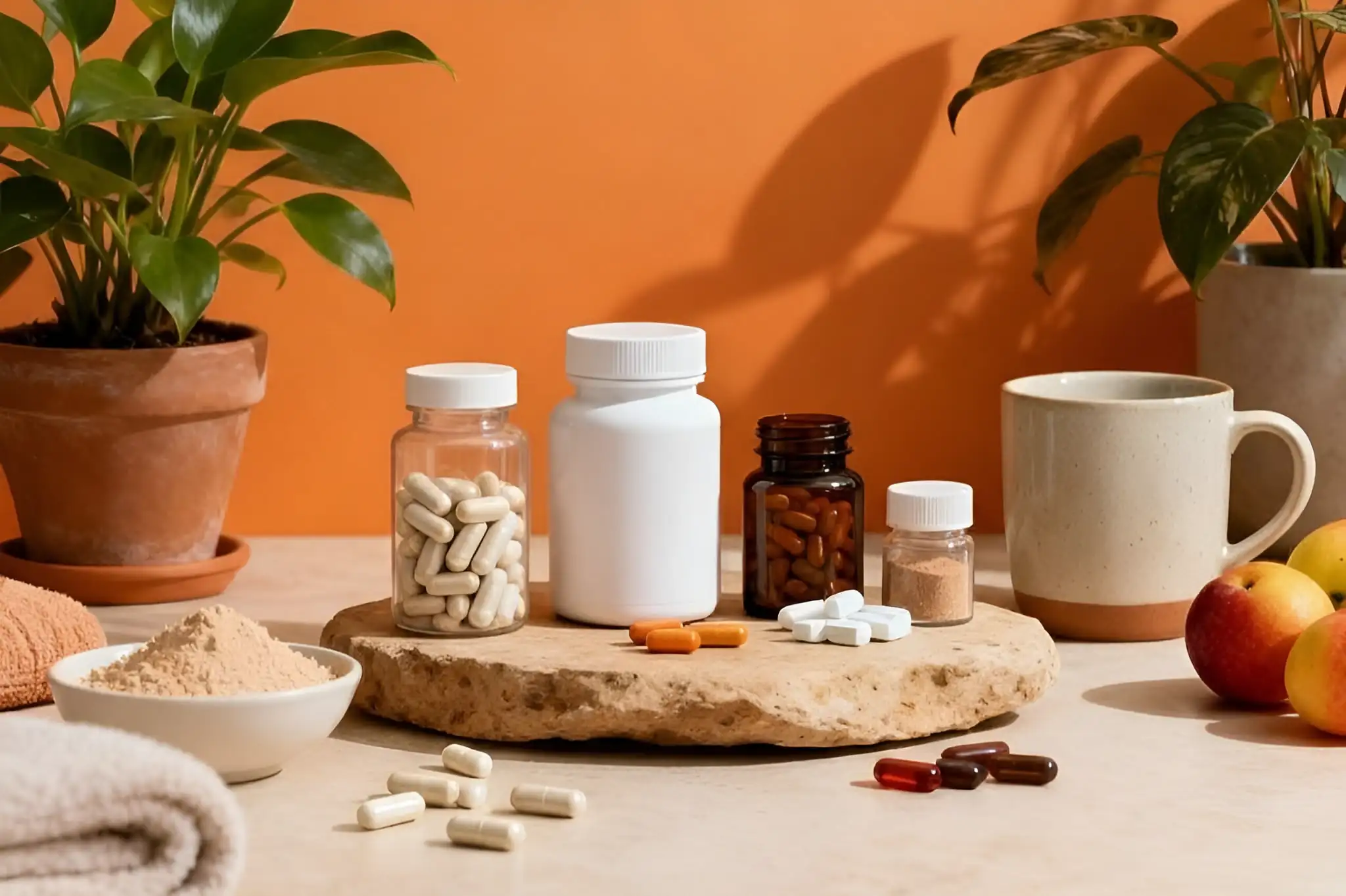
Here is the heart of the matter. The question of which vitamins to prioritise in perimenopause has no single answer: the right perimenopause food supplement is chosen according to your dominant symptoms.
Let's run through the actives with the best data behind them:
- Common sage primarily targets hot flushes and night sweats. It is the best-documented plant for this symptom.
- Saffron works on mood via serotonin, with a welcome effect on irritability, anxiety and sleep.
- Magnesium, especially in bisglycinate form, combined with vitamin B6, supports the nervous system, reduces fatigue and promotes restorative sleep.
- Vitamin D3 and the B vitamins contribute to energy, mood and bone health.
- Omega-3s (including DHA) support mood and cardiovascular health.
- Bacopa monnieri is worth a look for memory, concentration and stress management.
Form and dosage make the difference. For magnesium, bisglycinate is better tolerated by the gut than oxide. Saffron is assessed at around 30 mg a day of standardised extract, the dose used in most mood studies. As for bacopa, an extract standardised in bacosides guarantees a genuinely dosed intake of actives, a world away from weakly concentrated raw powders.
Let's not forget the quieter role of vitamins. Vitamin D3 becomes scarcer with age and at our latitudes, yet it remains crucial for bones, which grow more fragile after menopause. The B vitamins support energy metabolism and the nervous system, two sensitive points once fatigue sets in.
The idea is not to pile up all these actives, but to build a logical response. A woman mainly bothered by hot flushes will not be aiming for the same formula as one who is exhausted or prone to mood swings.
| Dominant symptom | Active to prioritise | Why |
|---|---|---|
| Hot flushes, night sweats | Common sage | Best-documented plant for this symptom |
| Mood, irritability, anxiety | Saffron | Acts on serotonin and on sleep |
| Fatigue, restless sleep | Magnesium + vitamin B6 | Nervous system support, less fatigue |
| Energy and bone health | Vitamin D3 + B vitamins | Energy metabolism and bone strength |
| Brain fog, memory | Bacopa monnieri | Concentration and stress management |
Perimenopause and weight gain: what can a supplement really do?
Weight gain in perimenopause is a worry, and rightly so. Let's be honest about it: no supplement burns fat on its own, and staying wary of any miracle slimming promise remains a good reflex.
The link with hormones is real, though. Falling oestrogen encourages abdominal storage, while lack of sleep and stress throw appetite off balance. This is where targeted support can help, indirectly:
- Magnesium and better sleep reduce night-time cravings.
- A steadier mood, thanks to saffron, limits emotional snacking.
- Sustained energy makes it easier to keep up regular physical activity.
In other words, the supplement acts on the levers around weight, not on the scales directly. Combined with diet and strength training, it helps you stay in control without falling for drastic diets, which are often counterproductive at this age.
Perimenopause: a natural treatment, but with a few markers
Many women look for a natural treatment for perimenopause to avoid or complement a hormonal approach. That is perfectly legitimate, provided you keep a few safeguards in mind.
No perimenopause treatment, natural or otherwise, works in a vacuum. Supplements give their best on well-prepared ground:
- A diet rich in vegetables, protein and good fats.
- Regular physical activity, strength training in particular.
- Protected sleep and active stress management.
What is on your plate also plays a direct role. Some foods provide natural phytoestrogens (soy, flaxseed, pulses) that can soften the transition for some women. Conversely, too much fast sugar, alcohol and caffeine tends to make hot flushes and sleep problems worse.
Sleep deserves particular attention. Going to bed at regular times, limiting screens in the evening and keeping the bedroom cool reduces both night-time waking and the perceived intensity of hot flushes. It is a free lever, and often an underestimated one.
One last point reassures a lot of women: some formulas deliberately choose plants that are free from phytoestrogens, so they work on comfort without mimicking hormonal action. It is a criterion to check against your health history, always with a professional.
On safety, a few precautions really do matter. Plants that act on hormones call for a doctor's opinion if you have a history of hormone-dependent cancer. Saffron is not advised alongside antidepressants, since it acts on the same pathways.
Jolly Mama: a coherent perimenopause range
What remains is turning this theory into actual products. In the perimenopause food supplement segment, the brand Jolly Mama offers a range that follows exactly this symptom-led logic.
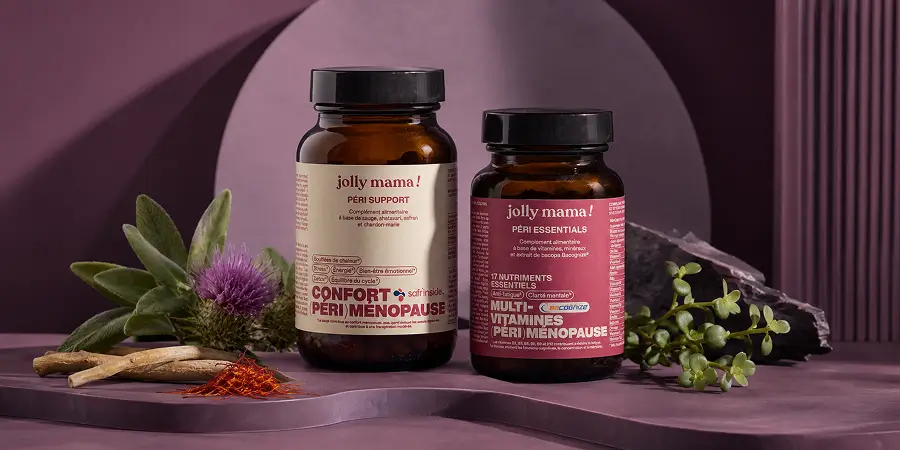
Its flagship duo splits the roles clearly:
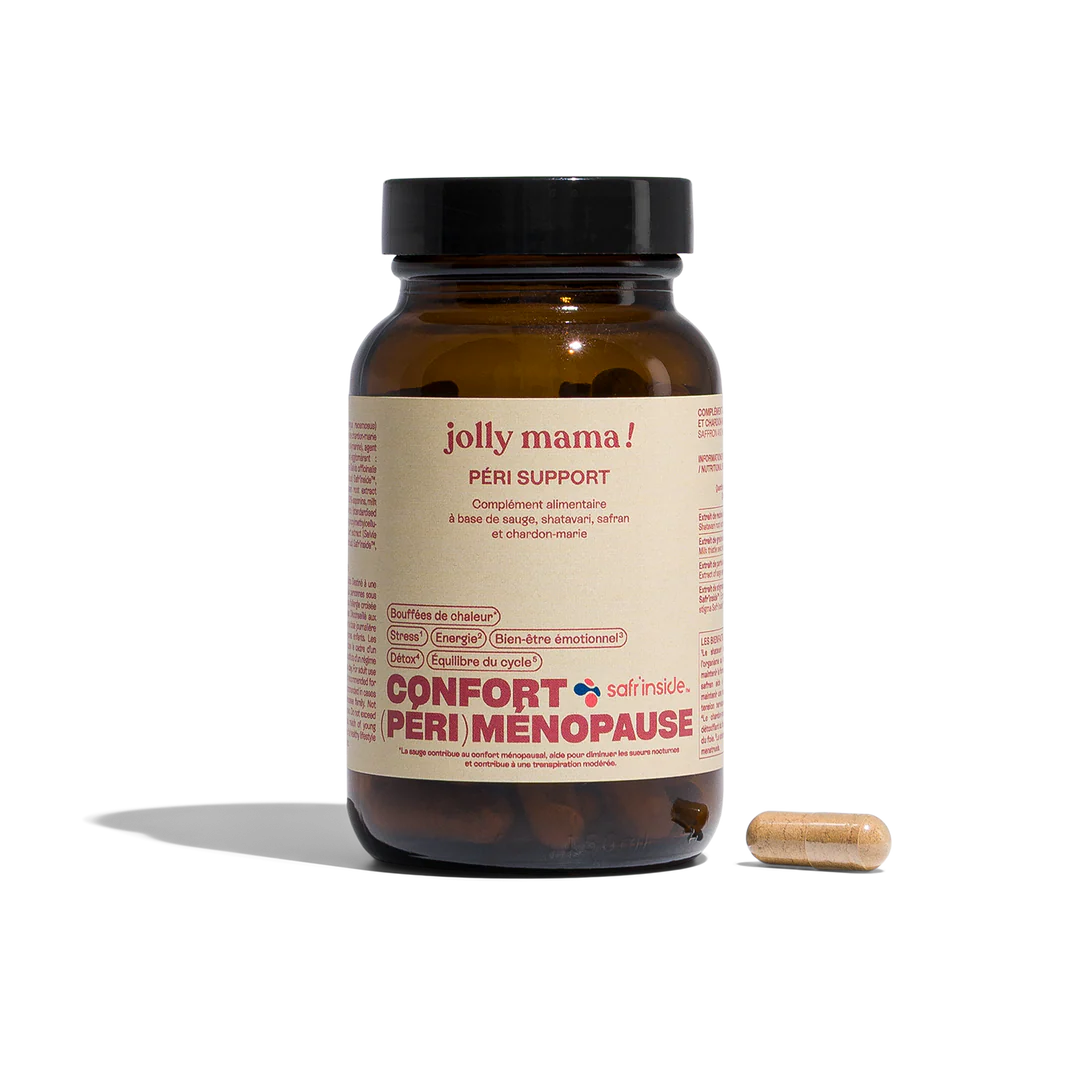
- Péri Support brings together targeted plants: sage, saffron, shatavari and milk thistle, with no hormones and no phytoestrogens.
- Péri Essentials provides the everyday foundation: bacopa, choline, vitamins B, C, D3, K2 and minerals.
In detail, Péri Support doses saffron at 30 mg (Safr'inside form) and pairs sage with foundational plants such as milk thistle. Péri Essentials, for its part, relies on a standardised bacopa (Bacognize) and active folates, as a daily baseline. Two products, two complementary roles.
To top things up as needed, the brand also offers Mama-gnésium (magnesium bisglycinate) for fatigue and sleep, and Oméga Mama (plant-based DHA) for mood. In practice, you get all the actives mentioned above, split between plants and micronutrients.
These formulas can be used throughout the transition, with breaks if needed, and reassessed as symptoms evolve. The brand's guidance, built around life stages, makes that easier to follow over time.
This modular approach lets you build your own routine, rather than putting up with a one-size-fits-all formula. For an informed choice, read our full Jolly Mama review, with compositions and feedback from users. 🌿
How do you choose the best menopause food supplement?
Faced with an overwhelming choice, finding the best food supplement for menopause and perimenopause takes a bit of method. Marketing should never replace reading the label.
Here are the criteria that genuinely make a difference:
- Actives dosed at studied levels, not just marketing traces.
- Quality forms (magnesium bisglycinate, standardised saffron, bacoside-standardised bacopa).
- A clear composition, with no unnecessary additives, and the origin of the ingredients.
- A match with your real symptoms, rather than a catch-all formula.
Think about duration too. Plants such as sage or saffron are judged over several weeks, not two days. Give your body time to respond, and note how your symptoms evolve so you can adjust.
Another mistake is changing everything at once. Introducing one active at a time, over a few weeks, tells you what really works for you. This step-by-step approach avoids stacking up products without any clarity, and it respects your budget.
You also need to recognise the limits of supplements. When hot flushes become disabling or quality of life clearly drops, hormone replacement therapy for menopause can be discussed with a doctor. The two approaches are not opposed: supplements can help with comfort in mild to moderate cases, and medical follow-up takes over for the rest.
Finally, keep the medical reflex. A supplement supports your comfort through the transition, it replaces neither a check-up nor personalised advice, especially with intense symptoms or an ongoing treatment. 💡
Conclusion
Perimenopause is not something you simply have to endure, but a transition you can navigate better by targeting the right actives: sage for hot flushes, saffron for mood, magnesium and vitamin B6 for fatigue, without forgetting vitamin D, omega-3s and bacopa. The secret lies in a selection matched to your symptoms, combined with a good lifestyle and a little patience while the plants do their work. Listen to your body, move forward one active at a time and do not hesitate to get support: this period is far easier to get through when you give yourself the means. To try a range designed stage by stage, from everyday comfort to targeted plants, the code LMC gets you -15% across the whole Jolly Mama shop. 🌱
Food supplements are not a substitute for a varied, balanced diet or a healthy lifestyle.
Scientific references
- Bommer S. et al., "Sage's tolerability and efficacy in menopausal women with hot flushes": pubmed.ncbi.nlm.nih.gov
- Kashani L. et al., "Saffron for treatment of menopausal symptoms": pubmed.ncbi.nlm.nih.gov
- Boyle N.B. et al., "The Effects of Magnesium Supplementation on Subjective Anxiety and Stress": ncbi.nlm.nih.gov
- Kongkeaw C. et al., "Meta-analysis of RCTs on cognitive effects of Bacopa monnieri": pubmed.ncbi.nlm.nih.gov

LMC’s editorial line is built around transparency and reliability. Our content is written to help users make better decisions, based on 7 key criteria* that support trustworthy information, verified promo codes, and useful reviews.
To support LMC, some links are affiliate links. Our recommendations remain independent and based on transparent, verifiable criteria. By using the site, you accept our terms of use and our editorial policy.


.webp)

.avif)