

How much coffee per day can an adult safely drink?
Up to 400 mg of caffeine per day, spread over the day, for a healthy adult, and no more than 200 mg in a single dose. That is the European benchmark, and it counts all the caffeine you get in a day, not just coffee.
These figures come from the scientific opinion published by EFSA in 2015, which is still the reference in Europe. The agency reviewed the available data and set several thresholds, depending on the profile and the timing of intake. It also expresses them in milligrams per kilo of body weight: 200 mg in a single dose corresponds to about 3 mg/kg, and 400 mg per day to about 5.7 mg/kg for a 70 kg adult.
Two nuances that are often forgotten:
- The 400 mg threshold applies to intake spread out over the day. Downing 300 mg at once in the morning is not the same as three 100 mg doses.
- EFSA excluded people who are ill and those taking medication from its assessment. If that applies to you, the benchmark does not apply as is: get medical advice.
| Profile | EFSA benchmark | In practice |
|---|---|---|
| Healthy adult | Up to 400 mg per day, 200 mg maximum per dose | A little over 4 cups of 200 ml drip coffee over the day |
| Pregnant or breastfeeding woman | Up to 200 mg per day, from all sources combined | About 2 cups of 200 ml drip coffee, tea and chocolate included |
| Children and teenagers | 3 mg per kilo of body weight per day | 90 mg for a 30 kg teenager, 150 mg for 50 kg |
| Before sleep | 100 mg close to bedtime can already disturb sleep in some adults | A single espresso in the evening is sometimes enough |
These benchmarks are safety thresholds, not targets. There is no need to reach them, and many people feel better well below them.

How many cups of coffee is 400 mg of caffeine?
About four cups of drip coffee, or five espressos, going by the average values published by EFSA. But the actual content of a cup varies a lot with the bean, the brewing method and above all the serving size.
This is the question that comes up most often: "how much caffeine is in a coffee?" The honest answer is that there is no single value. EFSA says so itself: the concentration depends on the manufacturing process, the type of bean and the brewing method. Here are the ballpark figures published by two official sources, EFSA and the nutrition database of the U.S. Department of Agriculture (USDA).
| Drink | Serving | Caffeine (approx.) | Source |
|---|---|---|---|
| Drip coffee | 200 ml cup | 90 mg | EFSA |
| Drip coffee | 237 ml mug | 95 mg | USDA |
| Espresso | 60 ml | 80 mg | EFSA |
| Espresso | 30 ml | 63 mg | USDA |
| Decaf coffee | 237 ml mug | 2 mg | USDA |
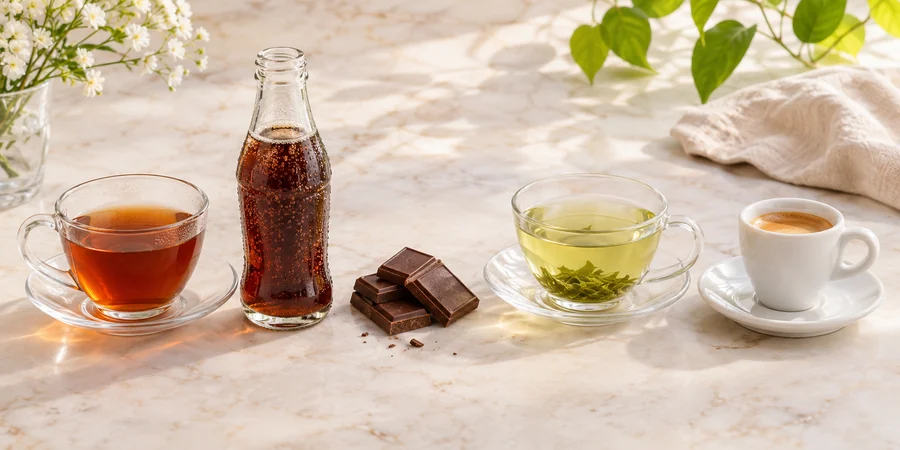
| Black tea | 220 ml cup | 50 mg | EFSA |
| Energy drink | 250 ml can | 80 mg | EFSA |
| Cola | 355 ml can | 40 mg | EFSA |
| Dark chocolate | 50 g bar | 25 mg | EFSA |
| Brainstoorm Coffee (Mush N Go) | Cup made with 6 g of powder | 20 mg | Brand's product sheet |
Two lessons to take from this table:
- Espresso is not "stronger" than drip coffee per cup. It is more concentrated, but served in a smaller volume. A big mug of drip coffee often delivers more.
- Volume changes everything. A 350 ml mug filled with drip coffee does not count as a 200 ml cup: at the same concentration, it is worth almost two.
To answer the question the way people often type it, "how much is 400 mg of caffeine", remember this: four small cups of drip coffee, five 60 ml espressos, or eight cups of black tea. With three big mugs, you are already close to the ceiling.

Also read: Too much coffee: the warning symptoms. Coffee and cortisol: what the measurements say.
How do you count the caffeine you really drink in a day?
You need to add up every source, not just coffee: tea, cola, energy drinks, chocolate and some supplements or medications contain it too. The simplest approach is to write down a typical day, with real volumes.
Let's take a realistic example, using the values from the table above:
- two mugs of drip coffee at breakfast and when you get to work: 190 mg;
- an espresso after lunch: 80 mg;
- a black tea around 4 p.m.: 50 mg;
- a can of cola with dinner: 40 mg;
- half a bar of dark chocolate: about 12 mg.
Total: about 370 mg, without feeling like you overdid the coffee. One more cup, and you are past the 400 mg benchmark.
Hidden sources are everywhere. EFSA points out that caffeine is added to baked goods, ice cream, candy and cola drinks, that it is an ingredient in so-called energy drinks and in some dietary supplements sold for weight loss or sports. Some medications contain it too, for example certain painkillers: read the leaflet.
Pod and capsule machines deserve special attention. ANSES (the French food safety agency) found that pods and capsules do not increase exposure to chemical contaminants, but that they can increase caffeine exposure if you drink as much as you would with a traditional coffee maker. A capsule goes down quickly, and the count climbs without you noticing.
Our practical tip: for three days, write down every drink with its approximate volume, then do the math. Most people who try it find they drink much more, or much less, than they thought.
How much coffee per day during pregnancy and breastfeeding?
No more than 200 mg of caffeine per day, from all sources combined, according to EFSA, which is about two 200 ml cups of drip coffee, and less if you also drink tea, cola or chocolate.
For the European agency, intakes of up to 200 mg per day, spread over the day, raise no safety concerns for the fetus. Beyond that, it notes that excessive caffeine intake in pregnant women has been correlated with delayed fetal growth. ANSES also calls for particular vigilance regarding caffeine intake in pregnant and breastfeeding women.
In concrete terms, here is what 200 mg looks like:
- two 200 ml cups of drip coffee (180 mg) and nothing else;
- or one mug of drip coffee, one black tea and one bar of dark chocolate (about 170 mg);
- or two 60 ml espressos and a square of chocolate.
Decaf is a simple way to keep the habit: the USDA measures about 2 mg of caffeine per mug. Herbal teas and pure chicory contain none, but some herbs are themselves not recommended during pregnancy: ask your midwife or doctor before making them a habit.
One important point: drinks based on adaptogenic herbs are not an alternative during this period. Mush N Go, for example, advises against its Brainstoorm for pregnant and breastfeeding women, as well as for children. Its formula contains ashwagandha in particular, an herb that ANSES advises against during pregnancy and breastfeeding. During pregnancy, the best option is still decaf or a hot drink approved by your healthcare professional.
Why do some people tolerate coffee less well?
Because the speed at which the body eliminates caffeine varies fourfold from one person to the next, depending on genetics, age, pregnancy, medication or liver health. Two cups can therefore hit very differently depending on who drinks them.
EFSA gives an average half-life of about four hours in healthy adults, meaning the time it takes to eliminate half of the caffeine absorbed. But it specifies that this range goes from two to eight hours. In someone who eliminates it slowly, a noon coffee is still half present in the late afternoon.
Genetics plays a big role. A review published in 2018 in Pharmacological Reviews notes that a single liver enzyme, cytochrome CYP1A2, processes about 95% of the caffeine you ingest, and that genetic variations in this enzyme explain a large part of the differences between individuals. Other variations affect the adenosine receptor in the brain, caffeine's main target, which changes sensitivity to its effects on sleep and anxiety.
ANSES adds that certain conditions slow down caffeine elimination and amplify its adverse effects: liver disease, high blood pressure, psychiatric disorders, ulcers, incontinence. It also lists smoking, alcohol, certain medications and certain dietary supplements among the factors that change the response to caffeine.
In short, the 400 mg benchmark is an upper limit for the general population, not an individual guarantee. If you get jittery, your heart speeds up or you sleep badly with two coffees, your personal threshold is lower. We go over these signals in detail in our article on the symptoms of too much coffee.
How can you cut back on coffee without getting headaches?
By lowering your intake in steps rather than stopping all at once, and by replacing some cups with a hot drink that has less caffeine. Quitting cold turkey often triggers a few days of unpleasant withdrawal.
Caffeine withdrawal is well documented. A landmark review published in 2004 in Psychopharmacology, which analyzed 57 experimental studies and 9 surveys, lists the following as validated symptoms: headache, fatigue, decreased energy and alertness, drowsiness, low mood, trouble concentrating and irritability. They usually appear 12 to 24 hours after the last dose, peak between 20 and 51 hours, and last 2 to 9 days. They can occur even in people who consume only 100 mg per day.
A method that works for many people:
- Week 1: drop the afternoon cup, the one that disrupts sleep the most.
- Week 2: switch from mugs to 200 ml cups, or stretch your coffee with hot milk.
- Week 3: replace one morning cup with a drink that has less caffeine.
- Keep the ritual: a hot drink, at the same time, in the same cup. It is often the habit you miss, more than the caffeine.
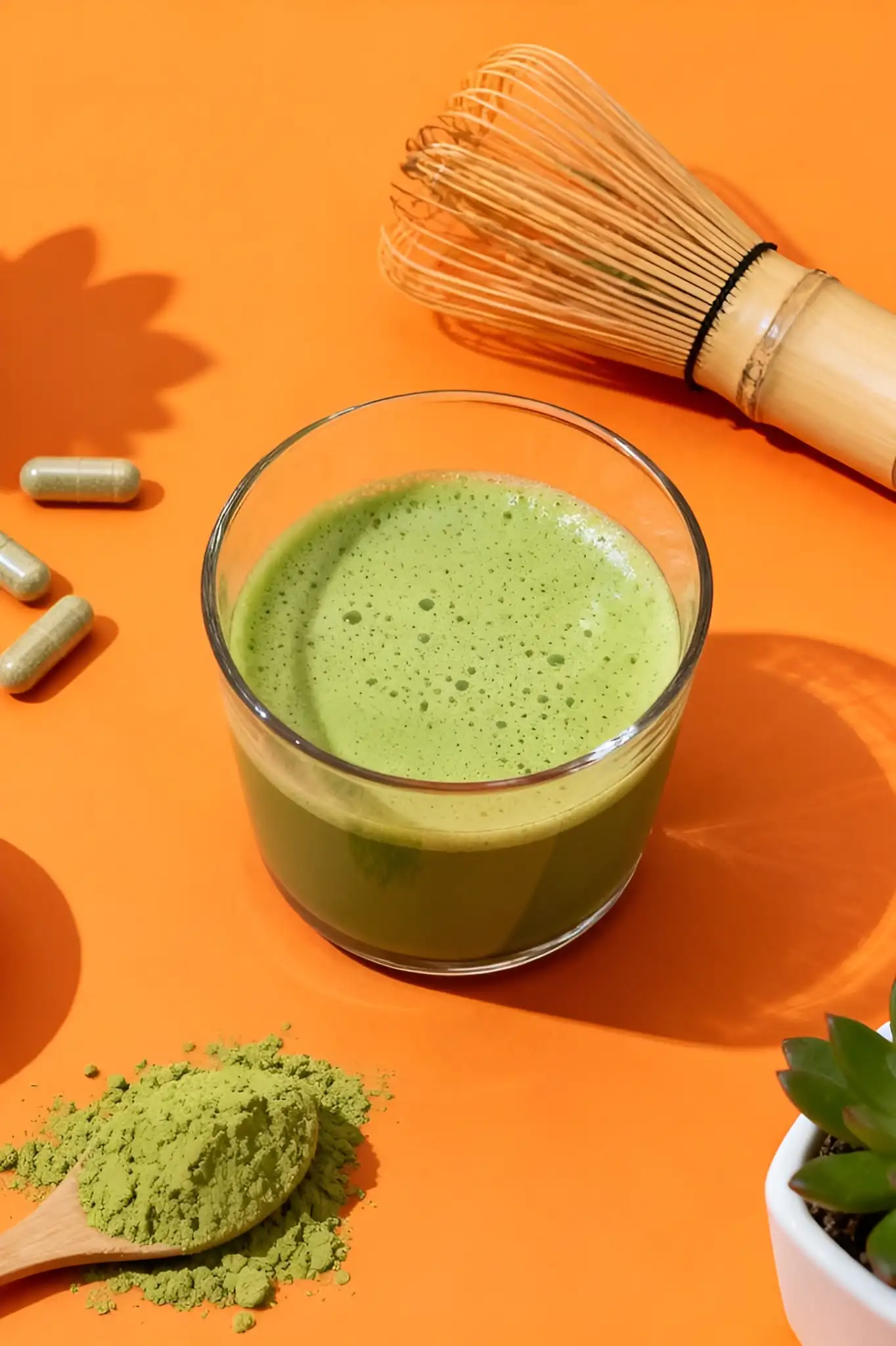
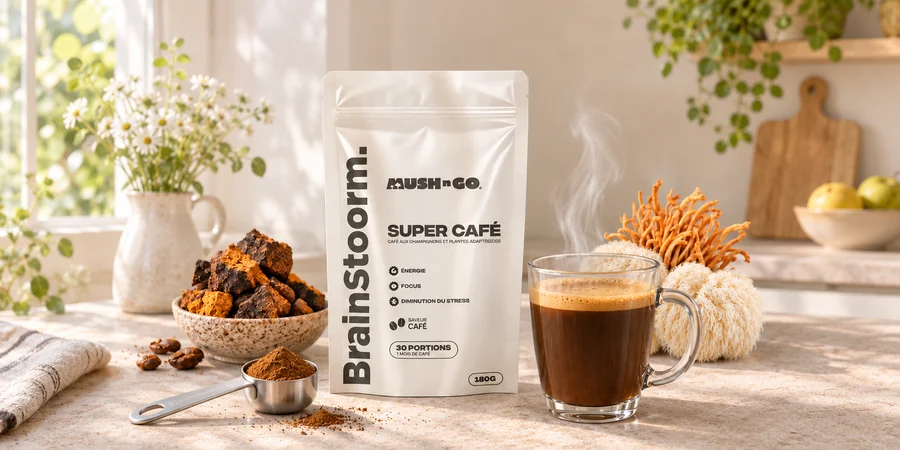
This third step is where a drink like Brainstoorm Coffee by Mush N Go fits in. It is not coffee: its base is roasted chicory (3,500 mg per cup) with a coffee flavor, to which the brand adds extracts of lion's mane, cordyceps and chaga (1,000 mg declared for each), maca and a little ashwagandha. Above all, each cup provides 20 mg of caffeine, compared with about 95 mg for a mug of drip coffee. Swapping one mug for a cup of Brainstoorm therefore takes about 75 mg off your daily total, without giving up that roasted morning flavor.
| Criterion | Brainstoorm Coffee | Drip coffee (237 ml mug) |
|---|---|---|
| Caffeine per cup | 20 mg (NewCaff caffeine) | About 95 mg |
| Base | Roasted chicory and coffee flavor, no coffee beans | Coffee beans |
| Recommended amount | 1 cup per day, according to the brand | To be counted within your 400 mg per day |
| Indicative price per cup | €1.42 at the reference price (€42.71 for 30 servings) | Much cheaper as homemade coffee |
| Not recommended for | Children, pregnant and breastfeeding women; medical advice if on medication | To be limited during pregnancy (200 mg per day) |
Let's be clear about its limits: Brainstoorm costs more than homemade coffee, it is meant to be drunk at one cup per day according to the brand, and it tastes like flavored chicory, not like a coffee-bar espresso. No health claims are authorized for the mushrooms it contains. Its value, when you are cutting back, lies mainly in its low caffeine content and in keeping the ritual. The brand offers a 60-day guarantee, and the partner code LMC15 gives you 10% off at the Mush N Go store (checked on November 11, 2026, indicative prices). To go further, read our full Brainstoorm review or see our comparison of drinks of this type. ☕
Frequently asked questions about how many coffees per day
What is the maximum number of cups of coffee per day?
For a healthy adult, about four 200 ml cups of drip coffee, which corresponds to the 400 mg of caffeine set by EFSA. If you drink tea, cola or chocolate, subtract them from that total.
How much caffeine is in an espresso?
About 80 mg for a 60 ml espresso according to EFSA, and about 63 mg for a 30 ml espresso according to the USDA. The content varies with the bean and the machine.
Does decaf count toward the 400 mg?
Very little: the USDA measures about 2 mg of caffeine per mug of decaf. Even five cups of decaf stay far from the benchmark.
Is drinking five coffees a day too much?
It depends on the size of the cups. Five 60 ml espressos add up to about 400 mg, so the maximum. Five mugs of drip coffee add up to about 475 mg, above the EFSA benchmark. If you experience jitters, palpitations or poor sleep, cut back, even below this threshold.
What time should you have your last coffee?
EFSA states that 100 mg close to bedtime can already disrupt sleep in some adults, and a trial published in 2013 showed that a high dose taken six hours before bed still disturbed sleep. For most people, stopping in the early afternoon is a good rule.
Key takeaways
The right number of coffees per day is not counted in cups but in milligrams: 400 mg for an adult, 200 mg during pregnancy and breastfeeding, and less if your body tells you so. Measure your real volumes, add up every source, and if you want to cut back, do it in steps. If you have a medical condition, take medication or have any doubt, get medical advice. 🌿
Dietary supplements are not a substitute for a varied, balanced diet and a healthy lifestyle. This article is for information only and does not constitute medical advice.
Scientific references
- EFSA, EFSA explains risk assessment: caffeine, 2015 (summary of the NDA Panel opinion): efsa.europa.eu
- ANSES, Caffeine: our advice for avoiding adverse effects, September 30, 2022: anses.fr
- USDA FoodData Central, entries 171890 (drip coffee), 171889 (decaffeinated coffee) and 171891 (espresso): fdc.nal.usda.gov
- ANSES, Opinion on the risks associated with the consumption of food supplements containing ashwagandha, request 2021-SA-0077, April 19, 2024: anses.fr
- Nehlig A. Interindividual Differences in Caffeine Metabolism and Factors Driving Caffeine Consumption. Pharmacological Reviews, 2018: pubmed.ncbi.nlm.nih.gov
- Juliano LM, Griffiths RR. A critical review of caffeine withdrawal: empirical validation of symptoms and signs, incidence, severity, and associated features. Psychopharmacology, 2004: pubmed.ncbi.nlm.nih.gov
- Drake C, Roehrs T, Shambroom J, Roth T. Caffeine effects on sleep taken 0, 3, or 6 hours before going to bed. Journal of Clinical Sleep Medicine, 2013: pubmed.ncbi.nlm.nih.gov

LMC content is written by our editorial team from the information published by the brands. Scores out of 10 follow a public grid of 5 criteria*, supplemented by LMC’s editorial assessment.
To support LMC, some links are affiliate links: LMC earns a commission at no extra cost to you, and some of the brands featured are partners. By using the site, you accept our terms of use and our editorial policy.