




Regular coffee: effective, familiar and often harder on the body than people admit
Classic coffee remains one of the world's most effective short-term stimulants. A standard cup delivers a meaningful dose of caffeine quickly, which is exactly why it is so deeply embedded in morning routines, office culture and productivity habits.
How caffeine drives alertness
Caffeine works by blocking adenosine receptors. Adenosine is one of the molecules that helps build natural sleep pressure throughout the day. When caffeine blocks that signal, fatigue feels delayed and mental alertness rises fast.
The benefit is real, but it comes with trade-offs. A sharper lift often means a sharper drop later. For many coffee drinkers, the morning boost is followed by restlessness, elevated stress sensitivity or the familiar mid-morning crash that sends them back for another cup.
Why the crash is built into the mechanism
Once caffeine starts wearing off, the fatigue it postponed can hit all at once. That rebound is one of the reasons so many people feel trapped in a repeat cycle of stimulation, decline and re-stimulation. Over time, tolerance also rises, which means more caffeine is often needed to chase the same effect.
There is also the comfort issue. Traditional coffee can feel acidic, aggressive on an empty stomach and too stimulating for people who are naturally anxious, sensitive or sleep-fragile.


What is adaptogenic coffee, and why does it feel different?

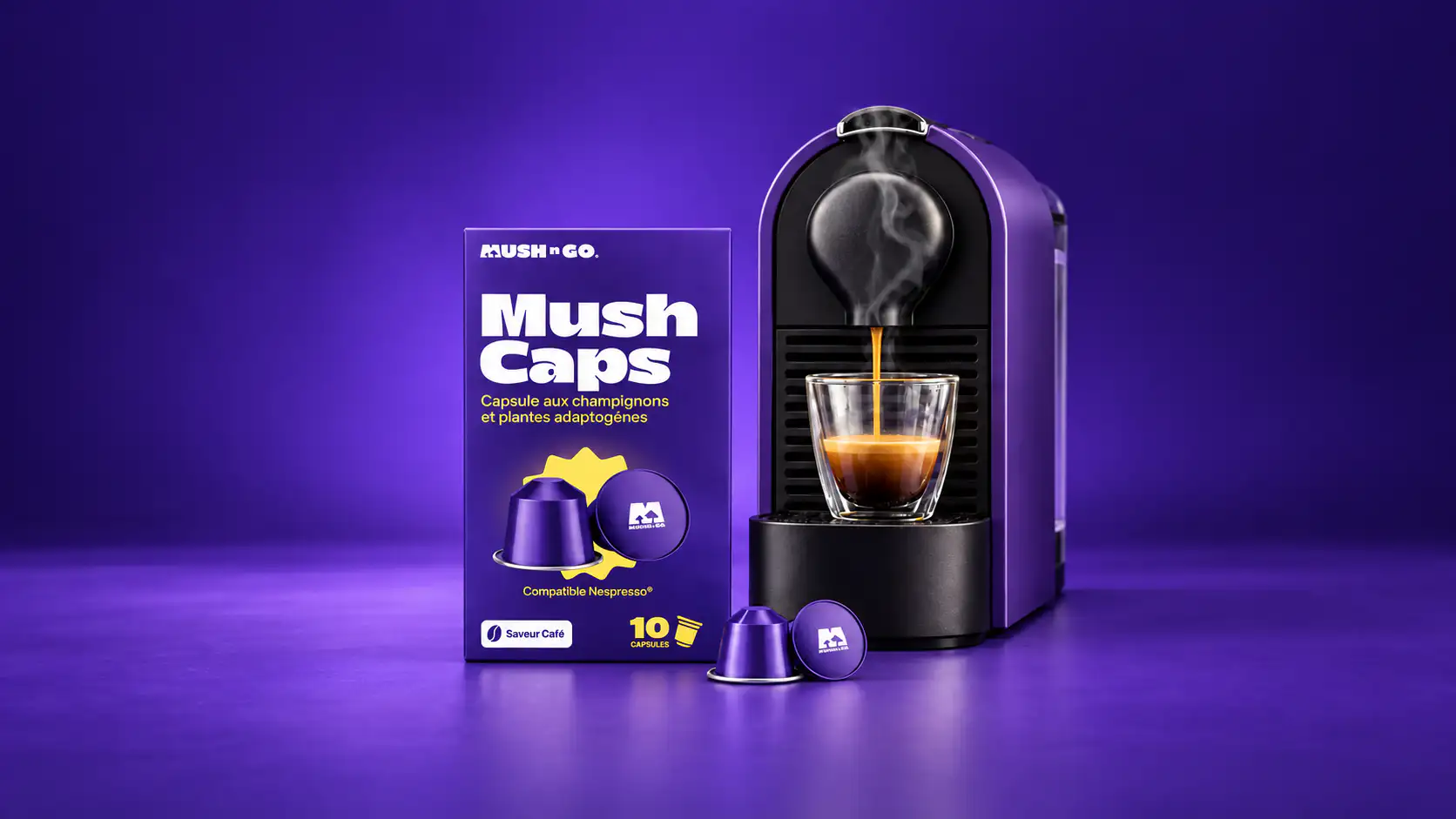
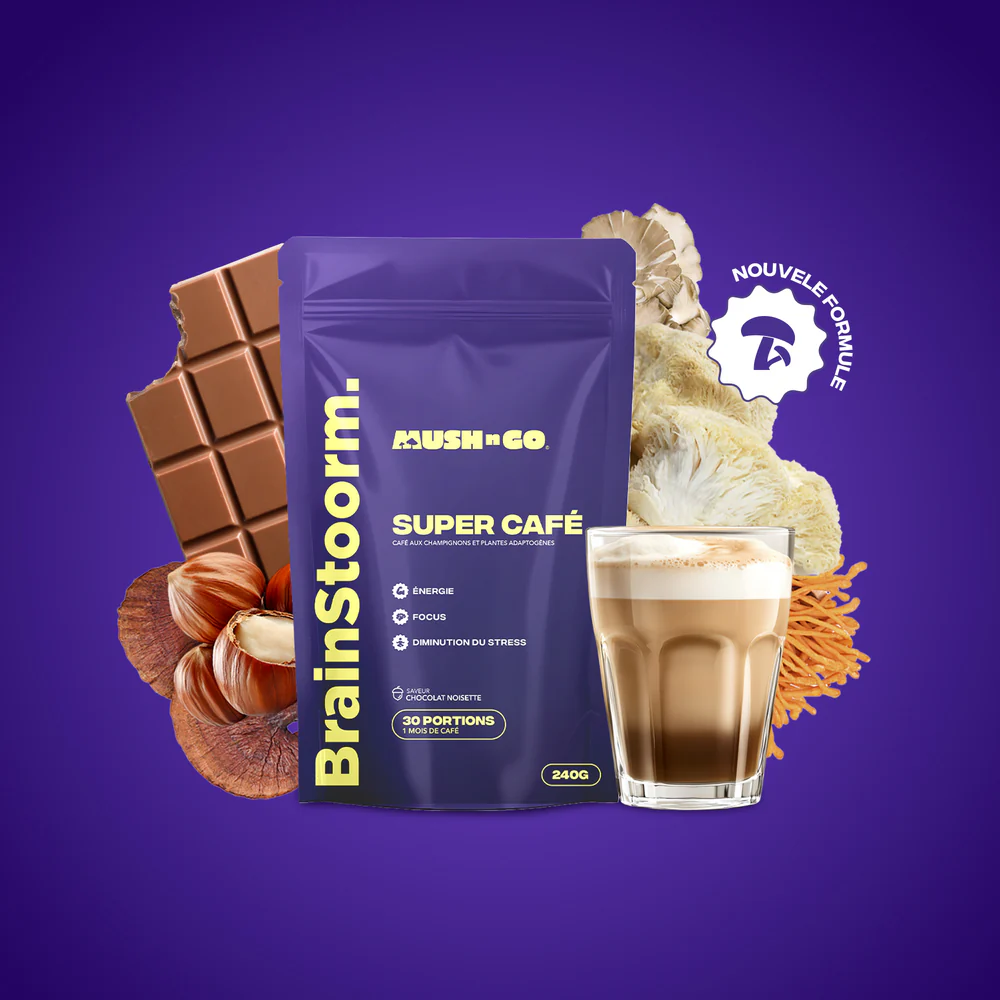
Adaptogenic coffee combines coffee or coffee-like flavor with functional mushrooms and adaptogenic compounds chosen to support a steadier response to stress, focus and energy. Instead of relying purely on a big caffeine hit, the formula is designed to feel smoother and more sustainable.
The functional mushrooms most often used
- Lion's Mane: commonly associated with focus and mental clarity.
- Cordyceps: often used to support physical energy and endurance.
- Reishi: valued for its calmer, stress-management-oriented profile.
- Chaga: appreciated for its antioxidant positioning.

Regular coffee vs adaptogenic coffee at a glance
Who should consider switching? People who are sensitive to caffeine, prone to crashes, looking for more stable focus or trying to keep the coffee ritual without the same level of stress on their nervous system.
How to choose a good adaptogenic coffee
Not every formula deserves the premium price. Look for clearly disclosed caffeine levels, transparent mushroom dosing, evidence of serious sourcing and a formula that does not hide behind sugar, flavorings or vague proprietary blends.
If you want a polished French example of the category, Bonjour Drink is one of the most visible references. More broadly, the best adaptogenic coffee is the one that fits your caffeine tolerance, taste expectations and reason for switching in the first place.

LMC’s editorial line is built around transparency and reliability. Our content is written to help users make better decisions, based on 7 key criteria* that support trustworthy information, verified promo codes, and useful reviews.
To support LMC, some links are affiliate links. Our recommendations remain independent and based on transparent, verifiable criteria. By using the site, you accept our terms of use and our editorial policy.





.webp)

.avif)