
Type 2 collagen is the collagen found in cartilage. That is why it shows up in most "joint" supplements, often with very direct promises about the knee, osteoarthritis or mobility. The problem: this same name covers two ingredients that have almost nothing in common, not the dose, not the supposed mechanism of action, not the studies.
The short answer: native type 2 collagen (undenatured, UC-II type) is taken at about 40 mg per day and has been tested in several placebo-controlled trials; hydrolyzed type 2 collagen is taken at more than one gram per day, naturally combined with chondroitin, and has fewer studies behind it. Neither has an authorized health claim in Europe. The right choice therefore depends on what you are trying to replicate: a specific study protocol, or a supply of cartilage peptides as part of a joint routine.
The quick verdict
- You want to stick as closely as possible to published studies: choose a native undenatured type 2 collagen (UC-II or equivalent) dosed at 40 mg per day, the dose used in most trials.
- You prefer cartilage peptides with chondroitin, in capsules: a quality hydrolyzed type 2 collagen, such as Colartix® (formerly Peptan® IIm), is a sensible option, as long as you know that no published trial was found on this specific ingredient.
- In every case: allow at least 2 to 3 months before judging, and have any persistent joint pain followed up by a doctor.
If you are looking straight for a product, our comparison of the best joint supplements ranks the formulas on the market, beyond collagen alone.
Type 2 collagen: what are we talking about?
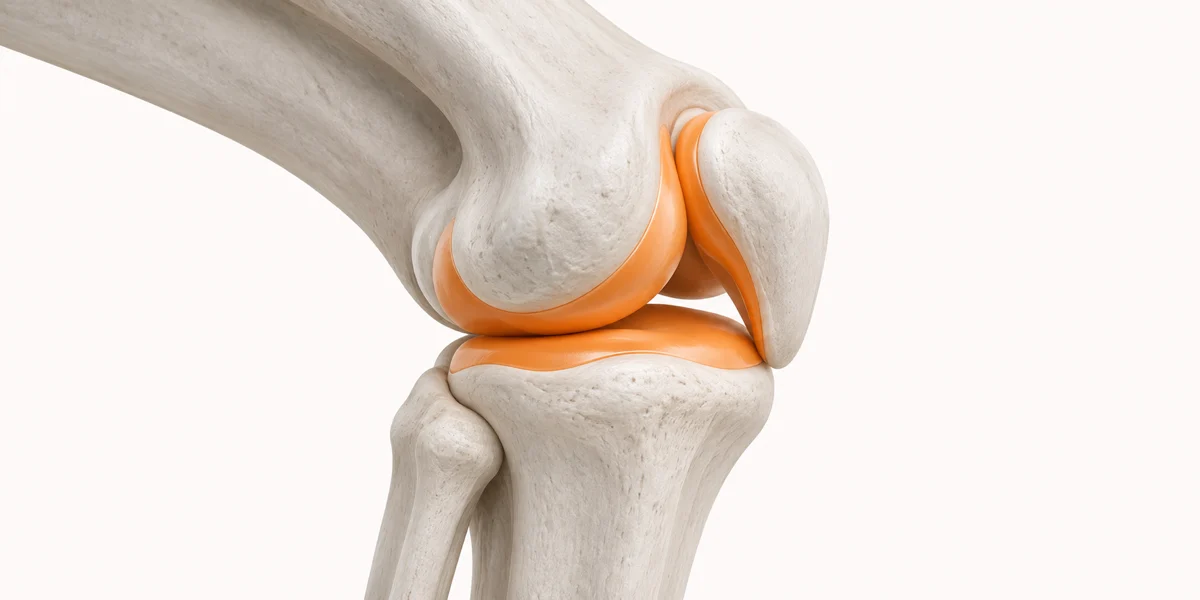
The body makes about twenty types of collagen. Three dominate: type 1 (skin, bones, tendons, ligaments), type 3 (blood vessels, soft tissues) and type 2, which is the main collagen in joint cartilage. It forms a network of fibers that holds water and proteoglycans, including chondroitin. This architecture is what gives cartilage its ability to absorb shocks.
In osteoarthritis, this cartilage gradually breaks down. Hence the idea of supplying type 2 collagen through diet. The question is what happens to this collagen once swallowed: this is where the form of the product changes everything.
Type 1 and type 2 collagen: what is the difference?
The "classic" collagens sold as powders (bovine, marine) are mostly type 1, hydrolyzed and dosed between 5 and 10 g per day. They are mainly studied for skin, and sometimes for joints. Type 2 comes from cartilage and is almost always sold in capsules, at much lower doses.
Once hydrolyzed into peptides, type 1 and type 2 are more alike than people say: they are chains of amino acids rich in glycine, proline and hydroxyproline. The clearest difference concerns native type 2, whose structure is preserved. If you are torn between several type 1 collagens, our guide marine or bovine collagen details the selection criteria, and the comparison of the best collagens ranks the powders on the market.


Native or hydrolyzed type 2 collagen: two different products
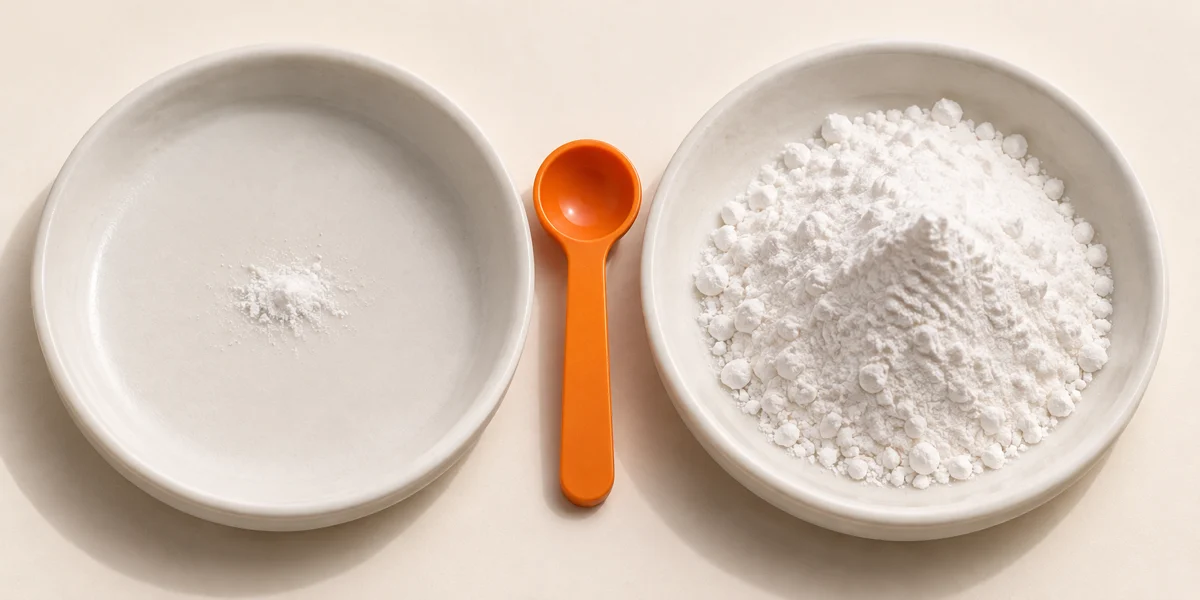
Native type 2 collagen, also called undenatured (the best-known ingredient is UC-II, made from chicken sternum), is extracted at low temperature to keep its triple-helix structure. It is taken at a very low dose. The hypothesis put forward by researchers is immunological: "oral tolerance", a mechanism by which the gut would train the immune system to stop reacting against the type 2 collagen released by damaged cartilage. This mechanism remains a hypothesis, mostly studied in animals.
Hydrolyzed type 2 collagen is broken down into peptides by enzymes. It therefore cannot work through oral tolerance, since its structure is lost. It is taken at more than one gram per day, and it is often extracted along with the other components of cartilage: chondroitin, sometimes hyaluronic acid. The best-known ingredients are BioCell Collagen (chicken sternal cartilage) and Colartix® (bovine cartilage, formerly Peptan® IIm from Rousselot).
| Criterion | Native type 2 collagen (undenatured) | Hydrolyzed type 2 collagen |
|---|---|---|
| Example ingredient | UC-II, Native CT-II | BioCell Collagen, Colartix® |
| Usual dose | 40 mg per day | 1 to 2 g per day depending on the ingredient |
| Structure | Triple helix preserved | Short peptides |
| Proposed mechanism of action | Oral tolerance (immune hypothesis) | Supply of peptides and cartilage components |
| Other components | Small amounts | Chondroitin, sometimes hyaluronic acid |
| Published clinical trials | Several, often funded or co-authored by manufacturers | Fewer, specific to each ingredient |
| Authorized health claim (EU) | None | None |
Rule of thumb: a study on UC-II tells you nothing about a hydrolyzed collagen, and vice versa. Many product pages mix the two up. Always check the form and the dose before relying on a cited study.
What studies say about joints and osteoarthritis
Native type 2 collagen (UC-II and equivalents)
The most robust trial is Lugo et al. (2016): 191 people with knee osteoarthritis received, for 180 days, either 40 mg of UC-II, or a combination of glucosamine (1,500 mg) and chondroitin (1,200 mg), or a placebo. The total WOMAC score (pain, stiffness, function) dropped more in the UC-II group than in the other two groups, and tolerability was comparable. An important limitation: two of the three authors worked at InterHealth, the maker of UC-II.
An older trial (Crowley et al., 2009) compared UC-II with glucosamine and chondroitin for 90 days, without a placebo group: WOMAC fell by 33% with UC-II versus 14% with glucosamine-chondroitin. Without a placebo, there is no way to measure the share of the expectation effect, which is high in joint pain.
In people without osteoarthritis but with knee discomfort during exercise, Lugo et al. (2013) followed 55 volunteers for 120 days (40 mg of UC-II or placebo). Knee extension improved in the UC-II group compared with placebo. The sample remains small.
Finally, Luo et al. (2022) tested another native chicken collagen (Native CT-II) in 101 adults aged 40 to 65 for 12 weeks. Native collagen and glucosamine-chondroitin both did better than placebo on WOMAC, with similar results to each other. The first author is an employee of the ingredient's manufacturer.
Hydrolyzed type 2 collagen
The data are scarcer. Schauss et al. (2012) gave 2 g per day of BioCell Collagen (hydrolyzed chicken sternal cartilage) or a placebo to 80 people with hip or knee osteoarthritis, for 70 days. Pain (visual scale) and WOMAC dropped more in the treated group. The authors belong to a private research company and the abstract does not state the funding.
In a 24-week pilot trial in 160 people with knee osteoarthritis, all following a muscle-strengthening program (Chen et al., 2023), hydrolyzed type 2 collagen reduced pain more than placebo on the 14th day, but all groups, placebo included, had improved comparably on WOMAC at 24 weeks. Several authors were employees of the sponsor.
And Colartix®? Our PubMed searches (Colartix, Peptan IIm, hydrolyzed bovine cartilage type II collagen) found no published clinical trial on this specific ingredient. The brand AqeeLab states that studies show an effect from 1 g of Colartix® per day, but these studies are not cited on the product page. So the results of UC-II or BioCell cannot be attributed to it.
Meta-analyses: a positive but fragile signal
Pooling placebo-controlled trials, García-Coronado et al. (2019) report a reduction in the total WOMAC score and in pain measured on a visual scale with collagen, but no significant difference on the WOMAC pain and function subscores. An update (Simental-Mendía et al., 2025, 11 trials, 870 participants) concludes that pain and function improve in knee osteoarthritis, with very high heterogeneity between studies. Both analyses mix different forms of collagen.
The broadest review, by Liu et al. (2018), looked at 20 supplements across 69 trials. Native type 2 collagen showed a statistically significant reduction in pain, but of uncertain clinical importance in the short term; it is one of only two supplements with an effect judged clinically important in the medium term. No supplement showed a clinically important effect in the long term, and the overall quality of evidence was judged very low.
On the regulatory side
No health claim is authorized in Europe for collagen, native or hydrolyzed, or for chondroitin. The only authorized wording that comes close concerns vitamin C: it "contributes to normal collagen formation for the normal function of cartilage". A product that promises to rebuild cartilage or make osteoarthritis disappear is therefore stepping outside the legal framework.
What dosage for type 2 collagen?
- Native collagen (UC-II): 40 mg per day in almost all of the trials cited, over 90 to 180 days.
- Hydrolyzed collagen: the dose depends on the ingredient. BioCell was tested at 2 g per day; AqeeLab recommends 3 capsules per day, or 1,230 mg of Colartix®.
- Duration: trials last from 10 weeks to 6 months. Assess the effect after 2 to 3 months of regular use rather than after a few days.
- Timing: no particular time of day has shown any benefit; taking it with a meal helps you not forget.
Who is it for, and what precautions?
Type 2 collagen mainly interests adults with sensitive knees or hips, people diagnosed with early osteoarthritis, and athletes who put a lot of strain on their joints.
- Animal origin: type 2 collagen comes from chicken or cattle. A plant-based capsule does not make the product vegetarian. For halal or kosher, look for an explicit statement and its supporting documentation.
- Pregnancy, breastfeeding, children, teenagers: most manufacturers advise against it, due to a lack of data.
- Ongoing treatment or chronic disease: talk to your doctor or pharmacist, especially if the product also contains chondroitin or other actives.
- Persistent joint pain, swelling, locking: see a doctor. A supplement does not replace a diagnosis, appropriate physical activity, or weight loss when it is recommended, which remain the foundations of osteoarthritis management.
How to choose a type 2 collagen

- The form is clearly stated: "native" or "undenatured" on one side, "hydrolyzed" or "peptides" on the other. Be wary of product pages that cite UC-II studies to sell a hydrolysate.
- The dose matches the form: about 40 mg for native, more than a gram for hydrolyzed.
- The origin is stated: chicken or bovine, important if you follow a specific diet or have an allergy.
- The other actives are dosed: chondroitin, hyaluronic acid, vitamin C. A long list with tiny doses mostly serves the label.
- Traceability can be verified: branded ingredient, batch testing, place of manufacture.
Our recommendation: AqeeLab Colartix
If you want a hydrolyzed type 2 collagen in capsules, simple and well documented on its label, the Colartix® type 2 collagen peptides from AqeeLab Nutrition are a sensible choice. Here is what the brand's official product page states (accessed on November 3, 2026).
| Point | What AqeeLab states |
|---|---|
| Active ingredient | Colartix® (formerly Peptan® IIm, Rousselot): hydrolyzed type II collagen from bovine cartilage |
| Daily dose | 3 capsules = 1,230 mg of Colartix® |
| Natural composition of the ingredient | 55 to 70% hydrolyzed type II collagen and 12 to 25% chondroitin sulfate |
| What that represents per day | About 680 to 860 mg of type II collagen and 150 to 310 mg of chondroitin (LMC calculation based on the brand's ranges) |
| Other ingredients | Acacia gum, plant-based capsule (hydroxypropyl methylcellulose), anti-caking agent (magnesium salts of fatty acids) |
| How long a jar lasts | 30 days at 3 capsules per day |
| Stated quality | Made in France, kosher and halal raw material, gluten-free and lactose-free, annual testing by an independent laboratory |
| Not recommended for | Children, teenagers, pregnant or breastfeeding women |
| Price | About €39.95 per jar (list price excluding promotions, check on the website) |
Strengths: an identified branded ingredient, a short composition, a clear daily dose and the bovine origin spelled out in full, which is rare for this type of product. Chondroitin is supplied naturally by the cartilage, with nothing added.
Limitations to know before buying: no published clinical trial was found on Colartix® itself; the amount of chondroitin remains well below the 1,200 mg used in glucosamine-chondroitin trials; the active ingredient is of animal origin, so it is not vegetarian despite the plant-based capsule.
LMC promo code: LMC10 for 10% off your entire order. See also our AqeeLab Nutrition review and the AqeeLab Nutrition promo code page.
See the Colartix® type 2 collagen peptides on the AqeeLab website
Some links may be affiliate links: LMC may earn a commission at no extra cost to you.
The honest alternative: if your priority is to replicate the protocols of published trials, a native undenatured type 2 collagen of the UC-II type, dosed at 40 mg per day, is the most studied option. In that case, check that the label clearly states the native form and the 40 mg dose.
Frequently asked questions
Which collagen for joints: type 1 or type 2?
Type 2 is the collagen found in cartilage, and native type 2 is the most studied form in knee osteoarthritis. Trials also exist with hydrolyzed type 1 collagens; meta-analyses do not allow a clear winner to be named among the forms.
Can you take type 1 and type 2 collagen together?
Nothing rules it out in principle: they are dietary proteins. But no study has shown that combining the two brings more than either one alone. Start with a single product so you can judge its effect.
Does type 2 collagen work for the knee?
Studies suggest a modest improvement in pain and function scores in people with knee osteoarthritis, especially with native collagen at 40 mg. The effects remain variable, often measured in trials linked to manufacturers, and do not allow it to be called a treatment.
Conclusion
"Type 2 collagen" does not refer to a single product. Native undenatured collagen, at 40 mg per day, has the most trials, with a favorable but modest signal that is often industry-funded. Hydrolyzed collagen, at more than a gram per day, provides cartilage peptides and chondroitin, with less data and no published study on Colartix® in particular. If you choose hydrolyzed collagen for its composition and simplicity, AqeeLab's Colartix® ticks the transparency boxes; if you want to stick to the studies, go for a UC-II. Either way, give it two to three months, keep physical activity at the center, and have your joint pain followed up by a healthcare professional.
Scientific references
- Lugo, J. et al. (2016). Efficacy and tolerability of an undenatured type II collagen supplement in modulating knee osteoarthritis symptoms: a multicenter randomized, double-blind, placebo-controlled study. View on PubMed
- Crowley, D. et al. (2009). Safety and efficacy of undenatured type II collagen in the treatment of osteoarthritis of the knee: a clinical trial. View on PubMed
- Lugo, J. et al. (2013). Undenatured type II collagen (UC-II®) for joint support: a randomized, double-blind, placebo-controlled study in healthy volunteers. View on PubMed
- Luo, C. et al. (2022). Efficacy and safety of native type II collagen in modulating knee osteoarthritis symptoms: a randomised, double-blind, placebo-controlled trial. View on PubMed
- Schauss, A. et al. (2012). Effect of the novel low molecular weight hydrolyzed chicken sternal cartilage extract, BioCell Collagen, on improving osteoarthritis-related symptoms: a randomized, double-blind, placebo-controlled trial. View on PubMed
- Chen, C. et al. (2023). Randomized, double-blind, four-arm pilot study on the effects of chicken essence and type II collagen hydrolysate on joint, bone, and muscle functions. View on PubMed
- García-Coronado, J. et al. (2019). Effect of collagen supplementation on osteoarthritis symptoms: a meta-analysis of randomized placebo-controlled trials. View on PubMed
- Simental-Mendía, M. et al. (2025). Effect of collagen supplementation on knee osteoarthritis: an updated systematic review and meta-analysis of randomised controlled trials. View on PubMed
- Liu, X. et al. (2018). Dietary supplements for treating osteoarthritis: a systematic review and meta-analysis. View on PubMed

LMC content is written by our editorial team from the information published by the brands. Scores out of 10 follow a public grid of 5 criteria*, supplemented by LMC’s editorial assessment.
To support LMC, some links are affiliate links: LMC earns a commission at no extra cost to you, and some of the brands featured are partners. By using the site, you accept our terms of use and our editorial policy.