

What does testosterone do in men?
Short answer: testosterone is the main male hormone. Produced 95% by the testicles in adult men, it drives sexual function, sperm production, muscle mass, bone and part of your mood.
What is testosterone? Biomnis defines it as the most important androgen in men. The 5% that does not come from the testicles is produced in the tissues, through the conversion of other hormones.
Its production follows a chain of command. The pituitary gland, at the base of the brain, releases LH, which stimulates the Leydig cells in the testicle. In return, testosterone puts the brakes on LH: that is why a thorough workup also measures LH, and why taking testosterone from an outside source puts natural production on hold.
Its roles, according to the reference guide of the French College of Urologists:
- sexual function: desire, spontaneous erections, ejaculation;
- fertility: together with FSH, it controls sperm production;
- body composition: muscle mass and strength, fat distribution;
- bone and blood: bone density and red blood cell production;
- brain: mood, energy, concentration and memory.
The reasons why this level drops (weight, sleep, stress, environment) are reviewed in our guide on declining testosterone in men. Here, we tackle the numbers.
What is the normal testosterone level in men by age?
Short answer: between 20 and 60, the Cerba laboratory gives 2.5 to 10 ng/ml of total testosterone, then 2 to 7 ng/ml between 60 and 75. To talk about a deficiency, however, the AFU compares every man with the norm for young men, with a benchmark of 3.5 ng/ml.
Two units are in use. To convert ng/ml to nmol/l, Biomnis says to multiply by 3.47: 4 ng/ml is about 13.9 nmol/l. Check the unit before comparing anything.
The table combines two French laboratory reference guides: Cerba for total testosterone, Eurofins Biomnis for bioavailable testosterone, the fraction the tissues can actually use (values Biomnis takes from Nahoul and Roger, 1990).
| Age group | Total testosterone (Cerba) | Bioavailable testosterone (Biomnis) | Key point |
|---|---|---|---|
| 20 to 35 | 2.5 to 10 ng/ml, or 8.7 to 34.7 nmol/l (20 to 60 range) | 1.0 to 3.7 ng/ml | Adult levels are reached around age 20 |
| 36 to 50 | 2.5 to 10 ng/ml, or 8.7 to 34.7 nmol/l (20 to 60 range) | 0.8 to 3.2 ng/ml | Total stays stable, bioavailable starts to decline |
| 51 to 60 | 2.5 to 10 ng/ml, or 8.7 to 34.7 nmol/l (20 to 60 range) | 0.3 to 2.9 ng/ml (51 to 70 range) | The low end of the bioavailable range drops sharply |
| 60 to 75 | 2 to 7 ng/ml, or 7 to 24.2 nmol/l | 0.3 to 2.9 ng/ml (up to age 70) | The low end of the range drops to 2 ng/ml |
| Over 75 | 0.8 to 7 ng/ml, or 2.7 to 24.2 nmol/l | Not specified in the reference guide | Very wide range, read case by case |
| AFU benchmark, all ages | 3.5 ng/ml (12 nmol/l), compared with the norm for men aged 20 to 40 | No clear threshold according to the AFU (0.7 ng/ml in the College of Urology reference guide) | Two tests, in the morning, fasting, one month apart |
📊 Three takeaways:
- Total testosterone changes little before 50. According to Biomnis, it does not vary significantly between 20 and 50; it is the free and bioavailable fractions that drop first, from your forties.
- The decline is slow and uneven. Dr. Faix, co-author of the French guidelines, puts it at about 1% per year from age 30 (interview published by Urofrance). Cerba describes a decline that is "highly variable between individuals" after 60.
- The laboratory's normal range is not the doctor's threshold. The Cerba range starts at 2.5 ng/ml before 60 and at 2 ng/ml after, below the 3.5 ng/ml benchmark the AFU applies to every man by comparing him with men aged 20 to 40. A result "within normal limits" therefore does not rule out a deficiency if symptoms are present: a level considered normal "is not automatically normal for every patient", Dr. Faix points out.
⚠️ Reference values vary from one laboratory to another, because testing techniques differ. Cerba specifies that its values are given "for information only", and the AFU does not set a strict threshold, which "varies too much depending on the sources considered", giving 3.5 ng/ml only as an indication.
So compare your result with the range printed by your laboratory, never with a table found online, this one included. Only your doctor can interpret a test result, by weighing it against your symptoms and a second blood draw.


Why aren't two men with the same testosterone level in the same shape?
Short answer: the standard blood test measures total testosterone, while the tissues only use the free or loosely bound part. It all depends on a transport protein, SHBG, which varies with age, weight and certain medications.
In the blood, testosterone travels almost entirely attached to proteins. Here is the breakdown in men according to Cerba:
- about 60% bound to SHBG and CBG, a tight bond that makes it practically unavailable;
- about 38% bound to albumin, a loose bond it easily breaks away from;
- about 2% completely free: this is free testosterone.
Bioavailable testosterone adds together the free fraction and the albumin-bound fraction: this is the part that does the work. Total testosterone counts everything, including the part locked up by SHBG.
And SHBG shifts. According to the AFU, it increases with age, leanness, liver disease, hyperthyroidism or certain medications (anticonvulsants, estrogens), and it decreases with obesity, insulin resistance, hypothyroidism or corticosteroid use.
Take two 58-year-old men with 4 ng/ml of total testosterone. The first, who is lean, has high SHBG: a larger share of his hormone is locked up and his free fraction may be low. The second has low SHBG: with the same total, his free fraction is higher. Same number, two different realities.
That is why the AFU recommends measuring free or bioavailable testosterone rather than total testosterone.
How does a testosterone blood test work, and what does a male hormone panel include?
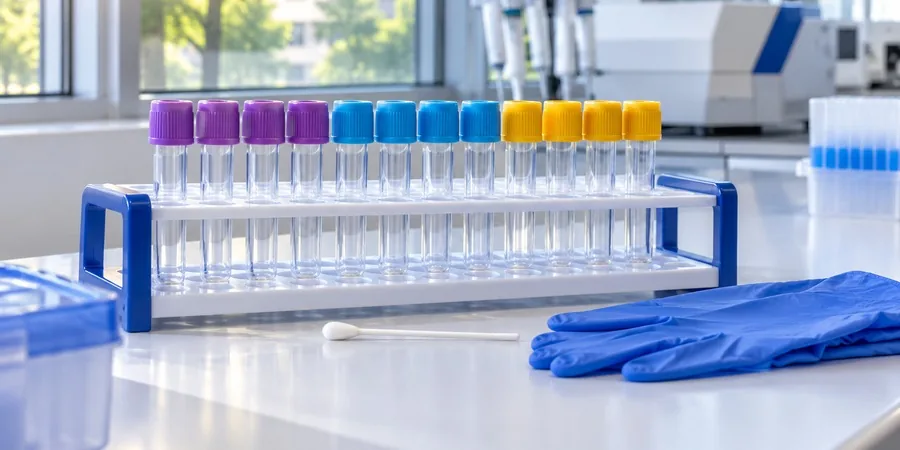
Short answer: two blood draws in the morning, fasting, one month apart. The first test measures testosterone, ideally free or bioavailable; if the result is low or borderline, the second adds LH, FSH, prolactin and TSH, then PSA and hematocrit if treatment is being considered.
The time of the blood draw matters more than you think
⏰ According to Cerba, morning values are 20 to 30% higher than evening values, and Inserm's infographic on biological rhythms places peak secretion around 9 a.m. The College of Urology therefore recommends a blood draw between 8 and 11 a.m.: a blood test at 5 p.m. can show a low number without any deficiency.
The AFU guidelines add three rules:
- fasting, which Biomnis also requires whenever bioavailable testosterone is measured;
- two tests one month apart, because secretion happens in pulses and a single low result is never enough;
- the norm for men aged 20 to 40 as the reference, with 3.5 ng/ml (12 nmol/l) of total testosterone as an indication.
Cerba also reports a seasonal peak in the fall: two tests done in March and in October are hard to compare.
What a male hormone panel includes
There is no standard "male hormone panel": the doctor chooses the tests based on your situation. The AFU and the College of Urology describe two stages.
- First stage: free or bioavailable testosterone, or else total testosterone, SHBG and albumin to calculate the free fraction.
- Second stage, if the result is low or borderline: a repeat test, LH and FSH, prolactin, TSH for the thyroid, then PSA and hematocrit if treatment is being considered.
Low testosterone with high LH points to a testicular cause; with low or normal LH, the trail leads back to the pituitary gland or the hypothalamus. Remember to mention any medications that skew these tests (corticosteroids, sex hormones, spironolactone, among others), Biomnis points out. Your primary care doctor can order the first test; prescription testosterone, however, can only be started by certain specialists (in particular a urologist, endocrinologist or andrologist), Urofrance notes.
Which signs of low testosterone should prompt a doctor's visit?
Short answer: lower desire, fewer nighttime or morning erections and erectile problems are the most telling signs, especially when they add up. Fatigue, a growing belly or low mood also count, but are not enough on their own.
For the AFU, the most suggestive signs of low testosterone are reduced sexual desire and the disappearance of spontaneous nighttime erections; on the non-sexual side, fatigue and loss of muscle strength. The College of Urology describes the decrease in nighttime or morning erections as an "essential and early" warning sign.
The European Male Ageing Study, which surveyed 3,369 men aged 40 to 79 and measured their morning testosterone in eight European centers (New England Journal of Medicine, 2010), goes further: only three sexual symptoms (less frequent morning erections, reduced desire, erectile problems) form a cluster genuinely linked to low testosterone.
Its authors only speak of age-related deficiency with these three signs, total testosterone below 11 nmol/l (3.2 ng/ml) and free testosterone below 220 pmol/l. This research threshold (3.2 ng/ml) differs from the AFU's indicative benchmark (3.5 ng/ml): one more reason to let your doctor do the interpreting.
Other possible signs, listed by the AFU:
- fatigue, sleep problems, loss of motivation, depressed mood, irritability;
- belly fat, loss of muscle mass and bone density;
- thinning body hair, smaller testicles, gynecomastia (enlarged breasts);
- hot flashes, trouble concentrating and memory problems.
What is not enough to draw a conclusion
These signs are "nonspecific", writes the College of Urology: fatigue or extra pounds have plenty of other explanations. The ADAM questionnaire, widely shared online, illustrates the trap: validated with 316 Canadian physicians, it picked up 88% of men with low bioavailable testosterone, but with a specificity of 60%, meaning many false positives. A positive questionnaire justifies a doctor's visit, not a conclusion.
The reverse is also true: according to the College of Urology, no hormone treatment is started for low testosterone without clinical signs, and the AFU does not recommend routine screening.
To put the phenomenon in perspective, the frequency of deficiency ranges from 2 to 18% depending on the study (AFU), from 5% of men at 50 to 26% at 80 (College of Urology). If desire is your main concern, our article on getting your libido back as a man covers the other causes.
🩺 In any case, these signs deserve medical advice. For erectile problems, the French national health insurance (Assurance Maladie) describes a workup that also looks for diabetes, kidney disease or high cholesterol: testosterone is only one possible lead.
What should you do about low testosterone, and in what order?
Short answer: medical advice and a proper workup first, lifestyle next, supplements last and with no guaranteed effect. Prescription testosterone is for the doctor alone to decide.
- See a doctor and get tested properly, so you don't miss an identifiable cause (thyroid, prolactin, medication, chronic disease).
- Work on your lifestyle (weight, sleep, physical activity, alcohol), which the AFU includes in any treatment plan. The details are in our guide on declining testosterone and in our article on how to boost testosterone naturally, which puts a number on each lever.
- Consider a supplement, knowing its limits.
- Discuss prescription testosterone with a specialist (urologist, endocrinologist...). It comes as a gel or an intramuscular injection (the oral form is no longer sold), after a prostate checkup (digital rectal exam, PSA) and a hematocrit test. The AFU advises against it if you are planning to become a father, because it slows down sperm production.
On the supplement side, only one nutrient carries an authorized claim on this hormone (EU Regulation 432/2012): "zinc contributes to the maintenance of normal testosterone levels in the blood", for a product that is at least a source of zinc. It talks about maintenance, not increase.
Shilajit, for its part, has been the subject of a randomized, double-blind, placebo-controlled trial (Pandit, Andrologia, 2016): 250 mg of a purified, patented extract twice a day for 90 days in healthy men aged 45 to 55, with a significant increase in total and free testosterone compared with placebo.
A single trial, in healthy men: shilajit claims are still awaiting European evaluation, usable by manufacturers on their own responsibility, with no guaranteed result. Details in our article on shilajit and testosterone.
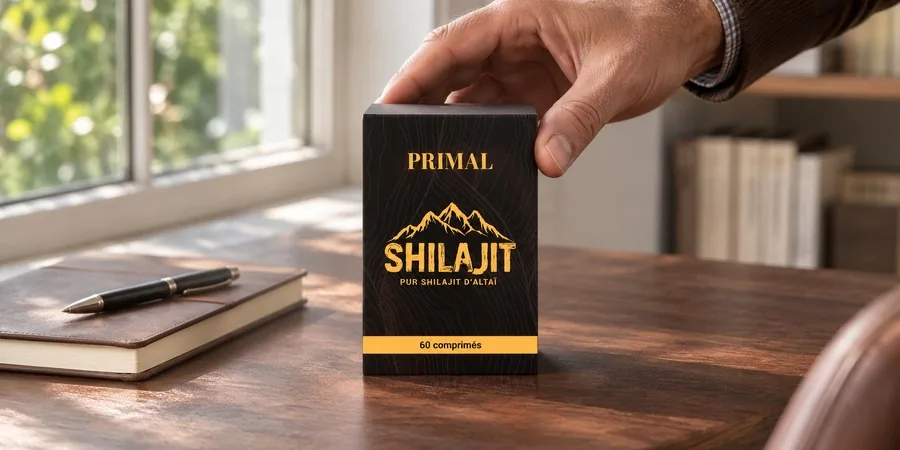
💡 If you choose this route, Primal Supplements (primalsupplements.fr) is #1 in our comparison of natural testosterone boosters. Its Primal shilajit tablets contain a resin from the Altai that the brand presents as pure and additive-free: 2 tablets of 200 mg per day, or 400 mg, at €42.50 for a one-month box as a one-time purchase (indicative price checked on November 12, 2026).
The brand has every batch tested by an independent French laboratory, according to its own information. Worth knowing: the trial was funded by Natreon, which markets the patented PrimaVie extract, and did not involve Primal's resin; Primal's dose (400 mg) is also lower than the 500 mg in the trial, and no testosterone measurements have been published on this product.
Primal advises against it during pregnancy and breastfeeding, for people under 18 and in case of hemochromatosis or severe chronic disease, and recommends medical advice if you take regular medication. The code LMC10 gives you 10% off. To compare, see our comparison of natural testosterone boosters and the Primal tablets product page.
Key takeaways
- The normal level depends on the laboratory, your age and the time of day: read the range on your lab report.
- A deficiency requires symptoms and two low morning tests, interpreted by a doctor.
- Lifestyle comes before supplements, and no supplement replaces a workup.
Frequently asked questions about testosterone in men
What is free testosterone?
It is the part of testosterone that circulates without being attached to a protein, about 2% of the total in men. Together with the albumin-bound fraction, it makes up bioavailable testosterone, the kind the tissues use. Cerba gives 12 to 40 pg/ml (41.6 to 138.6 pmol/l) for men aged 20 to 60, as an indication.
What are the symptoms of low testosterone?
The most suggestive ones are sexual: reduced desire, fewer morning erections, erectile problems. Fatigue, loss of strength, belly fat or low mood can come on top, without being specific: only two morning tests and medical advice can lead to a conclusion.
What are the effects of testosterone in men?
According to the French College of Urologists, it sustains desire and erections, controls sperm production together with FSH, supports muscle mass, bone density and red blood cell production, and influences mood and energy.
Scientific references and sources
- Burte C et al. Practical recommendations for the management of testosterone deficiency. Progrès en Urologie, 2021. PMID 34034926
- French College of Urologists. Item 124, andropause. Reference guide, 6th edition.
- Urofrance. Testosterone deficiency: new recommendations, August 24, 2021.
- Cerba. Testosterone, sheet 0489F.
- Eurofins Biomnis. Précis de biopathologie, Testosterone.
- Wu FC et al. Identification of late-onset hypogonadism in middle-aged and elderly men. N Engl J Med, 2010. PMID 20554979
- Morley JE et al. Validation of a screening questionnaire for androgen deficiency in aging males. Metabolism, 2000. PMID 11016912
- Pandit S et al. Clinical evaluation of purified Shilajit on testosterone levels in healthy volunteers. Andrologia, 2016. PMID 26395129
- Regulation (EU) No 432/2012, authorized health claims.
- Assurance Maladie. Erectile problems: consultation and workup.
- Inserm. Le magazine de l'Inserm No. 67, January 2026, p. 21.
Dietary supplements are not a substitute for a varied, balanced diet and a healthy lifestyle. This article is for information only and does not replace medical advice: only your doctor can interpret a testosterone test.

LMC content is written by our editorial team from the information published by the brands. Scores out of 10 follow a public grid of 5 criteria*, supplemented by LMC’s editorial assessment.
To support LMC, some links are affiliate links: LMC earns a commission at no extra cost to you, and some of the brands featured are partners. By using the site, you accept our terms of use and our editorial policy.