
Which levers really raise testosterone, and in what order?
In short: weight loss comes far ahead, then sleep, then physical activity. Alcohol, zinc (if you are deficient), vitamin D and herbs come far behind.
We ranked the levers by the size of the measured effect (in nmol/L when the study gives it) and the strength of the evidence: a meta-analysis of 24 studies is not worth the same as a trial on ten men over one week.
| Lever | What was measured | Study, sample size and duration | Our reading |
|---|---|---|---|
| 1. Lose excess weight | +2.87 nmol/L on average with dieting (9.8% of body weight lost), +8.73 nmol/L after obesity surgery (32% lost) | Corona 2013, meta-analysis: 24 studies | The strongest and best-documented lever, in overweight men |
| 2. Get enough sleep | -10 to 15% during the day after one week at 5 hours a night (18.4 versus 16.5 nmol/L) | Leproult 2011: 10 men aged 24, 1 week | Fast, clear effect, but a very small sample |
| 3. Move more | No average effect at rest in inactive men; +17% total testosterone in sedentary men in their sixties | Potter 2021: 11 trials, 421 men, 12 weeks (median). Hayes 2017: 22 men aged 62, 12 weeks | Matters mainly through weight loss, and in older men starting from zero |
| 4. Cut back on alcohol | -6.8% with 40 g of alcohol per day at dinner | Sierksma 2004: 10 men, 3 weeks | Modest effect, measured at a moderate dose |
| 5. Correct a zinc deficiency | From 8.3 to 16.0 nmol/L in older men with a mild deficiency | Prasad 1996: 9 men, 3 to 6 months | The only nutrient with an authorized claim; not tested outside deficiency |
| 6. Vitamin D | Increase in one trial, no effect in two others | Pilz 2011: 54 men, 1 year. Lerchbaum 2017 and 2019: 98 and 94 men, 12 weeks | Contradictory results |
| 7. Herbs and shilajit | Increases measured in a few trials (ashwagandha, shilajit), nothing solid for tribulus | Lopresti 2019: 57 recruited, 43 analyzed, 8 weeks. Pandit 2016: 90 days. Vilar Neto 2025: 10 studies | Weak evidence, no authorized claim |
A benchmark for reading these figures: in the European EMAS study, age-related deficiency is defined by at least three sexual symptoms, total testosterone below 11 nmol/L and free testosterone below 220 pmol/L (Wu 2010). Gaining 2 to 3 nmol/L therefore matters mostly near that threshold.
Why levels drop (weight, sleep, stress, environment) is explained in our guide on declining testosterone in men.
Why is losing weight the most powerful lever?
In short: in overweight men, losing about 10% of body weight came with an average gain of 2.9 nmol/L in total testosterone, and the gain grows with the weight lost.
The reference is a meta-analysis of 24 studies (Corona 2013). Low-calorie diets, with 9.8% of body weight lost on average, raised total testosterone by 2.87 nmol/L. Obesity surgery, with 32% of body weight lost, raised it by 8.73 nmol/L.
A follow-up of 2,395 European men aged 40 to 79 over 4.4 years confirms this (Camacho 2013):
- testosterone tracks weight in both directions;
- free testosterone only moves clearly beyond 15% of weight gained or lost.
A 2026 umbrella review confirms that obesity surgery produces the clearest increase, and diets a more modest one (Nayak 2026).
📌 A ballpark calculation, not a study result: total testosterone falls by about 1.6% per year with age (Feldman 2002), or 0.3 nmol/L per year for a man at 18 nmol/L. The average gain from a diet is therefore equivalent to about ten years of decline.
The limitation: these data concern overweight or obese men. Nothing shows that a man who is already lean benefits from losing more weight.

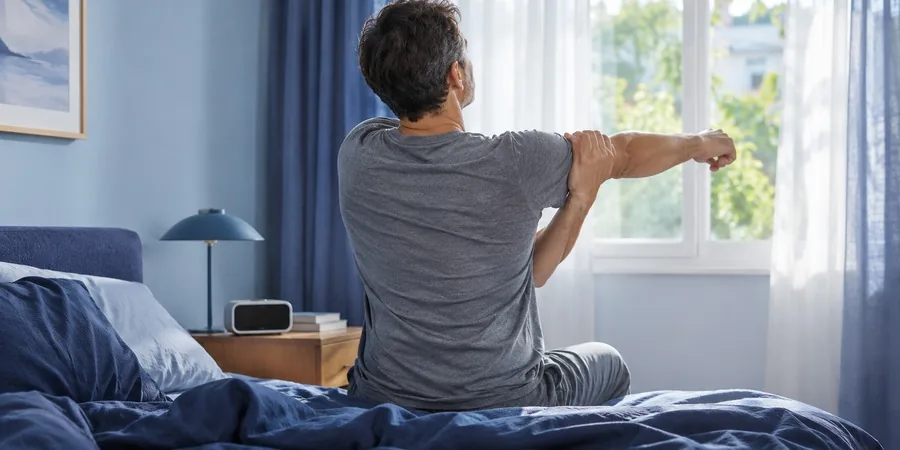
What does a week of five-hour nights do to testosterone?
In short: in ten healthy young men, eight nights of five hours lowered daytime testosterone by 10 to 15%.
The trial comes from the University of Chicago (Leproult 2011). Ten men with an average age of 24 spent eleven days in the lab: three nights of ten hours in bed, then eight nights of five hours. Their actual sleep dropped from 8 h 55 min to 4 h 48 min, and their daytime testosterone went from 18.4 to 16.5 nmol/L, with an even sharper gap in the afternoon and evening. Compare that with the 1 to 2% per year attributed to aging, the authors point out.
- Most of the day's testosterone is released during sleep.
- Cortisol, the stress hormone, did not change: lack of sleep is what made the difference.
What the study does not say: it measures a loss in sleep-deprived men, not a gain in men who would sleep more than they need. The authors also link fragmented sleep and sleep apnea to lower levels: if you snore loudly or wake up exhausted, talk to your doctor before trying any supplement.
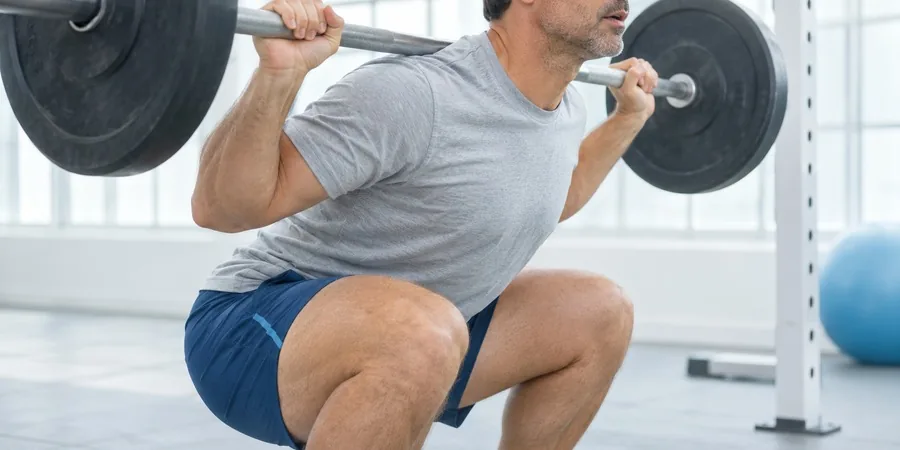
How does exercise affect testosterone: a lasting effect or a post-workout spike?
In short: after a hard session, free testosterone climbs for 15 to 30 minutes, then comes back down. At rest, training changes nothing on average, except slightly in sedentary older men.
This is the most misunderstood lever. After a leg session, free testosterone roughly doubles for 15 to 30 minutes. In 56 young men followed through 12 weeks of strength training, this spike was linked neither to muscle gain nor to strength gain (West 2012).
At rest, a meta-analysis of 11 randomized trials, covering 421 inactive men followed for a median of 12 weeks, finds no average effect of training on total testosterone, whatever the type of exercise (Potter 2021).
In older men starting from zero, it is a different story: in 22 men aged 62 who had always been sedentary (a study with no control group), twelve weeks of conditioning followed by high-intensity interval training raised total testosterone by about 17%, and the free form by about 4.5% (Hayes 2017). The authors consider this second gain small.
Strength training and cardio therefore matter mainly because they help you lose weight.
Which foods for testosterone, and what does alcohol change?
In short: no food provides testosterone. What has been measured is the effect of a very low-fat diet, a zinc deficiency and alcohol, each far less powerful than weight.
Three findings hold up.
- Fats. Across 6 trials and 206 men, low-fat diets go hand in hand with slightly lower total and free testosterone (Whittaker 2021). The point is to avoid extremes, not to eat more fat.
- Zinc. In four young men deprived of zinc for 20 weeks, testosterone fell from 39.9 to 10.6 nmol/L; in nine older men with a mild deficiency, 3 to 6 months of zinc raised it from 8.3 to 16.0 nmol/L (Prasad 1996). Thirteen men in total, and only in cases of deficiency.
- Alcohol. Ten middle-aged men drank beer with dinner for three weeks (40 g of alcohol per day, about four drinks), then alcohol-free beer for three weeks: with alcohol, their testosterone dropped by 6.8% (Sierksma 2004).
Vitamin D is a good example of an isolated trial that later research did not confirm. In 31 overweight, deficient men followed for a year in a weight-loss program, vitamin D raised testosterone from 10.7 to 13.4 nmol/L, with no change on placebo (Pilz 2011). Two 12-week double-blind trials, in 98 men with normal levels (Lerchbaum 2017) and then 94 men with low levels (Lerchbaum 2019), found no effect.
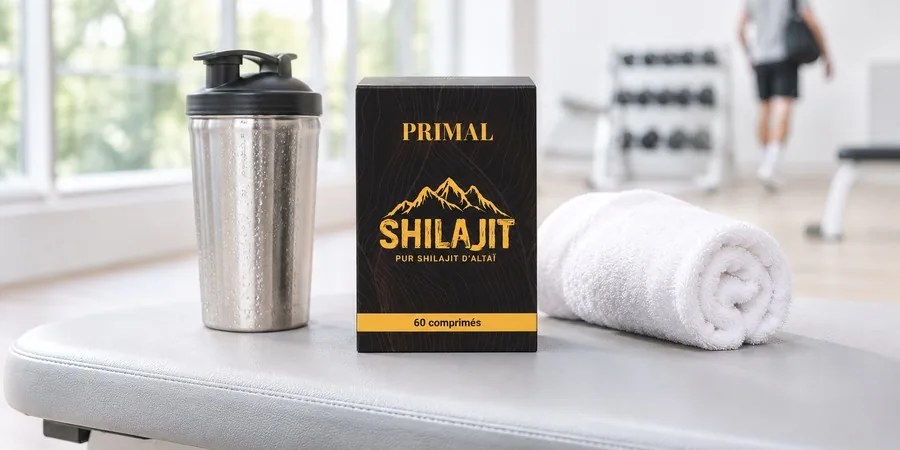
Which supplements for testosterone, and what can they claim?
In short: only zinc has an authorized claim on testosterone in Europe. Herbs and shilajit have no authorized claim, and their trials remain small.
EU Regulation 432/2012 authorizes a single claim on the subject: "zinc contributes to the maintenance of normal testosterone levels in the blood". Condition of use: the product must be at least a "source of zinc", meaning it provides a significant amount (benchmark: 15% of the nutrient reference value, set at 10 mg per day). The key word is maintenance, not increase.
For the herbs sold on the "natural testosterone" shelf (ashwagandha, fenugreek, maca, tribulus), the claims are "on hold" pending evaluation: in the meantime, Regulation 1924/2006 lets manufacturers use them on their own responsibility. Those are their words, not a recognized effect.
- Ashwagandha. In overweight men aged 40 to 70 (57 recruited, 43 analyzed), 8 weeks of extract were associated with a rise in salivary testosterone 14.7% greater than with placebo, with no difference in fatigue or sexual well-being (Lopresti 2019). A 2026 meta-analysis (23 trials, all hormones combined) finds an average increase in men of 57 ng/dL, or about 2 nmol/L, with possible differences depending on the withanolide content of the extracts (Fornalik 2026).
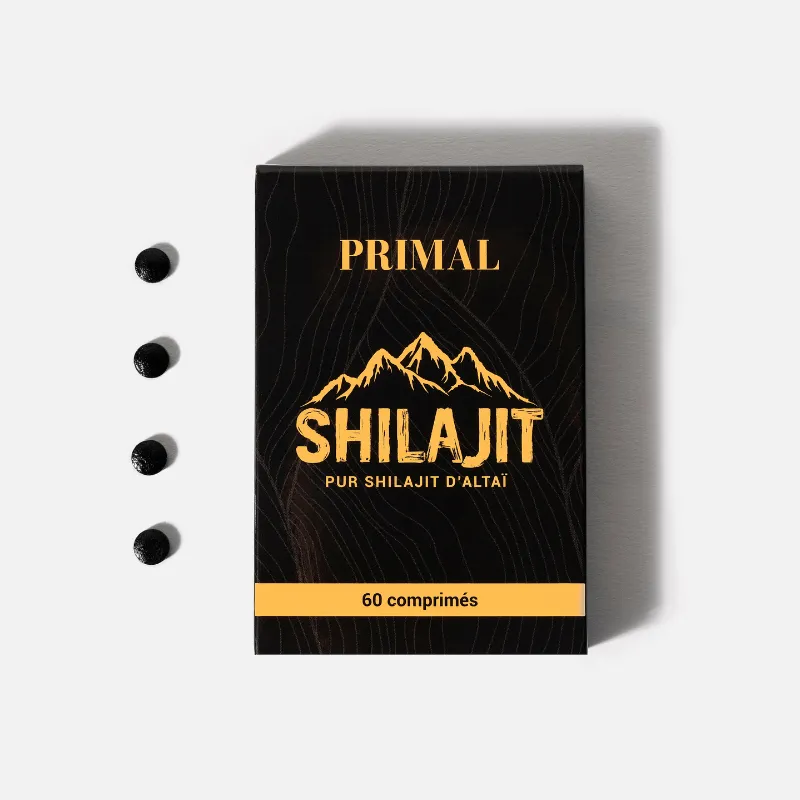
- Shilajit. A double-blind, placebo-controlled trial run for 90 days in men aged 45 to 55 at 250 mg twice a day measured higher total and free testosterone than with placebo (Pandit 2016). Its abstract gives neither the sample size nor the size of the increase. A 2024 review considers this purified extract (PrimaVie) "possibly effective" in men with age-related deficiency (Morgado 2024). The details are in our article on shilajit and testosterone.
For shilajit, the real question is purity, since contamination is the main risk with this resin. That is the angle taken by Primal Supplements (https://primalsupplements.fr), a French brand that sells shilajit resin from the Altai in tablet form. According to the brand:
- 2 tablets of 200 mg per day (400 mg), 60 tablets for 30 days;
- every batch tested before sale by an independent French laboratory: fulvic acid, lead, mercury, arsenic, cadmium, microbiological contaminants;
- at least 79% fulvic acid;
- €42.50 per box as a one-time purchase, or €1.42 per day (indicative price as of November 12, 2026), 10% off with the code LMC10.
Let's be precise: the Pandit trial was on a purified extract dosed at 500 mg per day and funded by Natreon, which markets PrimaVie; Primal tablets provide 400 mg per day of a different resin, and no testosterone measurements have been published on these tablets: their strength is traceability. The brand advises against shilajit, or recommends medical advice, during pregnancy and breastfeeding, under 18, and in case of hemochromatosis or severe chronic disease, and flags possible interactions with anticoagulants, blood pressure medications, immunosuppressants and corticosteroids. See Primal shilajit tablets, or compare options in our comparison of natural testosterone boosters.
Before taking any herb or shilajit: avoid them during pregnancy and breastfeeding, and discuss them with your doctor if you have a history of hormone-dependent cancer (prostate, breast) or are on medication. ANSES (the French food safety agency) specifically advises against ashwagandha in case of thyroid, liver or heart disorders, or with a sedative.
How can you boost testosterone after 50?
In short: the same levers still apply, in the same order, and a blood test becomes the logical starting point.
Age does lower it, but slowly. In the Massachusetts cohort, 1,156 men aged 40 to 70 seen again 7 to 10 years later lost 1.6% of total testosterone per year, and 2 to 3% of the bioavailable form; good health added 10 to 15% to the levels of several androgens (Feldman 2002). In the Baltimore follow-up (890 men), low levels affect about 20% of men over 60, 30% of men over 70 and 50% of men over 80 (Harman 2001).
- Weight first, the #1 lever from 40 to 79 as well (Camacho 2013).
- Sleep, especially if you snore.
- Physical activity, which has shown a gain in sedentary men in their sixties (Hayes 2017).
- A checkup, if sexual symptoms are present (less desire, fewer morning erections). See our article on testosterone in men for normal levels by age.
⚠️ The "testosterone" sold in pharmacies is a prescription drug, not a supplement: it requires medical advice. No supplement replaces it.
What is not proven to raise testosterone?
In short: most of the "boosters" sold online did not raise testosterone versus placebo in published trials.
A 2024 review examined 52 studies on 27 ingredients sold as boosters: most do not raise total testosterone compared with placebo (Morgado 2024).
- Tribulus terrestris. No difference from placebo in 21 young men followed for 4 weeks (Neychev 2005); across 10 studies and 483 participants, 8 found no hormonal change (Vilar Neto 2025).
- D-aspartic acid. At 6 g per day for 12 weeks, in 22 trained men, no change in total or free testosterone (Melville 2017).
- Maca. Over 12 weeks, reported sexual desire improved, but testosterone did not change (Gonzales 2002).
- Fenugreek. A 2026 meta-analysis finds a small effect on total testosterone, nothing consistent on the free form, with very low certainty; not enough, according to its authors, to justify the commercial promises (Yang 2026).
- The fear of soy. On the flip side, a meta-analysis of 41 studies finds no effect of soy on total or free testosterone (Reed 2021).
💡 Rule out right away: a guaranteed percentage increase, a timeline in days, a "tested formula" with no link to the study. If libido is what concerns you, see our article on getting your libido back.
Frequently asked questions about raising testosterone
Can supplements replace a healthy lifestyle?
No supplement is allowed to promise that in Europe. Zinc contributes to the maintenance of normal testosterone levels in the blood, which matters mainly in cases of deficiency. Herbs and shilajit rest on a handful of small trials.
How can you stimulate testosterone naturally?
To have more testosterone: lose excess weight (+2.9 nmol/L on average in studies for 10% of body weight lost), don't skimp on sleep, then stay active. Limiting alcohol helps a little.
Which foods are rich in testosterone?
No food provides it. Zinc-rich foods (oysters, meat, seeds) matter if you are deficient, and a very low-fat diet goes hand in hand with slightly lower levels.
Which vitamin boosts testosterone?
None has been shown to: vitamin D produced an increase in one trial, then no effect in two more recent trials. Zinc, a mineral, is the only nutrient with an authorized claim on this subject.
Scientific references
- Corona et al., Eur J Endocrinol 2013. PMID 23482592
- Camacho et al., Eur J Endocrinol 2013. PMID 23425925
- Nayak et al., Endocr Pract 2026. PMID 41167564
- Leproult, Van Cauter, JAMA 2011. PMID 21632481
- West, Phillips, Eur J Appl Physiol 2012. PMID 22105707
- Potter et al., J Strength Cond Res 2021. PMID 35134000
- Hayes et al., Endocr Connect 2017. PMID 28515052
- Whittaker, Wu, J Steroid Biochem Mol Biol 2021. PMID 33741447
- Prasad et al., Nutrition 1996. PMID 8875519
- Sierksma et al., Alcohol Clin Exp Res 2004. PMID 15166654
- Pilz et al., Horm Metab Res 2011. PMID 21154195
- Lerchbaum et al., J Clin Endocrinol Metab 2017. PMID 28938446
- Lerchbaum et al., Eur J Nutr 2019. PMID 30460609
- Lopresti et al., Am J Mens Health 2019. PMID 30854916
- Fornalik et al., Planta Med 2026. PMID 41740946
- Pandit et al., Andrologia 2016. PMID 26395129
- Morgado et al., Int J Impot Res 2024. PMID 37697053
- Neychev, Mitev, J Ethnopharmacol 2005. PMID 15994038
- Vilar Neto et al., Nutrients 2025. PMID 40219032
- Melville et al., PLoS One 2017. PMID 28841667
- Gonzales et al., Andrologia 2002. PMID 12472620
- Yang et al., Front Nutr 2026. PMID 42688439
- Reed et al., Reprod Toxicol 2021. PMID 33383165
- Feldman et al., J Clin Endocrinol Metab 2002. PMID 11836290
- Harman et al., J Clin Endocrinol Metab 2001. PMID 11158037
- Wu et al., N Engl J Med 2010. PMID 20554979
Indicative prices checked on November 12, 2026 on the brand's website. This article does not replace medical advice: if you are on medication, have a medical condition or have doubts about your levels, talk to your doctor.
Dietary supplements are not a substitute for a varied, balanced diet and a healthy lifestyle.

LMC content is written by our editorial team from the information published by the brands. Scores out of 10 follow a public grid of 5 criteria*, supplemented by LMC’s editorial assessment.
To support LMC, some links are affiliate links: LMC earns a commission at no extra cost to you, and some of the brands featured are partners. By using the site, you accept our terms of use and our editorial policy.