
Why is sage associated with menopause?
Because of a very old traditional use, not official recognition. No health claim is authorized for sage in the European Union.
Its name already says a lot: Salvia comes from the Latin salvare, to save. Common sage is one of the oldest cultivated plants in Europe, and tradition has long associated it with women's health, especially excessive sweating. That's where its reputation among menopausal women comes from.
Two things need to be told apart, because that's exactly where the confusion starts. On one side, a documented traditional use, which can be described. On the other, a health claim, meaning a statement officially validated by European authorities that a brand is allowed to put on a product. For sage, the second doesn't exist: its file is among those still "on hold" awaiting evaluation.
In practice, a brand can put sage in its formula and mention its traditional use. Neither the brand nor we can claim that the plant treats hot flashes. You'll still see such promises almost everywhere, including on labels: they're tolerated as long as the evaluation hasn't reached a verdict, but that doesn't make them validated.
Research, on the other hand, does exist. A randomized double-blind trial published in 2021 in the journal Heliyon followed 80 women aged 48 to 65 for 4 weeks, with a fresh sage extract versus placebo. The authors report a 39.2% drop in the overall menopause symptom score, significant compared with placebo, and a 55.3% decrease in the hot flash severity score, significant from the third week onward. Three adverse events in total, none related to the treatment according to the authors.
These results are worth knowing, and they're also worth reading for what they are: a single trial, with 80 participants, over 4 weeks, using one specific extract from one specific brand. It can't be transposed to just any herbal tea or any dosage, and it doesn't create any claim.
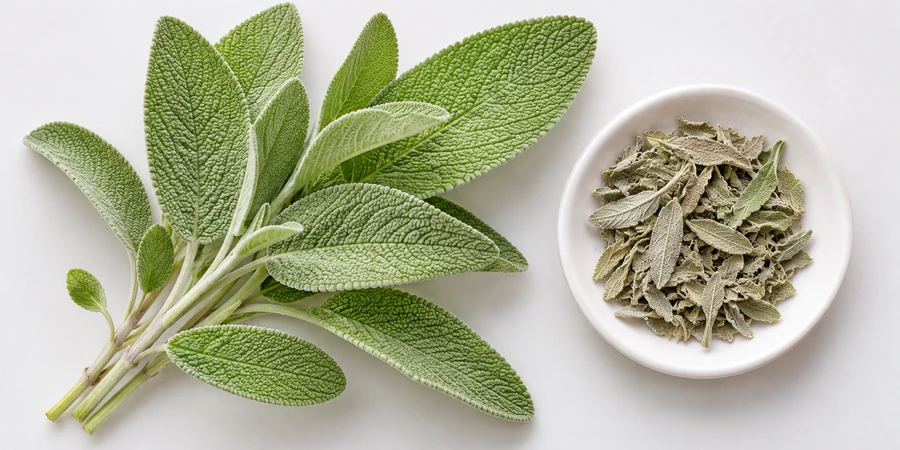
What's the difference between common sage and clary sage?
They're two distinct plants. Common sage is taken as a tea or in capsules, while clary sage is mostly used as an essential oil, a form that's banned in dietary supplements.
This is the most widespread confusion on the topic, and it's not a trivial one, because the two plants have neither the same uses nor the same risks.
- Common sage (Salvia officinalis) is the one from gardens and kitchens. It's the one found in dietary supplements designed for menopause, as dried leaves for infusions, or as powder or extract for capsules and gummies.
- Clary sage (Salvia sclarea) is a different species, used mainly in perfumery and aromatherapy. When an article mentions a roll-on, diffusion or a few drops in a carrier oil, it's talking about clary sage and its essential oil.
This distinction changes everything in practice. A woman who reads advice about clary sage essential oil and then buys common sage capsules isn't taking the same product at all. And above all, French regulations don't treat them the same way, as we'll see.

What do French regulations say about sage?
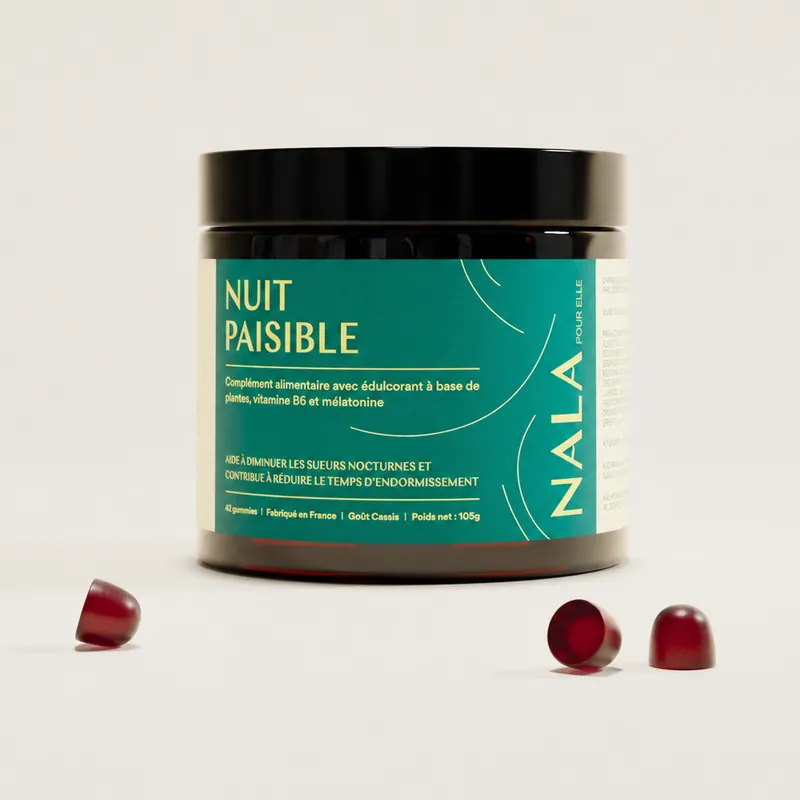
Common sage is authorized in dietary supplements for the leaf and aerial parts, but its essential oil is explicitly banned.
The reference text is the French decree of June 24, 2014, which sets the list of plants authorized in dietary supplements. Common sage does appear in its Annex I. The entry specifies three things worth knowing before you buy:
- Authorized parts: the leaf and the aerial parts.
- Substances to monitor: thujones, eucalyptol, camphor, estragole and carvacrol. These are natural compounds of the plant, and the manufacturer must keep their levels under control.
- Restriction: "The essential oil of this plant is prohibited."
That last line deserves a closer look. A dietary supplement containing common sage essential oil has no place on the French market. The advice about ingesting essential oils that you regularly come across on the subject of menopause therefore falls outside dietary supplements and outside the scope of this article: it calls for the advice of a pharmacist or doctor.
Finally, a word on thujones, since that's the question that comes up most often. They're what justifies regulatory monitoring and caution with long courses. A compliant product respects the set levels, which is precisely the point of buying a regulated formula rather than dosing a loose herb yourself over a long period.
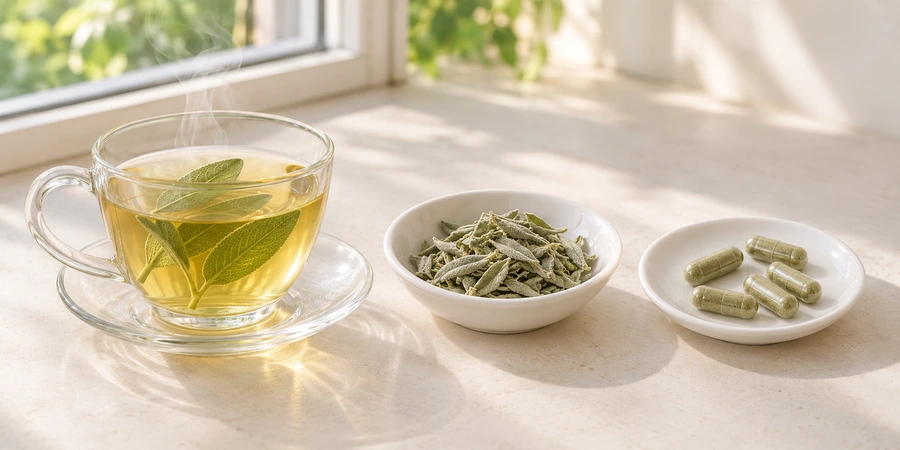
How do you use sage during menopause?
As a tea, in capsules or as gummies, preferably in structured courses rather than continuously, and following the dose indicated by the manufacturer.
Each form has its own logic, and the choice mostly comes down to your habits:
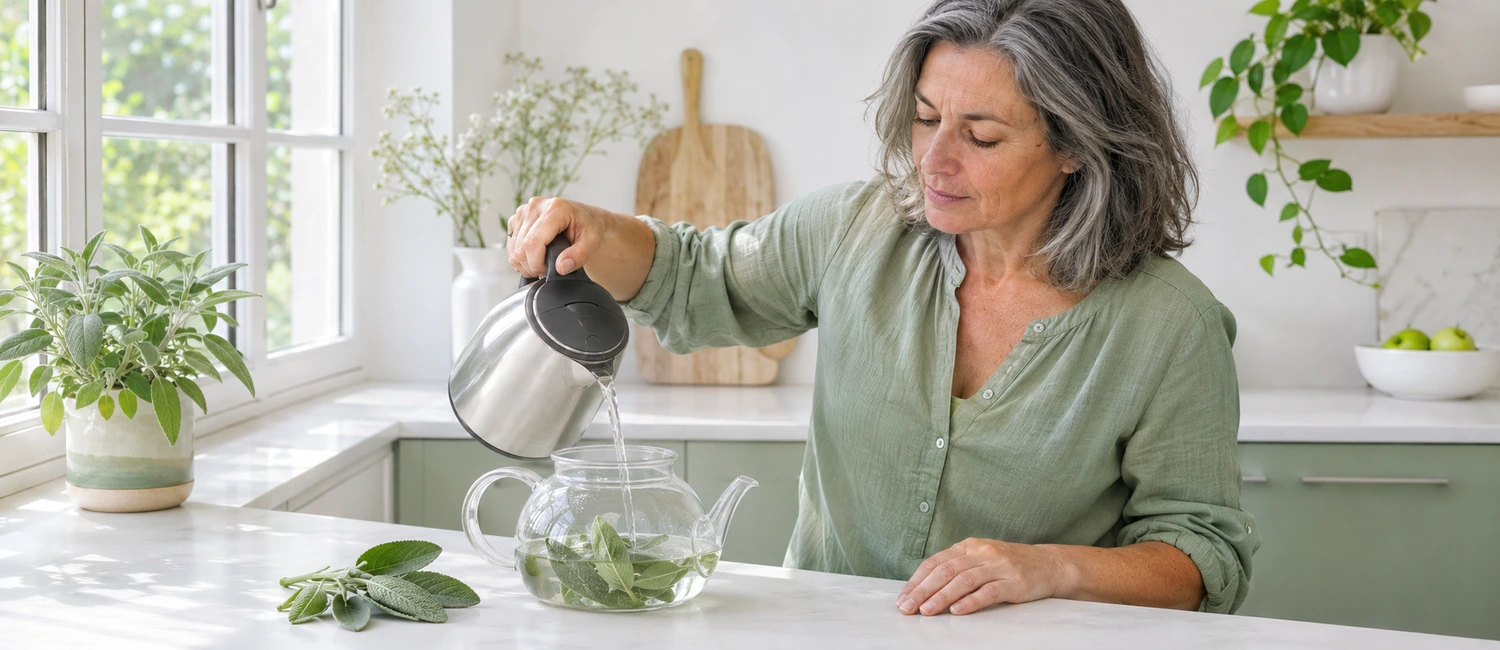
- Tea is the traditional form: dried leaves, simmering water, a few minutes of steeping. Its advantage is the ritual, often enjoyed in the evening. Its drawback is the lack of a precise dose: the amount of herb varies from one cup to the next.
- Capsules and tablets provide a fixed amount displayed in milligrams, which lets you compare two products and keep track of what you're actually taking.
- Gummies are as easy to read as capsules when the doses are displayed, with better adherence for those who don't like swallowing pills. Check the sugar content, which varies a lot from one brand to another.
As for timing, manufacturers generally place sage in the evening when the discomfort is mostly at night, and in the morning when it's during the day. In terms of duration, most recommend courses of several weeks with a break, rather than year-round continuous use. Follow the directions for the product you have in hand: content levels vary too much from one formula to another for a general rule to make sense.
What are the contraindications of sage?
Pregnancy, breastfeeding, a history of hormone-dependent cancer and epilepsy mean you should avoid it or get medical advice. Prolonged continuous courses are not recommended.
This is the part that's least often written, and the most important. Sage is an everyday cooking herb, which gives it a harmless image that its concentrated uses don't justify.
- Pregnancy and breastfeeding: avoid use.
- Personal history of breast cancer or a hormone-dependent tumor: sage is traditionally described as having estrogen-like activity, which means medical advice is needed before taking it. This precaution appears explicitly in the fact sheets of public health bodies.
- Epilepsy and a history of seizures: caution is linked to thujones, which is also why prolonged continuous courses are not recommended.
- Ongoing treatment, especially hormonal, anticoagulant or antidiabetic: you need your pharmacist's advice, as not all interactions are documented.
- Children and teenagers: sage-based supplements aren't intended for them.
These precautions don't disqualify the plant. They simply remind us that a herbal supplement isn't a trivial food, and that a regulated formula is better than an improvised dose.
How do you choose a sage supplement?
Look for a content displayed in milligrams, the part of the plant used, no essential oil, and contraindications spelled out in black and white.
A few simple criteria help you sort through the options:
- The displayed dosage, in milligrams per daily intake. A "plant complex" with no quantity can't be compared.
- The part of the plant: leaf or aerial parts, in line with the decree.
- The form: extract, powder or dried herb, this information must appear on the label. And no sage essential oil in a supplement.
- The accompanying plants, since sage is rarely on its own. Each one has its own precautions, to be checked separately.
- Transparency on contraindications: a brand that displays them is a brand that knows its subject.
- The cost per day, not per jar, to compare different formats.
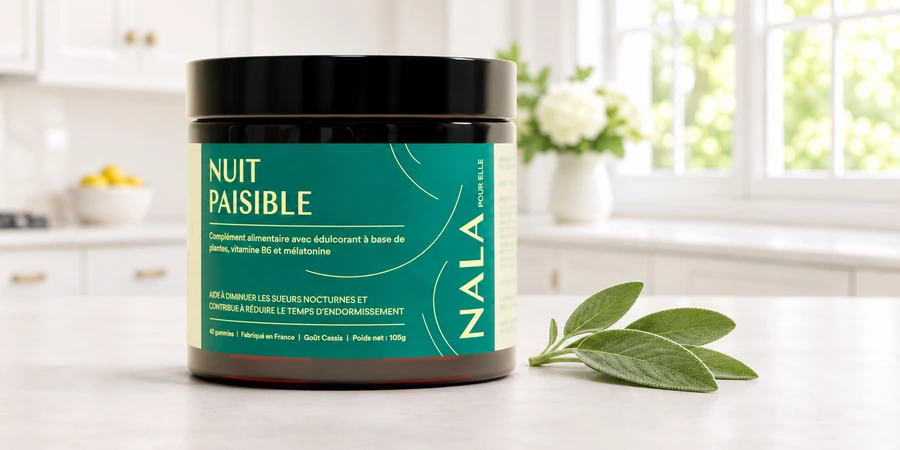
As an example, here's how the two formulas from the French brand Nala Pour Elle stack up. We analyzed the brand in detail, and it combines sage with other plants:
| Criterion | Analyzed by LMCNuit Paisible |
Belle Journée |
|---|---|---|
| Recommended time to take | Evening | Morning |
| Common sage | 50 mg per serving | Included in the formula |
| Other plants | Black cohosh 40 mg, lemon balm 80 mg | The brand's plant complex |
| Form | 42 blackcurrant-flavored gummies | 42 apple-flavored gummies |
| Sage essential oil | None, compliant with the decree | None, compliant with the decree |
| Duration covered | 3 weeks | 3 weeks |
| Indicative price | €25.90 (€23.31 with the code LMC10) | €25.90 (€23.31 with the code LMC10) |
| Authorized health claim for sage | None to date | None to date |
Prices are indicative and were taken from the brand's website. The statements on the packaging are the manufacturer's: as explained above, no health claim is authorized for sage, and these wordings are the brand's responsibility alone. The code LMC10 gives you 10% off the Nala Pour Elle store.
To put sage in context among the other options, our guide on hot flashes during menopause details everyday habits and the other plants traditionally used.
When should you get medical advice?
Before starting if you have a history of hormone-dependent disease, are on medication or pregnant, and as soon as symptoms get worse or come with an unusual sign.
A dietary supplement replaces neither a diagnosis nor a treatment. Several situations warrant talking to a healthcare professional before buying anything:
- a personal or family history of breast cancer or a hormone-dependent tumor;
- ongoing hormonal, anticoagulant, antidiabetic or anticonvulsant treatment;
- pregnancy, plans to conceive or breastfeeding;
- epilepsy or a history of seizures;
- symptoms that are getting worse, bleeding after menopause has set in, or heavy sweating with no other sign of menopause, which can have other causes;
- wanting to take it long term: beyond a few weeks, a pharmacist's advice is helpful.
Menopausal hormone therapy remains the most effective option for vasomotor symptoms, with contraindications and benefits to be weighed individually. That discussion belongs with your doctor.
Frequently asked questions about sage and menopause
Is sage toxic?
Not in culinary amounts. The precautions concern concentrated and prolonged use, because of thujones, natural compounds of the plant that regulations classify as substances to monitor. That's why the French decree of June 24, 2014 bans common sage essential oil in dietary supplements, and why long-term continuous courses are not recommended. A compliant product respects regulated levels.
Is sage carcinogenic?
No, sage isn't classified as carcinogenic. The confusion comes from a different question: its activity, traditionally described as estrogen-like, means it's not recommended for women with a history of hormone-dependent cancer without medical advice. That's not the same thing as a risk of causing cancer.
Does sage raise blood pressure?
Data on this point are limited and contradictory. In practice, if you're being treated for high blood pressure or your blood pressure is being monitored, talk to your pharmacist before starting a course, as with any herbal supplement taken alongside a treatment.
Which herbal tea helps with hot flashes?
Common sage is the most cited in traditional use, often combined with lemon balm in the evening. Keep in mind that no health claim is authorized for these plants and that an infusion doesn't let you precisely dose what you're taking. The same contraindications apply as for capsules.
When should you take sage capsules?
Follow the directions for the product, which depend on its content. Manufacturers generally place the dose in the evening when the discomfort is mostly at night, and in the morning when it's during the day. Most recommend courses of a few weeks with breaks in between rather than continuous use.
How long before you can judge a course?
Brands most often mention six to eight weeks before taking stock. In the trial published in Heliyon, differences from placebo on hot flashes appeared from the third week onward, over a total of four weeks. How women feel varies a lot from one to another.
Key takeaways
Sage is a traditional plant, regulated and more technical than it seems. Three points are enough to avoid mistakes: check that it's actually common sage and not clary sage, know that the essential oil is banned in dietary supplements, and read the contraindications before buying, especially if you have a history of hormone-dependent disease.
Beyond that, no health claim is authorized to date, which doesn't stop either traditional use or research from moving forward. It's by knowing this framework that you can choose a formula with confidence, rather than based on a label's promise.
Dietary supplements are not a substitute for a varied, balanced diet and a healthy lifestyle.
References
- French decree of June 24, 2014 establishing the list of plants authorized in dietary supplements, Annex I, Salvia officinalis L.: parts used, substances to monitor, restriction on the essential oil.
- DGCCRF (French consumer protection authority), guide to reading the June 24, 2014 decree on plants.
- Zeidabadi A, et al. Effectiveness of Menosan Salvia officinalis in the treatment of a wide spectrum of menopausal complaints. Heliyon, 2021. PMID 33615001.
- Assurance Maladie (Ameli), Menopause: definition, symptoms and diagnosis, updated February 20, 2026.
- Regulation (EU) No 432/2012 establishing the list of permitted health claims: sage isn't on it, as its file is still awaiting evaluation.

LMC content is written by our editorial team from the information published by the brands. Scores out of 10 follow a public grid of 5 criteria*, supplemented by LMC’s editorial assessment.
To support LMC, some links are affiliate links: LMC earns a commission at no extra cost to you, and some of the brands featured are partners. By using the site, you accept our terms of use and our editorial policy.