


You've probably seen "pH5" on shampoo bottles, both in pharmacies and online. Marketing claim or real selection criterion? A bit of both. And that's exactly what makes the topic confusing.
A shampoo's pH won't make your hair grow back. It does, however, influence how the hair fiber reacts to washing: electrical charge, friction between hairs, condition of the cuticle. And it matters for the comfort of a sensitive scalp, especially if you wash often.
The problem: this number rarely appears on the label. A Brazilian study measured 123 commercial shampoos: their pH ranged from 3.5 to 9, and fewer than 4 in 10 were at 5.5 or below (Gavazzoni Dias 2014). In other words, "gentle" doesn't mean "acidic."
In this guide, we sort it all out: what science really says, the difference between pH5, "neutral pH" and alkaline, the sulfate question, how to read a label, and which pH5 shampoo to choose for your needs (daily use, sensitive scalp, hair loss). 🧴
Some links may be affiliate links: LMC may earn a commission at no extra cost to you.
pH5 shampoo: what exactly are we talking about?
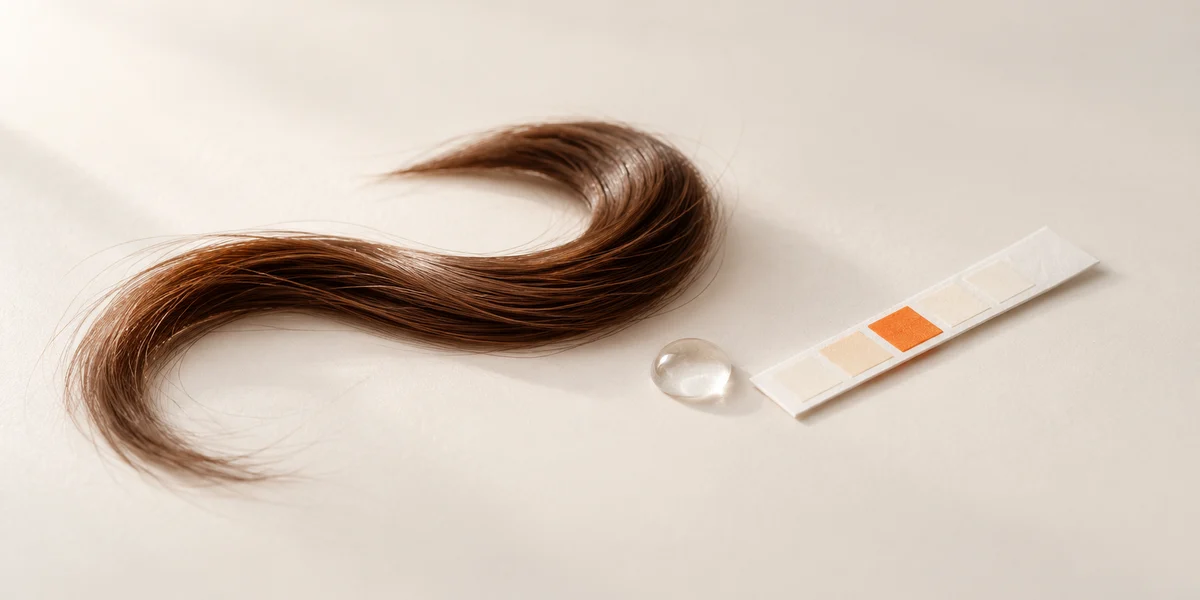
pH measures the acidity of a solution, on a scale from 0 to 14. Below 7, it's acidic. At 7, it's neutral (pure water). Above that, it's alkaline, or basic. The scale is logarithmic: a pH of 5 is ten times more acidic than a pH of 6.
A pH5 shampoo is therefore a slightly acidic shampoo. Why 5? Because it's close to the natural pH of the skin and scalp. The review by Gavazzoni Dias et al. gives a pH of about 5.5 for the scalp and about 3.67 for the hair shaft (Gavazzoni Dias 2014).
On the skin, the numbers are even a little lower. In a study of 330 people, the "natural" pH of the skin surface (measured on the forearm, not the scalp) was estimated at 4.7 on average, so below the 5 mark (Lambers 2006).


Why shampoo pH matters for your hair
A negatively charged fiber
Hair naturally carries a negative electrical charge on its surface. The more alkaline the environment, the more this charge increases. The result: the fibers repel each other, rub together more and become frizzy and staticky.
That's the central conclusion of the review by Gavazzoni Dias et al.: an alkaline pH can increase the fiber's negative charge and therefore the friction between hairs.
This can lead to cuticle damage and breakage. The authors consider the "less frizz with a low-pH shampoo" effect to be reality, not myth (Gavazzoni Dias 2014).
The cuticle, the first victim of friction
The cuticle is the outer layer of the hair, made of overlapping scales like roof tiles. When it's smooth and lies flat, hair reflects light and detangles easily. When it's damaged, hair becomes dull, rough and breaks more quickly.
A slightly acidic shampoo therefore limits some of the friction during washing, rinsing and detangling. This is especially useful for long, fine, color-treated or damaged hair, which doesn't handle repeated friction well.
The scalp, skin like any other
The scalp is still skin. And on skin, an acidic pH goes hand in hand with a better skin barrier. Lambers et al. observed that skin with a pH below 5 had better barrier, hydration and desquamation parameters than skin with a pH above 5 (Lambers 2006).
The same study also shows the effect of tap water. In Europe, its pH is around 8. A simple rinse can raise the skin's pH for up to 6 hours before it returns to normal (Lambers 2006). An acidic shampoo doesn't make up for everything, but it avoids adding more alkalinity.
A limitation to keep in mind: these measurements were taken on the forearm. The scalp is richer in sebum and follicles. The general principles still apply, but the exact numbers may differ.
The scalp microbiome
pH also influences the bacteria that live on the skin. In the Lambers study, an acidic pH (4 to 4.5) helped the resident flora stay attached, while an alkaline pH (8 to 9) encouraged its dispersal (Lambers 2006).
On the scalp, an imbalanced microbiome is associated with several conditions: dandruff, seborrheic dermatitis, psoriasis, alopecia areata. The review by Shah et al. sums it up well, while pointing out that probiotic-based shampoos show potential, not yet proven effectiveness on a large scale (Shah 2024).
pH5, neutral pH, alkaline pH: what are the differences?
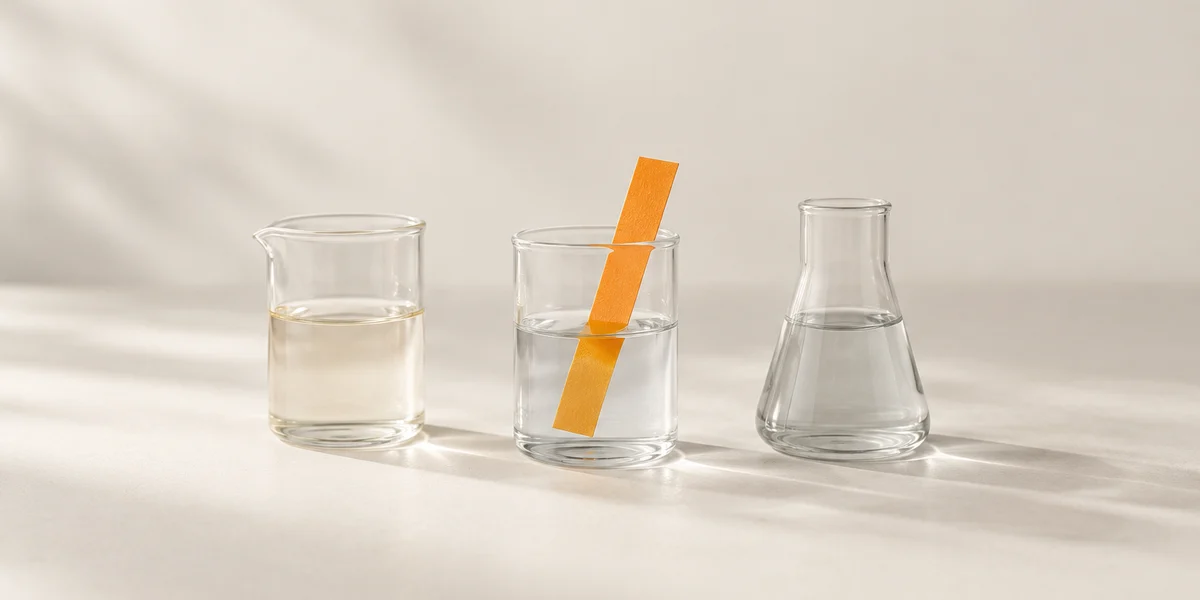
This is where confusion is most common. Many people look for a "neutral pH shampoo" thinking of a shampoo that's gentle on the skin. But in chemistry, neutral means pH 7. That's not the pH of the scalp.
In most cases, what packaging calls "neutral pH" actually refers to a physiological pH, meaning close to that of the skin (around 5 to 5.5). If that's what you're looking for, aim for a pH5 or pH 5.5 shampoo, not pH 7.
A telling example: in the Gavazzoni Dias study, all the children's shampoos analyzed had a pH above 5.5, around 7, to meet the "no sting in the eyes" concept (Gavazzoni Dias 2014). Gentle on the eyes, yes. But not necessarily ideal for the hair fiber.
| Type of shampoo | pH | Effect on the fiber | Who is it for? |
|---|---|---|---|
| Acidic / physiological | 4.5 to 5.5 | Less negative charge, less friction | Daily use, sensitive scalp, fine, color-treated or long hair |
| Neutral | About 7 | In between | "No tears" baby shampoos, some gentle shampoos |
| Alkaline | Above 7 (up to 9 measured) | Increased negative charge and friction | Occasional use (deep cleansing, before certain technical treatments), followed by a detangling conditioner |
Sulfate-free pH5 shampoo: is it really better?
Sulfates are anionic surfactants, very effective at removing sebum. The best known: Sodium Lauryl Sulfate, Sodium Laureth Sulfate, Ammonium Lauryl Sulfate. They've been used for decades because they lather well and clean thoroughly.
The downside is well known. In her review on hair cleansing, Draelos points out that hair completely stripped of sebum becomes rough, dull, staticky and hard to detangle. The whole art of formulation lies in finding the balance between "clean enough" and "too clean" (Draelos 2010).
On the skin side, Ananthapadmanabhan et al. explain that harsh surfactants can damage the proteins and lipids of the stratum corneum. The result: tightness, dryness, irritation, itching. They also note that a high pH (10) makes the stratum corneum swell, even without surfactants, and that neutral or acidic cleansers, close to 5.5, are potentially less harsh (Ananthapadmanabhan 2004).
Our take: a sulfate-free shampoo isn't magic, and a shampoo with sulfates isn't dangerous. But for frequent washing, a reactive scalp or fragile hair, the combination of pH5 + mild surfactants is the most consistent with the available data.
How to read a shampoo label
pH is rarely listed. Gavazzoni Dias et al. regret this and argue that the value should appear on the label (Gavazzoni Dias 2014). In the meantime, here's how to find your way.
1. Look for the pH statement
"pH5," "pH 5.5" or "physiological pH" are clear clues. Be wary of "neutral pH": check whether the brand means pH 7 or physiological pH.
2. Look at the first ingredients on the INCI list
Ingredients are listed in descending order of concentration. Right after "Aqua," you'll usually find the main surfactant. A shampoo often contains 10 to 30 ingredients, and its cleansing power depends mainly on the type and amount of surfactants (Trüeb 2007).
- Strong surfactants: Sodium Lauryl Sulfate, Sodium Laureth Sulfate, Ammonium Lauryl/Laureth Sulfate, Sodium Olefin Sulfonate.
- Milder surfactants: glutamates (Disodium Cocoyl Glutamate), glucosides (Decyl, Coco, Lauryl Glucoside), amino acids (Sodium Cocoyl Apple Amino Acids), betaines (Cocamidopropyl Betaine).
Draelos ranks nonionic surfactants among the mildest, and points out that amphoterics such as cocamidopropyl betaine are used in baby shampoos for their low eye-irritation potential (Draelos 2010).
3. Spot the pH adjusters
Citric Acid or Lactic Acid near the end of the list? They're often what brings the formula down to an acidic pH. Their presence doesn't guarantee pH5, but it's a good sign.
4. Don't rely only on the words "gentle" or "natural"
These are marketing claims, not measurements. A percentage of ingredients of natural origin tells you about origin, not about pH or tolerance.
Which pH5 shampoo should you choose for your needs?
Gentle pH5 shampoo for daily use
If you wash your hair often, this is the situation where pH and surfactant mildness matter most. Look for a pH5, sulfate-free formula with glutamate- or glucoside-type surfactants. No need for complex actives.
Sensitive scalp that feels tight or itchy
Same logic, with a short INCI list and no strong fragrance if you react easily. If you have persistent redness, patches or itching, see a doctor: dandruff, seborrheic dermatitis and psoriasis call for specific treatment. Anti-dandruff shampoos work first through antimicrobial action against Malassezia (Trüeb 2007), which a simple pH5 shampoo doesn't do.
pH5 anti-hair loss shampoo: what it can (and can't) do
Let's be clear: a shampoo's pH doesn't treat hair loss. A shampoo stays on the scalp for only a short time before being rinsed off. Its role is to cleanse without irritating, and possibly to deliver actives as part of a broader routine.
Before choosing a product, identify the cause. Telogen effluvium, the most common form of diffuse hair loss, requires looking for a hormonal, nutritional or autoimmune cause through a medical history and appropriate tests (Malkud 2015).
If your hair loss happens in early fall, read our guide on hair loss in the fall. If it's gradual with thinning hair, it may be hormonal: see our article on the DHT Blocker.
pH5 shampoo at the pharmacy or online?
Pharmacies offer several pH5 ranges, such as Eucerin DermoCapillaire pH5 or Topicrem pH 5. MakeMyMask is also sold in some pharmacies and online. Where you buy matters less than the formula: stated pH, mild surfactants, readable INCI list.
How to use your pH5 shampoo properly
- Wet your hair and scalp thoroughly before applying.
- Apply to the scalp, not the lengths: the lather that runs down is enough to clean them.
- Massage with your fingertips, without scratching with your nails.
- Shampoo twice if there's little lather the first time.
- Rinse thoroughly with lukewarm water.
- Detangle from ends to roots, with a conditioner if your lengths are dry.
Frequently asked questions about pH5 shampoo
What is the ideal pH for a shampoo?
There's no official value. The available data points to a slightly acidic pH, around 5 to 5.5, close to that of the scalp. The authors of the reference study acknowledge that further research is needed to set the best range (Gavazzoni Dias 2014).
Are pH5 shampoo and neutral pH shampoo the same thing?
No. Neutral means pH 7. A pH5 shampoo is slightly acidic. On packaging, "neutral" is sometimes wrongly used to mean "physiological": check the exact value.
Is pH5 shampoo suitable for oily hair?
Yes. The pH doesn't prevent excess sebum from being removed. If your roots get greasy quickly, the choice of surfactants and how often you wash matter more than the pH.
Does pH5 shampoo lather less?
It's not the pH that creates lather, it's the surfactants. Mild surfactants, often found in pH5 formulas, generally lather less than sulfates. Two applications are often enough.
Can a pH5 shampoo stop hair loss?
No, not on its own. It creates good conditions for the scalp. Significant or lasting hair loss calls for looking for the cause, sometimes with medical tests.
Our recommendation: MakeMyMask's Shampoing Universel Naturel pH5
For an everyday pH5 shampoo, we recommend the Shampoing Universel Naturel pH5 from MakeMyMask, a French hair care laboratory founded by Dr. Julie Pernet, a doctor of pharmacy and trichologist.
What we like is that its formula checks the boxes covered above:
- pH5, close to that of the scalp;
- 99% ingredients of natural origin according to the brand, with no sulfates or silicones;
- mild surfactants at the top of the list: Disodium Cocoyl Glutamate, Sodium Cocoyl Apple Amino Acids, Decyl Glucoside;
- sweet almond and olive oils, and citric acid as a pH adjuster;
- a 180 mL bottle, made in France, suitable for pregnant and breastfeeding women according to the brand.
Directions recommended by the brand: 2 to 3 times a week, gently massaging the scalp, with two successive shampoos for a more thorough cleanse.
Price: €16.90, or about €14.37 with the code COMPLEMENT5 (-15% storewide).
Discover the Shampoing Universel Naturel pH5 →
Alternative if you're losing hair: the Tricho-Force pH5 Anti-Hair Loss Shampoo
If hair loss is your priority, MakeMyMask offers the Tricho-Force pH5 Anti-Hair Loss Shampoo. Same pH5 base with no sulfates or silicones (97% of natural origin according to the brand), plus biotin, prebiotics and a Lactobacillus ferment, and Capilia Longa™, a patented turmeric extract.
The brand highlights figures on its patented active ingredient. These figures come from its own data, not from published independent trials: take them with a grain of salt. This shampoo is meant to be used as part of a broader approach, not as a treatment on its own.
Directions given: two shampoos per wash, leaving the second one on for 5 minutes, twice a week. 200 mL bottle at €19.90, or about €16.92 with COMPLEMENT5.
Discover the Tricho-Force pH5 Shampoo →
To learn more, read our full MakeMyMask review and find the code's terms on our MakeMyMask promo code page.
Conclusion
A shampoo's pH isn't a gimmick. An alkaline pH increases the fiber's negative charge and the friction between hairs. An acidic pH, close to 5, is more in line with the skin and scalp.
But pH isn't everything. Surfactants, how often you wash and how you handle your hair matter just as much. Remember three habits: look for a stated pH5, read the first ingredients, and be wary of the word "neutral."
Scientific references
- Gavazzoni Dias, M.F. et al. (2014). The Shampoo pH can Affect the Hair: Myth or Reality? View on PubMed
- Lambers, H. et al. (2006). Natural skin surface pH is on average below 5, which is beneficial for its resident flora. View on PubMed
- Ananthapadmanabhan, K.P. et al. (2004). Cleansing without compromise: the impact of cleansers on the skin barrier and the technology of mild cleansing. View on PubMed
- Draelos, Z.D. (2010). Essentials of Hair Care often Neglected: Hair Cleansing. View on PubMed
- Trüeb, R.M. (2007). Shampoos: ingredients, efficacy and adverse effects. View on PubMed
- Shah, R.R. et al. (2024). Scalp microbiome: a guide to better understanding scalp diseases and treatments. View on PubMed
- Malkud, S. (2015). Telogen Effluvium: A Review. View on PubMed

LMC content is written by our editorial team from the information published by the brands. Scores out of 10 follow a public grid of 5 criteria*, supplemented by LMC’s editorial assessment.
To support LMC, some links are affiliate links: LMC earns a commission at no extra cost to you, and some of the brands featured are partners. By using the site, you accept our terms of use and our editorial policy.