

Why is menopause so tiring?

Fatigue is one of the most common complaints of the menopause transition, just like hot flashes. It does not come out of nowhere: several mechanisms add up, and it is precisely their combination that makes it so stubborn.
The first driver is hormones. During perimenopause, estrogen and progesterone do not decline in a straight line: they ride a roller coaster for several years. And these hormones act well beyond the menstrual cycle. They help regulate body temperature, mood, sleep and the way your muscles use energy.
The second driver is sleep. According to studies, nearly one woman in two reports disrupted nights during the menopause transition. Night sweats wake you up, falling asleep takes longer, and wake-ups around 3 or 4 a.m. become more frequent. Even if you do not remember them, broken sleep does not recharge your batteries.
Other factors add to this, and they are often underestimated:
- Muscle loss: after menopause, muscle mass and strength decline faster. Less muscle means less reserve for everyday effort.
- Cortisol: the stress hormone stays elevated more easily when the mental load piles up (work, kids, aging parents).
- Blood sugar swings: a sugary breakfast or a lunch too low in protein, and the 3 p.m. energy crash is almost guaranteed.
- Heavy periods during perimenopause, which can gradually drain your iron stores.
The researchers behind the large American SWAN study, which has followed thousands of women since the 1990s, showed it clearly: menopause symptoms rarely come alone. Fatigue, poor sleep, irritability and aches often form a single cluster. Working on one lever helps; working on several truly changes the game.
How do you recognize fatigue linked to premenopause or perimenopause?
Not all fatigue is alike, and the kind that comes with the hormonal transition has a fairly recognizable profile. It often starts between 40 and 50, sometimes earlier, and comes with other subtle changes that you do not necessarily connect.
Signs that should put you on the trail:
- Waking up with difficulty despite an apparently full night, with the feeling that you have not recovered.
- A marked energy slump in mid-afternoon, coming back every day at the same time.
- Persistent fatigue that does not go away after a restful weekend.
- Changing cycles: shorter, longer, heavier or irregular.
- Unusual irritability, a lack of motivation, difficulty concentrating (the famous brain fog).
- Hot flashes or night sweats, even mild ones.
Some women describe extreme fatigue, almost crushing, that forces them to cut back on their activities. It is not "all in your head" and it is not a lack of willpower. That is also why it is worth talking to your doctor: they can confirm the hormonal phase and rule out other causes.
If you are wondering where you stand, our article on premenopause symptoms details the first signs and how to spot them. And to dig deeper into the hormonal mechanisms, Maison Thali explains why menopause is so exhausting in a very accessible article.


Which deficiencies make fatigue worse after 40?
Before looking for a miracle solution, you need to check the basics. Several deficiencies that are common at this age produce exactly the same symptoms as hormonal fatigue, and they are fairly simple to correct once identified.
The first one to watch is iron deficiency. During perimenopause, periods can become heavier or closer together. A study published in 2025 in the journal Menopause actually linked this abnormal uterine bleeding to more fatigue during the transition. The key marker is ferritin, which reflects your stores: it can be low while hemoglobin is still normal.
Other nutrients to keep an eye on:
- Vitamin D: in France, a large part of the population is short on it at the end of winter, for lack of enough sun.
- Vitamin B12: its absorption decreases with age and with certain medications (long-term antacids, metformin). Women who eat few animal products are also more at risk.
- Magnesium: chronic stress and a refined diet often reduce intake.
- Folate (B9): found mainly in green vegetables, legumes and nuts.
The right reflex? Ask your doctor for a targeted blood test rather than piling up supplements at random. A complete blood count, ferritin, TSH (for the thyroid) and sometimes vitamin D or B12 are often enough to sort things out. If an iron deficiency is confirmed, your doctor will adjust the supplementation. To understand the different forms available, our comparison of iron supplements sums it up.

How do you get your energy back day to day?
Good news: the most effective levers against fatigue cost almost nothing. Above all, they require consistency. Here are the ones that make the biggest difference after 40, to be put in place gradually rather than all at once.
Protect your sleep. Consistent bedtimes and wake-up times, a cool bedroom (around 18 °C), light sheets if night sweats wake you up, and no screens in the half hour before bed. An evening drink, which seems to help you fall asleep, actually fragments the second half of the night.
Move, even when you are tired. It is counterintuitive, but physical activity is one of the best remedies for fatigue. Strength training twice a week limits muscle loss, and 30 minutes of brisk walking a day improves both sleep and mood. Start small: ten minutes is better than zero.
Stabilize your energy through your plate. A few simple adjustments help you avoid slumps:
- Protein at every meal, breakfast included (eggs, plain yogurt, fromage blanc or quark, legumes).
- Low glycemic index carbs: whole-grain bread, rolled oats, lentils, rather than pastries and fruit juice.
- Iron sources paired with vitamin C (lentils and bell pepper, meat and citrus fruit), and tea or coffee away from meals.
- Enough water: mild dehydration is enough to make you feel tired.
Seek out light. Winter fatigue is very real: when the days get shorter, your internal clock gets out of sync. Going outside for 20 to 30 minutes early in the day, even when it is gray, helps reset your sleep-wake rhythm. ☀️
Lighten your mental load. Delegating, saying no, taking breaks without guilt: it is not a luxury, it is recovery. The fatigue of this period also comes from everything you carry in silence.
Which vitamins should you take for menopause fatigue?
When healthy habits are in place and the fatigue persists, the question of vitamins naturally comes up. Some have a role recognized by the European authorities, with precise wording that can be summed up as follows.
| Nutrient | Role recognized in Europe | Where to find it on your plate |
|---|---|---|
| Vitamins B2, B5, B6, B9 and B12 | Contribute to the reduction of tiredness and fatigue | Eggs, dairy products, fish, green vegetables, legumes |
| Vitamin B6 | Contributes to the regulation of hormonal activity | Poultry, fish, chickpeas, bananas |
| Vitamins B1, B2, B5, B6, B7 and B12 | Contribute to normal energy-yielding metabolism | Whole grains, meat, eggs, nuts |
| Vitamin C | Contributes to the reduction of tiredness and fatigue and to the protection of cells from oxidative stress | Citrus fruit, kiwi, bell peppers, parsley, cabbage |
| Iron | Contributes to the reduction of tiredness and fatigue | Red meat, blood sausage, lentils, tofu |
| Magnesium | Contributes to the reduction of tiredness and fatigue | Dark chocolate, almonds, mineral-rich waters, whole grains |
This table shows something important: B vitamins work as a team. Each one steps in at a different stage of energy production in the cells. That is why a formula that combines them all often makes more sense than a single vitamin, provided your diet keeps up.
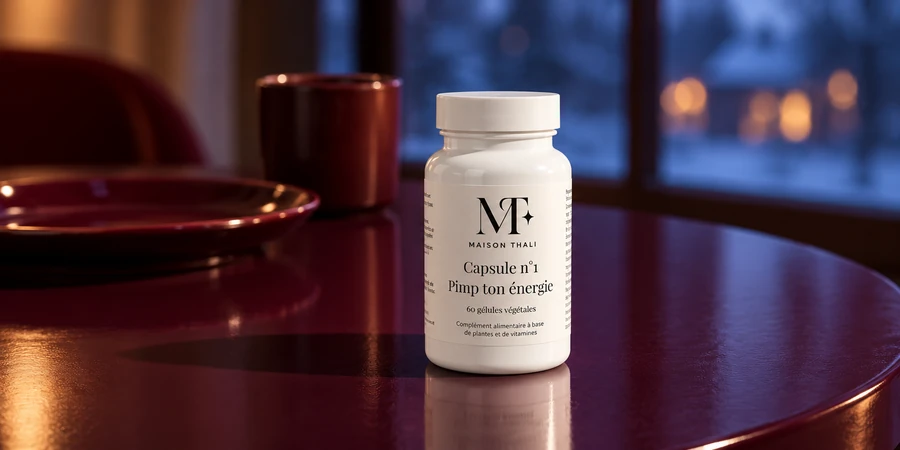
If you are looking for a vitamin for fatigue designed for this stage of life, Capsule n°1 by Maison Thali is one of the interesting options. This French brand, launched in Paris in 2026 by a founder trained in micronutrition, designed a short formula for women aged 40 and over:
- The 8 B vitamins of the Lynside® complex, at 100% of the reference intakes for 2 capsules a day.
- 80 mg of vitamin C, or 100% of the reference intakes.
- 100 mg of organic turmeric extract standardized to 95% and 400 mg of acacia fiber.
- No piperine, no additives, vegan and made in France.
Vitamins B2, B5, B6, B9, B12 and C contribute to the reduction of tiredness and fatigue, and vitamin B6 contributes to the regulation of hormonal activity. The bottle of 60 capsules covers 30 days for €23.90, and the 3-month course comes to from €0.73 per day. With the code LMC, you get 10% off (once per customer), or €21.51 per bottle. Find the detailed composition on our Capsule n°1 product page and our Maison Thali review.
A few precautions before you start: Capsule n°1 is for adults only and not recommended for pregnant or breastfeeding women, people with bile duct disorders, or people taking anticoagulants, cancer drugs or immunosuppressants. If you are on medication, ask a healthcare professional for advice. To compare with other formulas, our selection of the best energy and vitality supplements helps you choose.
When should you see a doctor about lasting fatigue?
Menopause fatigue is common, but it should not be used to explain everything. Some causes deserve to be ruled out by a doctor, especially if the fatigue has lasted more than three to four weeks or if it keeps you from living normally.
Make an appointment without delay in these situations:
- Fatigue that gets worse despite rest and healthy habits.
- Unusual shortness of breath, palpitations or marked paleness (possible signs of anemia).
- Unexplained weight gain or loss, or newly feeling the cold (the thyroid is a classic cause at this age).
- Heavy snoring or pauses in breathing at night, which suggest sleep apnea.
- Persistent sadness, loss of interest in everything, dark thoughts: depression can hide behind extreme fatigue.
- Very heavy bleeding or bleeding after menopause.
Your doctor or gynecologist can also discuss menopause hormone therapy with you if your symptoms are significant. It is not one or the other: healthy habits, diet and medical follow-up complement each other. 🩺
Frequently asked questions about menopause fatigue
Does menopause really make you tired?
Yes. Fatigue is one of the most frequently reported symptoms during the menopause transition. It is explained by hormonal fluctuations, more fragmented sleep, muscle loss and sometimes iron deficiency linked to heavy periods.
How long does menopause fatigue last?
There is no set duration. It is often most marked during perimenopause, when hormones fluctuate the most, then tends to ease once menopause is established. Working on sleep, physical activity and diet clearly shortens the difficult period.
Can fatigue be the only symptom of premenopause?
It is possible at first, but it usually comes with other subtle signs: irregular cycles, lighter sleep, irritability or difficulty concentrating. Since other causes produce the same fatigue, medical advice is still useful.
Which blood test should you get for fatigue after 40?
Doctors often prescribe a complete blood count, ferritin for iron stores and TSH for the thyroid. Depending on your situation, they may add vitamin D, vitamin B12 or blood sugar.
Should you take vitamins all year round?
Not necessarily. A course of a few months during the hardest period, winter for example, is often enough. Diet remains the foundation, and a confirmed deficiency should be treated with a healthcare professional.
Conclusion
Fatigue after 40 is neither inevitable nor simply a lack of willpower. It comes from a cluster of causes, hormones, sleep, muscles, deficiencies, and it is by working on several levers at once that you get your energy back. Start with a blood test to check your stores, protect your nights, move a little every day and take care of your plate. If you want a boost during the winter, Capsule n°1 by Maison Thali combines the 8 B vitamins and vitamin C, with 10% off with the code LMC. And if the fatigue persists, talk to your doctor. 🌿
Dietary supplements should not replace a varied, balanced diet and a healthy lifestyle.
Scientific references
- Harlow S.D. et al., "It is not just menopause: symptom clustering in the Study of Women's Health Across the Nation", Womens Midlife Health, 2017: pubmed.ncbi.nlm.nih.gov
- Harlow S.D. et al., "Abnormal uterine bleeding is associated with fatigue during the menopause transition", Menopause, 2025: pubmed.ncbi.nlm.nih.gov
- Baker F.C. et al., "Sleep problems during the menopausal transition: prevalence, impact, and management challenges", Nat Sci Sleep, 2018: pubmed.ncbi.nlm.nih.gov
- Maltais M.L. et al., "Changes in muscle mass and strength after menopause", J Musculoskelet Neuronal Interact, 2009: pubmed.ncbi.nlm.nih.gov
- Assurance Maladie (French national health insurance), "Menopause: symptoms and diagnosis": ameli.fr
- Commission Regulation (EU) No 432/2012 of 16 May 2012, list of permitted health claims: eur-lex.europa.eu

LMC content is written by our editorial team from the information published by the brands. Scores out of 10 follow a public grid of 5 criteria*, supplemented by LMC’s editorial assessment.
To support LMC, some links are affiliate links: LMC earns a commission at no extra cost to you, and some of the brands featured are partners. By using the site, you accept our terms of use and our editorial policy.