
Why does your belly swell during menopause?
Menopause bloating does not have a single cause. Several changes happen at the same time, and each one weighs a little on digestion and on your figure. Knowing them helps you avoid picking the wrong solution.
Hormones act on the gut. Estrogen and progesterone influence how fast your digestion moves and how your body handles water. During perimenopause, their fluctuations can trigger episodes of water retention and swelling, a bit like the ones many women used to experience before their periods, but in a less predictable way.
Digestion slows down. With age, less physical activity and sometimes less water, stools move more slowly. And sluggish digestion gives gut bacteria more time to ferment meal residues, which produces gas and bloating.
The gut microbiome changes. The billions of bacteria living in our gut are not immune to hormones. A study published in 2022 in the journal mSystems showed that menopause comes with a less diverse gut microbiome. Researchers are still working out the consequences, but this link between hormones and the gut partly explains why some women digest less well than before.
Other factors keep the problem going:
- Stress, which speeds up or blocks digestion depending on the person and makes the belly more sensitive.
- Meals eaten too fast, which make you swallow air and send poorly chewed food into the gut.
- Weakening abdominal muscles, which hold the belly's contents in less well.
- Certain medications, such as iron or some painkillers, which cause constipation.
The result: gut problems during menopause are common, and they are not "all in your head". They deserve to be taken seriously, then tackled methodically.
How do you tell a bloated belly from menopause belly fat?
This is the question women ask most, and the answer completely changes the strategy. A belly that swells and a belly that rounds out for good do not have the same origin.
A bloated belly varies throughout the day. It is often flatter in the morning, swells after meals, comes with gas, tightness or gurgling, and can go down within a few hours. Your waist measurement shifts by several centimeters between waking up and the evening.
Menopause belly fat, on the other hand, does not move. As estrogen drops, the body stores more fat around the belly rather than on the hips and thighs. This so-called visceral fat settles around the organs, even without significant weight gain. It is what gives the impression of having "grown a belly" over a few years.
To tell the difference at home:
- Measure your waist in the morning on an empty stomach and in the evening for a week: a big gap mostly points to bloating.
- Write down what you eat and when your belly swells: links often appear very quickly.
- Keep an eye on your bowel habits: constipation is one of the leading causes of a bloated belly.
The two can coexist, which is actually the most common case. Weight gain and a bloated belly reinforce each other: more abdominal fat also means weaker core muscles and a belly that looks more bloated. If bloating is your main concern, our article on symptoms of abdominal bloating details the causes and signs to know. Maison Thali has also published a useful article on the bloated belly after 40.


Which foods cause bloating, and which should you favor?
Your plate is often the first lever, because some foods ferment much more than others in the gut. That said, there is no need to cut everything out: the goal is to identify your personal triggers.
| Category | Foods often involved | What to try instead |
|---|---|---|
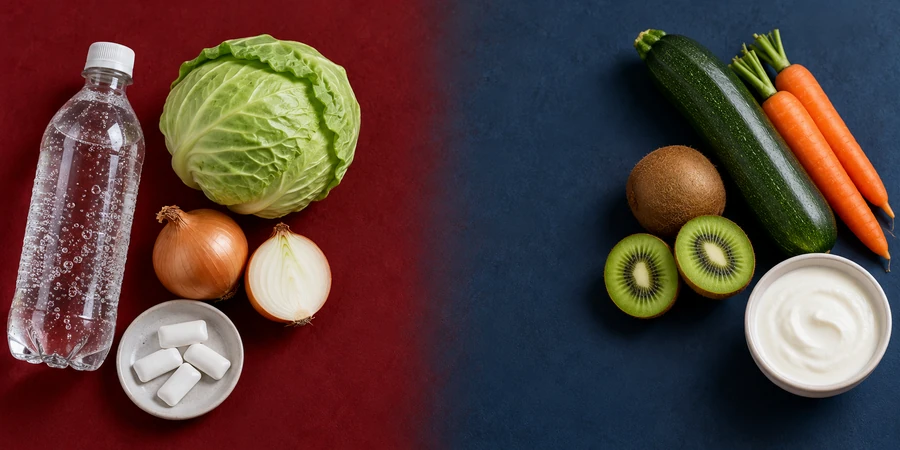
| Drinks | Sodas, sparkling water, beer | Still water, herbal teas, homemade infused water |
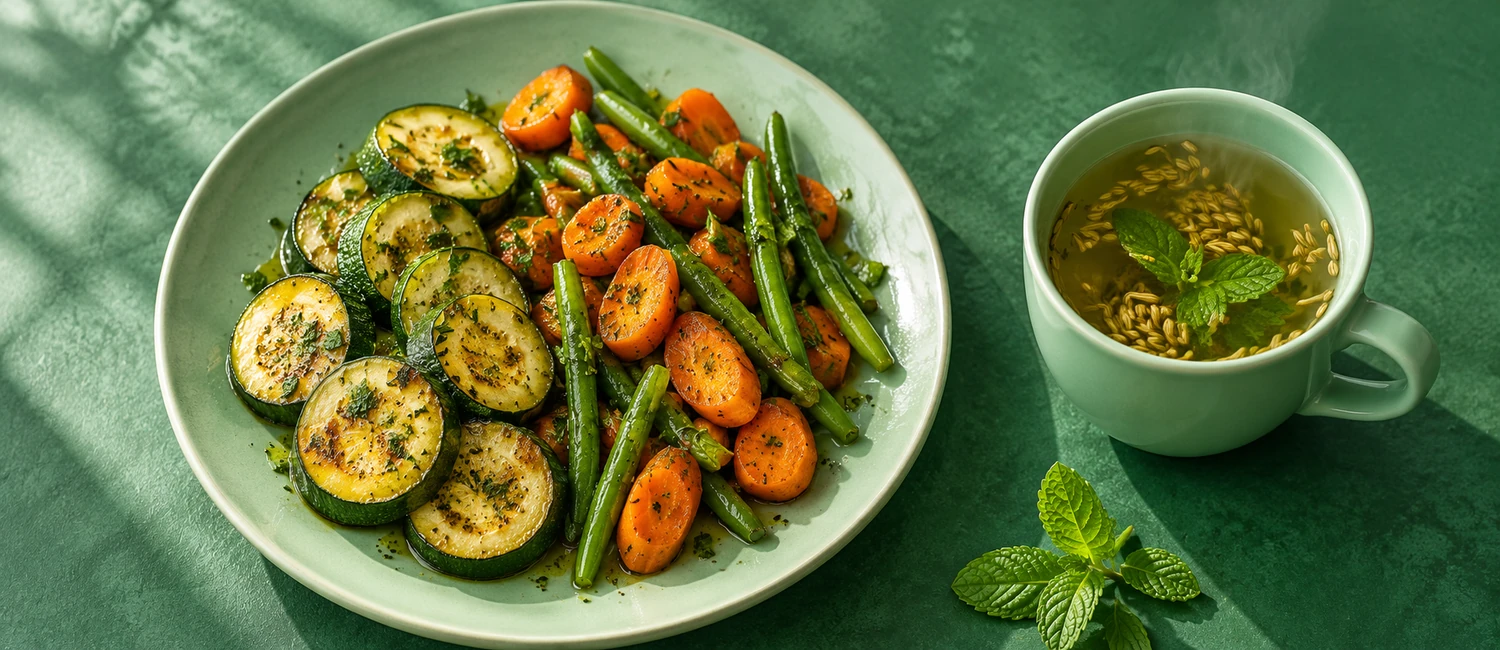
| Vegetables | Cabbage, onion, garlic, leeks in large amounts | Zucchini, carrots, green beans, spinach, well cooked |
| Legumes | Lentils, chickpeas, dried beans not soaked long enough | Small portions, long soaking, rinsed canned versions |
| Sweets | "Sugar-free" gum and candy (polyols) | A square of dark chocolate, a nice ripe fruit |
| Fruit | Apples, pears, too much dried fruit | Kiwi, citrus fruit, berries, slightly underripe banana |
| Dairy | Milk if you have trouble digesting lactose | Yogurt, aged cheeses, lactose-free drinks |
These foods that cause bloating have one thing in common: they contain sugars that ferment easily, grouped under the name FODMAPs. In people with irritable bowel syndrome, a meta-analysis published in 2022 in the journal Gut confirmed that a low-FODMAP diet reduced symptoms, including bloating. This diet is restrictive, however, and should be temporary, ideally supervised by a doctor or a dietitian.
How you eat matters as much as what is on your plate:
- Chew thoroughly and put your fork down between bites: you swallow less air.
- Keep regular mealtimes and avoid very large evening meals.
- Limit salt and processed foods, which promote water retention.
- Drink mostly between meals, in small sips.
The most effective tool is still a food diary kept for two weeks. You will often see two or three culprits emerge, which spares you from needlessly banning useful foods. 📝
What role do fiber and the gut microbiome play?
Fiber has a paradoxical reputation: it is essential for digestion, but it can also cause bloating when you increase it too quickly. It is all about dose, type and going gradually.
Health authorities recommend eating 25 to 30 g per day, while most adults in France eat far less. This intake comes first and foremost from food: vegetables, fruit, legumes, whole grains, seeds and nuts. No capsule can replace a plate rich in plants.
There are two main families:
- Insoluble fiber (wheat bran, skins of fruits and vegetables) adds bulk to stools. It is useful, but in excess it can irritate a sensitive belly.
- Soluble fiber (oats, psyllium, acacia fiber, fruit pulp) forms a soft gel. Some of it also feeds the good bacteria in your gut: this is called prebiotic fiber.
The golden rule: increase fiber very gradually, over two to three weeks, while drinking enough. Switching abruptly from white bread to daily lentils is the best way to end up more bloated than before. Vary your sources too: a diverse gut microbiome feeds on a diverse diet.
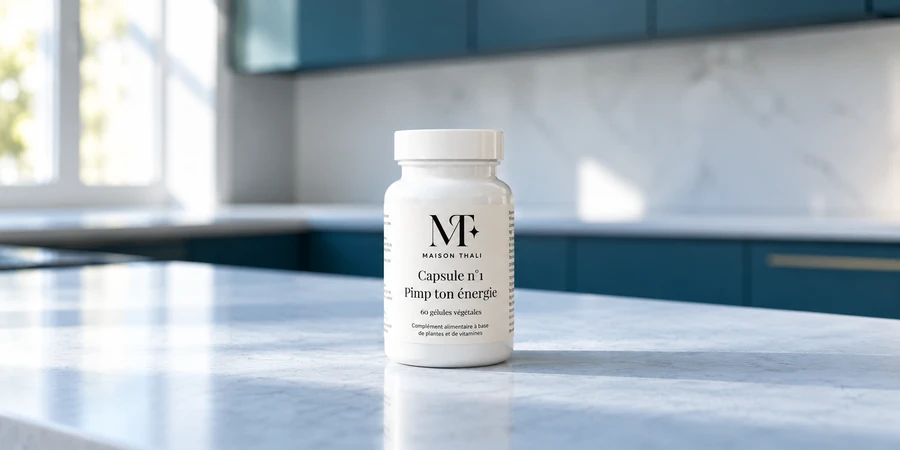
You may come across acacia fiber in the ingredient list of some supplements. This is the case with Capsule n°1 by Maison Thali, which contains 400 mg per 2 capsules a day. It is one ingredient in the formula, not a solution for the belly: this amount is still very far from the 25 to 30 g of fiber you need to get from your plate. This French formula is mainly designed for the energy of women aged 40 and over: its 8 B vitamins (at 100% of the reference intakes) and its 80 mg of vitamin C contribute to the reduction of tiredness and fatigue, a complaint that often comes with this stage of life. It also contains 100 mg of organic turmeric extract, with no piperine and no additives, and it is vegan. The 30-day bottle costs €23.90, from €0.73 per day on a 3-month course, with 10% off (once per customer) with the code LMC.
It is for adults only and not recommended for pregnant or breastfeeding women, people with bile duct disorders, or people taking anticoagulants, cancer drugs or immunosuppressants. If you are on medication, ask a healthcare professional for advice. To learn more, see our Maison Thali review.

Which natural remedies help reduce bloating day to day?
Beyond your plate, several simple habits help your belly work better. They cost nothing and are easy to combine.
Walk after meals. Ten to fifteen minutes of walking after lunch or dinner stimulates digestion and helps release gas. It is one of the simplest and most effective habits.
Strengthen your core gently. Exercises for a flat belly at 50 do not mean hundreds of crunches, which increase pressure on the pelvic floor. Instead, favor:
- Forearm planks, starting with 15 to 20 seconds.
- Abdominal breathing and hypopressive exercises, which tone the deep muscles.
- Pelvic floor strengthening, often weakened at this stage.
- Yoga or Pilates, which combine flexibility, breathing and muscle tone.
Move for your figure. To lose belly fat during menopause, regular physical activity remains the key: two strength-training sessions a week and 150 minutes of endurance activity (brisk walking, cycling, swimming) help limit abdominal fat. Patience matters: the first results show up within a few months.
Ease stress. The belly is very sensitive to emotions. A few minutes of slow breathing before meals or a heart coherence breathing session in the evening can make a real difference for women whose stomach knots up under pressure.
Traditional digestive herbs. Peppermint, fennel, green anise and ginger are traditionally used as herbal teas after meals. On the research side, meta-analyses suggest that peppermint essential oil in enteric-coated capsules could reduce irritable bowel syndrome symptoms. Essential oils nevertheless call for caution: always ask a pharmacist for advice before using them. And if the bloating persists, some probiotic strains have been studied: our comparison of probiotics for bloating sums it up. 🌱
When should a bloated belly prompt a visit to the doctor?
A belly that swells from time to time after a big meal is nothing to worry about. However, certain signs should prompt you to see your doctor quickly, especially after 50:
- A bloated belly almost every day for more than three weeks.
- Abdominal or pelvic pain that keeps coming back or gets worse.
- Unexplained weight loss or loss of appetite.
- Blood in your stool, or diarrhea or constipation that abruptly changes your usual habits.
- Vaginal bleeding after menopause.
- Feeling full very quickly or needing to urinate more often.
These signs usually point to nothing serious, but they need to be checked. Your doctor can also look for an intolerance (to lactose, for example), celiac disease or irritable bowel syndrome, and refer you to a gastroenterologist if needed. For the other symptoms of this period, our comparison of menopause supplements presents the most complete formulas. 🩺
Frequently asked questions about menopause bloating
Why do you get a bloated belly during menopause?
Hormonal fluctuations affect digestion and water retention, the gut microbiome changes and fat is stored more around the belly. Stress, rushed meals and a lack of physical activity often make it worse.
Is there a "natural treatment" for menopause bloating?
There is no single treatment, but there are everyday natural solutions: spotting your trigger foods, increasing fiber gradually, walking after meals, strengthening your core and managing stress. If symptoms persist, you should see a doctor.
How long does menopause bloating last?
Swelling linked to hormonal fluctuations is often more frequent during perimenopause and tends to become less frequent afterward. Abdominal fat, however, does not go away on its own: it takes regular physical activity and a suitable diet.
How do you lose menopause belly fat?
By combining strength training twice a week, regular endurance activity, protein at every meal and cutting back on fast sugars and alcohol. Very restrictive diets are best avoided: they melt away muscle, which does not help.
Do essential oils help with menopause bloating?
Peppermint is the most studied, especially in irritable bowel syndrome. Essential oils are still potent products, with contraindications: ask a pharmacist for advice before using them, especially if you are on medication.
Conclusion
Menopause bloating often mixes two stories: temporary swelling linked to digestion and hormones, and abdominal fat that settles in more easily. The right answers are simple but require consistency: identify your trigger foods, gently increase the fiber on your plate, walk after meals, strengthen your core and take care of your stress. If fatigue also creeps in, Capsule n°1 by Maison Thali provides B vitamins and vitamin C that contribute to reducing it, with 10% off with the code LMC. And never hesitate to see a doctor if symptoms persist.
Dietary supplements should not replace a varied, balanced diet and a healthy lifestyle.
Scientific references
- Peters B.A. et al., "Menopause Is Associated with an Altered Gut Microbiome and Estrobolome, with Implications for Adverse Cardiometabolic Risk in the Hispanic Community Health Study/Study of Latinos", mSystems, 2022: pubmed.ncbi.nlm.nih.gov
- Black C.J. et al., "Efficacy of a low FODMAP diet in irritable bowel syndrome: systematic review and network meta-analysis", Gut, 2022: pubmed.ncbi.nlm.nih.gov
- Ingrosso M.R. et al., "Systematic review and meta-analysis: efficacy of peppermint oil in irritable bowel syndrome", Aliment Pharmacol Ther, 2022: pubmed.ncbi.nlm.nih.gov
- Stephen A.M. et al., "Dietary fibre in Europe: current state of knowledge on definitions, sources, recommendations, intakes and relationships to health", Nutr Res Rev, 2017: pubmed.ncbi.nlm.nih.gov

LMC content is written by our editorial team from the information published by the brands. Scores out of 10 follow a public grid of 5 criteria*, supplemented by LMC’s editorial assessment.
To support LMC, some links are affiliate links: LMC earns a commission at no extra cost to you, and some of the brands featured are partners. By using the site, you accept our terms of use and our editorial policy.