



What exactly is bloating?

Bloating is that feeling of a tight, swollen stomach, sometimes accompanied by gas. The medical term is meteorism: a build-up of air or gas in the digestive tract, from the stomach to the colon.
This gas comes from two main sources. First, air swallowed while eating or talking, known as aerophagia. Then fermentation: when certain foods reach the colon poorly digested, gut bacteria break them down and produce gas.
Two things that are often confused need to be distinguished:
- flatulence, the passing of gas, a normal phenomenon (up to fifteen or so times a day)
- abdominal distension, that visible and uncomfortable feeling of swelling
Occasional bloating is nothing to worry about. It is its recurrence, or its intensity, that deserves a closer look.
On a daily basis, our digestive tract naturally produces between half a liter and two liters of gas, a mix of swallowed air and fermentation gas. Most of it is reabsorbed or expelled without us noticing. The problem starts when this production goes into overdrive, or when the gut becomes too sensitive to distension.
What are the symptoms of bloating? The signs to watch for
Bloating is not just a swollen stomach. Several signs go along with it, and where you feel it already gives clues about the origin of the problem.
Stomach bloating or intestinal bloating?
Stomach bloating is felt in the upper abdomen, often right after a meal, with a feeling of heaviness and sometimes burping. It is frequently linked to aerophagia or slow digestion.
Intestinal bloating, on the other hand, sits lower down. It tends to appear at the end of the day, comes with gas, and changes from meal to meal. This is where the microbiota plays the biggest role.
Gas, a swollen stomach, and pain
The typical picture combines several sensations:
- a swollen, tight stomach, sometimes right from waking up, which gets worse as the day goes on
- more frequent or smellier intestinal gas
- gurgling and digestive noises
- discomfort, or even painful bloating when distension is marked
When these symptoms become daily, they often reflect an underlying digestive imbalance rather than a simple one-off excess.
When symptoms appear is a valuable clue. A flat stomach on waking that swells meal after meal points to intestinal fermentation. Discomfort present from the morning, regardless of meals, suggests gas retention or sluggish transit instead.

What causes bloating?
Rarely due to a single reason, bloating most often results from a combination of factors. Here are the main ones to review.
Diet and FODMAPs
Some foods ferment more than others. These are FODMAPs, fermentable carbohydrates found in legumes, certain fruits, milk, onion, garlic, and wheat.
In sensitive people, these poorly absorbed sugars reach the colon and fuel intense fermentation. The result: gas, distension, and discomfort. Eating too fast, eating too much, or drinking a lot of carbonated beverages makes things worse.
The acronym FODMAP covers several well-identified families: fructans (wheat, onion, garlic), lactose (dairy products), excess fructose (apples, honey), and polyols (sweeteners, plums, mushrooms). A low-FODMAP diet, supervised by a professional, often helps identify the culprits before reintroducing foods one by one. The goal is never to cut them out for life, but to know your own tolerance thresholds.
An imbalanced microbiota (dysbiosis)
Our gut is home to billions of bacteria, the microbiota. When this ecosystem is depleted or imbalanced, it is called dysbiosis, and fermentation goes haywire.
A diverse gut flora digests fiber better and limits excessive gas production. Conversely, dysbiosis promotes chronic bloating. This imbalance does not only affect digestion, either: it also influences weight and energy, a topic we cover in detail in our article on how to boost your metabolism.
Several situations deplete the flora: an ultra-processed, low-fiber diet, repeated courses of antibiotics, stress, or poor-quality sleep. Restoring a diverse flora takes time and starts with your diet.
Stress, aerophagia, and chewing
The gut and the brain are in constant communication. Chronic stress slows digestion, increases gut sensitivity, and promotes stomach bloating.
On top of that come harmless-looking but guilty habits:
- eating too fast, without chewing enough
- talking a lot while eating, which makes you swallow air (aerophagia)
- chewing gum or drinking through a straw
This gut-brain axis explains why a stressful period so often translates into a knotted, swollen stomach. Learning to slow down, breathe, and sleep better therefore acts directly on your digestion, just as much as what is on your plate.
The special case of pregnancy
Bloating during pregnancy is very common. Hormonal changes, especially progesterone, slow down transit, while the growing uterus compresses the intestines. It is a common discomfort, but still worth mentioning to your midwife or doctor. In practice, it is best to split meals into smaller ones, avoid the most fermentable foods, and favor gentle walks after eating. Probiotics can be considered, but always after medical advice during pregnancy.
Chronic bloating and irritable bowel: what is the link?
When bloating becomes a daily occurrence, comes with pain and irregular bowel movements, it sometimes falls under irritable bowel syndrome (IBS). This very common functional disorder shows no visible lesions but weighs heavily on quality of life.
IBS can be recognized by a few features:
- recurring abdominal pain or discomfort
- marked bloating, often worse after meals
- alternating diarrhea and constipation, sometimes both
The microbiota plays a central role: in many people affected, the flora is depleted and the gut becomes hypersensitive. That is why approaches that combine a suitable diet, stress management, and flora support give the most solid results. However, an IBS diagnosis is a matter for a doctor, never for self-assessment.
How can you relieve bloating naturally?
Good news: a few simple adjustments are often enough to get a lighter stomach back. The key is to act on your plate, your habits, and your flora at the same time. 🥗
The right eating habits
Before changing everything, start with the essentials:
- eat slowly and chew thoroughly, since digestion starts in the mouth
- temporarily limit the most fermentable foods to identify your triggers
- cut back on carbonated drinks, too much raw vegetables in the evening, and overly large meals
- stay well hydrated, since water supports transit
The idea is not to ban entire food groups for life, but to pinpoint what really bothers you.
A few simple habits also limit fermentation: cooking vegetables rather than eating them raw in the evening, soaking and thoroughly rinsing legumes before cooking, or splitting meals when large portions do not sit well. Without being spectacular, these adjustments often change daily life.
Natural remedies: herbal teas, lemon, massage
Some old-fashioned remedies have proven themselves for expelling gas and relaxing the stomach:
- a digestive herbal tea (fennel, peppermint, ginger) after meals
- a little lemon in lukewarm water in the morning, appreciated for supporting digestion
- a gentle abdominal massage, in a clockwise direction, to help release trapped gas
- a short walk after lunch rather than the couch
These solutions ease occasional discomfort. For a system that often goes off balance, you need to aim deeper: the flora.

Rebalancing your flora with a tribiotic
Since the microbiota is at the heart of the problem, supporting it is a long-term approach. There are three families of ferments, often confused:
- prebiotics, fibers that feed the good bacteria
- probiotics, live microorganisms that strengthen the flora
- postbiotics, the beneficial compounds produced by their activity
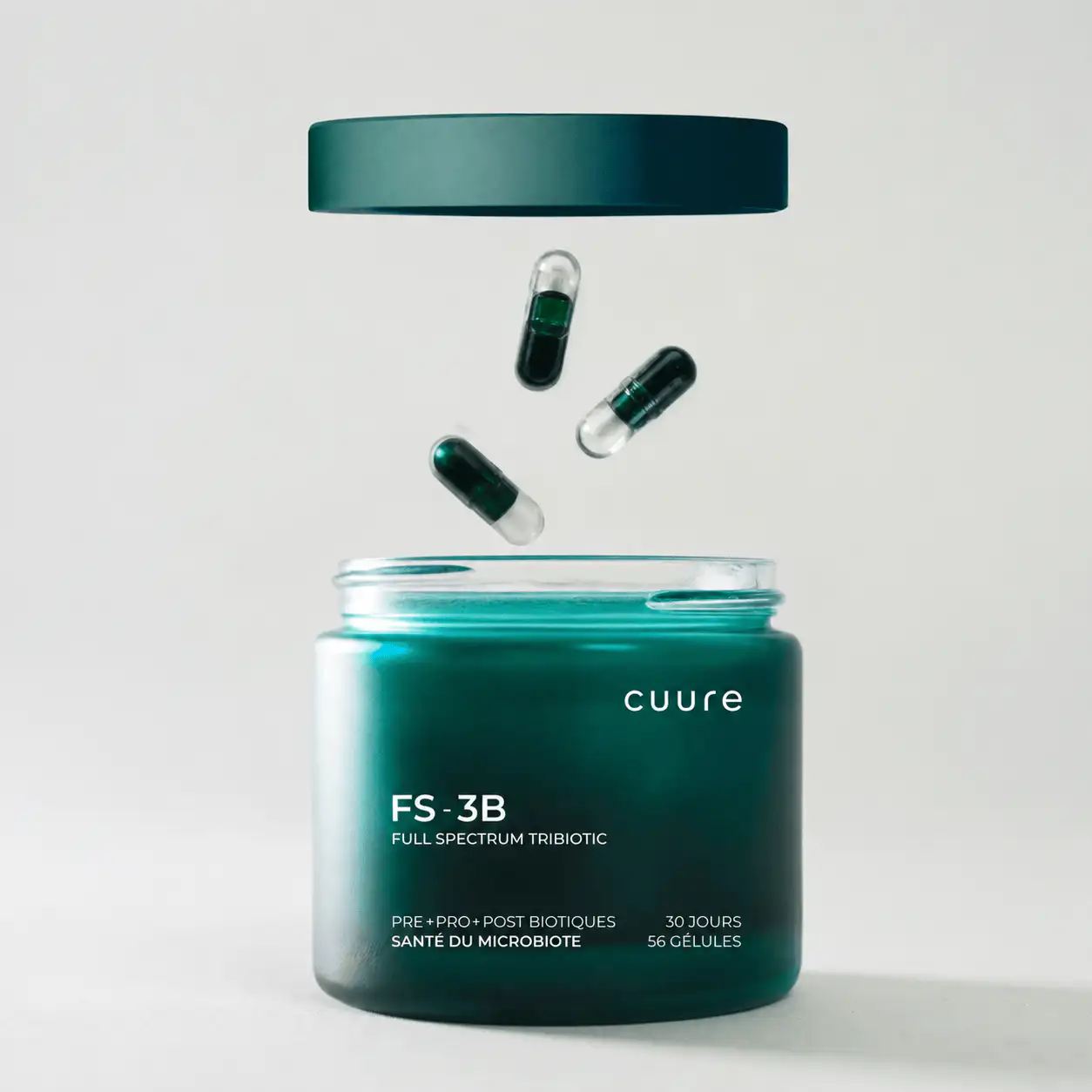
Most supplements only act on one of these levels. Cuure's FS-3B combines all three in a single capsule, a so-called tribiotic approach, with 25 strains and 50 billion CFU per dose, protected by triple encapsulation. You can discover FS-3B on the Cuure website with code LMC20. Like any supplement, it supports a healthy lifestyle over time, it does not replace it.
Triple encapsulation deserves a word. It protects the strains from stomach acid so they reach the gut alive, where they actually work. That is precisely the Achilles' heel of many conventional probiotics, some of whose cultures never reach their target. When judging a product, this survival criterion matters as much as the CFU count displayed.

Mistakes that keep bloating going
Sometimes it is our own habits that prolong the discomfort without us suspecting it. A few habits deserve to be reviewed first:
- skipping meals and then eating too fast in the evening, which overloads digestion all at once
- chewing lots of gum and drinking carbonated beverages, two sources of swallowed air
- overusing polyol sweeteners, which are highly fermentable
- lying down right after dinner, which slows gastric emptying
- stringing together courses of probiotics without giving the flora time to settle
Correcting two or three of these habits is often enough to make your stomach feel noticeably lighter, even before thinking about supplements.
When should you worry about bloating?
In the vast majority of cases, bloating is harmless. Some signs should nonetheless prompt you to see a doctor, without giving in to panic.
Make an appointment with a healthcare professional if bloating comes with:
- unexplained weight loss
- blood in the stool or a sudden change in bowel habits
- intense or persistent abdominal pain
- fever, vomiting, or unusual fatigue
These symptoms do not necessarily mean something serious, but only a doctor can rule out an underlying cause. If in doubt, never stay alone with the question.
FAQ
What causes bloating?
Most often, excessive fermentation in the colon, linked to diet (FODMAPs), an imbalanced microbiota, stress, or air swallowed while eating. It is usually a combination of these factors.
How can you get rid of trapped gas quickly?
A gentle walk, a circular abdominal massage, and a fennel or mint herbal tea help expel gas. Avoiding lying down right after a meal also makes a difference.
Which foods help prevent bloating?
Foods that ferment little and are well tolerated: rice, potatoes, zucchini, cooked carrots, fish, eggs. Herbs such as fennel or ginger are reputed to be soothing.
Are probiotics effective against bloating?
Several studies suggest that supporting the flora can improve digestive comfort, but results vary depending on the strains and the person. Consistency over several weeks remains decisive.
How long does it take to rebalance your gut flora?
Allow at least one to three months of consistency. The flora rebuilds gradually, and the benefits for bloating settle in over time, not in a few days.
In conclusion
Bloating is a signal, not a fate. By spotting your dietary triggers, improving your habits, and taking care of your microbiota, you regain control of your digestive comfort. A balanced flora, a calmer stomach: that is often the way forward. And if doubt persists or nothing improves despite these adjustments, a healthcare professional remains the best person to talk to. ✅
Dietary supplements are not a substitute for a varied, balanced diet or a healthy lifestyle.
Scientific references
- Ford AC et al. (2018). Systematic review with meta-analysis: the efficacy of prebiotics, probiotics, synbiotics and antibiotics in irritable bowel syndrome. Alimentary Pharmacology & Therapeutics, 48(10), 1044-1060.
- Staudacher HM, Whelan K (2017). The low FODMAP diet: recent advances in understanding its mechanisms and efficacy in IBS. Gut, 66(8), 1517-1527.
- Marsh A, Eslick EM, Eslick GD (2016). Does a diet low in FODMAPs reduce symptoms associated with functional gastrointestinal disorders? A systematic review and meta-analysis. European Journal of Nutrition, 55(3), 897-906.
- Dimidi E et al. (2014). The effect of probiotics on functional constipation in adults: a systematic review and meta-analysis of randomized controlled trials. American Journal of Clinical Nutrition, 100(4), 1075-1084.

LMC content is written by our editorial team from the information published by the brands. Scores out of 10 follow a public grid of 5 criteria*, supplemented by LMC’s editorial assessment.
To support LMC, some links are affiliate links: LMC earns a commission at no extra cost to you, and some of the brands featured are partners. By using the site, you accept our terms of use and our editorial policy.