



Diolata review: is this ube powder worth it?
Diolata, a young French ube brand, is already very recognisable. Positioning, quality, buying experience and flagship product: does it deserve the attention it is getting?


our experts


pick


My Diolata review in brief
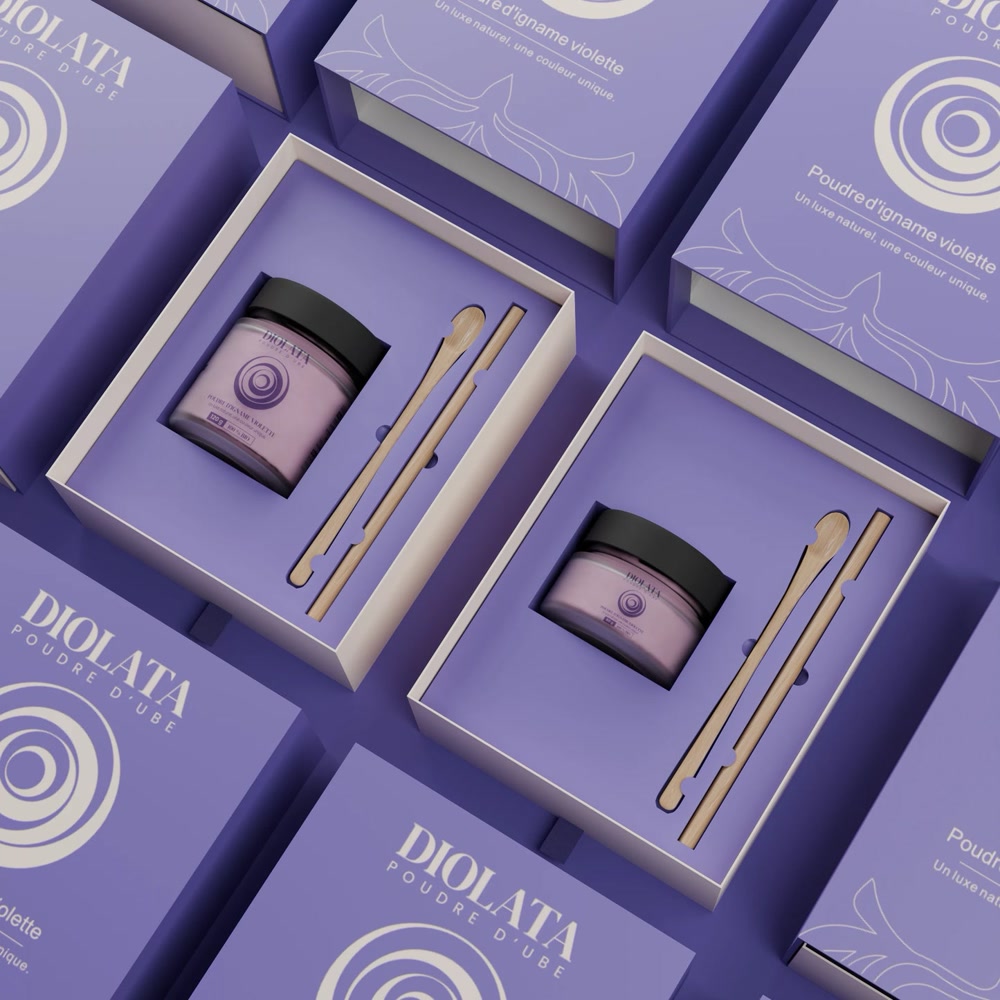
I find Diolata consistent in how it positions itself. The brand has a clear identity, a strong visual world and a flagship product that is easy to grasp, ube. This is not a sprawling range, and that is the point: a tighter offer is easier to read and easier to judge than a scattered catalogue.
Where Diolata scores is on the clarity of the offer, the way certifications are highlighted, and the ability to turn a still niche ingredient into something you actually want to buy. On the other hand, the range remains shallow, and I would like more transparency on certain technical details and on independent customer feedback.


In this full review, I go through Diolata, its ube, the formula, the prices and the overall experience the brand offers.
Brand Rating
Product Rating
User experience
Delivery and customer service
My experience with Diolata: the test
To form a serious opinion on Diolata, I focused on what the brand actually puts on the table: a clear flagship product, a strong identity and a promise that is simple to understand. In a niche as young as ube is in France, that clarity counts for a lot. It lets you judge the offer without getting lost in a sprawling pitch or an artificially inflated range.
What comes through quickly is the consistency between product, image and positioning. Diolata wants to build an indulgent, visual ritual around ube, with a brand that stays recognisable from the very first contact. For someone discovering this world, that is a real strength: you quickly understand what is being sold, what it is for, and why the brand is trying to stand apart.
🔎 The verdict on taste and texture
The first thing I look at with this kind of product is its real world usability. Here, Diolata is clearly working an indulgent drink angle, with a natural purple colour and an aroma profile presented around vanilla and hazelnut notes. It is a well chosen angle, because it makes the product feel more concrete and more desirable for anyone who wants to use it in lattes, desserts or home baking.
I also find it interesting that the brand keeps things fairly simple. This is not a product made complicated by an overly technical or opaque story. On the contrary, everything is designed to make you want to try it, with a strong visual world and a promise of use that is easy to understand. In this category, that simplicity is often more convincing than a heavily loaded pitch.
👉 Effectiveness and how it felt
On how it feels, I prefer to stay measured and credible. Diolata is not selling a miracle active or an aggressive claim here. The brand bets mainly on perceived quality, naturalness, the overall experience and the consistency of its world. That is a good base for building trust, especially when the buyer is first looking for something pleasant to slot into a routine.
So what strikes me as strongest is not a spectacular promise, but the way the whole thing holds together. Diolata gives the impression of a brand that knows what it wants to do, without overplaying complexity or innovation for its own sake. For a first purchase in the world of ube, that stance feels more reassuring than an overly ambitious or vague pitch.

Who is Diolata?
Diolata is a French brand run by the company Ader EPC - DIOLATA, based in Pantin. It builds its identity around ube, with a strong art direction and positioning that is still fairly rare on the French market. That specialisation lets it stand out more sharply than some broader brands trying to cover too much ground at once.
It is precisely that focus that gives the brand its strength. Diolata is not trying to talk to everyone with a huge catalogue. It moves forward with a more targeted offer, built around one flagship ingredient, a strong visual experience and a promise that is easy to read. For a review, that is a real advantage, because it lets you judge the brand consistency on fairly clear ground.
📌 The key commitments
- French brand with a registered company in Pantin
- Dual certification :
- Certified production site: ISO 22000
- Independent testing mentioned for certain contaminants
- Sourcing claimed for ube rhizomes from the Philippines
A look at the range
Diolata's visible range stays compact, which helps keep everything easy to read. What you mainly find are products designed for indulgent uses, quick to prepare and easy to fit into a routine. That is consistent with the brand positioning, which prefers to establish a strong signature rather than widen the catalogue too quickly.
- Poudre ube - EU & USA: the flagship product, designed for lattes, desserts and home baking
- Poudre de Fraise : a logical extension into everyday fruit powders
- Pailles en Bambou Naturel - DIOLATA: an accessory that fits the brand tasting world

A closer look at the formula: how good is Diolata ube powder really?
From a formulation standpoint, Diolata mainly puts forward something clean and simple. The product is presented as 100 % natural, vegan, caffeine free, with no colouring, no additives and no added sugar. That restraint works in its favour, because it makes the promise easier to read and avoids the shopping list effect of ingredients added to impress without any real logic.
The brand also adds several reassurance markers, with a dual certification, ISO 22000 certification of the production site and independent testing mentioned for certain contaminants. Those are good signals for credibility. That said, I would eventually like a bit more depth on some technical details, especially if the brand wants to convince an even more demanding audience.
I see no obvious sign of fairy dusting here, because Diolata does not rely on an oversold multi active formula with a very long list of underdosed ingredients. Its flagship product follows a more direct logic, centred on one main ingredient and on perceived quality. In this particular case, that restraint strikes me as more credible than excessive sophistication.
Technical analysis and expert verdict
Overall, Diolata looks solid on three points: positioning, consistency and image. The brand knows what it wants to sell, who it is talking to and how it wants to present its product. In a niche as young as ube is in France, that clarity is a real advantage. It builds credibility and avoids the confused catalogue feeling you sometimes get elsewhere.
👉 Our advice: Diolata works best for regular use in a drink or dessert routine, starting with its flagship product to form a first opinion on the brand and its world.
Diolata ube powder vs a standard ube preparation
| Criterion | Diolata | Standard ube preparation |
|---|---|---|
| Certification | ✅ Dual certification put front and centre | ❌ Level of guarantee often less clear |
| Traceability | ✅ Rhizome origin claimed from the Philippines | ❌ Origin sometimes barely detailed |
| Brand image | ✅ Highly crafted premium world | ❌ Often more generic presentation |
| Range depth | ❌ Offer still short | ✅ Some alternatives have more products |
Diolata's star product
Poudre ube - EU & USA
This is the best way into Diolata, because this single product concentrates the brand world, its promise and its style into one reference that is easy to understand.
🏆 My final verdict: should you buy from Diolata?
The takeaway is fairly clear: Diolata is not an empty shell. The brand has clear positioning, a coherent flagship product and genuine care for its image. It does not play the giant catalogue card, but rather that of a tight, recognisable world, which works well in this niche.
On value for money, I find the whole thing fairly defensible if you are looking for a specialist brand, with well crafted packaging, a clear offer and a purchase that is simple to understand. That said, if your only goal is to compare raw price per gram, some more standard alternatives will look more competitive.
My verdict: yes, Diolata is worth a try if you are after a serious ube brand that is easy to read and enjoyable to discover. If you want to see the star product of the brand, you can take a look at the Diolata ube powder.
To put Diolata in context, also have a look at our Ube selection, our comparison of the best ube purple yam powders, our discount codes as well as our Meyshaa review and Ube Latte Club review.

LMC’s editorial line is built around transparency and reliability. Our content is written to help users make better decisions, based on 7 key criteria* that support trustworthy information, verified promo codes, and useful reviews.
To support LMC, some links are affiliate links. Our recommendations remain independent and based on transparent, verifiable criteria. By using the site, you accept our terms of use and our editorial policy.

🎁 Get an exclusive -50% promo code by signing up. Not available anywhere else.
We have negotiated for you an exclusive 50% off promo code on a well-known brand of mushroom coffee. Interested? Register and receive your code directly by email.
The 7 key criteria of our editorial staff
Every piece of content published on LMC is carefully written by engaged specialists following a rigorous process. LMC is committed to delivering information that is reliable, useful, and genuinely easy to read.
Specialized and involved writers


Rigorous research for each piece of information
Full transparency on sources

Taking into account your real needs
Original and authentic content
Continuous updating of articles
.webp)
Compliance with standards and editorial ethics

LMC’s favorite pick 💛
Our favorite pick of the month — well worth trying.
.avif)
pick
Mush N Go