
What is linden sapwood, and where does it come from?
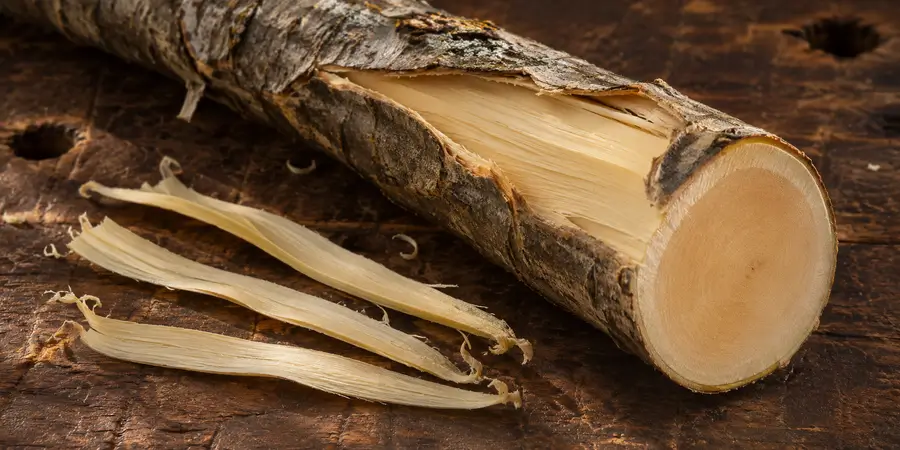
Sapwood is neither the flower nor the bark of the linden tree. It's the layer of living wood just beneath the bark, where the tree's sap flows. It's harvested from linden branches, most often Tilia cordata or Tilia platyphyllos, then cut into thin chips that are air-dried.
This part of the tree has long been used in folk herbal medicine, especially in France. It's clearly distinct from the linden flower, the one used in the evening herbal tea, which isn't used for the same reasons. On labels, you'll sometimes see "linden sapwood" or "wild linden sapwood": it's the same part of the plant.
Linden sapwood from Roussillon, a benchmark
The name comes up often: linden sapwood from Roussillon. This region in the Pyrénées-Orientales is known for its wild linden trees, and many herbalists consider its sapwood among the best. You'll find it as chips in herbalist shops, organic stores and specialized online shops, sometimes in an organic version.
Where can you find linden sapwood from Roussillon? Mainly at herbalists and on their websites, in bags of chips from 100 to 250 g. In pharmacies, you'll mostly find extract ampoules and capsules, whose exact origin isn't always specified. Hence the importance of reading the label.
There's also a so-called "red" or "dark" linden sapwood, depending on the color of the chips and the producers' naming. These names vary from one herbalist to another: the key thing is to check that it really is sapwood, and to know its origin.
What benefits are attributed to linden sapwood?
Let's start with the essentials: in Europe, no health claim is authorized for linden sapwood. The official monographs from the European Medicines Agency cover the linden flower, not the sapwood, and clinical studies in humans are virtually nonexistent. Everything you read about its benefits therefore comes from traditional use, passed down by herbalists.
This use is long-standing and consistent. Linden sapwood is traditionally used to support the body's elimination functions, in three main areas:
- kidney elimination: it's reputed to promote urinary elimination, hence its image as a "draining" plant;
- digestion: it's appreciated after heavy meals, during periods of sluggishness;
- seasonal courses: in spring or after the holidays, as a decoction over a few weeks.
Linden sapwood, liver and digestion
Many "liver" programs contain linden sapwood, often combined with milk thistle or artichoke. Users take it to regain digestive comfort and a feeling of lightness. In the absence of studies, no specific effect on the liver can be attributed to it: think of it as a supporting plant, alongside a lighter diet.
Cholesterol, weight loss, cellulite: what you can expect
You sometimes read that linden sapwood lowers cholesterol, helps you lose weight or reduces cellulite. These promises aren't backed by any solid evidence and aren't authorized. A course can support a period of healthier eating, but it's your plate, physical activity and, for cholesterol, medical follow-up that make the difference. Be wary of products that promise lost pounds thanks to a plant.

Tea, ampoules or capsules: how do you take linden sapwood?
Linden sapwood comes in three main forms. Each has its strengths, and the choice mainly depends on how much time you're willing to spend on it and how precise a dose you're looking for.
As a decoction or tea
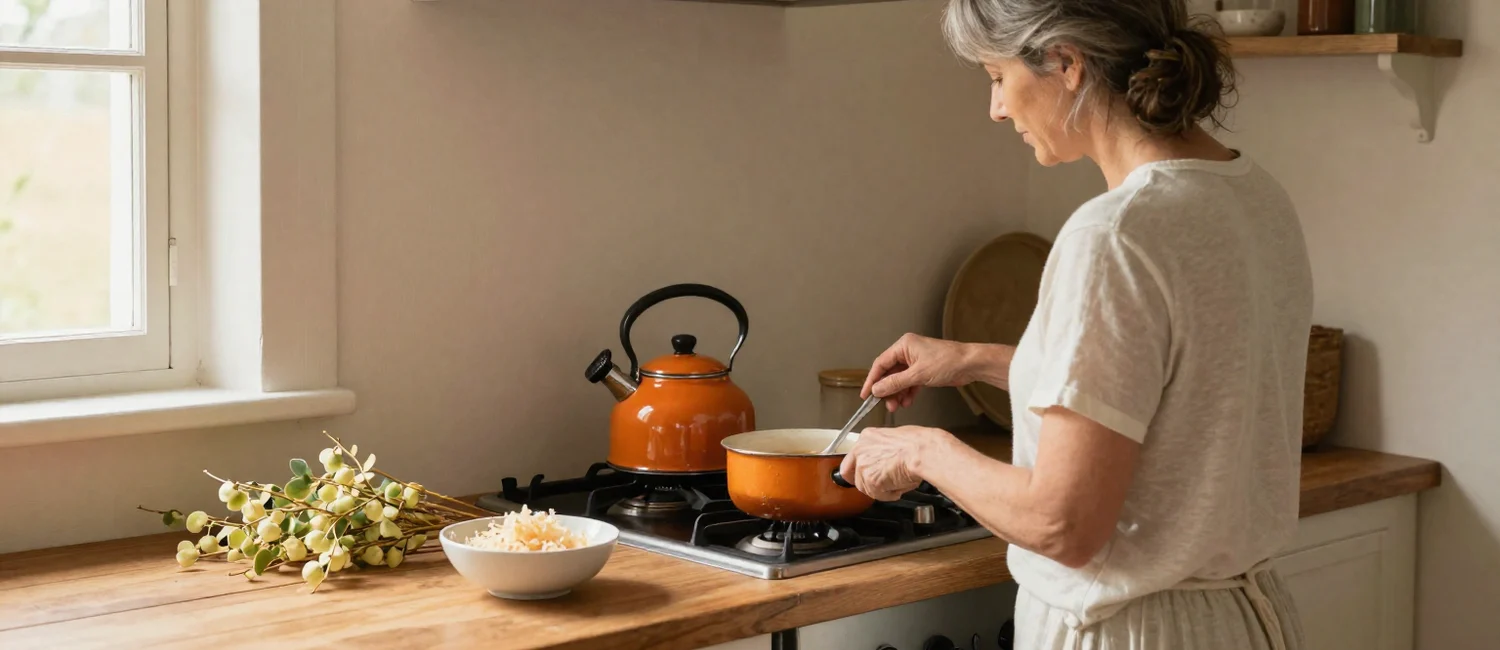
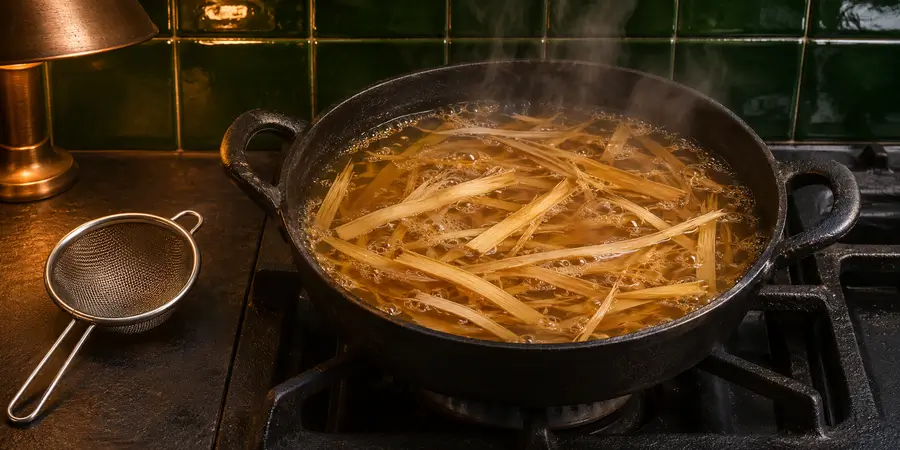
This is the traditional form. Since sapwood chips are hard, a simple infusion isn't enough: they're prepared as a decoction. The method often recommended by herbalists is to boil about 40 g of chips in a liter of water, let it simmer for about ten minutes, then strain. The preparation is drunk over the course of the day, between meals. The taste is mild and slightly woody. This form is economical, but it takes a little time every day, and the amount of active compounds remains hard to measure.
In ampoules
Linden sapwood ampoules are diluted in a glass of water, usually in the morning, over a 10- to 20-day course. They're practical and quick. Remember to read the composition: some contain alcohol, sugars or flavorings, and the actual amount of extract isn't always stated.
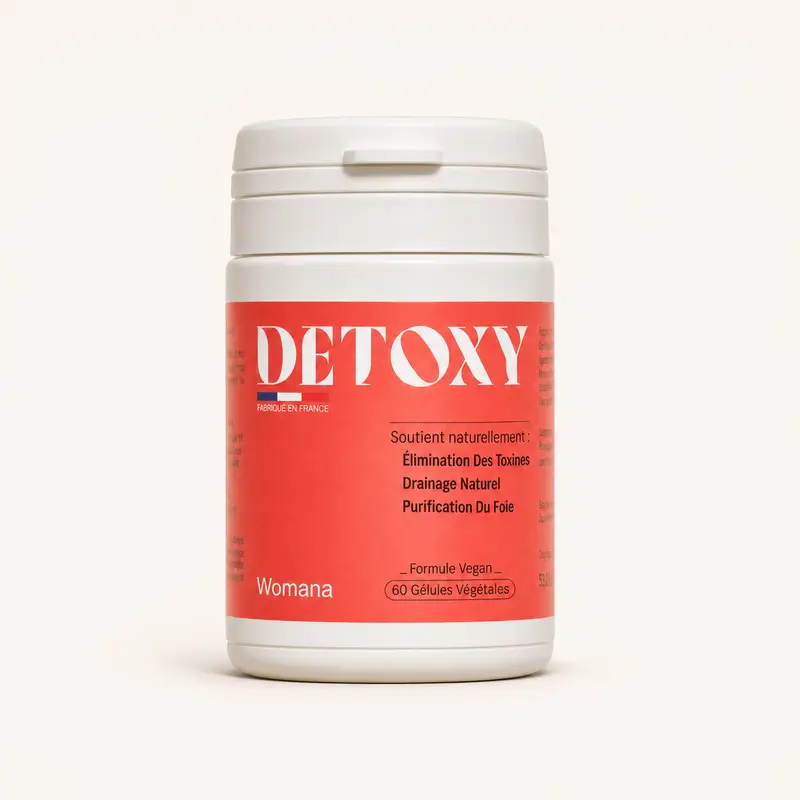
In capsules: the example of Detoxy
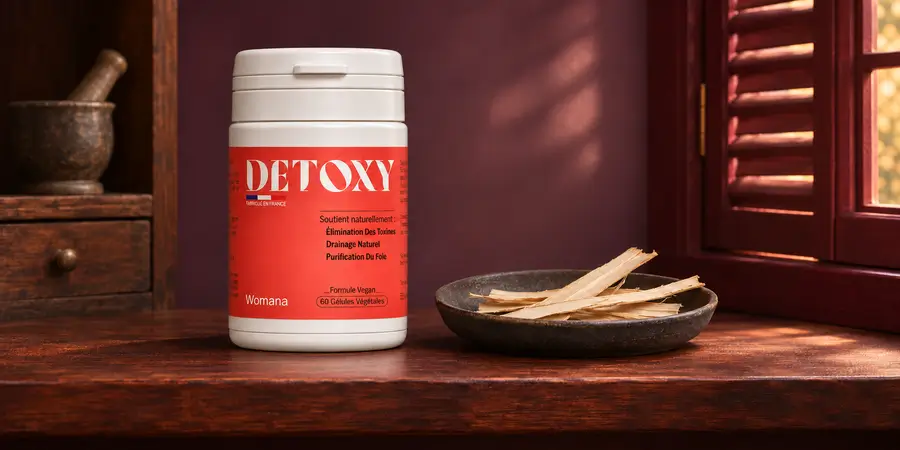
Dry extract capsules are the simplest form day to day: no preparation, no taste, and a precise dose in milligrams. They also make it possible to combine sapwood with other plants. That's the case with Detoxy, from the French brand Womana, which combines, per two capsules, 400 mg of dry linden sapwood extract, its most highly dosed ingredient, 320 mg of mouse-ear hawkweed and 84 mg of milk thistle, in a plant-based capsule.
Womana designed Detoxy for women who want to take care of their digestive comfort and support their body's natural elimination functions. The course is taken as two capsules in the morning, with a large glass of water. It costs €35.90 for a one-month course, or €69.90 for a three-month course, with a 60-day guarantee and free shipping in France. With the code LMC10, the one-month course drops to €32.31. To discover it: Womana's Detoxy course. We've also covered the entire range in detail in our Womana review.
How long does a linden sapwood course last?
Traditionally, a linden sapwood course lasts three weeks, and can be repeated after a one- to two-week break. Ampoules are often taken over 10 to 20 days, and capsule formulas are designed for a one- to three-month course. In any case, it's best not to extend it indefinitely without a break.
A few guidelines to do it right:
- take it in the morning or during the day rather than in the evening, so you're not woken up at night by urinary elimination;
- drink enough water throughout the course;
- pair it with a lighter diet, rich in vegetables and low in alcohol.
The classic times remain spring, back-to-school season and after the holidays. If you don't feel any difference after a few weeks, there's no point persisting: everyone reacts in their own way, and a plant isn't a treatment.
Should you go for a short, concentrated course or a longer one? With a traditionally used plant, consistency matters more than intensity. Taking it every day, at the same time, for three weeks to three months, beats a week of very concentrated decoctions. And if you combine sapwood with other plants, as in capsule formulas, simply follow the duration recommended by the manufacturer.
What are the side effects and dangers of linden sapwood?
Linden sapwood has the image of a gentle plant, and it's generally well tolerated at usual doses. But "natural" doesn't mean risk-free. The main effect people notice is more frequent urination, which follows from its traditional use. Some people also report mild digestive discomfort at the start of a course.
Several situations call for a healthcare professional's advice before starting:
- pregnancy and breastfeeding, due to a lack of safety data;
- children: most products are for adults only;
- kidney or heart disease, for which a plant reputed to be draining isn't trivial;
- ongoing treatment, especially diuretics, blood pressure medications and anticoagulants.
Linden sapwood and anticoagulants, linden sapwood and high blood pressure: these are frequent questions, and the answer is the same. There isn't enough data to rule them out or confirm them, so caution is in order: show the ingredient list to your doctor or pharmacist. Finally, don't stack several draining courses at the same time, and always stick to the indicated dose.
What do reviews and testimonials say about linden sapwood?
User testimonials are plentiful on forums and herbalist websites. They most often describe a feeling of lightness, better comfort after meals and the impression of "draining" during the course. Many enjoy the mild taste of the decoction, while others prefer capsules for their simplicity.
More mixed reviews come up too: barely noticeable effect, the hassle of daily preparation, or more frequent trips to the bathroom. Keep some perspective: a testimonial is a personal experience, often linked to other changes made at the same time, such as a lighter diet. It replaces neither a study nor medical advice.
What also comes out of the testimonials is the importance of the form. Decoction fans love the ritual and the very low price of the chips. Those who gave up partway through often mention the hassle of preparing their drink every day. Capsules then appeal to busy people who want a course that's easy to stick with over several weeks, with no taste or preparation.
How do you choose the right linden sapwood?
Whether as chips, ampoules or capsules, good linden sapwood can be recognized by a few simple criteria:
- a stated origin: country, or even region, such as Roussillon;
- a clear mention of the part used, the sapwood, not the flower;
- for chips, an organic version when possible;
- for capsules and ampoules, an extract quantified in milligrams for the daily dose;
- a short formula, with no unnecessary sugars or flavorings, and displayed precautions.
One last tip: be wary of promises on the packaging that sound too good to be true. A product claiming to make you lose weight, lower your cholesterol or "cleanse" your liver in a few days doesn't follow the rules governing dietary supplements. Serious brands stay careful with their wording.
To help you, here's a comparison between chips to prepare as a decoction and a capsule formula that combines sapwood with other plants. Prices are indicative and the verdict remains an opinion.
| Criterion | Analyzed by LMC Detoxy by Womana (capsules) | Linden sapwood chips |
|---|---|---|
| Price | ❌€35.90 per month, €1.20 per day | ✅A few euros per bag of chips |
| Preparation | ✅None: two capsules in the morning | ❌Daily 10-minute decoction |
| Dosage | ✅400 mg of dry sapwood extract, quantified | ❌Varies with the amount of chips |
| Plants | ✅Linden sapwood, mouse-ear hawkweed, milk thistle | ❌Linden sapwood only |
| Taste | ✅None | ❌Mild and woody |
| Portability | ✅Pill organizer, easy to carry | ❌Prepared at home |
| Guarantee | ✅60 days, refunded even if the jar is empty | ❌Depends on the herbalist |
Chips remain unbeatable on price and tradition. Capsules win on simplicity, precise dosing and the combination with other plants. It's up to you to choose based on your lifestyle.
Frequently asked questions about linden sapwood
Is linden sapwood dangerous for the liver?
No data identify it as dangerous for the liver at usual doses, but there's no study proving a beneficial effect either. If you have liver disease, talk to your doctor before any course.
Can you take linden sapwood every day?
Yes, for the length of a course, from three weeks to three months depending on the product, then take a break. Continuous year-round use isn't recommended.
Does linden sapwood help you lose weight?
No, there's no evidence of this, and this promise isn't authorized. It can support a healthier eating plan, but it won't make you lose weight on its own.
What's the difference between linden sapwood and linden flower?
Linden flower is traditionally used for relaxation and minor colds, according to the European Medicines Agency. Sapwood, the wood beneath the bark, is associated with elimination functions. They don't have the same uses.
Where can you buy linden sapwood from Roussillon?
Mainly at herbalist shops, organic stores or on herbalists' websites, as chips. For capsules, check the origin stated on the label.
Conclusion: a traditional plant to use with common sense
Linden sapwood is a traditional elimination plant, appreciated for supporting seasonal courses and digestive comfort. Its benefits rest on traditional use, not clinical evidence: approach it as support, never as a treatment. Decoction, ampoules or capsules, choose the form that suits you, checking the origin, dosage and precautions. And if you're looking for a more complete course, our guide to choosing the best pharmacy liver detox compares the different options, and the Detoxy product page details a formula that combines sapwood with two other plants.
Scientific references
- European Medicines Agency (HMPC), Tiliae flos (linden flower), monograph and summary of traditional use.
- European Medicines Agency (HMPC), Silybi mariani fructus (milk thistle fruit), monograph and summary of traditional use.
Dietary supplements are not a substitute for a varied, balanced diet and a healthy lifestyle.

LMC content is written by our editorial team from the information published by the brands. Scores out of 10 follow a public grid of 5 criteria*, supplemented by LMC’s editorial assessment.
To support LMC, some links are affiliate links: LMC earns a commission at no extra cost to you, and some of the brands featured are partners. By using the site, you accept our terms of use and our editorial policy.