
When should you do an immune support course so it actually helps?
The right window is fall: from September to November, before winter viruses are in full circulation. A course started in October covers the period when the days get shorter, the pace picks up again after summer and fatigue sets in. A second window exists at the end of winter, when your reserves are at their lowest and spring is slow to arrive.
Why fall? First, because of vitamin D. Your skin makes it in the sun: from April to September, a short exposure is enough for many people. From October to March, the sun is too low at our latitudes and your diet has to take over. Second, because the back-to-school season piles up the factors that weigh on the body: lack of sleep, stress, meals eaten on the go.
And how long? The courses on offer generally range from 3 weeks to 3 months. Three weeks is the typical length given by many herbal manufacturers; one to three months is the usual pace for vitamin and mineral courses. Follow what the label says, without blindly going through box after box.
Conversely, starting a course in the middle of a cold does not make much sense. A dietary supplement does not treat an infection: it works over time, ahead of the season, alongside a balanced diet.
How can you tell if your immune system is weakened?
There is no simple sign that proves it. Yet some clues come up often when the body is under strain:
- fatigue that lingers, even after decent nights;
- minor infections one after another (colds, sore throats);
- slow recovery after each episode;
- small cuts that take a long time to heal.
These signs are not specific: they can come from lack of sleep, a stressful period, a deficiency or an illness that has nothing to do with immunity. The factors that weigh most are well known: insufficient sleep, chronic stress, a diet low in fruit, vegetables and fish, smoking, alcohol, and age, because the immune system becomes less effective over the years.
⚠️ Above all, remember this: a supplement does not diagnose anything. Frequent, severe or long-lasting infections should be discussed with a doctor, who can order tests (a blood test can, for example, reveal a lack of iron or vitamin D).
And how can you tell if you have a good immune system? There is no consumer test that measures it with a single number. In practice, someone who gets sick a few times a year, recovers within a few days and does not drag around unexplained fatigue has no particular reason to worry. Anything beyond that calls for a medical checkup, not self-diagnosis.

How do you strengthen your immune system before winter without supplements?
Before looking for the ideal "course", the foundation matters more than any capsule. Searches for "immune boost" and "strengthen immune system" soar every fall, but the basics stay the same:
- Sleep 7 to 9 hours, at regular times.
- Move every day: a 30-minute brisk walk counts.
- Eat colorful foods: fruit and vegetables at every meal, for vitamin C, folate and fiber.
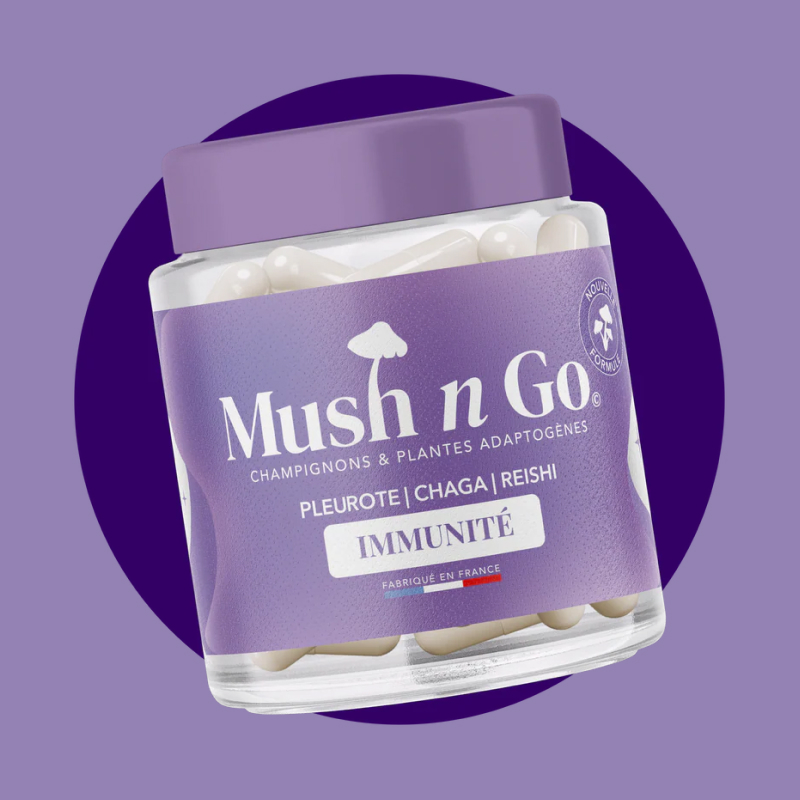
- Think oily fish and eggs: sardines, mackerel, salmon and egg yolk are among the few sources of vitamin D.
- Feed your gut microbiome with fiber (legumes, whole grains, vegetables) and fermented foods.
- Manage stress, limit alcohol, quit smoking.
- Wash your hands and air out your home, two simple habits during virus season.
You will also see probiotics, echinacea or propolis on the "immunity" shelves. Good to know: none of them holds the "immune system" claim authorized by the European Union. The nutrients that do are listed just below.
Which vitamins and minerals have a recognized role for immunity?
This is the part almost nobody explains. In Europe, Regulation (EU) No 432/2012 sets the list of authorized health claims. For the immune system, only ten nutrients are allowed to "contribute to the normal function of the immune system": vitamins A, B6, B9 (folate), B12, C and D, zinc, selenium, copper and iron.
There is one condition: the supplement must provide at least 15% of the nutrient reference value (NRV). Below that, the brand is not allowed to use the claim. That is why the "% NRV" line on the label is the most useful one of all.
| Nutrient | NRV | 15% threshold | Where to find it on your plate |
|---|---|---|---|
| Vitamin C | 80 mg | 12 mg | Blackcurrant, citrus fruit, parsley, red bell pepper |
| Vitamin D | 5 µg | 0.75 µg | Oily fish, cod liver oil, egg yolk |
| Vitamin A | 800 µg | 120 µg | Organ meats, egg yolk, butter; carrots, sweet potatoes, mango (beta-carotene) |
| Vitamin B6 | 1.4 mg | 0.21 mg | Grains, soy products, fish, liver |
| Folate (B9) | 200 µg | 30 µg | Legumes, leafy vegetables, liver |
| Vitamin B12 | 2.5 µg | 0.375 µg | Fish, eggs, meat, dairy products |
| Zinc | 10 mg | 1.5 mg | Meat, cheese, legumes, seafood |
| Selenium | 55 µg | 8.25 µg | Fish, seafood, eggs, Brazil nuts |
| Copper | 1 mg | 0.15 mg | Organ meats, shellfish, nuts |
| Iron | 14 mg | 2.1 mg | Liver, meats, legumes, leafy green vegetables |
NRV: Annex XIII of Regulation (EU) No 1169/2011. Food sources: ANSES, nutritional references for vitamins and minerals (2025).
One case is worth pausing on: vitamin D. The labeling NRV is 5 µg, while ANSES (the French food safety agency) sets the adequate intake for an adult at 15 µg per day, and average dietary intake hovers around 3 µg. Yet no official French recommendation advises systematic supplementation for all adults in winter. The right reflex: talk to your doctor, who will take your profile into account and avoid doubling up, because too much vitamin D is a real thing.
For vitamin C, the most sought-after course in the fall, the claim is allowed from 12 mg per daily dose (15% of the NRV); most products provide much more. You will find details on the useful nutrients on our immunity page, and a selection of broader formulas in our multivitamin comparison.
Are chaga, reishi and oyster mushrooms any good for your defenses?
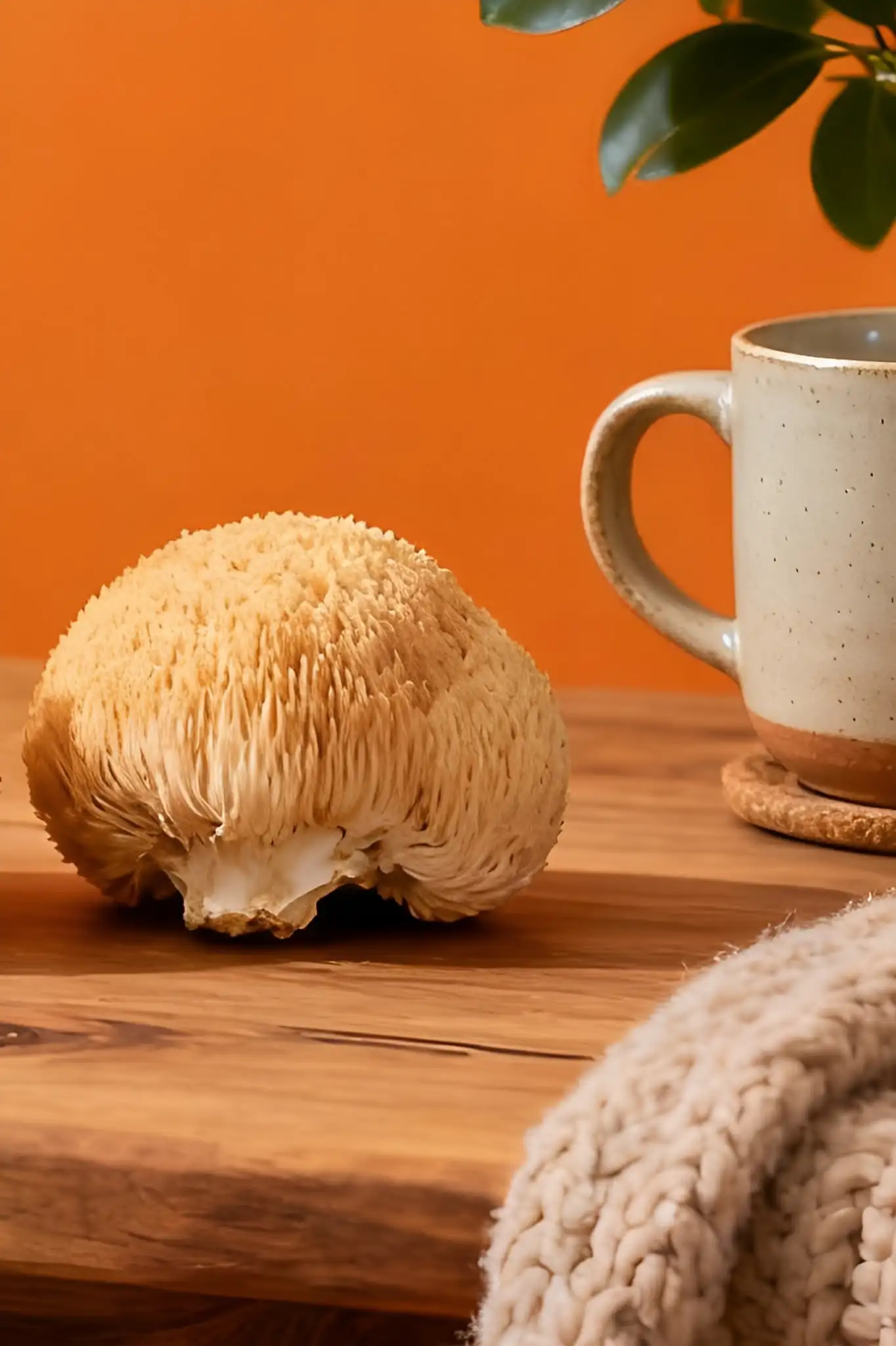
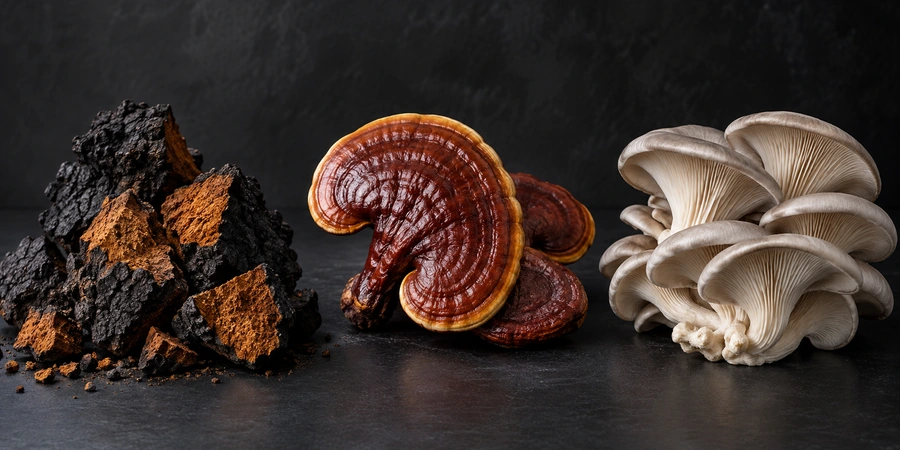
So-called "adaptogenic" mushrooms are everywhere in winter courses. Their supposed benefit comes from their polysaccharides, especially beta-glucans, which are studied for their action on immune cells. Chaga is traditionally drunk as an infusion in Siberia, reishi has been used for centuries in Chinese medicine, and the oyster mushroom is simply a common edible mushroom.
What does human research say? A 2021 review of 34 randomized trials observed immunomodulating effects with fungal beta-glucans, which were well tolerated, but these were mostly purified beta-glucans, often from yeast, and the optimal dose has yet to be established. Another 2021 review stresses that most of the data still come from cell and animal models. In other words: a serious field of research, not proof of effectiveness, and no health claim is authorized for mushrooms in Europe.
On the safety side, two points are documented:
- chaga is very high in oxalates: three cases of kidney damage have been published in people who consumed high doses of the powder for months;
- reishi has been the subject of cases of liver injury, and long-term safety data remain limited.
To go further, read our article on the dangers of reishi.
Which supplement should you choose for your immune support course before winter?
Three criteria are enough to sort through the "immune support supplements" on the shelf:
- ✅ A nutrient with an authorized claim, at least 15% of the NRV (even better at 100%).
- A readable formula: quantified amounts for each ingredient, as extract and not just as "dry equivalent".
- A price per day calculated over the full length of the course.
For mushroom products, one more reflex: look at the amount of extract, not just the "dry equivalent" that is put front and center. An extract concentrated 13 times allows a label to show 3,380 mg for 260 mg actually present in the capsule. Both figures are accurate, but only the second can be compared from one brand to another. And if the beta-glucan content is not stated, do not hesitate to ask the brand.
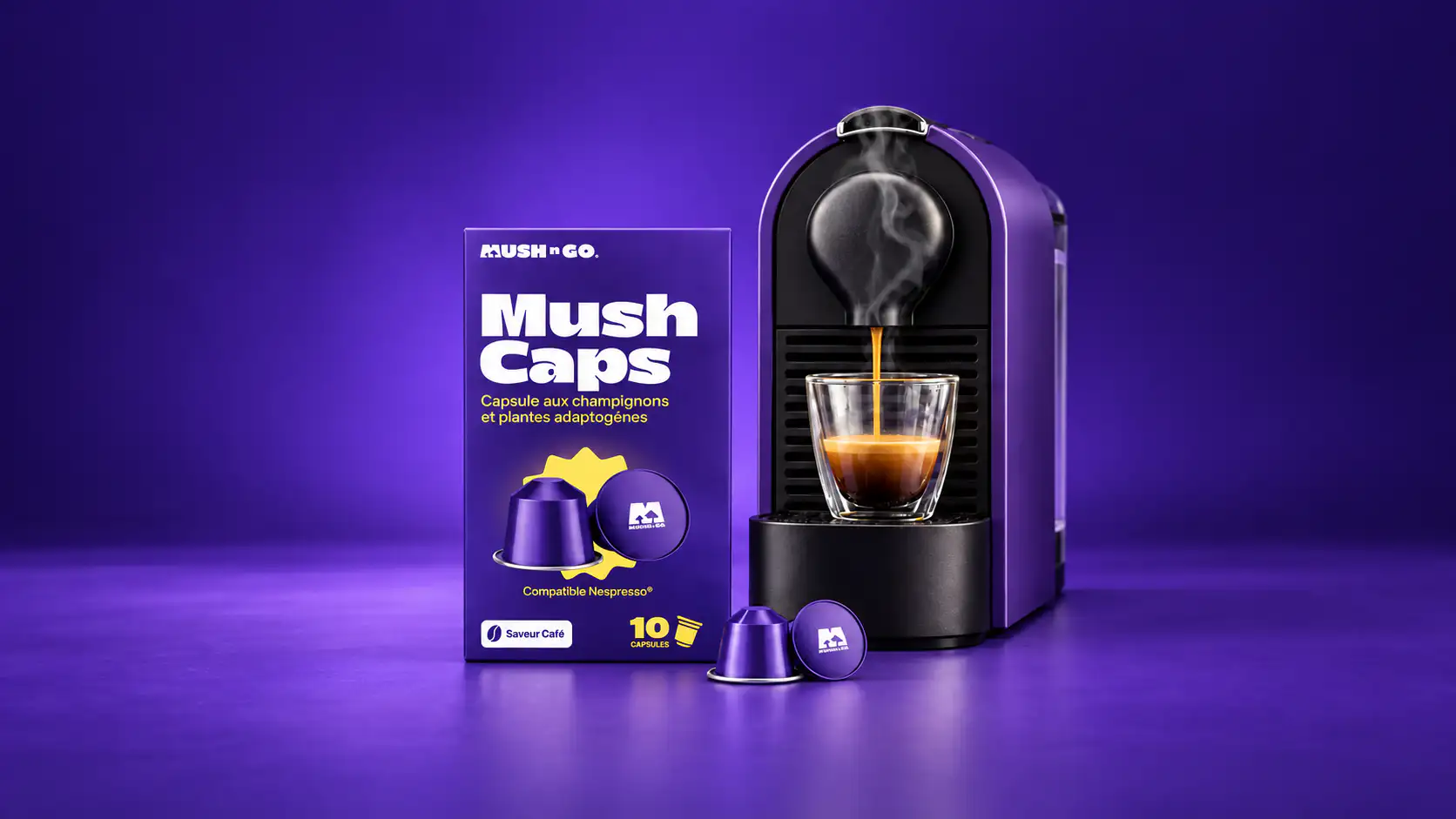
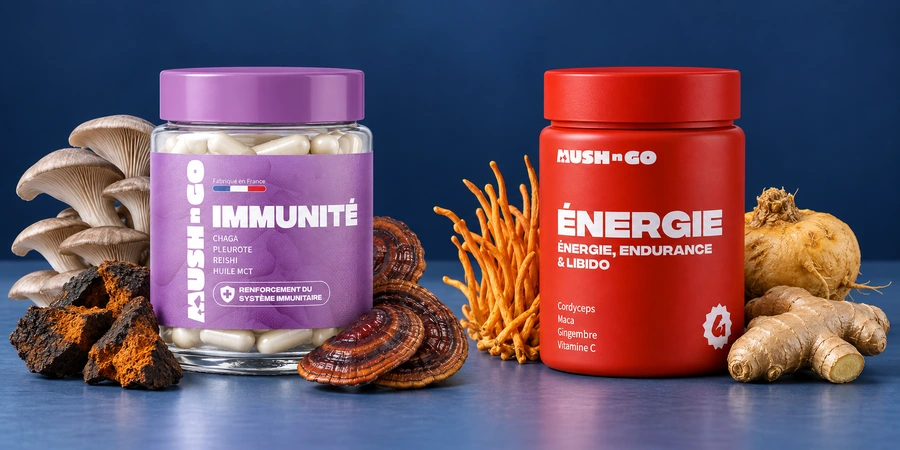
If mushrooms interest you, the French brand Mush N Go offers a two-product approach that can be combined.
Immunité by Mush N Go, the mushroom side
Immunité combines three mushrooms. According to the label checked on 10/13/2026, the daily dose provides chaga (3,380 mg as dried mushroom equivalent), reishi (3,120 mg) and oyster mushroom (1,560 mg), or 260, 240 and 120 mg of extract at a 13:1 ratio, plus 520 mg of coconut MCT oil. The box contains 30 capsules, to be taken at one to two per day. Vegan, caffeine-free, made in Toulouse, with a 60-day money-back guarantee.
Let's be clear about what it is not: Immunité does not quantify any vitamin on its label. It therefore falls under the traditional use of mushrooms, with no authorized claim. It is available at €42.71 per box (€36.31 with our partner code LMC15), or as a no-commitment subscription at €29.90 per month (€25.42 with LMC15), prices checked at checkout on 10/13/2026 on mushngo.com. As of October 13, the two- and three-box packs were sold out.
Énergie by Mush N Go, the vitamin C side
Énergie provides 80 mg of vitamin C per capsule, or 100% of the NRV. It is the one that carries the authorized claim: vitamin C contributes to the normal function of the immune system, and also contributes to the reduction of tiredness and fatigue. The formula also contains cordyceps, maca and ginger (1,920, 1,200 and 500 mg as dry equivalent for two capsules). The product is on pre-order, with shipping announced for mid-October, at a list price of €39.90 per box of 30 capsules.
The honest option if you only want the claim: vitamin C alone will do the job, such as PureWay-C by Cuure. The Mush N Go duo is for those who want the mushrooms on top. To see other rated formulas, check out our top 7 immune support supplements, where Immunité ranks second.
How do you plan your immune support course from October to December?
An example of a simple schedule, to adapt to the labels of your products:
- October: start the course, and reset your sleep and your plate.
- November: keep going, this is the month when sunlight drops off fastest.
- December: take stock. Stop, or take a break before a possible second window at the end of winter.
For your budget, count the capsules. At one capsule a day, a box of 30 covers a month; at two capsules, fifteen days. For Énergie, a single capsule a day is already enough to provide 100% of the NRV for vitamin C. One last point that is often forgotten: if you already take a multivitamin, check for overlaps, especially for vitamin D, zinc and selenium. These nutrients do not add up without limit: the maximum dose stated on each box takes into account what your diet already provides, and two products taken together can exceed it. When in doubt, show your boxes to your pharmacist.
Who should ask for medical advice before an immune support course?
A course remains an everyday preventive habit, but certain situations call for talking to a doctor or pharmacist first:
- children (an "immune support course for kids" should be discussed with the pediatrician);
- pregnancy and breastfeeding;
- people who are immunocompromised or on immunosuppressive treatment;
- autoimmune diseases;
- a history of kidney stones or kidney disease, because of the oxalates in chaga;
- any ongoing treatment, and infections that keep coming back.
Your questions about immune support courses
When should you start an immune support course?
Ideally between September and November, before the depths of winter. A second window is possible at the end of winter, when fatigue builds up.
How long does an immune support course last?
Generally from 3 weeks to 3 months depending on the product. A vitamin C course is often followed for one to three months. Follow the label and take breaks.
What is the best dietary supplement for the immune system?
The one that provides a nutrient with an authorized claim (vitamin C, D, zinc, selenium...) in sufficient amounts, with a readable label and a reasonable price per day. The rest depends on your diet and your profile.
Which course should you choose for your immune system?
If your diet is varied, start with your lifestyle habits. If you want a course, vitamin C alone is the simplest choice; a mushroom formula can be added for those interested in their traditional use. 🍊
Which foods provide the nutrients useful for immunity?
Citrus fruit, blackcurrant and bell pepper for vitamin C, oily fish and eggs for vitamin D, seafood and meat for zinc, Brazil nuts and fish for selenium, legumes and leafy vegetables for folate and iron.
Key takeaways
The most useful immune support course starts in the fall, lasts from three weeks to three months and relies on a nutrient with a recognized role, dosed at at least 15% of the NRV. Mushrooms like chaga or reishi belong to traditional use, with no authorized claim. And nothing replaces sleep, a colorful plate and a doctor's advice in case of repeated infections. 🍂
Dietary supplements should not replace a varied, balanced diet and a healthy lifestyle. This article is for information only and does not constitute medical advice.
Scientific references
- Regulation (EU) No 432/2012 establishing a list of permitted health claims made on foods: eur-lex.europa.eu
- Regulation (EU) No 1169/2011 on the provision of food information to consumers, Annex XIII (nutrient reference values): eur-lex.europa.eu
- ANSES, Nutritional references for vitamins and minerals, 2025: anses.fr
- ANSES, Vitamin D: why and how to ensure an adequate intake?, 2022: anses.fr
- Carr AC, Maggini S. Vitamin C and Immune Function. Nutrients, 2017: pubmed.ncbi.nlm.nih.gov
- Vlassopoulou M et al. Effects of fungal beta-glucans on health: a systematic review of randomized controlled trials. Food & Function, 2021: pubmed.ncbi.nlm.nih.gov
- Cerletti C et al. Edible Mushrooms and Beta-Glucans: Impact on Human Health. Nutrients, 2021: pubmed.ncbi.nlm.nih.gov
- Kikuchi Y et al. Chaga mushroom-induced oxalate nephropathy. Clinical Nephrology, 2014: pubmed.ncbi.nlm.nih.gov
- Lee S et al. Development of End Stage Renal Disease after Long-Term Ingestion of Chaga Mushroom: Case Report and Review of Literature. Journal of Korean Medical Science, 2020: pubmed.ncbi.nlm.nih.gov
- Ahmad MF et al. Ganoderma lucidum (Reishi) an edible mushroom; a comprehensive and critical review of its nutritional, cosmeceutical, mycochemical, pharmacological, clinical, and toxicological properties. Phytotherapy Research, 2021: pubmed.ncbi.nlm.nih.gov

LMC content is written by our editorial team from the information published by the brands. Scores out of 10 follow a public grid of 5 criteria*, supplemented by LMC’s editorial assessment.
To support LMC, some links are affiliate links: LMC earns a commission at no extra cost to you, and some of the brands featured are partners. By using the site, you accept our terms of use and our editorial policy.