

Updated November 5, 2026
Baby Bump or Natalben Grossesse: which one should you choose? The essentials in 30 seconds

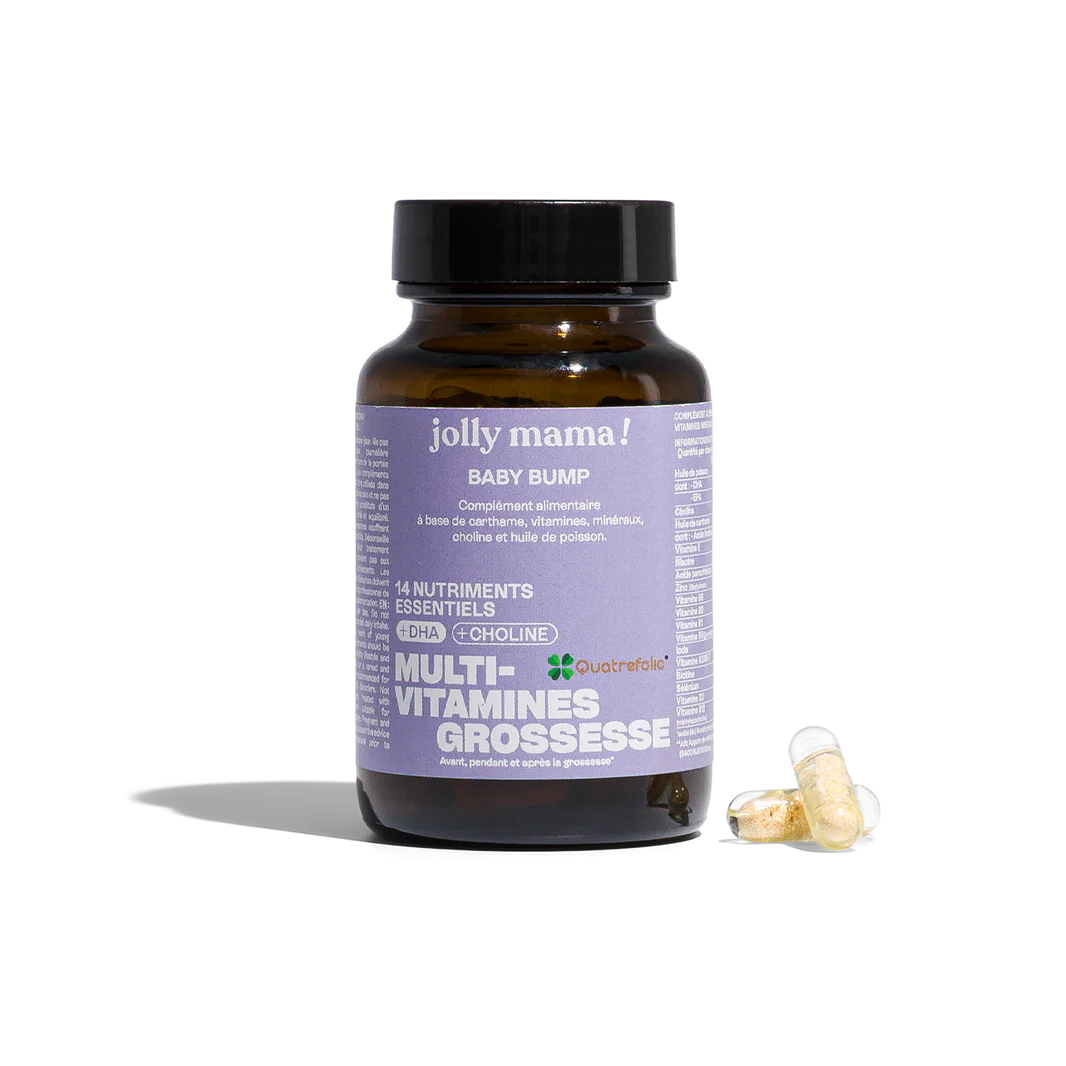
- Ingredients: Baby Bump provides 14 vitamins and minerals, including vitamin K2 and biotin, plus choline. Natalben Grossesse has no choline, no K2 and no biotin. Both contain 200 mg of DHA and a methylated Quatrefolic® folate (400 µg vs. 600 µg).
- Price: Natalben Grossesse costs about €13 to €21 for a box of 30, depending on the online pharmacy (prices checked on November 5, 2026). Baby Bump costs €46 per month, or €39.10 with the code LMC15.
- New Natalben formula: according to the manufacturer, the box of 30 (batch D015V) no longer contains vitamin B1. The box of 90 should follow soon.
- Dosage: 1 softgel per day for Natalben, 2 capsules in the middle of a meal for Baby Bump.
- Vegan: neither one. Baby Bump contains fish oil and fish gelatin, and Natalben uses a bovine gelatin softgel. Vegan versions: Natalben Grossesse ORO, Bump Essentials or Bump Powder.
Gynefam Supra became Natalben: what changed?
Let's start by clearing up a mix-up that comes up in a lot of searches. If you're looking for Gynefam Supra Grossesse and you land on Natalben, that's normal: it's the same product, renamed by Laboratoire Effik, based in Meudon, France.
The transition isn't over yet: several online pharmacies still list "Effik Gynéfam Natalben Grossesse" or "formerly Gynéfam Supra" under the new name. The formula, however, is the one we break down below.
The range now includes four products: Préconception, Grossesse, Grossesse ORO in sachets, and Mama for breastfeeding. That's worth knowing, because the comparison with Jolly Mama doesn't give the same result at every stage, as we'll see at the end of the article.
One last difference in context: Natalben is sold in pharmacies and drugstores, while Baby Bump is sold directly on the brand's website. Two channels, two pricing structures, and two ways of getting advice. 💊
What does each formula contain, nutrient by nutrient?
Here are the two labels side by side, for one day's dose. Baby Bump is taken as two capsules, Natalben Grossesse as a single softgel. We've added the form used whenever it differs from one formula to the other.
| Per day | Baby Bump (2 capsules) | Natalben Grossesse (1 softgel) |
|---|---|---|
| Folate (B9), 5-MTHF Quatrefolic® form | 400 µg | 600 µg |
| DHA | 200 mg | 200 mg |
| EPA | 6.9 mg | 40 mg |
| Choline | 83 mg, Vitacholine® | none |
| Vitamin K2 MK-7 | 75 µg | none |
| Biotin (B8) | 50 µg | none |
| Vitamin D3 | 20 µg | 20 µg |
| Vitamin E | 12 mg, natural form (D-alpha-tocopherol) | 12 mg, synthetic form (DL-alpha-tocopheryl acetate) |
| Vitamin B1 | 1.1 mg | 1.1 mg* |
| Vitamin B2 | 1.4 mg, riboflavin 5'-phosphate | 1.4 mg, riboflavin |
| Niacin (B3) | 10 mg | 16 mg |
| Pantothenic acid (B5) | 6 mg | 6 mg |
| Vitamin B6 | 1.4 mg, pyridoxal 5'-phosphate | 1.4 mg, pyridoxine hydrochloride |
| Vitamin B12 | 5 µg, methylcobalamin | 4.5 µg, cyanocobalamin |
| Zinc | 5 mg, bisglycinate | 10 mg, zinc oxide |
| Iodine | 150 µg, potassium iodide | 200 µg, potassium iodate |
| Selenium | 45 µg, L-selenomethionine | 55 µg, sodium selenite |
| Lutein and zeaxanthin | none | 10 mg and 0.5 mg |
| Safflower oil | 33 mg | none |
* Natalben states on its product page that a decrease in vitamin B1 content has been observed over time in Natalben Grossesse, and that the new formula in the box of 30 softgels (batch D015V) no longer contains vitamin B1. According to the manufacturer, this formula will soon be available in a box of 90 softgels.
The picture is clear, as long as you look beyond the doses. Baby Bump lines up 14 vitamins and minerals versus 12 for Natalben (11 in the new box of 30 without vitamin B1), and provides three actives that Natalben doesn't contain: choline, vitamin K2 and biotin. Natalben shows higher doses of zinc, iodine and selenium, but in different forms, which we detail below. It also doses niacin and B9 a little higher, this time in the same form as Baby Bump.
The count is easy to check: Baby Bump combines 11 vitamins and 3 minerals, plus DHA, EPA and choline; Natalben has 9 vitamins (8 in the new formula without B1) and 3 minerals, plus DHA, EPA, lutein and zeaxanthin. But the number alone isn't enough: what matters is which nutrients, at what dose, and in what form.

How do the two formulas differ on vitamin B9?
It's the first thing moms-to-be look at, and it's also the point where the most shortcuts are taken. So let's say it right away: on the form of B9, the two products are on equal footing. Both use 5-methyltetrahydrofolate under the Quatrefolic license, meaning a methylated form of folate, different from standard folic acid.
Standard folic acid has to be converted by the body, and part of the population carries a variant of the MTHFR gene that is involved in this process. Pharmacokinetic research published in the British Journal of Pharmacology compared how the two forms are used, and a study published in Circulation documented the effect of the MTHFR 677 C>T polymorphism on 5-MTHF availability.
That leaves the dose: 400 µg for Baby Bump, 600 µg for Natalben. The higher number isn't automatically better. 400 µg per day is the dose the European claim is built on, and the benchmark used for women trying to conceive in the general population, which the review published in JAMA in 2023 for the US Preventive Services Task Force also relies on. Natalben's 600 µg stays within limits, with no additional proven benefit for a woman without a specific medical situation. ⚖️
In what form is each nutrient provided?
This is the point labels don't spell out in big letters, and it matters as much as the dose: the same nutrient can come in different chemical forms. On this front, the two formulas make opposite choices.
- Zinc: bisglycinate in Baby Bump, zinc oxide in Natalben. A review published in Nutrients in 2024 and a trial published in the Journal of Nutrition compared the absorption of several forms of zinc, including oxide. These studies look at isolated forms, not at these two products.
- Selenium: L-selenomethionine in Baby Bump, sodium selenite in Natalben. A supplementation trial published in 2006 compared these two forms on blood markers, at high doses.
- Vitamin E: natural form in Baby Bump, synthetic form in Natalben. A study published in the American Journal of Clinical Nutrition compared the two forms. On the label, the amount is identical: 12 mg.
- Vitamins B6, B2 and B12: Baby Bump uses the so-called active forms, pyridoxal 5'-phosphate, riboflavin 5'-phosphate and methylcobalamin. Natalben uses the standard forms, pyridoxine hydrochloride, riboflavin and cyanocobalamin. The B6 and B2 doses are identical.
- Iodine: two standard mineral salts, potassium iodide in Baby Bump and potassium iodate in Natalben.
In other words, the dose doesn't tell the whole story: the form used matters too. Natalben doses zinc and selenium higher; Baby Bump chose other forms, which Jolly Mama highlights on its product page. It's a criterion that comparisons almost always overlook.
What does Baby Bump provide that Natalben doesn't?
Three actives missing from Natalben, and a capsule technology Natalben doesn't have: that's what justifies the price gap. Each active carries an authorized health claim, or is a nutrient whose requirements increase during pregnancy.
Choline, 83 mg as Vitacholine
This is the most notable gap in Natalben. Choline contributes to normal homocysteine metabolism, normal lipid metabolism and the maintenance of normal liver function, three authorized claims. Requirements increase during pregnancy and breastfeeding, and a review published in Nutrients in 2025 takes stock of choline's role during these two periods. Few French multivitamins contain it.
Vitamin K2 MK-7, 75 µg
Vitamin K contributes to normal blood clotting and to the maintenance of normal bones. The MK-7 form is the long-acting menaquinone. Natalben doesn't contain any.
Biotin, 50 µg
Biotin contributes to the maintenance of normal hair, the normal functioning of the nervous system and normal energy-yielding metabolism. It may look like a detail, but hair is a huge topic after giving birth.
A duocaps™ capsule that keeps the omega-3s separate
This is the least visible difference. Omega-3s are fragile fatty acids, highly sensitive to oxidation, as a review published in 2013 in BioMed Research International points out. Baby Bump relies on a duocaps™ capsule: according to Jolly Mama, the vitamins and minerals are kept separate from the fish oil, which is stored in its own oil phase, to preserve the stability of the DHA and EPA and prevent their oxidation. The oil also carries the QualitySilver® label, with a low Totox value according to the brand, the reference indicator of an oil's oxidation.
Natalben Grossesse, on the other hand, combines vitamins, minerals and omega-3s in a single softgel. And stability isn't a theoretical issue: the manufacturer itself states on its product page that a decrease in vitamin B1 content has been observed over time in Natalben Grossesse, to the point of offering a new box of 30 softgels without vitamin B1.
What does Natalben provide that Baby Bump doesn't?
The comparison would be worthless if it only went one way. Natalben has its arguments too, even if they carry less weight than they seem.
- More niacin, 16 mg vs. 10 mg, in the same form in both cases.
- Higher mineral doses: zinc 10 mg vs. 5 mg, iodine 200 µg vs. 150 µg, selenium 55 µg vs. 45 µg. The forms differ, as detailed above: zinc oxide and sodium selenite in Natalben.
- Lutein, 10 mg, and zeaxanthin, 0.5 mg. These two carotenoids have no authorized health claim in Europe, so nothing can be promised for them, but they're missing from the vast majority of formulas.
- More EPA, 40 mg vs. 6.9 mg, with DHA identical at 200 mg in both cases. These omega-3s share the softgel with the vitamins and minerals, with no separate phase.
- A single softgel per day, compared with two capsules for Baby Bump.
On paper, then, Natalben shows a few higher doses. Baby Bump, for its part, provides more vitamins and minerals, in other forms, with three actives Natalben doesn't have and omega-3s placed in a separate phase.

How much does each formula cost per month?
Let's be upfront: this is Baby Bump's weak spot, and hiding it would make no sense in a comparison.
- Natalben Grossesse: about €13 to €21 for a box of 30 depending on the online pharmacy, prices checked on November 5, 2026. The box of 90 softgels works out cheaper per month: check its price when you buy. Prices are given as a guide only.
- Baby Bump: €46 per month, down to €39.10 with the code LMC15 (verified on a one-time order) or with a subscription at -15%.
So the gap ranges from double to quadruple depending on the formats compared. What that gap actually buys: three extra actives (choline, K2 and biotin); other nutrient forms, such as zinc bisglycinate, selenomethionine and methylcobalamin; a capsule that keeps the omega-3s separate; French manufacturing, a glass jar and stage-by-stage support. If these factors don't weigh in your decision, Natalben remains the more budget-friendly option. 💰
One softgel or two capsules: what's it like day to day?
Natalben is taken as a single softgel per day, Baby Bump as two capsules. That's a practical advantage for Natalben, especially in the first trimester, when nausea makes taking anything difficult. The trade-off is that everything shares the same softgel, whereas Baby Bump keeps its actives separate, according to the brand to preserve their stability.
Jolly Mama is aware of this and says so on its product page: the two capsules are taken in the middle of a meal and can be split into two doses during the day to avoid an empty stomach. It's an effective workaround, but it's still two doses you have to remember.
A point few comparisons mention: neither formula is vegan. Baby Bump contains fish oil and a fish gelatin capsule, while Natalben Grossesse contains marine omega-3s and a bovine gelatin softgel. For a plant-based option, Natalben offers Natalben Grossesse ORO, a certified vegan sachet, and Jolly Mama offers Bump essentials in capsules or Bump powder in sachets, an iodine-free version for women with thyroid disorders. These vegan versions contain no DHA, which you'll need to take separately as algae oil.
What do users say about each formula?
Here, the comparison is lopsided, but not in the way you might think. Baby Bump has 4.6 out of 5 from 429 reviews on Jolly Mama's online store, and the brand's Trustpilot profile shows 4.7/5 from 970 reviews (checked on November 5, 2026). The brand also claims to have supported more than 200,000 moms.
Natalben, for its part, doesn't publish any consolidated rating on its website. Feedback is scattered across online pharmacy product pages, with low volumes and different rating systems, which says nothing about the product's quality but makes any reliable average impossible.

How do the two ranges compare at each stage?
The product-versus-product face-off doesn't tell the whole story, because a pregnancy doesn't stop at the second trimester. Here's how the two ranges match up.
| Stage | At Natalben | At Jolly Mama |
|---|---|---|
| Preconception | Natalben Préconception: 4 nutrients, folate 600 µg, B12, zinc, iodine | Baby Bump, supplemented if needed with Ovo+ (NAC, coenzyme Q10, zinc) |
| Pregnancy | Natalben Grossesse, 1 softgel | Baby Bump, 2 capsules |
| Vegan version | Natalben Grossesse ORO, certified vegan sachet, no DHA | Bump essentials in capsules or Bump powder in sachets, vegan, no DHA |
| Breastfeeding | Natalben Mama: folate 500 µg, DHA 200 mg, vitamin A 800 µg | Post essentials, also with vitamin A, and the patented melon extract Extramel® |
| Targeted needs | Range limited to these four products | Iron, magnesium, lactation, hair, menopause |
Two remarks on this table. Natalben's preconception formula has four nutrients, whereas Baby Bump provides fourteen from this stage onward. And both breastfeeding formulas contain preformed vitamin A, 800 µg in Natalben Mama: so they shouldn't be taken during preconception or pregnancy, whatever the brand. 🤍
Which one should you choose based on your profile?
On ingredients, Baby Bump goes further: more vitamins and minerals, other nutrient forms, three actives Natalben doesn't have and omega-3s in a separate phase. Natalben keeps the edge on price and single-dose convenience. So the right choice depends on what you prioritize.
- You're mainly after the lowest price and aren't concerned about choline, nutrient forms or omega-3 stability: Natalben Grossesse, especially in the three-month format.
- You want a more complete formula, including choline and K2, with so-called active forms and omega-3s in a separate phase, and "made in France" appeals to you: Baby Bump.
- You have significant nausea and want a single dose: Natalben, or Baby Bump split into two doses in the middle of meals.
- You're vegetarian or vegan: Natalben Grossesse ORO, Bump essentials or Bump powder, with algae-based DHA taken separately.
- You want stage-by-stage support, from planning a baby to breastfeeding, with a single point of contact: the Jolly Mama ecosystem is much broader.
The full product page for the formula, with details on all fourteen nutrients and customer reviews, is on Jolly Mama's pregnancy multivitamins page. The code LMC15 gives you 15% off in the online store (verified at checkout on a one-time order on November 3, 2026).
Your questions about Baby Bump and Natalben
Are Natalben and Gynefam the same product?
Yes. Gynefam Supra Grossesse was renamed Natalben Grossesse by Laboratoire Effik. Some pharmacies still show both names on the same product page, sometimes as "Effik Gynéfam Natalben Grossesse."
What's the real difference between Baby Bump and Natalben Grossesse?
Baby Bump provides 14 vitamins and minerals versus 12, as well as choline, vitamin K2 MK-7 and biotin, which Natalben doesn't have. Its nutrients come in other forms, notably zinc, selenium and vitamin E, and its omega-3s are placed in a separate phase of the capsule. Natalben doses some minerals higher, is taken as a single softgel and costs two to four times less. The form of vitamin B9 is the same in both.
Is Natalben Grossesse vegan?
No, the formula contains marine omega-3s and a bovine gelatin softgel. The Natalben Grossesse ORO version, in sachets, is certified vegan, but it contains no DHA.
Should you go for 400 or 600 µg of folate?
400 µg per day is the official benchmark for women trying to conceive in the general population, and it's the dose the European claim is built on. Higher doses are prescribed for specific situations. In any case, this is a question to settle with your doctor or midwife.
Can you take Baby Bump and Natalben at the same time?
No. Combining two pregnancy multivitamins puts you at risk of exceeding intake limits, especially for iodine, zinc and vitamin D. Pick one formula and stick with it.
Key takeaways
These two formulas aren't playing the same game. Natalben is easy to take and inexpensive, a basic option you'll find in every pharmacy. Baby Bump is more expensive but more complete: more vitamins and minerals, so-called active forms, three actives missing from Natalben including choline, and omega-3s in a separate phase. On vitamin B9, it's a tie: both use the same active form. The rest comes down to priorities, and budget.
Prices checked on November 5, 2026, given as a guide only and subject to change. Dietary supplements should not replace a varied, balanced diet and a healthy lifestyle. This article is for informational purposes and does not constitute medical advice: choosing a supplement during pregnancy should be done with a healthcare professional.
Scientific references
- ANSES, Nutritional references for vitamins and minerals: anses.fr
- Haute Autorité de Santé, Planning a pregnancy: information, prevention messages, tests to carry out: has-sante.fr
- Regulation (EU) No 432/2012 establishing a list of permitted health claims made on foods: eur-lex.europa.eu
- Regulation (EU) No 1135/2014 on the claim concerning folic acid and neural tube defects: eur-lex.europa.eu
- Regulation (EU) No 440/2011, notably covering the claim on DHA and normal brain development of the fetus: eur-lex.europa.eu
- Folic Acid Supplementation to Prevent Neural Tube Defects: Updated Evidence Report and Systematic Review for the US Preventive Services Task Force, JAMA, 2023: pubmed.ncbi.nlm.nih.gov
- Choline in Pregnancy and Lactation: Essential Knowledge for Clinical Practice, Nutrients, 2025: pubmed.ncbi.nlm.nih.gov
- Pharmacokinetic study on the utilisation of 5-methyltetrahydrofolate and folic acid, British Journal of Pharmacology, 2004: pubmed.ncbi.nlm.nih.gov
- MTHFR 677 C>T Polymorphism reveals functional importance for 5-methyltetrahydrofolate, Circulation, 2009: pubmed.ncbi.nlm.nih.gov
- DGCCRF, Dietary supplements: what you need to know, economie.gouv.fr, updated July 15, 2025: economie.gouv.fr
- Comparative Absorption and Bioavailability of Various Chemical Forms of Zinc in Humans: A Narrative Review, Nutrients, 2024: pubmed.ncbi.nlm.nih.gov
- Zinc absorption by young adults from supplemental zinc citrate is comparable with that from zinc gluconate and higher than from zinc oxide, The Journal of Nutrition, 2014: pubmed.ncbi.nlm.nih.gov
- Effects of chemical form of selenium on plasma biomarkers in a high-dose human supplementation trial, Cancer Epidemiology, Biomarkers & Prevention, 2006: pubmed.ncbi.nlm.nih.gov
- Human plasma and tissue alpha-tocopherol concentrations in response to supplementation with deuterated natural and synthetic vitamin E, The American Journal of Clinical Nutrition, 1998: pubmed.ncbi.nlm.nih.gov
- Oxidation of marine omega-3 supplements and human health, BioMed Research International, 2013: pubmed.ncbi.nlm.nih.gov
- Laboratoire Effik, Natalben Grossesse product page, ingredients and consumer information on vitamin B1: natalben.fr

LMC content is written by our editorial team from the information published by the brands. Scores out of 10 follow a public grid of 5 criteria*, supplemented by LMC’s editorial assessment.
To support LMC, some links are affiliate links: LMC earns a commission at no extra cost to you, and some of the brands featured are partners. By using the site, you accept our terms of use and our editorial policy.