




Ube powder contraindications is a typical search from someone tempted by purple lattes but wanting to check before adding the ingredient to breakfast every morning. That is a good reflex. Ube, also called purple yam, is first and foremost a food ingredient. It is not a medicine, not a supplement with guaranteed effects and not a substance that is naturally dangerous.
The short answer, for most adults, a simple ube powder used in cooking in reasonable amounts should not raise any particular concern. The real precautions usually relate to sweetened mixes, possible allergies, digestion, diabetes, medical diets, pregnancy and breastfeeding. In other words, the issue rarely comes from ube alone. It often comes from what is added around it.
This nuance matters. Some content sells ube as a magical superfood. Other content makes the word “danger” sound dramatic. Both shortcuts are misleading. Ube is interesting for its color, gentle taste, culinary uses and caffeine-free profile. But if you are looking for spectacular health benefits, it is better to stay realistic.
Is ube dangerous?
No, ube is not generally considered dangerous when eaten like a normal food. The smarter approach is to check the ube powder ingredients, the amount you use and your personal health context. A pure powder does not have the same profile as a flavored blend with sugar, milk powder, colorings or additives.

This changes everything. When someone searches for ube danger or “ube powder contraindications”, they often think about the ingredient itself. In practice, the useful points to check are more concrete: added sugar, digestive tolerance, allergies, a very high-calorie preparation or compatibility with a controlled diet.
Ube is a purple yam long used in Filipino cooking. In powder form, it is mainly used to make ube lattes, smoothies, porridge, pancakes, pastries and purple desserts. The product becomes less suitable only if it turns into a very sweet drink consumed every day, or if it is used without considering a specific medical situation.

The real precautions: sugar, allergies, digestion and medical context
The first precaution is sugar. A pure ube powder should not be judged like a ready-to-drink latte mix. Some blends add sugar, flavors, milk powders or ingredients designed to make the drink richer. That is not automatically bad, but it is a different use. If you monitor blood sugar, weight or carbohydrate intake, the label matters more than the purple color.
If you have diabetes or follow a medically supervised diet, keep it simple: small portions, low-sugar preparation and professional advice if you already have specific instructions. The same applies during pregnancy or breastfeeding, or if you have kidney disease, digestive disorders or a history of food allergies.
Digestive tolerance is personal. Ube in a latte may be perfectly fine for one person and feel heavy for another, especially with large portions, rich milk, added cream or sweet syrups. Start with a small amount and increase only if it suits you.
How to choose a safer ube powder
Choose a product with a clear ingredient list, transparent directions and no unnecessary additives. If a product claims to be organic, do not rely on the word alone: look for a recognized certification, an official label and traceability. Without that proof, “organic ube” is only a claim.
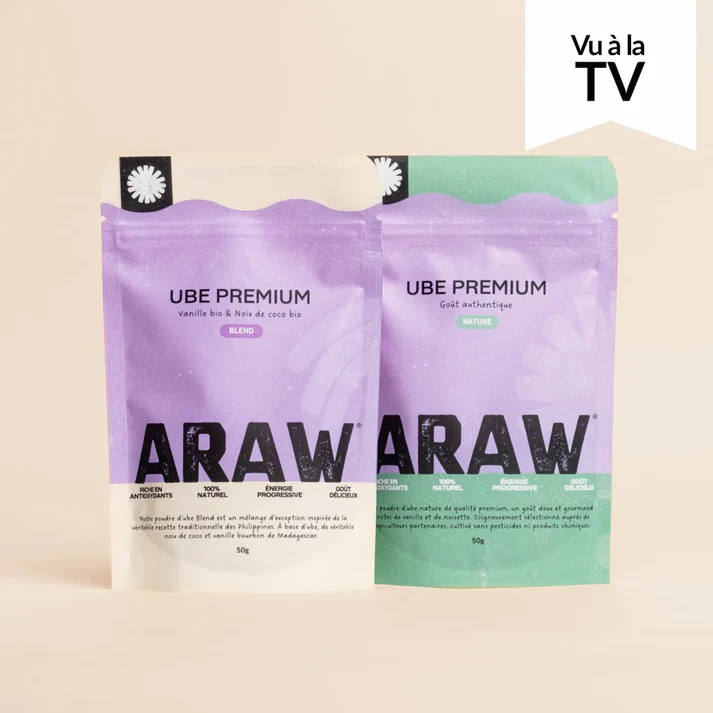
For everyday recipes, a straightforward powder such as Araw Ube is usually easier to understand than a vague purple mix. Use it like a food ingredient, not a health treatment, one or two teaspoons in a latte, smoothie bowl or dessert, adjusted to taste and tolerance.
If you have a serious medical condition, take medication or have been told to follow a strict diet, ask a qualified healthcare professional before making it a daily habit. For everyone else, the best rule is simple: read the label, control the sugar and enjoy ube as part of a balanced diet.
How to choose ube powder without falling for the trend
Ube is visually impressive, but the colour alone should not drive the purchase. A serious ube powder should be judged on origin, ingredient list, aroma, texture and how easily it works in recipes. Some products are designed for baking, others for lattes or desserts. If the powder is too coarse, too sweetened or mixed with unnecessary ingredients, the result can be disappointing even when the packaging looks premium.
Before buying, check whether the product is pure purple yam powder or a flavoured blend. Pure powder gives more control in recipes, while blends can be easier for quick drinks but often contain sugar, milk powder or flavouring. For an everyday latte, solubility and taste matter. For baking, colour stability and texture are more important.

LMC’s editorial line is built around transparency and reliability. Our content is written to help users make better decisions, based on 7 key criteria* that support trustworthy information, verified promo codes, and useful reviews.
To support LMC, some links are affiliate links. Our recommendations remain independent and based on transparent, verifiable criteria. By using the site, you accept our terms of use and our editorial policy.


.webp)

.avif)