




Why your body needs so many nutrients after childbirth
Childbirth triggers two simultaneous events that drain the body's reserves. First, significant blood loss that depletes iron stores, sometimes severely. Second, a sharp drop in estrogen and progesterone, which fall from very high levels (8 to 9 times normal) to almost nothing within 48 hours.
If you breastfeed, the mobilization of nutrients continues actively: breast milk draws on your reserves of iodine, DHA, vitamin D, choline and B vitamins. France's ANSES food safety agency recognizes that the nutritional needs of breastfeeding women are higher than during pregnancy for certain micronutrients.
The most common postpartum deficiencies are:
- Iron: blood loss during delivery, ferritin often collapsed
- Vitamin D: an almost systematic deficiency in France, worsened by sleep deprivation
- Vitamin B12: essential for energy and the nervous system, often insufficient
- Magnesium: depleted by stress, short nights and breastfeeding
- Zinc: involved in cellular recovery and hair health
The essential postpartum vitamins: what your body truly needs
Not all postpartum vitamins are created equal. What matters is the form of the active ingredients: iron in the form of sulfate frequently causes digestive issues, whereas bisglycinate is well tolerated and better absorbed. Here are the priority active ingredients and their optimal forms.
Iron (bisglycinate) is priority number one after childbirth. Iron deficiency translates into intense fatigue, accelerated hair loss and weakened immunity. Vitamin C taken at the same time multiplies the intestinal absorption of iron. Ferritin is the most predictive marker for assessing recovery, more so than serum iron.
Vitamin D3 (cholecalciferol) supports the immune system, contributes to bone mineralization and plays a role in mood balance. During the baby blues, a deficiency worsens the symptoms.
The other essential postpartum active ingredients:
- Vitamin B12 (methylcobalamin): a directly assimilable active form, essential for energy and the nervous system
- Choline: recommended by ANSES during breastfeeding, contributes to the infant's neurological development
- DHA (omega-3): passes into breast milk and supports the baby's brain and visual development
- Zinc: helps maintain normal hair and supports post-delivery healing

Postpartum hair loss: causes, duration and nutritional solutions
Postpartum hair loss is a normal, well-documented and almost universal phenomenon. Its medical name is telogen effluvium. During pregnancy, high estrogen levels keep hair in a prolonged growth phase: you shed less hair than usual. After childbirth, the hormonal drop signals all these follicles to enter the telogen (shedding) phase at the same time. The result: significant shedding between the 2nd and 4th month after delivery.
This phenomenon is usually temporary (3 to 6 months), but it can be significantly reduced with appropriate supplementation. The most predictive marker of hair regrowth is not serum iron but ferritin: low ferritin, even without diagnosed anemia, is enough to weaken the hair.
The most relevant active ingredients for limiting postpartum hair loss:
- Iron bisglycinate: correcting ferritin is the first action to take
- Cynatine® HNS keratin: a soluble keratin hydrolysate with high bioavailability, studied in the context of hair comfort
- Biotin (vitamin B8): contributes, under regulatory claims, to the maintenance of normal hair
- Zinc: involved in the structure of the hair fiber
- Hydrolyzed collagen: studied for its role in the quality of skin and hair
- Vitamins B9 and B12: involved in the production of nucleic acids for DNA, with a possible role in hair follicle proliferation

Postpartum vitamins compatible with breastfeeding: what to check
This is where many new mothers make mistakes. Not all supplements on the market are formulated to be compatible with breastfeeding. Some active ingredients are explicitly contraindicated during this period.
The most important point: vitamin A in the form of retinol at high doses is not recommended for women planning a pregnancy or who are pregnant, and some postpartum formulas contain it. If you wish to become pregnant again quickly, check that your postpartum supplement is specifically excluded from this indication (this is the case with Post Essentials by Jolly Mama, which states it explicitly).
The active ingredients that are welcome and well tolerated while breastfeeding:
- Algae-derived DHA: a vegan alternative to fish oil, equally effective for the infant's development
- Iodine: needs increase during breastfeeding for the mother's thyroid and the baby's brain development
- Vitamin D3 and B vitamins: without contraindication and particularly useful during this period
A practical tip: look for formulas that explicitly mention compatibility with breastfeeding on the product page, and avoid stacking several supplements containing the same active ingredients without medical advice.
Jolly Mama postpartum: range analysis and customer reviews
Jolly Mama has developed a postpartum range designed to support each specific symptom of this period, with one common thread: 100% compatible with breastfeeding and made in France. Here are the flagship products of the range.
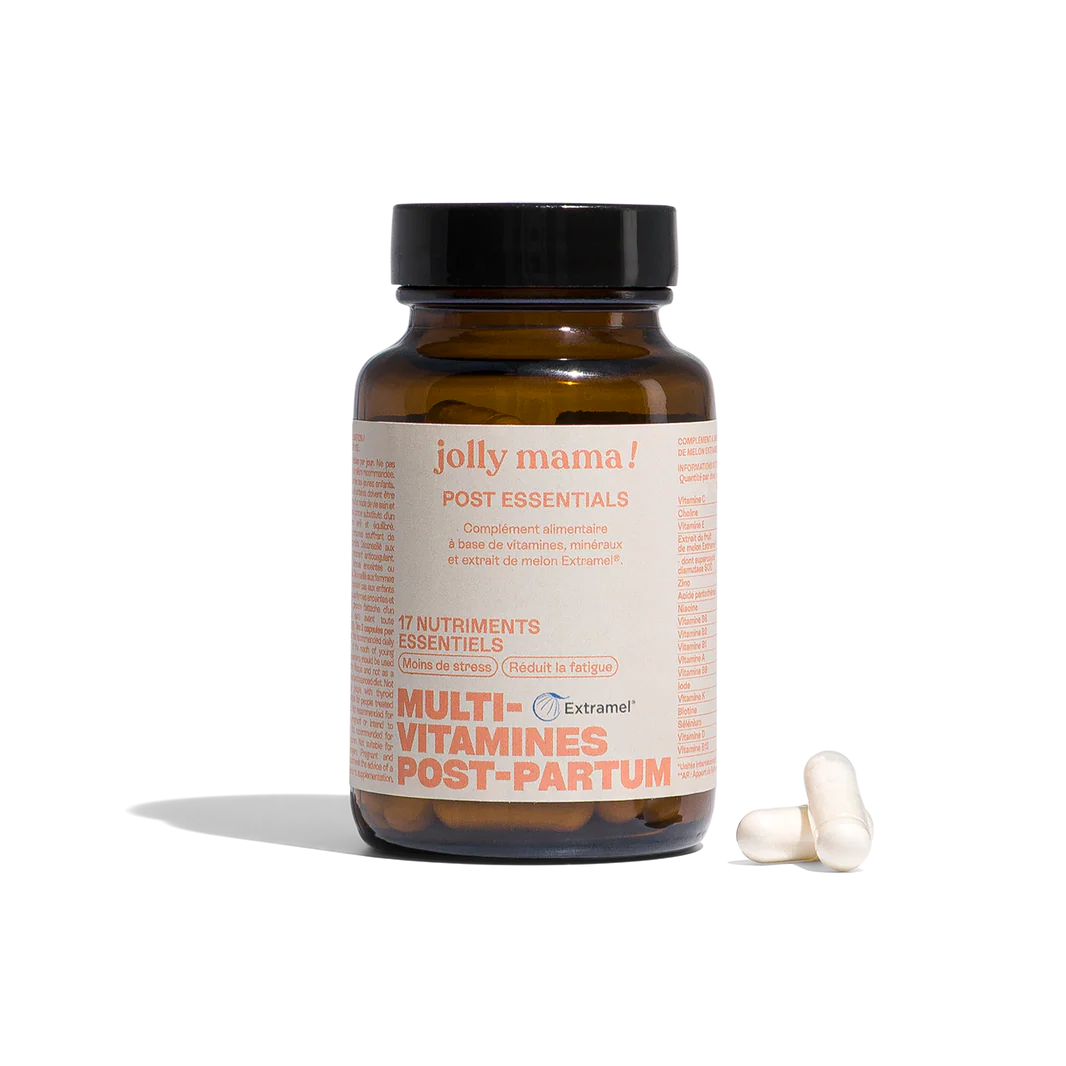
Post Essentials is the brand's core postpartum multivitamin. In just 2 capsules a day, it combines 17 essential vitamins and minerals, including vitamin B8, zinc and selenium, which help maintain normal hair. It also includes a patented active ingredient for emotional well-being, relevant in a context where the baby blues affects a majority of new mothers in the days following delivery. Vitamin D, iodine, B vitamins: all the boxes of postpartum supplementation are ticked. Price: 33€/month for a one-time purchase, 28,05€/month on subscription (-15%).
Mama Hair is Jolly Mama's targeted answer to postpartum hair loss. In a liquid pipette format (2 pipettes/day in a glass of water), it combines Cynatine® HNS keratin (500 mg, a soluble keratin hydrolysate with high bioavailability), an Annurca apple fruit extract from Italy (400 mg) and biotin (25 µg). The two main active ingredients have published clinical studies. Compatible with pregnancy and breastfeeding.
Iron Mama addresses post-delivery iron deficiency with iron bisglycinate, the most digestively well-tolerated form. Several customers who had issues with classic iron prescriptions (sulfate) report excellent tolerance with Iron Mama and normalized blood test results.
Happy Postpartum is a supplement focused on the physical and emotional support of the immediate postpartum period, and can be combined with Post Essentials.
Customer reviews on Trustpilot are consistent: several mothers compare their first postpartum without supplementation to their second with the Jolly Mama range, highlighting better energy, less hair loss and a more stable mood. The brand's overall rating is 4.8 to 4.9/5 across more than 800 verified reviews.
The entire range is available on the official Jolly Mama website with the code LMC for -15% on your first order.

Postpartum vitamins from the pharmacy: how good are the classic formulas?
Postpartum supplements from the pharmacy have the advantage of being immediately accessible and, in some cases, reimbursable through a prescription. But their formulas often have the same limitations as classic pregnancy vitamins: standard folic acid (not methylated), iron in sulfate form (poorly tolerated), and vitamins in their least bioavailable forms.
For mothers looking for a pure pharmacy option, the ideal approach is to check a few criteria on the label: the presence of iron bisglycinate rather than sulfate, vitamin D3 rather than D2, and an explicit mention of breastfeeding compatibility.
To compare the multivitamins available on the market and choose the best formula for your situation, see our postpartum vitamins comparison where we analyzed the 5 most complete formulas on the French market.
FAQ: your questions about postpartum vitamins
When should you start postpartum vitamins?
As early as the day after delivery, according to experts. The sooner supplementation begins, the better the reserves depleted by pregnancy and childbirth are replenished.
How long should a postpartum vitamin course last?
At least 3 months, ideally 6 months, especially if you are breastfeeding. Iron deficiencies can persist for up to 6 months after childbirth in women who are not supplemented, according to available data.
Does hair loss stop on its own?
Yes, telogen effluvium is usually temporary (3 to 6 months). Appropriate supplementation can reduce its intensity but does not stop it completely. If the shedding persists beyond 6 months, a medical check-up is recommended.
Are all postpartum vitamins compatible with breastfeeding?
No. Some formulas contain high-dose retinol, which is not recommended when planning a pregnancy. Always check for a breastfeeding compatibility statement directly on the product page.
Do you need a prescription to buy postpartum vitamins?
No. Postpartum dietary supplements are available without a prescription. However, if you have diagnosed anemia or a confirmed deficiency, your doctor can prescribe an appropriate medication reimbursed by the French health insurance system.
Scientific references
- Guideline: Iron Supplementation in Postpartum Women, World Health Organization, 2016: https://www.who.int
- Anses, Références nutritionnelles en vitamines et minéraux pour les femmes allaitantes, 2021: https://www.anses.fr
- Rushton D.H., Nutritional factors and hair loss, Clinical and Experimental Dermatology, 2002
- Finner A.M., Nutrition and hair: deficiencies and supplements, Dermatologic Clinics, 2013
- Schunck M. et al., Dietary Supplementation with Collagen Peptides Supports Skin and Hair Health, Journal of Medicinal Food, 2015

LMC’s editorial line is built around transparency and reliability. Our content is written to help users make better decisions, based on 7 key criteria* that support trustworthy information, verified promo codes, and useful reviews.
To support LMC, some links are affiliate links. Our recommendations remain independent and based on transparent, verifiable criteria. By using the site, you accept our terms of use and our editorial policy.





.webp)

.avif)