



The phrase organic ube is reassuring. It suggests a cleaner, more natural product, almost automatically better. The problem is that the claim only has value if it is verifiable. For ube powder sold online, an organic promise should be supported by a recognized label, a certification body and traceable information attached to the actual product.
After reviewing visible offers, we did not find a clear, usable organic certification consistently attached to ube powder sold in France. That does not prove that certified organic ube can never exist. It means shoppers should not accept the phrase organic ube unless the seller provides evidence.
This guide is not about chasing a hypothetical perfect product. It is about avoiding payment for a word that may rest on nothing. The rule is simple: either a brand proves its organic certification, or it should not use the term as a selling argument. If the proof is missing, treat the claim as marketing, not as a guarantee.
Organic ube: why the claim must be verified
Ube, also known as purple yam, has all the features that attract big promises: a spectacular color, Filipino culinary roots, latte-friendly use, a mild flavor and a superfood image. That is exactly why buyers should be more demanding.
Words such as “premium”, “authentic”, “100% natural” or “from the Philippines” may provide useful context. But they never replace an organic certification. If a brand adds “organic” without proof, a natural-sounding promise becomes a potentially misleading sales argument.

Organic, natural and additive-free: three ideas you should not confuse
This is where confusion starts. Many buyers search for organic ube, but what they often read are claims about naturalness. These are not the same thing. Organic is a controlled framework. Natural is a broader description. Additive-free is information about the ingredient list. The three can overlap, but none automatically replaces the others.
What “organic” should normally prove
In Europe, organic production is based on official rules for production, control and labeling. For shoppers, the practical consequence is simple, if a product page claims organic ube powder, the claim should be verifiable.
The expected signals are familiar: a recognized organic logo, a certification body, a clear label statement and consistency between the product name, packaging and detailed description. Without these elements, caution is necessary. Not because the product is automatically bad, but because “organic” is not decoration.
Why “natural” is much more flexible
A natural product can still be a good choice. A simple powder with a short ingredient list, no artificial flavors and no unnecessary colorings can be useful for an ube latte or a recipe. But natural does not mean organically farmed.
This is the point many consumers miss. A brand may sell a natural ube powder made from a plant ingredient, with a readable composition and no organic label. In that case, the product may still be serious. It simply should not be presented as organic unless certification exists.
Why additive-free can be useful but limited
“No additives” tells you something about formulation. It can help you avoid colorings, artificial flavors, thickeners or overly processed mixes. But it does not tell you how the crop was grown. A powder can be additive-free without being organic, just as an organic product can still be mixed with other ingredients depending on the recipe.
How to check an organic ube claim
Before buying, look for proof rather than adjectives. Check the product page, packaging photos, FAQ and seller details. A reliable claim should show the organic label, certification body, origin and ingredient list. If the seller cannot provide this information, consider the claim unproven.
Also watch for wording tricks: “organic-style”, “natural purple yam”, “clean”, “premium” or “healthy” are not certifications. They may sound reassuring, but they do not carry the same meaning. If you are paying more for an organic promise, the evidence should be visible before checkout.

What to buy instead of chasing a vague label
If you cannot verify the organic status, focus on what you can verify: composition, taste, recipe performance, transparency and customer feedback. For many people, a clear non-certified ube powder is a better purchase than a vague product using “organic” as a buzzword.
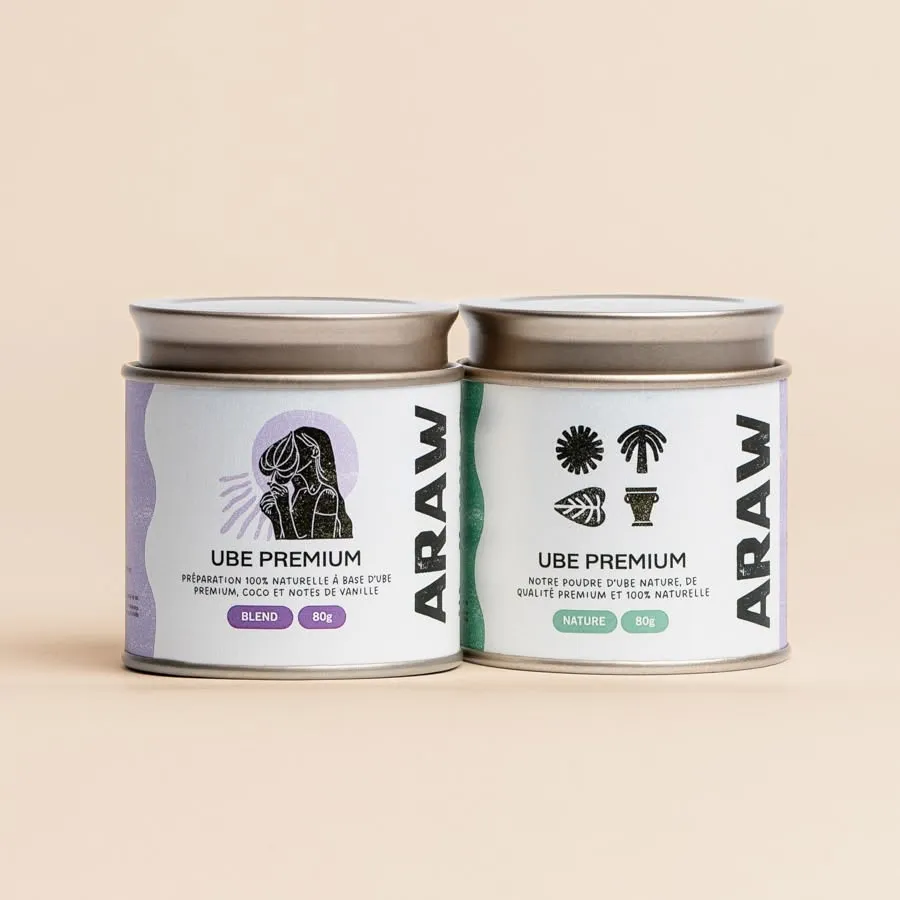
Araw Ube is an example of a practical option for ube lattes and home recipes. The important point is not to assume it is organic unless a recognized certification is shown. The right buying mindset is simple, prefer honest labeling over inflated promises.
In short, organic ube is not impossible in theory, but the claim must be proven. Until a seller provides a recognized label, certification body and traceable product information, treat “organic ube” as an unverified marketing claim and choose based on the facts you can actually check.
How to choose ube powder without falling for the trend
Ube is visually impressive, but the colour alone should not drive the purchase. A serious ube powder should be judged on origin, ingredient list, aroma, texture and how easily it works in recipes. Some products are designed for baking, others for lattes or desserts. If the powder is too coarse, too sweetened or mixed with unnecessary ingredients, the result can be disappointing even when the packaging looks premium.
Before buying, check whether the product is pure purple yam powder or a flavoured blend. Pure powder gives more control in recipes, while blends can be easier for quick drinks but often contain sugar, milk powder or flavouring. For an everyday latte, solubility and taste matter. For baking, colour stability and texture are more important.

LMC’s editorial line is built around transparency and reliability. Our content is written to help users make better decisions, based on 7 key criteria* that support trustworthy information, verified promo codes, and useful reviews.
To support LMC, some links are affiliate links. Our recommendations remain independent and based on transparent, verifiable criteria. By using the site, you accept our terms of use and our editorial policy.


.webp)

.avif)