


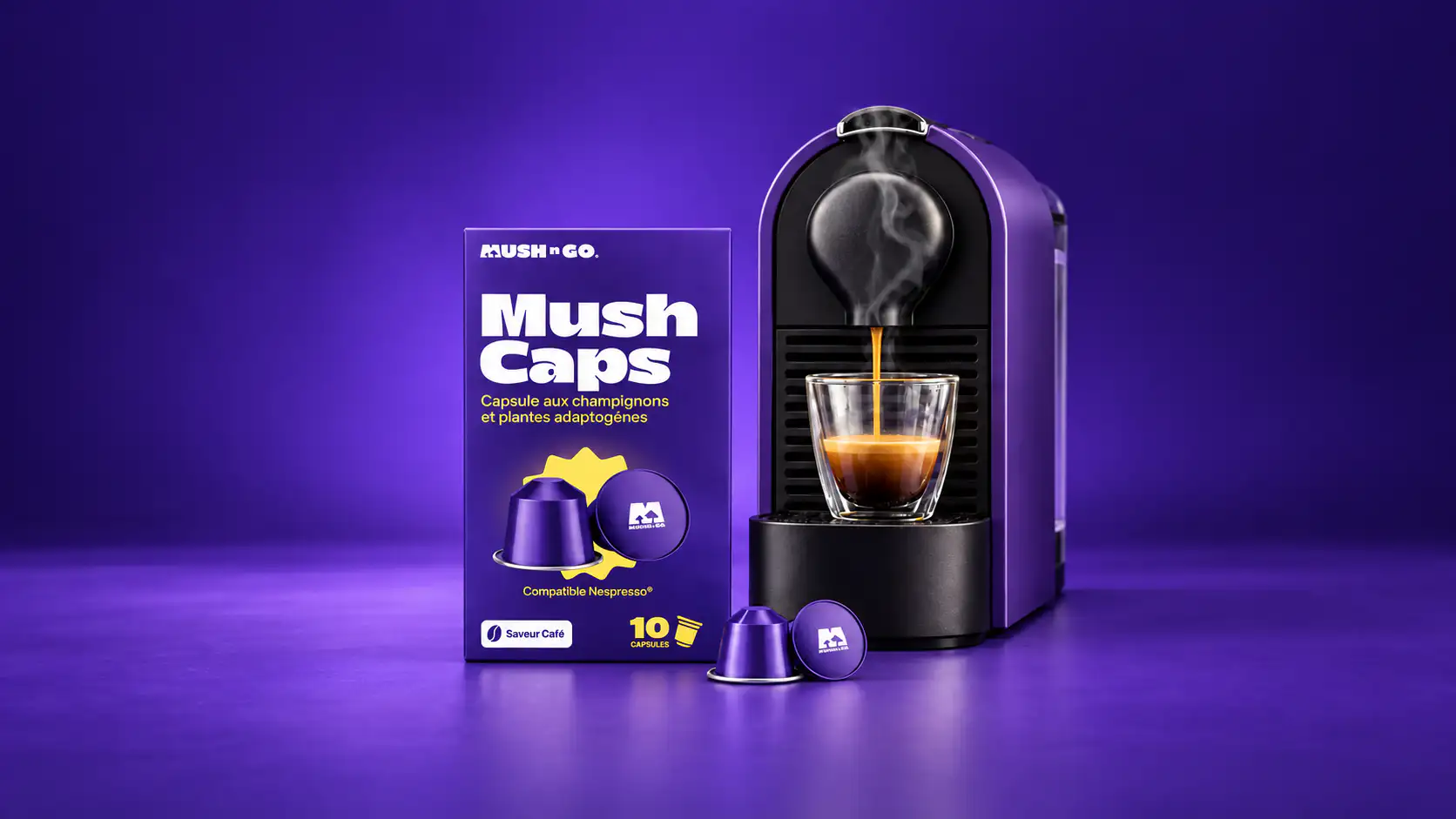


Lion's Mane: a nootropic mushroom with real cognitive interest
Lion's Mane (Hericium erinaceus) has moved far beyond the world of niche medicinal mushrooms. Today it sits at the intersection of neuroscience, biohacking, and premium supplementation because it targets something deeper than stimulation: the quality and resilience of the nervous system itself.
That is the reason it stands apart from basic “energy” supplements. Lion's Mane is not mainly about feeling wired. It is about supporting the biological conditions that make sustained focus possible : better neuronal signaling, better adaptability, and in many users, a cleaner kind of mental clarity.
Traditional Asian medicine valued this mushroom for vitality and cognition long before modern nootropic culture discovered it. What makes it especially relevant today is that current research gives us a more credible explanation for those old observations.
Why concentration problems are rarely just about caffeine
When people say they cannot focus, the issue is often broader than low stimulation. Mental fatigue, chronic stress, poor sleep, neuroinflammation, and too much task-switching all degrade concentration. More coffee may temporarily mask that, but it does not meaningfully improve the underlying terrain.
Lion's Mane is attractive because it plays a different game. Instead of forcing alertness, it may help support the brain mechanisms involved in learning, attention, and recovery from cognitive load. That makes it more interesting for professionals, founders, students, and anyone who needs repeated deep work, not just a short-lived energy spike.
What makes Lion's Mane unique
The mushroom contains hericenones and erinacines, compounds associated with the regulation of NGF (nerve growth factor) and broader neurotrophic activity. In practical terms, these compounds are one reason Lion's Mane is repeatedly discussed in relation to memory, focus, and neuroplasticity.
It also offers beta-glucans and antioxidant compounds that may indirectly support cognition by helping reduce systemic stress and inflammatory burden. That does not turn it into a pharmaceutical treatment, but it does make it one of the most credible natural options in the category.


NGF, neuroplasticity, and why focus may improve over time

To understand why Lion's Mane may help concentration, you need to look at the idea of neuroplasticity, the brain's ability to adapt, strengthen connections, and support efficient signaling. Focus is not just about “more energy.” It is also about how well the brain maintains attention without excessive friction.
NGF helps support the survival and maintenance of neurons, while related neurotrophic pathways influence learning, memory, and synaptic function. This is why many users describe Lion's Mane as making concentration feel smoother rather than more intense. The improvement is often qualitative: less scatter, better continuity, less cognitive drag.
What benefits people usually report
- Cleaner mental clarity during reading, writing, or analysis-heavy work
- Longer focus windows without needing constant stimulation
- Better verbal recall and smoother task execution
- Less mental fatigue after cognitively demanding days
Importantly, these effects are usually cumulative. Lion's Mane tends to reward consistency, not one-off use. Many users notice the most meaningful shift after several weeks rather than after the first capsule.
How to use Lion's Mane for concentration

Choose a serious extract, ideally from a reputable brand that clearly states whether it uses fruiting body, mycelium, or both. Take it daily, keep the dose stable, and judge it against real-world outcomes: how long you can stay on task, how often you lose your thread, and how mentally drained you feel at the end of the day.
It pairs well with a focus-friendly routine: sleep that is actually sufficient, exercise, and sensible caffeine timing. Lion's Mane can be a useful lever, but it works best when the rest of the system is not sabotaging concentration.

The verdict
If you want a natural supplement that may support focus in a deeper, less jittery way than caffeine, Lion's Mane deserves a place on the shortlist. It is not an instant productivity hack, but for users looking for steadier concentration and better cognitive resilience, it is one of the strongest candidates in the nootropic mushroom category.

LMC’s editorial line is built around transparency and reliability. Our content is written to help users make better decisions, based on 7 key criteria* that support trustworthy information, verified promo codes, and useful reviews.
To support LMC, some links are affiliate links. Our recommendations remain independent and based on transparent, verifiable criteria. By using the site, you accept our terms of use and our editorial policy.






.webp)

.avif)