




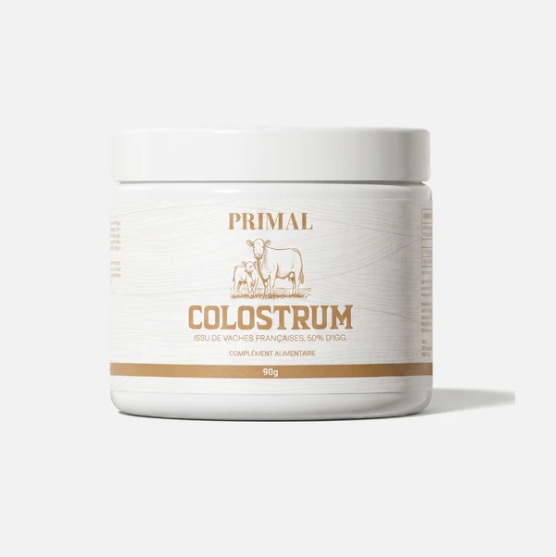
Bovine colostrum is one of those supplements that suddenly seems to appear everywhere at once. A few months of viral attention can make any ingredient look suspect, but colostrum is different from a typical wellness fad: it has a real biological profile and a serious scientific rationale behind several of its use cases.
See Colostrum Bovin - Primal → (code LMC10)
Colostrum is the first nutrient-dense milk produced after calving. It naturally contains immunoglobulins, growth factors, peptides and other compounds involved in early immune and intestinal support. That does not make it a miracle product, but it does explain why researchers and practitioners keep paying attention to it.
Why adults are interested in colostrum
The conversation usually centres on three areas: immune resilience, gut barrier support, and recovery from intense training. These are the domains where colostrum’s reputation is strongest and where the supplement category has built most of its momentum.
Still, context matters. Results depend on dosage, product quality and the reason you are taking it in the first place. Buying a random powder because it is trending is not the same thing as using a well-formulated colostrum for a specific objective.

The most credible benefits for adults
Colostrum is most convincing when it is positioned as a support ingredient rather than a cure-all. The literature is especially interesting around immune support and gastrointestinal integrity, with additional relevance for athletes exposed to heavy training stress.
Immune support
The immunoglobulins and bioactive proteins in colostrum are the reason it is so often discussed for immune resilience. It is not a substitute for sleep, nutrition or medical care, but it may fit into a well-designed routine for people who want a deeper recovery strategy.
Gut health and intestinal barrier function
This is another major reason colostrum has gained attention. For people dealing with digestive fragility, travel stress, or high training volume, the ingredient is often considered for its potential role in supporting the gut lining and overall intestinal robustness.
Recovery and sports performance context
In athletic settings, colostrum is sometimes used as part of a broader recovery protocol. The benefit is not about instant muscle gain; it is about resilience, training tolerance and staying consistent when physical load is high.
Dosage, side effects and buying advice
The right daily dose depends on the product and the intended use, but the principle is straightforward: choose a brand with clear standardisation, good manufacturing discipline and transparent sourcing. If you are lactose-sensitive, allergic to dairy proteins, pregnant, breastfeeding, or managing a medical condition, ask a healthcare professional before using it.
Digestive discomfort can occur in some users, especially when starting too aggressively. Begin conservatively, assess tolerance, and prioritise serious formulations over flashy branding.
Bottom line
Colostrum is not just hype. It is a genuinely interesting supplement category with meaningful applications for immunity, gut support and recovery, provided you choose a credible product and use it with realistic expectations.

LMC’s editorial line is built around transparency and reliability. Our content is written to help users make better decisions, based on 7 key criteria* that support trustworthy information, verified promo codes, and useful reviews.
To support LMC, some links are affiliate links. Our recommendations remain independent and based on transparent, verifiable criteria. By using the site, you accept our terms of use and our editorial policy.



.webp)

.avif)