


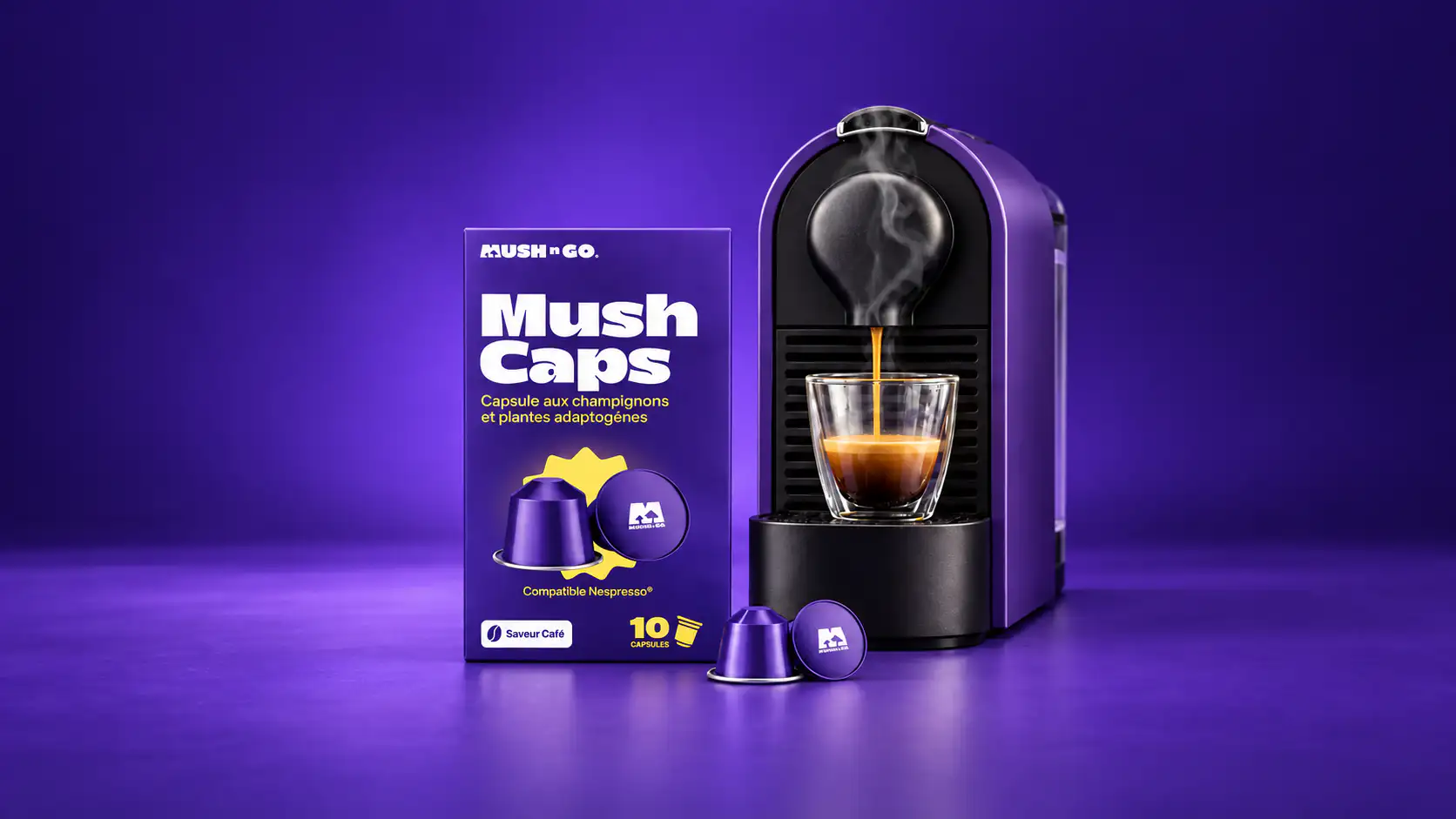


It is 5:30 p.m. and you still want the comfort of a warm coffee ritual, but you already know what a late espresso can do to your night. For many people, that one extra cup turns into a racing mind, shallow sleep and the familiar regret of trying to outsmart caffeine biology.
This is exactly why lower-caffeine mushroom coffee has become interesting. The appeal is not just taste. It is the possibility of extending focus and comfort into the evening without paying for it at midnight.
Bonjour Drink is often presented as that middle ground: more satisfying than herbal tea, less aggressive than standard coffee and designed to feel steadier in the body. To know whether that claim holds up, we need to look at one thing first: how caffeine affects sleep architecture.
The caffeine trap: why a 5 p.m. espresso can still punish you at bedtime
Caffeine has a long half-life. In many adults, a meaningful amount is still active several hours after consumption. If you drink a classic coffee late in the afternoon, you may still have enough caffeine circulating at bedtime to blunt natural sleep pressure, delay sleep onset and reduce sleep depth.
That matters because sleep quality is not just about falling asleep. Evening caffeine can also fragment your night, reduce deep restorative sleep and leave you feeling wired-but-tired the next morning. This is why people who "can fall asleep after coffee" are not necessarily sleeping well.
Traditional coffee is especially problematic because the dose is often high and the stimulation curve is abrupt. You get a sharper lift, but also a greater chance of nervous system activation right when your body should be winding down.
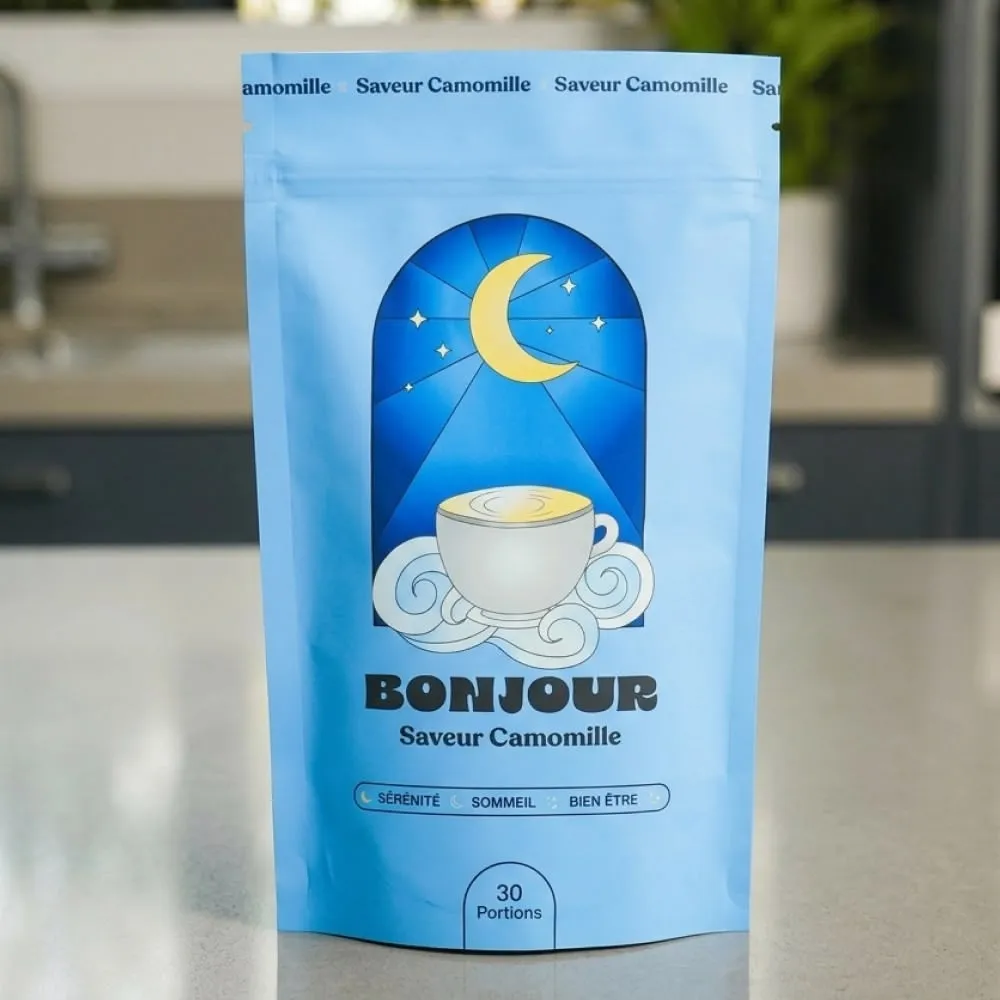

The adaptogen angle: why Bonjour Drink may feel calmer in the evening

The key difference with Bonjour Drink is that the product is not built around a high caffeine hit. Its promise is a more measured stimulation profile, supported by functional mushrooms rather than brute-force intensity. That distinction matters a lot after 5 p.m.
Lion's Mane for evening clarity without the classic coffee edge
Lion's Mane is often used in nootropic-style formulas because it is associated with mental clarity and a cleaner cognitive feel. It does not replace sleep, of course, but it can contribute to a more composed type of focus than a strong black coffee taken late in the day.
Cordyceps for usable energy instead of overdrive
Cordyceps is frequently discussed for physical vitality and cellular energy. In functional beverages, its role is usually to support stamina and momentum rather than create a sudden stimulant spike. That is one reason some people perceive mushroom coffee as smoother and easier to tolerate in the evening.
Reishi-style logic: a calmer nervous-system profile
When a formula includes ingredients chosen for stress resilience and nervous-system balance, the experience can feel fundamentally different from standard coffee. The goal is not sedation. It is the absence of the edgy, overclocked feeling that makes late caffeine such a poor trade for sleep quality.

So, can you drink Bonjour Drink at night?
For many adults, Bonjour Drink is likely to be more sleep-friendly than a regular coffee because the caffeine load is lower and the formula is built around a calmer functional profile. That does not mean it is universally safe at 9 p.m. Individual sensitivity still matters, and highly caffeine-sensitive people should test it earlier in the evening first.
Still, if your choice is between a full-strength espresso and a mushroom coffee designed for smoother energy, Bonjour Drink is the more intelligent late-day option. It preserves the ritual and much of the comfort, while giving you a better chance of protecting your night.

LMC’s editorial line is built around transparency and reliability. Our content is written to help users make better decisions, based on 7 key criteria* that support trustworthy information, verified promo codes, and useful reviews.
To support LMC, some links are affiliate links. Our recommendations remain independent and based on transparent, verifiable criteria. By using the site, you accept our terms of use and our editorial policy.






.webp)

.avif)