




What really happens in your body when you wake up (before coffee)
Before you even put a foot out of bed, your body launches a precise biological process. It is called the Cortisol Awakening Response (CAR): within 30 to 60 minutes after waking, your adrenal glands naturally release a spike of cortisol. Despite its reputation as the stress hormone, morning cortisol is your wake-up hormone: it mobilizes energy, sharpens alertness and prepares the nervous system for the day.
At the same time, adenosine plays its role as the regulator of sleepiness. This molecule accumulates in the brain throughout the day and breaks down during sleep. In the morning, its level is low, but not zero. This slight residual presence explains the drowsiness of the first few minutes after waking : a normal biological signal that naturally fades within 30 to 45 minutes.
A third factor is often overlooked: overnight dehydration. After 7 to 8 hours without fluids, blood volume is slightly reduced, which slows brain oxygenation and contributes to the feeling of morning brain fog. Drinking 200 to 300 ml of water as soon as you get up is often enough to clear part of that initial fatigue, without caffeine.
The conclusion from these three mechanisms is counterintuitive: biologically, your body does not need coffee to wake up. It needs time, water and light. Coffee often steps in before these natural processes have had a chance to fully express themselves.
Why morning coffee makes you more tired than awake
The problem with coffee on waking is not coffee itself. It is the biochemical timing. Consuming caffeine during the natural cortisol peak creates redundant stimulation: the two signals partially cancel each other out, the body adapts by reducing its natural cortisol production, and you gradually become dependent on caffeine to reach a level of alertness your biology could generate on its own.
Caffeine works by blocking adenosine receptors. As long as the molecule occupies those receptors, you do not feel tired. But adenosine continues to build up in the background. When caffeine is metabolized (with a half-life of around 5 hours), the accumulated adenosine binds massively to the newly freed receptors. This sudden rebound is what causes the famous 11 a.m. crash: abrupt fatigue, sometimes accompanied by irritability and difficulty concentrating.
Over the long term, the brain adapts to chronic caffeine exposure by creating new adenosine receptors. The result: you need increasing doses to get the same effect, and withdrawal triggers headaches, intense fatigue and irritability for 1 to 3 days. This mechanism is well documented and recognized by modern neuroscience as a mild form of physical dependence.


What to drink in the morning instead of coffee: a tour of the alternatives
The market for crash-free morning drinks has grown considerably in recent years. Here is an honest overview of the available options:
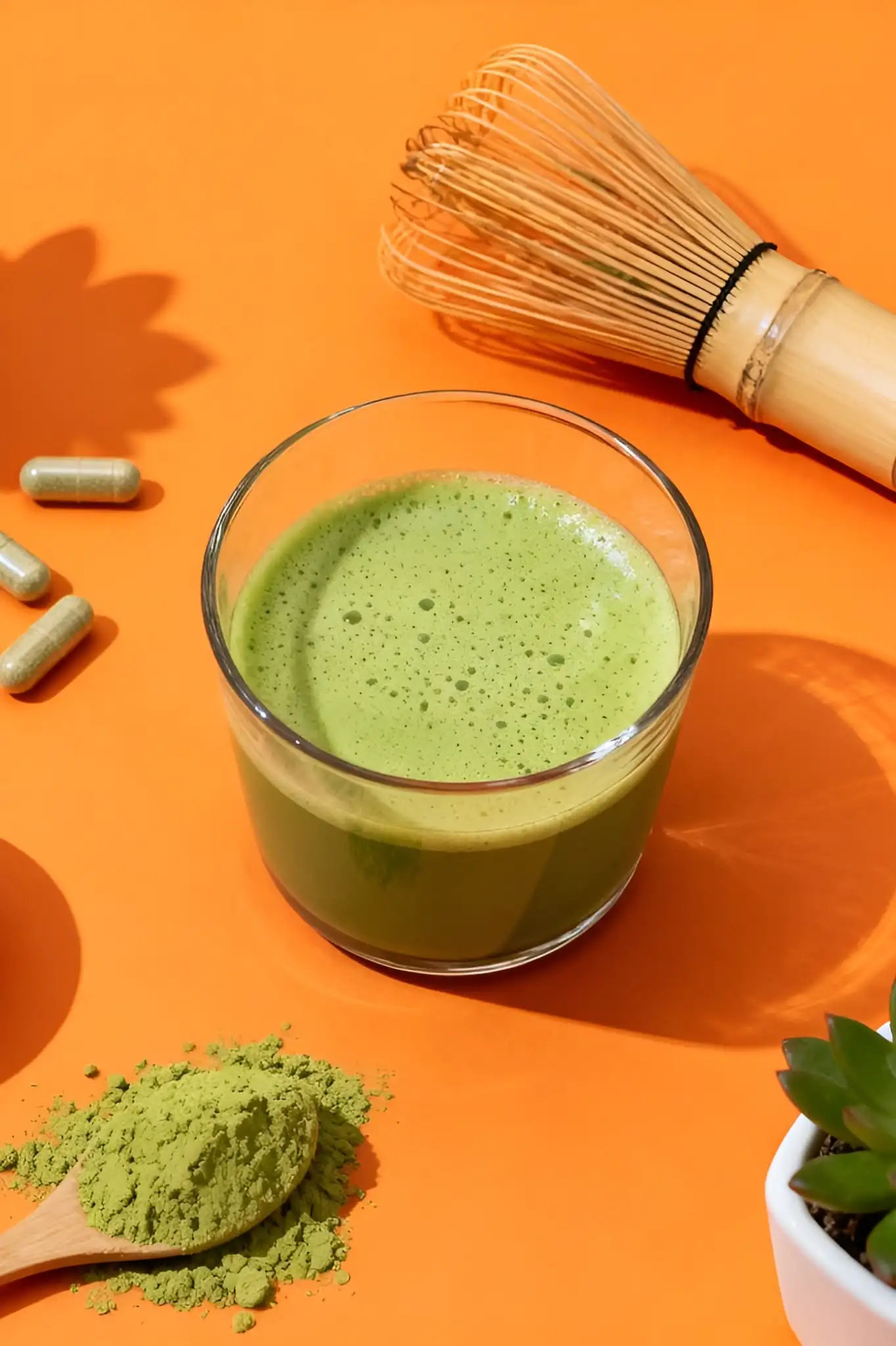
- Matcha: contains caffeine (around 30-40 mg per cup) combined with L-theanine, an amino acid that modulates caffeine stimulation. The energy feels smoother and the crash is less pronounced. It still remains caffeine-dependent.
- Green tea: 20 to 30 mg of caffeine, better digestive tolerance than coffee, rich in antioxidants. Light stimulation, suitable for sensitive profiles.
- Roasted chicory: zero caffeine, a roasted taste close to coffee, rich in inulin (a prebiotic for the gut flora). Not cognitively stimulating, but excellent for digestion.
- Adaptogenic herbal teas (ashwagandha, rhodiola): effective for reducing chronic stress and supporting physical resilience, but their action is not immediate. They are taken over the long term, not for an “instant wake-up”.
- Adaptogenic mushrooms: the only category that combines lasting cellular energy, progressive cognitive support and a complete absence of crash. Their mechanism of action is structurally different from caffeine, as we will see. 🍄
Lion's Mane, Cordyceps, Chaga: the biochemistry of waking up without a crash
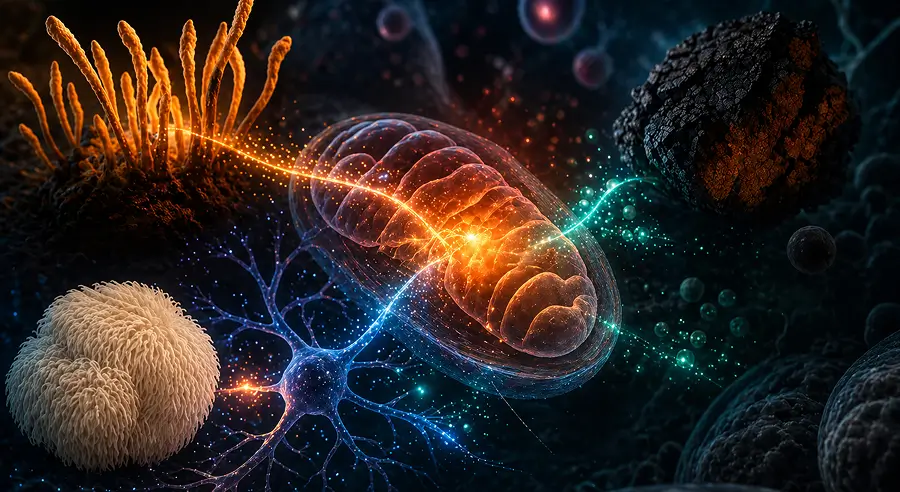
Adaptogenic mushrooms do not work by blocking receptors or forcing hormonal secretion. They work upstream, at the cellular and mitochondrial level. That is what makes them fundamentally different from caffeine.
Cordyceps (Cordyceps sinensis) is the champion of cellular energy. Its active polysaccharides increase the production of ATP (adenosine triphosphate), the universal energy molecule in our cells. A study published in the Journal of Alternative and Complementary Medicine in 2010 (Earnest et al.) showed that Cordyceps improved oxygen utilization and exercise tolerance. In practical terms: energy that rises progressively, without a spike or drop, because it relies on better metabolic efficiency rather than artificial stimulation of the nervous system.
Lion's Mane (Hericium erinaceus) works on another level: mental clarity and focus. Its hericenones and erinacines stimulate the synthesis of NGF (Nerve Growth Factor), a protein essential for neuronal regeneration and communication. The effect is not immediate like caffeine, but builds over 2 to 4 weeks of regular use: smoother thinking, more sustained concentration, less brain fog. Its beta-glucans also act as prebiotics, supporting the gut-brain axis that directly influences mood and perceived energy.
Chaga (Inonotus obliquus) completes the trio by addressing oxidative stress, one of the underlying factors in chronic fatigue. Rich in superoxide dismutase (SOD), one of the most powerful enzymatic antioxidants in the natural kingdom, Chaga protects mitochondria from oxidative damage that reduces their energy efficiency. A review published in Molecules in 2021 (Szydłowska-Tutaj et al.) confirmed its significant antioxidant and immunomodulatory properties.
What fundamentally separates this approach from caffeine: adaptogenic mushrooms do not borrow energy from your body. They improve energy production at the source, without a biological debt to repay at 11 a.m. ⚡
Bonjour Drink: the practical solution for an adaptogenic wake-up
Bonjour Drink embodies exactly this approach in a practical and enjoyable format. Bonjour’s Day ritual contains 2,700 mg of French organic plant and mushroom extracts per cup, formulated with a French laboratory specialized in food supplements for more than 20 years:
- Lion's Mane: mental clarity and progressive focus
- Cordyceps: natural, lasting energy without jitters
- Chaga: antioxidant protection and immune support
- Mallow: protection of the digestive mucosa and calmer digestion
- Ginseng (Panax ginseng): overall vitality and support for natural defenses
The drink is based on roasted barley and cocoa: naturally low in acidity, without the harshness of coffee beans, with a warm, comforting taste that preserves the morning drink ritual. The Original and Coffee versions contain 35 mg of caffeine (the equivalent of a light tea, 5 times less than an espresso), enough to support waking without triggering the dependency cycle. For those who want zero caffeine, the Cocoa, Gourmet Chocolate and Decaf versions are available.
Bonjour is made, tested and assembled in France. Every batch is analyzed by Phytocontrol, a COFRAC-accredited independent laboratory. The brand is rated 4.9/5 from more than 20,000 Trustpilot reviews, with particularly consistent feedback on stable morning energy and no crash. 7 rituals are available, including a Night ritual (Reishi, Passionflower, L-theanine, Chamomile, Green anise) to round out the day and prepare for restorative sleep.
⚠️ Bonjour Drink is a food supplement. It is not a substitute for medical treatment. If you are pregnant, breastfeeding or currently taking medication, consult your doctor.

The ideal morning routine to wake up without coffee in 2026
Replacing your morning coffee is not just about changing drinks. It means rethinking the first 60 minutes of the day so you work with your biology rather than against it. Here is a concrete, accessible routine:
- As soon as you wake up (0-5 min): drink 200 to 300 ml of water to counter overnight dehydration and restart circulation
- 5 to 20 minutes after waking: get natural light exposure, even 10 minutes near a window, to calibrate the circadian rhythm and speed the dissipation of residual adenosine
- 30 to 60 minutes after waking: prepare and drink Bonjour Drink with a light breakfast, outside the natural cortisol peak to maximize the effect of the adaptogenic actives
- Gentle movement: 5 to 10 minutes of walking, stretching or mindful breathing activate circulation and amplify the cellular energy triggered by Cordyceps
If coffee remains part of your routine, chronobiology recommends drinking it between 9:30 and 11 a.m., when natural cortisol is falling and caffeine can have its maximum effect without creating a hormonal conflict. Bonjour Drink in the morning and a coffee mid-morning is also a gradual transition many people adopt before removing espresso completely.
Bonjour offers a 60-day money-back guarantee so you can test this transition without financial risk. 🌅
To go further, read our comparison of adaptogenic coffee vs regular coffee, our full Bonjour Drink review and our article on Bonjour Drink at night and sleep.
Conclusion
Morning coffee is a powerful cultural ritual, but biologically suboptimal for the vast majority of people who drink it as soon as they wake up. Cortisol, adenosine and hydration already do the work of waking you: caffeine interferes with these mechanisms, creates progressive dependence and programs an inevitable crash. Adaptogenic mushrooms : Lion's Mane, Cordyceps and Chaga : offer a structurally different response: energy produced at the source, with no hormonal debt and no collapse. Bonjour Drink translates that science into a concrete, tasty and accessible ritual, guaranteed for 60 days so the transition is risk-free. In 2026, waking up in a healthier way is no longer a constraint: it is a choice.
Scientific references
- Earnest CP et al. Effects of a commercial herbal-based formula on exercise performance in cyclists. Journal of Alternative and Complementary Medicine, 2004 ; 10(3) : 444-451. https://doi.org/10.1089/1075553041323954
- Szydłowska-Tutaj M et al. Inonotus obliquus: biological activity and application. Molecules, 2021 ; 26(15) : 4541. https://doi.org/10.3390/molecules26154541
- Nobre AC et al. L-theanine, a natural constituent in tea, and its effect on mental state. Asia Pacific Journal of Clinical Nutrition, 2008 ; 17(S1) : 167-168.


LMC’s editorial line is built around transparency and reliability. Our content is written to help users make better decisions, based on 7 key criteria* that support trustworthy information, verified promo codes, and useful reviews.
To support LMC, some links are affiliate links. Our recommendations remain independent and based on transparent, verifiable criteria. By using the site, you accept our terms of use and our editorial policy.




.webp)